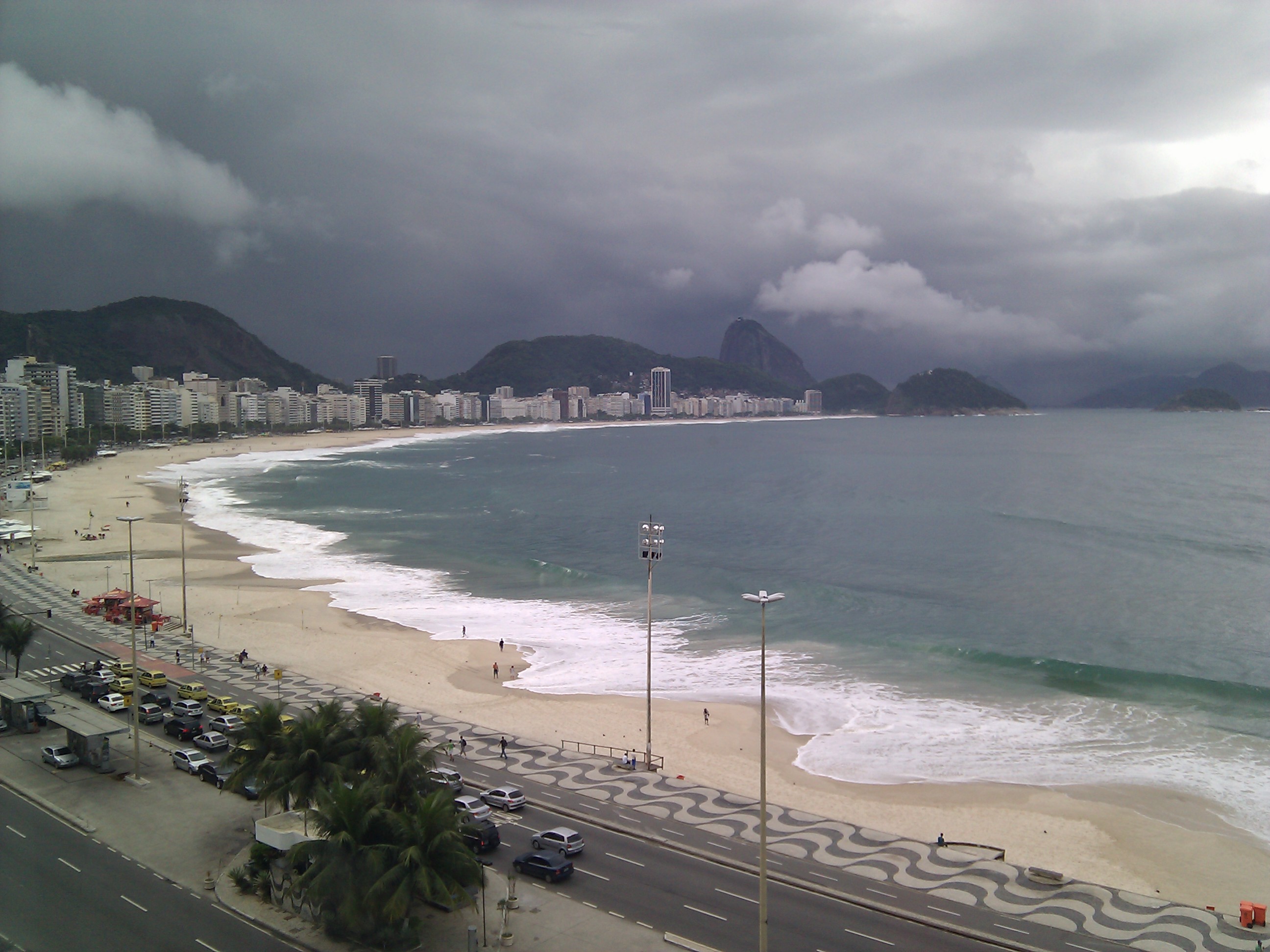
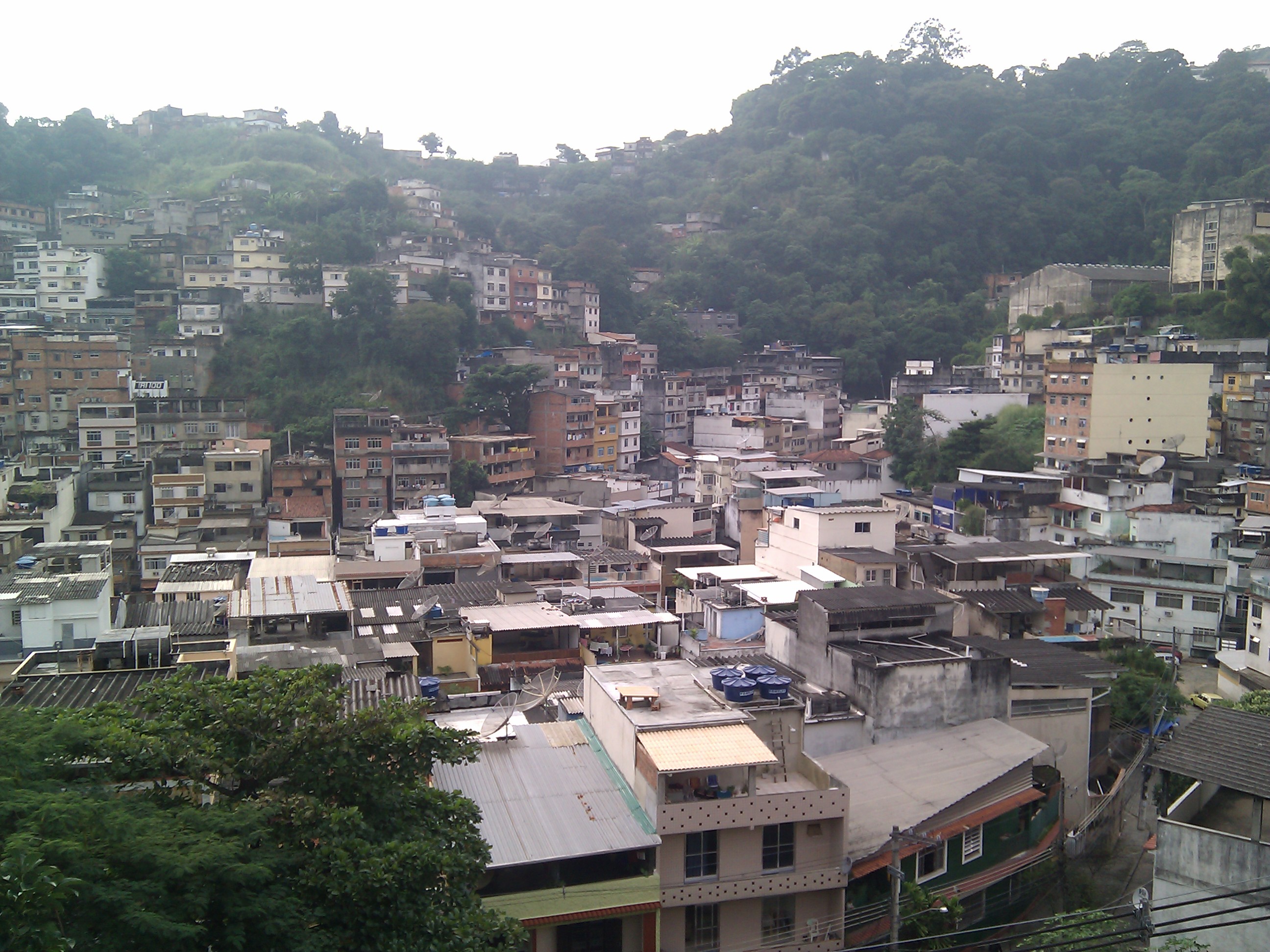
Don’t forget Rio’s “suburbs”!

Brazilian counterculture historian Fred Coelho, blogger, DJ and literature professor, urges new encounters

First in a series of RioRealblog conversational nuggets about the transformation of cultural life in the marvelous city.

With eighteen Police Pacification Units installed in the city of Rio de Janeiro over the last two and a half years, the carioca way of life is changing. Those who live on the “asphalt” are climbing the “hill” for dances and parties, while favela residents descend to the bars of the “asphalt”. Is this just some kind of transitory trade– in part “slumming”, the way the glitterati of New York used to go uptown to Harlem in the twenties to hear jazz?

No, says Coelho, who has long kept track of Rio’s musical and visual arts scenes. But, he adds, it’s not enough.

Fred Coelho

“Encounters between the favela and the formal city have always occurred,” he says. “They’ve always known each other to some extent. What’s got to happen now is a meeting of Zona Sul and the subúrbio, an end to tunnel geography.”

Very few middle and upper class Brazilians have ever been to a favela. It could be argued that contact between asfalto and morro has mostly been restricted to exchanges between servants and employers, to hillside drug purchases and the consumption of music. An exciting new phase of permeability and more egalitarian relations may be underway. More on this in later posts.

But it’s also true that neighborhoods such as Olaria, Engenho Novo, Meier and Cordovil have long been mentally off the map. Coelho recalls that his father never mixed with his coworkers at a downtown export agency, which may have affected his career mobility. “They’d offer him a ride home, thinking he lived in Copacabana or something. When he said Penha, they shrugged.” For South Zone residents, Penha means a ride through the long dark Rebouças Tunnel into unknown territory or along the ever more decrepit Avenida Brasil, or both.

Mostly part of the city proper, Rio’s subúrbios are not desirable tract houses with lawns and garages. Instead, crumbling apartment buildings and small houses shelter working class families whose social circles are far removed from the South Zone. “People use social relations in the South Zone to project themselves,” says Coelho. “In the suburbs, they are for protection.” Rio’s tunnels barricade the two worlds, and the violence of the eighties and nineties intensified the separation. Coelho says that South Zone residents used to limit their forays mostly to summertime samba school rehearsals and soccer games at Maracanã stadium.

Given Rio’s new sense of safety, South Zone folk have now begun to expand their horizons. They may for example visit Cadeg, a North Zone market for flowers and Portuguese products that hosts folkloric Portuguese dancing on Saturdays. In response, the market’s restaurants have grown in number and upgraded their menus.

When Paul McCartney sang last May in a stadium in the North Zone neighborhood of Engenho de Dentro, part of the novelty for many fans was the SuperVia train ride from the Central do Brasil station– a grungy North Zone commuter redoubt.

Coelho points out that the North Zone neighborhood of São Cristóvão has begun to undergo a real estate boom, given its proximity to downtown, its largely untouched nineteenth-century eclectic architecture, and improved security. The area has a great deal of imperial history, which gave way to light manufacturing– and then abandonment– in the last century.

Such a boom could rattle suburban cariocas who tend to exit the suburbs as soon as they’re able. Coelho, who grew up in Penha in the early eighties (where he played street soccer with kids from the neighboring Complexo do Alemão favelas), moved on to Barra (where many North Zone small business owners had weekend apartments) and Jacarepaguá before settling in Jardim Botânico. “The first time I came to the South Zone was with my father, to go to a party with him. That was when I saw my first Atari game.”

The North Zone is a place of botecos (bars), padarias (bakery-coffee shops), small shops, quitandas (grocery stores), and malls, says Coelho. No galleries, cafés, boutiques, cinemas, or museums. “Ask someone from there to produce culture. What frame of reference does he have? This is a place where washing your car on the street while knocking back a few beers is something to do.”

Every city has neighborhoods like this. But Coelho believes that government must invest in equipment that fosters the missing frame of reference, such as the new 3D movie theaters that have come to some favelas. Brazil’s new prosperity is also bringing South Zone consumption of culture into the reach of suburbanos.

The suburbs, Coelho notes, silently took the brunt of Rio’s era of drug-traffic-related violence. Residents put up walls and fences, counted on each other’s help, and moved away when they could. Meanwhile, it was the socially adept South Zone that engendered the state’s pacification policy. “Governor Sérgio Cabral is a typical South Zone ‘playboy’,” says Coelho, referring to a social type who comes from a well-connected family and never has to work very hard. “He networked to get elected and implement the policy. This is why I fear it may not last, it has weak institutional underpinnings.”

Whether or not Coelho is correct about this, one thing is for sure: moving around the city has become much less stressful than it used to be. Time to make the most of it.

Some good things Rio never had before
Posted in Brazil, Transformation of Rio de Janeiro / Transformação do Rio de Janeiro | Tagged , , , , , , , | Leave a comment

A child teaches that Rio police must reduce violence

Eleven-year-old Juan Moraes Neves disappeared June 20 from the Danon favela in Nova Iguaçu. The four police officers reportedly linked to his disappearance are said to have been involved in 37 deaths of suspects in confrontation with the police, or autos de resistência. Juan’s body was found in a river ten days later, but at first mistakenly identified as that of a girl. Bullets found in the alley where Juan was when police shot his brother and another victim all came from the gun of one police officer. Juan was at last buried July 7.

Here follows a useful and timely opinion piece about Juan, published in O Globo July 14 2011.

Para o artigo original em português, clique aqui

What we can learn from Juan

By Ignacio Cano, Uerj professor and a member of the Laboratory for the Analysis of Violence

Young Juan was killed during a police operation that presumably targeted others. This is why some of the victims were falsely accused of narcotrafficking. But since Juan was too young for the police to pretend he was shooting at them, they tried to hide his body. Civil society’s strong response forced the state to investigate, and the body was found. His family had to enroll in the witness protection program, in a typical scenario where the state must hide the victims because it’s incapable of containing the perpetrators.

Juan’s is not an isolated case. A great deal of evidence shows that police-incurred deaths in Rio consist partly of legitimate confrontations, and partly of summary executions. The former should be minimized and the latter, eliminated.

When a police action in Rio results in a death, it’s classified an “auto de resistência” [death resulting from a confrontation with police], a term that isn’t in the Penal Code  and was created during the [1964-1985] dictatorship to prevent the arrest of police officers caught in the act of homicide. This category, which doesn’t exist in other Brazilian states, helps to ensure that the police version of events prevails unchallenged, and that no investigation is carried out. In general, there’s no crime scene investigation because the bodies are taken to the hospital, ruining the crime scene, with the argument that it’s an area at risk. Witnesses are rarely interviewed, either because they’re afraid to come forward, or because the Civil Police carry out no real investigation. The chief detective is never seen at the crime scene. The state prosecutor’s office, with the honorable exceptions of Paulo Roberto Melo Cunha and Alexandre Temístocles, has long remained silent regarding these inquiries, and recommends they be shelved, even given evidence of summary execution (point-blank shooting, etc.). The courts tend to accept such recommendations. Overall, up until now there has been an institutional conspiracy for these deaths to pass through the criminal justice system without due investigation.

Thus it was necessary that a victim of extreme innocence, such as Juan, should appear, so that the illegality and horror of this mechanism could be exposed. There have been some positive reactions, however. The Civil Police created an ordinance to try to guarantee the investigation of such deaths, with measures such as the use of the CORE [the elite corps of the Civil Police, Rio’s investigative police] to keep crime scenes intact. The prosecutor’s office has filed a complaint against several police officers for murder. But it’s not enough. It’s not possible or acceptable that a group of police officers involved in dozens of “autos de resistência“, aren’t followed or checked up on. In other places, police officers who take part in just one ocurrence with a resultant death are taken off the street and receive psychological treatment, and there are meetings with the commanders of the most lethal battalions to take preventive measures.

The number of recognized deaths at the hands of the Rio police is very high, much more than in other states with comparable violence levels. The Rio [state] government recently included “autos de resistência” in the total of violent deaths, and police are meant to bring these numbers down. This is good news, but we must also create specific targets for the reduction of police-induced deaths. A state that once awarded police for killing (the so-called “Far West bonuses”), owes society a stimulus in the other direction.

While the police pacification units attempt to reduce violence, the rest of the police stick to the old model. Recently, a police officer was killed in Costa Barros, and the police response was to carry out an operation in the region and kill six men, with no evidence of their having taken part in the officer’s death. The sinister 6-1 scorecard might make sense in the realm of the old notion of group honor that must be restored, but it couldn’t be further from the concept of a modern police force. According to this concept, those reponsible for the policeman’s death must be investigated and arrested.

Pacification cannot be limited to eighteen or fifty islands in the territory of Rio de Janeiro state. It should be a principle of inspiration for the entire public safety policy. As is the case with all the families of the victims of violence, Juan’s family must hope that his death was not in vain.

Posted in Brazil, Transformation of Rio de Janeiro / Transformação do Rio de Janeiro | Tagged , , , , , , , , , | 2 Comments

Onde está o governador?


A todo vapor, apesar de correntezas

For Where’s the Governor, click here 

Um acidente de helicóptero no dia 17 de junho na Bahia serve para nos lembrar quão híbrida –ou esquizofrênica, se preferir– chega a ser a política brasileira.

Às vezes, parece que o Rio de Janeiro já está no mundo moderno de transparência, accountability, resultados e mérito, deixando para trás os domínios de subterfúgio fiscal, conexões pessoais, favoritismo, e a troca de favores.

Com a liderança do governador Sérgio Cabral, em março de 2010 o estado do Rio de Janeiro obteve o grau de investment da agência de classificação de risco Standard & Poor, após reduzir a burocracia, profissionalizar a  arrecadação de impostos, e sanar as finanças do estado. Com a implantação em 2008 da política de segurança pública do Cabral, baseada em UPPs, as índices de crime começaram a cair de maneira significativa, e continuam a cair. O governador é um embaixador dedicado dos interesses do Rio de Janeiro na esfera federal: há um ano, ele chorou por causa de uma votação na câmara dos deputados para redistribuir os royalties de petróleo até então exclusivamente fluminenses. E ele mantém um diálogo aberto com o governo municipal.

Mês passado, a imprensa brasileira inicialmente deu destaque à morte da namorada do filho do Cabral, junto com mais seis passageiros, na queda do helicóptero de um grupo que estava a caminho a um resort no sul da Bahia. Depois, soube-se que o próprio governador fazia parte do grupo, vivo apenas porque o helicóptero não podia levar todos numa única viagem. E a composição do grupo (além do empréstimo do jato do magnata de energia Eike Batista’s para a viagem até a Bahia) expôs a amizade do Cabral com pessoas que tem grandes negócios no Rio. E benefícios fiscais.

Tudo isso aconteceu no meio de uma longa e difícil greve pelos bombeiros do estado do Rio, que Cabral chamou de “vândalos” depois que centenas deles ocuparam o quartel-geral. A greve agora está praticamente resolvida, com aumentos de salário e a anistia de uns 400 bombeiros presos.

Depois de uma licença de uma semana (os cariocas bem informados dizem que Cabral, supostamente separado de sua esposa, perdeu sua própria namorada no acidente), o governador disse que errara ao usar a palavra “vândalos”, e que gostaria de ajudar a construir um código de ética para ele mesmo. Logo a  imprensa noticiou que já existe um…

Mais do que boas intenções

Talvez não seja importante

Para a maioria dos brasileiros, a conduta do Cabral não surpreende. Nadar em conflitos de interesse é o que mais se espera de figuras de vida pública. Mesmo assim, no clima atual de redução de crime (e mais de aumento da percepção de segurança) e de fluxo de investimento crescente, suas constantes viagens e associações duvidosas podem vir a pesar mais do que a política tradicional de espertalhão.

Ou não. É bom lembrar que estamos apenas no começo do segundo e último mandato do Cabral, ao qual ele se elegeu no primeiro turno, graças á melhora na segurança urbana, com o impressionante número de 66% do total– e que ele ainda não declarou suas ambições políticas para o futuro.

E independente da situação do governador, a vida continua. Muitos dos seus secretários estão produzindo resultados e fazendo planos, como demonstra essa entrevista inédita com o Secretário de Segurança Pública José Mariano Beltrame. Agora a polícia deve diminuir ainda mais as índices de crime, ele disse, com uma presença policial maior, tecnologia e capacitação aperfeiçoadas, e a continuação do combate contra a corrupção.

“Os problemas do Rio de Janeiro são muito grandes,” ele falou para a ONG Rio Como Vamos, que acompanha os resultados das políticas públicas na  cidade. “E são muito grandes porque são históricos. Eles criaram uma raiz que está agarrada, e mudar isso não vai ser trabalho de um secretário, não tenha dúvida. Talvez nem para dois. Entendo que as pessoas não conseguiam idealizar um conceito de segurança, mas agora elas percebem que há alguns pilares: a UPP para áreas consideradas mais conflagradas e o programa de metas para as Regiões Integradas de Segurança Pública. Acho que esses dois eixos são o que vêm tornando cada vez mais sólida a queda dos índices de criminalidade. As pessoas começam a ver esses índices, mas acho que sobretudo elas vêem agora um conceito de segurança pública.”

O novo Centro de Operações

O parceiro municipal do governador Cabral, prefeito Eduardo Paes, também recebe críticas de cariocas que duvidam de sua honestidade e detestam acima de tudo suas táticas de choque de ordem  e remoção.

Centro de Operações em ação

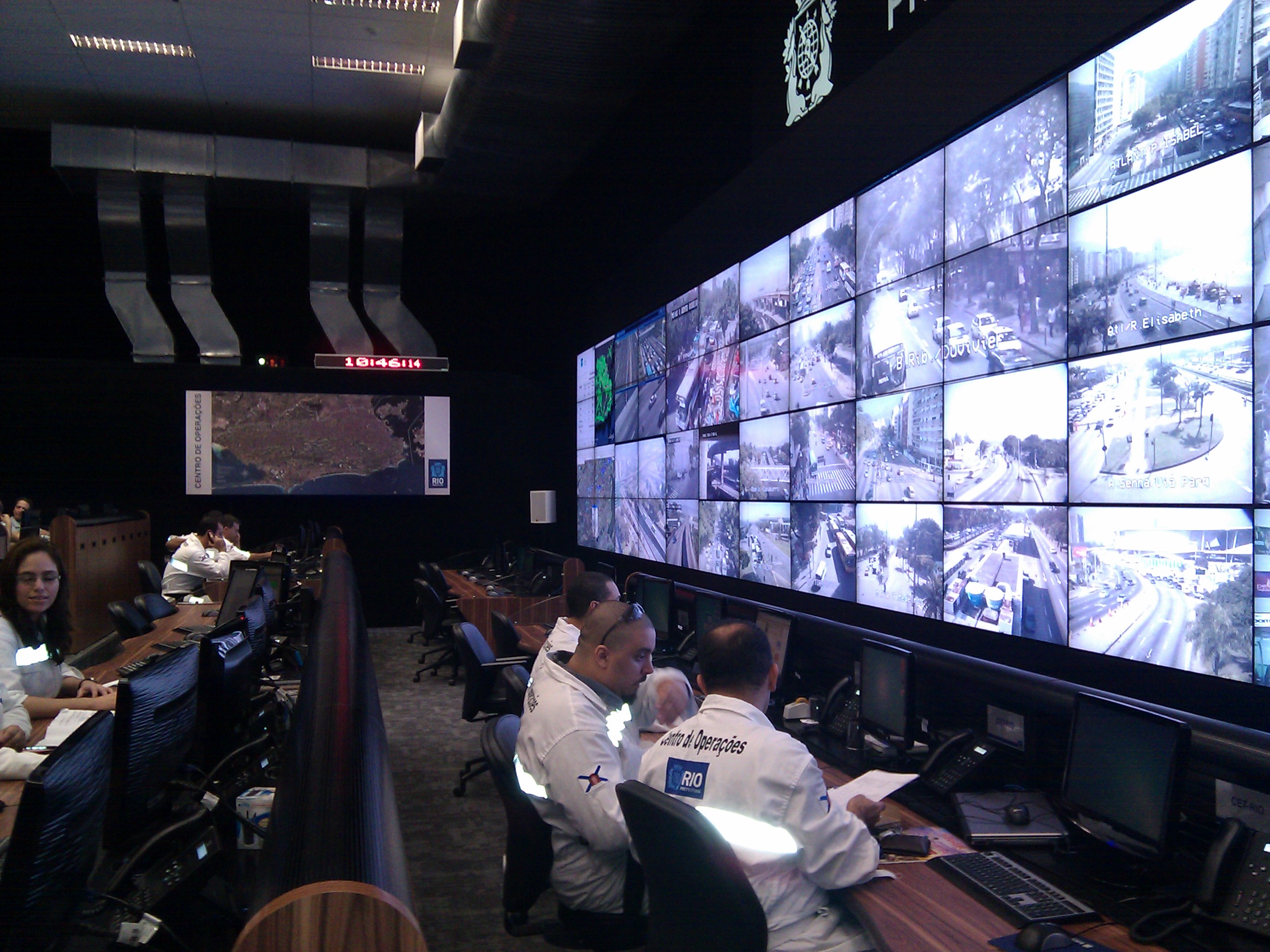
Mas a cidade também — com 110.000 servidores públicos e um orçamento por volta de R$ 20 bilhões– pode se orgulhar de algumas realizações bastante positivas sob sua administração. Através de sistemas desenvolvidos pela IBM e a Cisco, há seis meses inaugurou-se um novo Centro de Operações, no bairro de Cidade Nova. O Centro é um vários novos prédios governamentais que estão contribuindo à revitalização da área, conhecida historicamente pelas suas prostitutas e a proximidade ao Sambódromo (o “Nova” no nome do bairro remete ao começo do século XX, quando residentes pobres foram ali transferidos durante a reforma urbana Pereira Passos).

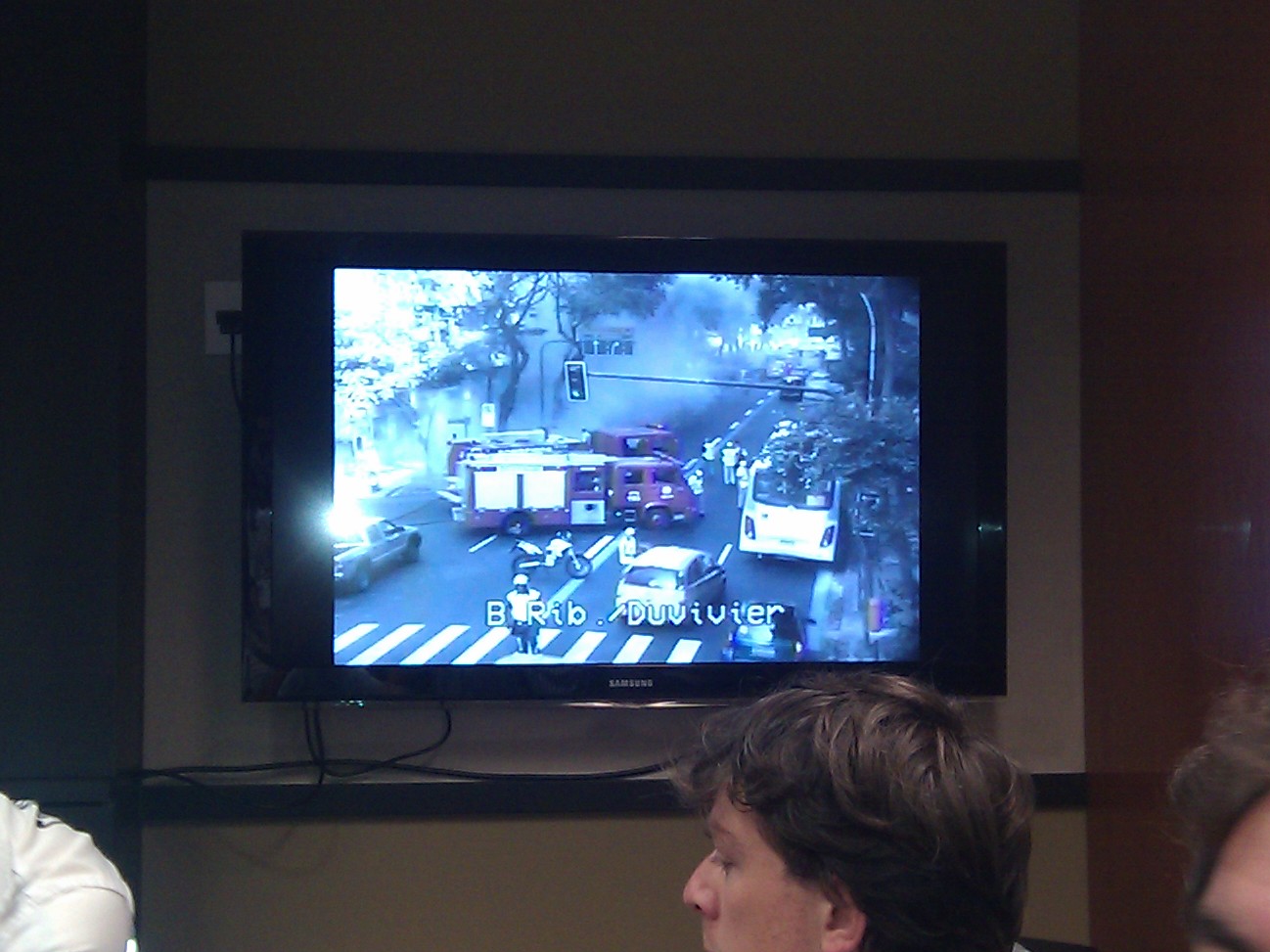
Carro pegando fogo em Copacabana

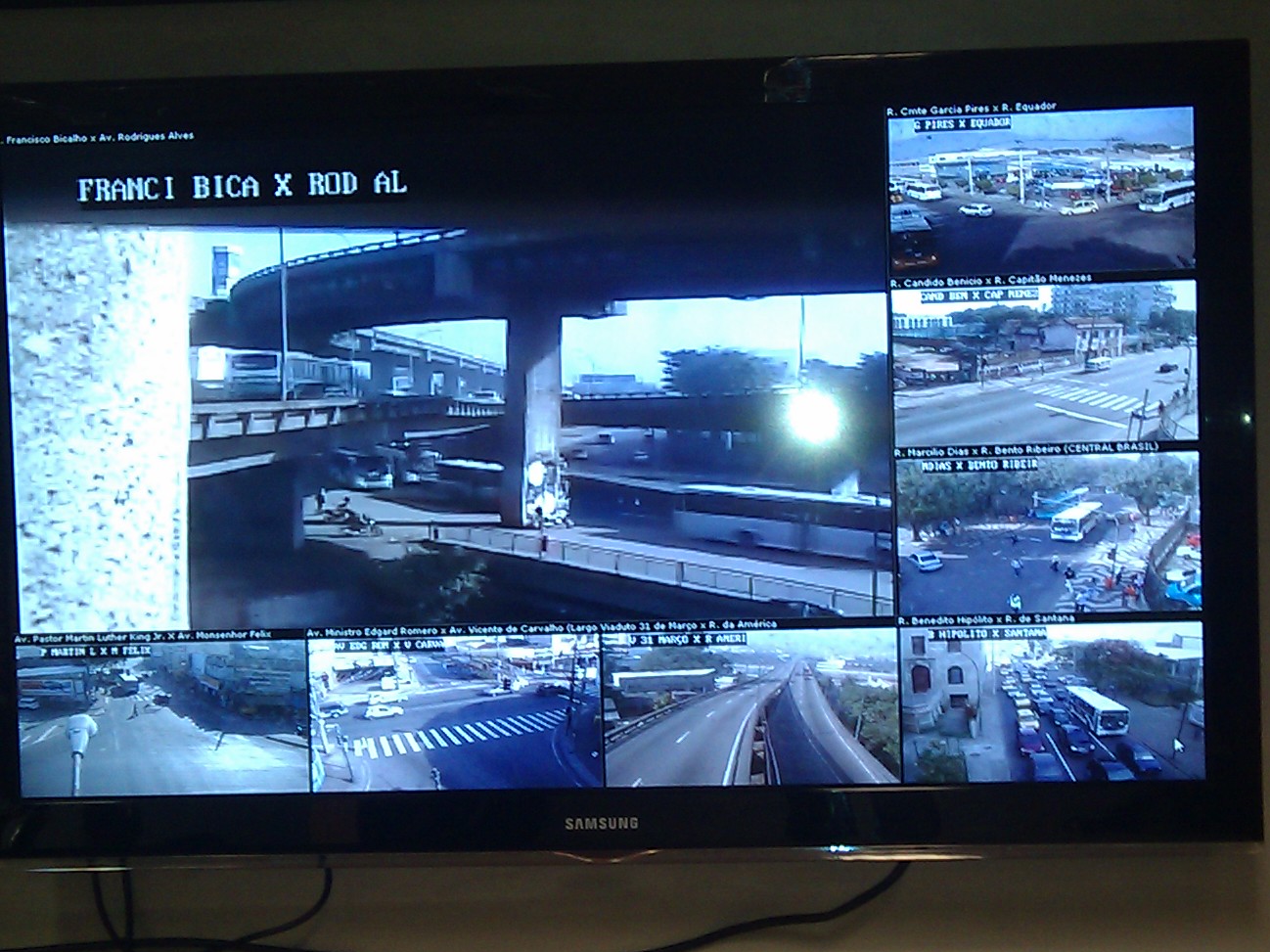
Uma visita na semana passada ao novo Centro de Operações trouxe à mente nada menos do que a NASA. Uma apresentação demonstrou como esse centro de informações congrega uma série de órgãos governamentais, para que lidem em conjunto com ocorrências do dia a dia, crises, e eventos de escala grande como o Reveillon e Carnaval. Além dos Jogos Olímpicos de 2016 e alguns jogos da Copa de 2014, o Rio também hospedará os Jogos Militares Mundiais neste mês, o  Rock in Rio em setembro e outubro, e, ano que vem, a reunião ambiental da ONU Rio + 20, entre 150 chefes de estado.

O Centro utiliza um novo sistema de previsão meteorológica para melhorar a resposta municipal às enchentes que afligem o Rio de Janeiro e que poderiam paralisar qualquer um desses eventos. Moradores de áreas de risco também estão sendo removidos e/ou treinados.

Antes, as órgãos municipais encontravam muita dificuldade para trabalharem juntos, planejar, criar metas, mensurar resultados, ou simplesmente compartilhar informações.

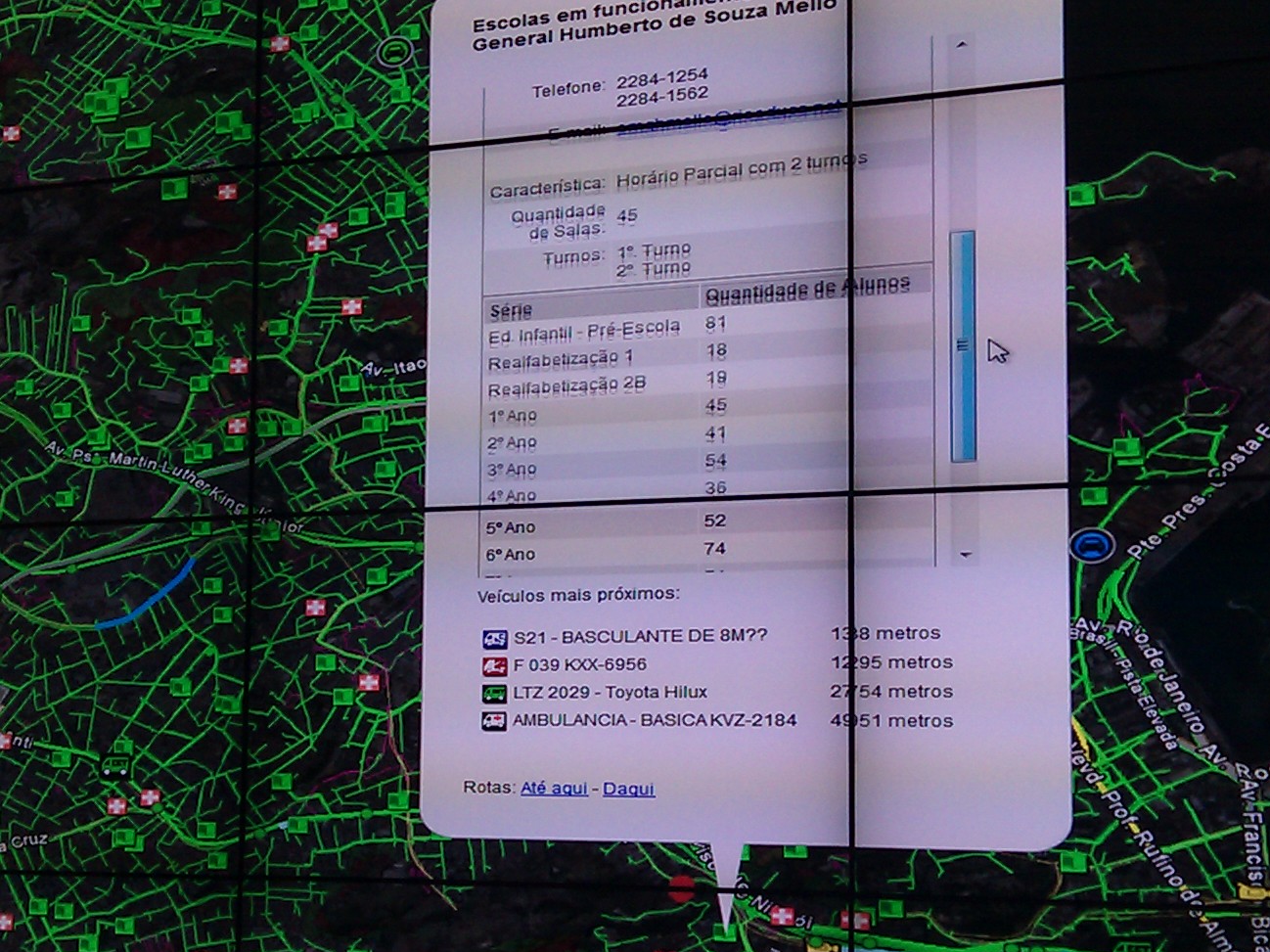
Grid elétrico e escolas, hospitais, veículos oficiais: tudo mapeado

No caso infeliz de acabar a luz em alguma parte da cidade, os administradores podem logo saber quais as escolas afetadas, e os nomes e números de telefone dos diretores– para então tomar as providências. A única crise até agora que surgiu depois da inauguração do Centro foi um ataque de tiros em abril passado, em uma escola pública de Realengo; o mapeamento de leitos e equipamentos hospitalares contribuiu para uma resposta rápida, dizem os técnicos.

Para acompanhar o dia a dia do Centro de Operações, é só seguir @OperacoesRio, no Twitter.

Guardas CET em ação em Copa, depois que os bombeiros apagaram o fogo

Antigamente, os cariocas tinham à disposição 67 números de telefone para reclamar de buracos, lixo, iluminação falha, e assim por diante. Ligavam raramente. Agora podem telefonar ou fazer o download de um application para entrar em contato com o novo call center 1746 (1-RIO) , e até enviar fotos. Logo, será também possível acessar as imagens de câmeras de rua, para se planejar os caminhos pela cidade.

De muitas formas, o Rio de Janeiro já chegou mesmo na era moderna. Talvez o que falte agora seja apenas um código de conduta– ou pelo menos um que os políticos reconheçam.

Enquanto isso não aconteça, temos aqui um vídeo oficial sobre o Centro de Operações.

Posted in Brasil, Brazil, Transformation of Rio de Janeiro / Transformação do Rio de Janeiro | Tagged , , , , , , , , , , , , , | Leave a comment

Where’s the governor?


Full steam ahead, despite the undertow

helicopter crash June 17 in Bahia serves to remind us just how hybrid –or schizophrenic, if you like– Brazilian politics can be.

Sometimes, it seems that Rio has arrived in the modern world of transparency, accountability, performance and merit, leaving behind the dominions of fiscal subterfuge, personal connection, favoritism and favor trading.

Under the leadership of Governor Sérgio Cabral, in March 2010 Rio de Janeiro state obtained investment grade rating from Standard & Poor by reducing bureaucracy, professionalizing tax collection and streamlining the state’s finances. With the 2008 implementation of Cabral’s “police pacification units” public safety policy, crime has fallen significantly and continues to drop. The governor is a dedicated ambassador of Rio’s interests at the federal level: a year ago, he wept over a vote by the lower house of congress to redistribute petroleum royalties that had heretofore been solely Rio’s. He’s also kept an open dialogue with city government.

Last month the Brazilian press at first headlined the death of Cabral’s son’s girlfriend, along with six others, in the helicopter crash of a group en route to a resort in southern Bahia. But it turned out later that the governor himself was part of the group, alive only because the helicopter couldn’t carry everyone in a single trip. And the composition of the group (as well as the loan of energy mogul Eike Batista’s jet to get to Bahia) laid bare Cabral’s friendship with people who have big business in Rio. And tax cuts.

This came in the midst of a long and angry strike by Rio state firemen, whom Cabral called “vandals” after several hundred of them occupied their headquarters . The strike has since been all but settled, with pay raises and the amnesty of about 400 arrested firemen.

After taking a week off (cariocas in the know say Cabral, reportedly separated from his wife, lost his own girlfriend in the crash), the governor said he’d been wrong to use the word “vandals” and that he’d like to help build an ethics code for himself. Unsuprisingly, there already is one.

More than good intentions

Maybe it doesn’t matter

For most Brazilians, Cabral’s behavior is no surprise. From past experience, they’ve learned to expect elected officials to wallow in conflict of interest. Still, given the current climate of crime reduction (plus increased perception of security) and booming investment, his constant travel and questionable associations may cast a longer shadow than the usual dodgy politics.

Or not. After all, this is just the start of Cabral’s second (and by law, last) term– to which he was elected in the first round of voting, thanks to increased security, with an overwhelming 66% of the total– and he has no declared political ambitions for the future.

No matter what’s up with the governor, life goes on. Many of his appointees are achieving results and thinking ahead, as this unpublished interview with State Public Safety Secretary José Mariano Beltrame indicates. The police must now bring crime down further, he said, with increased police presence, improved technology and training, and a continued fight against corruption.

“Rio de Janeiro’s problems are very big,” he told the Rio Como Vamos NGO, which tracks urban public policy performance. “There’s a lot of history. The problems have deep roots, and changing this isn’t a job for just one secretary, have no doubt. Maybe not even two. I believe that people were unable to imagine the concept of security, but now they perceive that there are some pillars: the UPP [police pacification unit] in more embattled areas, and the goals program for the Integrated Public Safety Regions [where civil and military police work together to bring down crime stats, and are held accountable for results]. I think these two axes are what are consolidating the drop in crime. People are starting to see these numbers, but I think above all they see there’s a public safety concept now.”

The new Operations Center

Governor Cabral’s municipal partner, mayor Eduardo Paes, also comes under attack from cariocas who doubt his integrity and particularly dislike his choque de ordem cleanup and removal tactics.

Operations Center in action

And yet the city too — with 110,000 public servants and a budget of about US$ 12.5 billion equivalent– boasts some very positive achievements under his aegis. Using systems developed by IBM and Cisco,  a new Operations Center opened six months ago in the Cidade Nova section of downtown Rio. It’s one of several government buildings that are helping to revitalize the area, traditionally known for its prostitutes and proximity to the Carnival parade’s Sambadrome (the “new” in the name Cidade Nova dates back to early 20th century, when poor residents were transferred there during Rio’s first urban renewal).

Car on fire in Copacabana

A visit last week to the new Centro de Operações brought nothing less than NASA to mind, as officials demonstrated how the information hub brings a gamut of government agencies together to deal with daily occurences, crises, and large-scale events such as New Year’s Eve and Carnival. In addition to the 2016 Olympic Games and some of the 2014 World Soccer Cup games, Rio will also host this month’s Military World Games, Rock in Rio this September and October, and next year, the Rio + 20 UN meeting among 150 heads of state.

The Center uses a brand-new weather forecasting system to improve municipal response to the tropical storms that plague Rio and could paralyze any of these events. Residents who live in risky areas are also being removed and/or trained.

Previously, it was difficult for city agencies to work in concert, plan, set goals, measure results, or simply share information.

Electric grid and schools, hospitals, official vehicles: all mapped

In the unfortunate event that the lights go out anywhere in the city, officials can now immediately access what schools are affected, plus the names and telephone numbers of their principals– and take adequate steps. The only crisis the new Center has dealt with so far was the April Realengo school shooting; mapped hospital beds and equipment speeded up response, technicians say.

To keep up with the goings-on of the Operations Center, anyone may follow @OperacoesRio, on Twitter.

Traffic guards in action in Copa, once the firemen were gone

Cariocas used to have 67 telephone numbers they could call–and rarely did– to report potholes, trash, darkened streetlamps, and the like. Now they can call or download an application to contact the new 1746 (1-RIO) call center, and even upload photos. Soon, they will also be able to access street cameras and plan transportation routes accordingly.

In so many ways, Rio truly has arrived in the modern age. Perhaps all that’s missing is a code of conduct– or at least one that politicians acknowledge.

Meanwhile, here’s an official video with English subtitles, about Rio’s Operations Center.

Posted in Brazil, Transformation of Rio de Janeiro / Transformação do Rio de Janeiro | Tagged , , , , , , , , , , , , , | 3 Comments

Drug traffickers don’t get away, says Public Safety Secretary Beltrame

Beltrame’s first Twitterview, translated into English

Leia aqui a entrevista do Secretário de Segurança Pública do Estado do Rio de Janeiro, José Mariano Beltrame, pelo Twitter, em português.

1) I’d like to know why the police haven’t been able to arrest the drug chiefs in the pacified favelas?

BELTRAME: “Last week we arrested ‘Playboy’ in the Complexo do Alemão favelas. In Cidade de Deus (City of God), we have so far arrested 576 criminals since the UPP was set up there. In Pavão-Pavãozinho, we got 125. These are a few examples.”

2) Is it possible to avoid the military police becoming “favela chiefs” in the pacified favelas?

BELTRAME: “The goal of the UPP is to return the territory to its rightful owners, the residents. When there is misconduct or abuse, officers are punished just as with any transgression of the law. But I’d like to point out to the citizenry that the UPP’s success depends on community participation, on information about misconduct. The channels for this are: police ombudsman’s office (3399-1199), the Internal Affairs Office (2332-6020) and the Disque-Denúncia hotline (2253-1177).”

3) What is the UPP budget for this year and how much has been spent on this policy from its start? 
BELTRAME – The 17 existing UPPs cost the state and the city of Rio de Janeiro a total of almost US$ 12 million equivalent. Another US$ 5 million have been drawn from [Eike Batista’s gas and oil company] OGX funding. I don’t know if you are aware, but the funds donated by OGX aren’t handed over to the state. We send a shopping list to the company, which makes the purchases and then donates the items to the state. So the company’s money doesn’t circulate in government coffers, nor those of the [Public Safety] Secretariat.  Our estimate is that the cost per hundred UPP police officers is US$ 3.8 million, equivalent.”

Secretary José Mariano Beltrame explained to tweeter @maricesario why the state decided on a strategy of advance public notice regarding police occupation prior to UPP installation:

“Our priority is the preservation of life, of the residents, this is why we give notice. Without a territory to dominate, the bandits lose power and then their capture is just a matter of time. But I repeat that community participation is essential, we need information,” said the Public Safety Secretary.
In answer to journalist Vitor Abdala, who writes blog Rio.40, and wanted to know how the state will be able to maintain the occupations that are part of the pacification policy, Beltrame said that “We are maintaining them, it’s possible and it’s being done. The state has not departed and won’t depart any pacified favela. [Civil] society should also be vigilant about keeping up the UPPs.” Abdala had two of his fifteen questions answered (the guy is a question machine and a strong critic of Rio’s public safety policy).

Abdala’s other question that Beltrame answered was about the reason for using four helicopters and armored vehicles, if the Secretary knew there would be no resistance in Mangueira [occupied last weekend, soon to have the 18th UPP]. The Secretary explained that “we expected an absence of resistance in Mangueira, but even so you can never be too careful. It’s because of this strategy that we haven’t had any resistance. We would rather work this way than have surprises”.

Posted in Brazil, Transformation of Rio de Janeiro / Transformação do Rio de Janeiro | Tagged , , , , , , , , , , | Leave a comment

O que pode estar no centro da greve dos bombeiros no Rio de Janeiro

For What might be at the heart of the firemen’s strike in Rio, click here.

“Mocinhos contra bandidos” não serve para pensar o noticiário

Devido à  história autoritária e aristocrática do Brasil, é provável que a maioria dos brasileiros já foi oprimida e vitimizada pelo chefe. É provável que a maioria dos brasileiros pensa em termos de “Nós” contra “Eles”. E que os trabalhadores de baixo escalão, no interesse da sobrevivência, tendem a se juntar para encontrar apoio. Nas fábricas, lojas e escritórios brasileiros, frequentemente valoriza-se a solidariedade acima da competição.

Notavelmente, o empregado que procura satisfazer o chefe é tachado de puxa-saco, um termo que remete aos soldados que puxavam a bagagem dos seus superiores militares.

(Num significativo contraste sociológico, o equivalente de língua inglesa, apple-polisher— polidor de maça– refere aos alunos que presenteavam suas professoras com maças, na esperança de conseguir notas boas.)

Portanto, quando um grupo de trabalhadores faz greve para melhores salários e condições de trabalho, é fácil tomar a decisão sobre como passar um fresquinho domingo de outono: claro que você deve amarrar uma fita vermelha no braço e sair para marchar em apoio daqueles valentes e sexy bombeiros e salva-vidas. A polícia militar e os professores estaduais do Rio já deram seu apoio ao movimento que surgiu no mês passado. Muitos cariocas mostraram simpatia no Facebook e com adesivos nos seus carros. Circulam emails, com links para sites como este.

O bandido é o governador Sérgio Cabral, que mandou o BOPE ao quartel geral dos bombeiros para tirar os grevistas (que haviam vandalizado o prédio) e seus familiares, inclusive uma esposa grávida, que abortou. Cabral estava implementando aumentos salariais progressivos, mas ainda não tirara os bombeiros cariocas do fim do ranking nacional de salários. E chamou os bombeiros de “vândalos“.

As intenções mais doces colocam em grave risco a virada atual do Rio de Janeiro.

Como queijo mussarela e pizza, é justamente o sentimento de solidariedade que atrai os políticos populistas aos eleitores. E populistas, que gostam muito de pizza, sobretudo quando tudo acaba nela, às vezes até são benéficos para com seus eleitorados. Mas o que geralmente energiza os caras que adoram uma multidão não é o bem maior, e sim a necessidade de manter e expandir sua capacidade de influenciar o povo.

A mídia brasileira já assinalou que a liderança dos bombeiros tem ambições políticas. Qual líder não tem? Nada errado aí.

Os bombeiros brasileiros, como a polícia, são militares. E como tal, eles podem portar armas. Isso sim é interessante. É para atirar nos incêndios? Nos incendiários? Saqueadores?

Os populistas contam com eleitores de mãos pedintes e de memória curta, pois esse tipo de político raramente se interessa em algo de prazo mais longo do que a próxima eleição. E é a sorte deles que poucos cariocas se lembrem de ter lido (ou talvez de ter feito a reportagem de) essa pequena notícia, em 2008.  Ou essa. Ou essa.

Então quem sabe as armas têm utilidade

As matérias antigas do jornal  O Globo lincadas acima, publicadas nos primeiros meses da política de segurança pública do governador Cabral, que  transformou o panorama carioca de crime e violência, contam que:

  • José Mariano Beltrame, o Secretário Estadual de Segurança Pública, tinha intenção de acabar com o direito dos bombeiros de portar armas fora do horário de serviço.
  • O propósito da medida era de reduzir o número de armas nas ruas e enfraquecer as milícias, que “contam cada vez mais com a participação de bombeiros”. De acordo com Beltrame, o jornal disse,  “15% dos servidores acusados de participação em milícias que estão sendo investigados pelo setor de inteligência da polícia são bombeiros”.
  • Pelo menos metade dos 25 mil bombeiros ativos e inativos no estado portam armas, mas não recebem treinamento sobre sua utilização.
  • “Especialistas destacam que os servidores fazem valer o direito facultativo de portar arma para garantir o trabalho de segurança clandestina, e muitos acabam envolvendo-se com milícias. A regulamentação proibindo o uso de armas fora do expediente seria uma forma de reduzir o poder de fogo das milícias. Apesar de reconhecer que bombeiros não são treinados para usar armas, a direção da Assinap anunciou que entrará na Justiça contra a regulamentação proposta pela Secretaria de Segurança Pública.”
  • O governador Sérgio Cabral apoiou plenamente a medida, e foi citado de tal maneira em O Globo. Em 2007, ele colocou os bombeiros no âmbito da Secretaria de Saúde, tirando-os da Secretaria de Segurança Pública. Cabral disse que era para enfatizar o papel dos bombeiros como provedores de saúde, mas os bombeiros dizem que era para não ter que empregar mais médicos, a salários mais altos.
  • Em 2008, o deputado federal Jair Bolsonaro, cujo eleitorado conservador é principalmente militares do estado do Rio, disse que iria contestar o proposto desarmamento dos bombeiros.

Estranhos companheiros

Um dos deputados estaduais que têm frequentado a escadaria da assembleia legislativa– junto com Bolsonaro– em defesa dos bombeiros e suas reivindações salariais, é Marcelo Freixo, representante de excelente reputação, que presidiu o CPI das milícias e inspirou uma personagem de Tropa de Elite 2 que trata da ameaça das milícias no Rio de Janeiro.
A transformação do Rio, que começou no primeiro mandato do Cabral em 2007, deve incomodar àqueles que estão acostumados à maneira antiga de fazer as coisas no Rio: conexões pessoais, favores, e a solidariedade do Nos contra Eles.
Mas as coisas estão mudando, e elas não são apenas as estatísticas de crime (daqui a pouco o blog fala das dúvidas recentes sobre os números) . Graças às políticas dos governos Lula e do Fernando Henrique Cardoso, milhões de brasileiros se juntaram à classe média. Isso se traduz em menos desigualdade e mais competição por empregos e educação, além de muita outra coisa. Significa que a solidariedade terá sempre menos cacife. Que resultados e mérito começam a ter mais valor do que quem você conhece. Que a informação vale mais do que armas. Que está na hora de ambos os lados reavaliar e redesenhar os relacionamentos trabalhistas.
Os cariocas  precisam se dar conta disso e se adaptarem às mudanças, logo. A confluência planetária que trouxe paz e abriu horizontes em tantos partes da cidade talvez não dure muito mais. A economia mundial ainda está frágil, e o governo federal– parceiro crucial– parece estar focado mais na sobrevivência do que na criação e implementação de políticas públicas. E, talvez de maior importância, surge o populismo agora, para ameaçar tudo que os governos estadual e municipal construíram com tanto esforço– e resultado– nos últimos quatro anos.
Cujo fim implicaria, se alguém precisar ser lembrado, mais lucro para as milícias e os narcotraficantes, mais empregos de segurança para policiais e bombeiros, mais vendas de armas… e, ah, sim, mais balas perdidas, homicídios e assaltos,  a queda vertiginosa de valores imobiliários, custos de seguro e segurança em alta, menos turismo, e bastante pizza, bem bem pegajosa.
Posted in Brasil, Transformation of Rio de Janeiro / Transformação do Rio de Janeiro | Tagged , , , , , , , , , , , | 2 Comments

What might be at the heart of the firemen’s strike in Rio

Good guys versus bad guys is never a useful way to think about current events

Given Brazil’s authoritarian and aristocratic history, it’s likely that most Brazilians have been oppressed and victimized by their employers. It’s likely that most Brazilians think in terms of “Us” versus “Them”. And that that lower-echelon workers, in the interest of their own survival, tend to band together for support. In the Brazilian workplace, solidarity often trumps competition.

Notably, the employee who curries favor with the boss is called a puxa-saco (bag-puller)  in Portuguese, a term deriving from the soldiers who pulled the baggage of their military superiors.

(In telling sociological contrast, the English-language equivalent, apple-polisher, refers to students giving apples to teachers, hoping for good grades.)

So when a group of workers go on strike for better labor conditions and wages, the decision of how to spend a cool fall Sunday is quite simple: of course you must tie on a red ribbon and go out marching in support of those selfless sexy firemen and lifeguards. Rio’s military police and teachers have given their support to the movement that cropped up last month, and many cariocas have shown their allegiance on Facebook and with bumper stickers. Emails circulate, with links to sites such as this one.

The bad guy is Governor Sérgio Cabral, who sent the military police elite squad into the central fire station to rout occupying strikers (after they vandalized the building), and their family members, including a pregnant wife who miscarried. Cabral was implementing a gradual pay raise scheme but had yet to lift Rio’s firemen off the bottom of the national ranking. He called the firemen “vandals“.

The sweetest of intentions may gravely jeopardize Rio de Janeiro’s ongoing turnaround.

Like mozzarella cheese and pizza, it is exactly the sentiment of mass solidarity that draws populist politicians to voters. And populists, who do love their pizza (per the saying in Portuguese that everything ends in pizza, i.e. impunity reins amid corruption) sometimes actually benefit their constituents. But what usually drives the guys who adore a crowd is not the greater good but the need to maintain and expand their sway over the populace.

The Brazilian media have pointed out that the firemen’s leaders have political ambitions. What leader doesn’t? Nothing wrong there.

Brazilian firemen, like the police, have military status. As such they bear arms. Now that’s interesting. So they can shoot fires? Arsonists? Looters?

Populists count on voters with open hands and short memories, for this kind of politician rarely takes interest in anything more long-term than the next election. Lucky for them, few cariocas recall having read (or perhaps even having written and reported) this bit of news, back in 2008.  Or this. Or this.

Militias, for those who associate the word with the admirable Minutemen of the American Revolutionary War, in Rio are paramilitary groups who extort shopkeepers and residents, mostly in the city’s West Zone. They’re involved in van transportation, bottled gas sales, real estate, and video gambling. They hurt and kill people. The Rio state government has been cracking down on militias, in addition to drug traffickers, as part of its occupy-and-pacify public safety policy.

So maybe they do use their guns, after all

The old Globo reports linked above, published in the early days of Governor Cabral’s public safety policy that has transformed Rio’s crime and violence panorama, say the following:

  • José Mariano Beltrame, the State Public Safety Secretary, intended to remove the Rio de Janeiro firemen’s right to carry weapons when off duty.
  • The purpose of this measure was to reduce the number of weapons on Rio streets and weaken the militias which dominate parts of the city, which “have an increasing number of firemen”. According to Beltrame, the paper said, “15% of all public servants accused of participating in militias that are being investigated by the police intelligence unit are firemen”.
  • At least half of the state’s active and inactive 25,000 firemen carry weapons but receive no weapons training.
  • “Specialists say that [the firemen] use their optional right to arms to be able to work [off-duty] as security guards, and many of them end up in militias. A norm prohibiting firearms would be a way to reduce militias’ firepower. Athough ASSINAP, the firemen’s and military police association, recognizes that firemen receive no weapons training, they plan to contest the norm in court.”
  • Governor Sérgio Cabral fully supported the measure, and was thus quoted in O Globo. He moved the firemen from the state department for public safety to the health department in 2007. Cabral said this was to emphasize the firemen’s role as purveyors of health (lifeguards in Rio are firemen), but the firemen claim he did this so as not to hire more doctors.
  • In 2008, congressman Jair Bolsonaro, whose  conservative constituency consists mainly of Rio-based members of the military, said he would contest Cabral’s move to disarm firemen.

Strange bedfellows

One of the state representatives who’s been standing on the capitol steps– together with Bolsonaro– in defense of the firemen and their wage demands, is the highly popular Marcelo Freixo, who presided over a militia investigation and was the basis for a character in the movie Elite Squad 2– which is about the huge threat that militias pose in Rio.
The transformation of Rio, which began with Cabral’s first term in 2007, must have brought discomfort to those accustomed to the old ways of doing things in Rio: personal connections, favors, and the solidarity of Us versus Them. But things are changing and not just the crime rate (more on recent doubts about the numbers, later). Thanks to the policies of Lula and Fernando Henrique Cardoso, millions have joined Brazil’s middle class. This means less inequality and more competition for jobs and education, among much else. It means that increasingly, solidarity will not get a person very far. That performance and merit begin to carry more weight than who you know. That information is more valuable than guns. That it’s time for both sides to reevaluate and rework labor relationships.
The faster cariocas become aware of and adapt to the many changes under way, the better. The planetary confluence that brought peace and widened horizons in so much of the city may not last much longer. The world economy is still shaky and the federal government– a key partner– seems to be focused on its survival more than policymaking or implementation. Last but not least, populism now threatens to bring down what the state and municipal governments have so painstakingly built up in the last four years.
The ruin of which would mean, in case anyone needs reminding, more profits for militia members and drug traffickers, more off-duty security jobs for police and firemen, more weapons sales… and oh, yes, more stray bullets, murders and robberies, plummeting real estate values, skyrocketing insurance and security costs, falling tourism, and lots of nice gooey pizza.
Posted in Brazil, Transformation of Rio de Janeiro / Transformação do Rio de Janeiro | Tagged , , , , , , , , , , , , | 6 Comments

Vamos discutir a relação

For Let’s talk about the relationship, click here

Sim, temos paz em casa. Mas onde está a atenção e o compromisso, onde estão os serviços urbanos? A dignidade dos cidadãos, diz o Secretário Estadual de de Segurança Pública, José Mariano Beltrame, é crucial- para que ele possa seguir em frente com a modernização da polícia carioca

O jornal O Globo hoje dedicou uma página inteira a uma entrevista com Beltrame, na qual ele lamentou o ritmo de investimento social nas comunidades pacificadas.

“Hoje, por exemplo, eu tenho policiais que, mesmo estando de serviço, dão aula de esportes”, disse Beltrame. ” […] Mas gostaria que o responsável por esse setor assumisse essa tarefa, me liberando dois ou três policias para exercerem a sua função”.

Com 17 comunidades já pacificadas, de um total de 300 mil moradores, o homem forte da segurança pública no Rio de Janeiro gostaria de focar logo na corrupção policial, e de investir em tecnologia e capacitação. Parece, porém, que o serviço “social” reduz o tempo disponível aos policiais para as tarefas do moderno policiamento comunitário, algo que os especialistas acreditam ser chave à integração urbana e à virada geral da cidade. O policiamento comunitário está no centro da bem-sucedida política de segurança pública praticada desde 2008, de ocupar e pacificar territórios até então dominado por criminosos.

“Já vi esse filme tantas vezes”, disse a bostoniana Liz Leeds, durante uma visita recente ao Rio de Janeiro. Desde os anos 60, Leeds, especialista em reforma policial, acompanha as muitas tentativas da cidade para reduzir a violência.

“Se o policiamento de orientação comunitária não se tornar uma política integrada da polícia em todo lugar, e não apenas em favelas, não irá se enraizar. Ainda há muita resistência. Se a capacitação não mudar de verdade, fugir desse treinamento muito militar e dessa atitude militar sobre o papel da polícia, a falta de respeito pelas comunidades e uma resultante falta de cooperação da parte delas continuarão sendo problema”.

Hora de focar em funções policiais

“Nada sobrevive só com segurança”- Beltrame, em O Globo

“Na Cidade de Deus vi lixão a céu aberto, porco e criança vivendo no mesmo ambiente, que parece Bangladesh. Há muita sujeira, muita desordem na questão habitacional. Fizeram uns conjuntinhos de qualidade muito baixa e entregaram aquilo à população, que hoje começa a fazer puxadinhos. Parece que ali não há ninguém fiscalizando. Aí o que acontece? Nesses lugares, a PM, através do capitão (comandante da UPP), se torna a presença física do Estado, 24 horas por dia. As pessoas vão lá no capitão reclamar do puxadinho, da van clandestina, do piloto de moto que faz transporte e não tem capacete. Isso desgasta o capitão, porque eles vão lá cobrar coisas que não são da competência da polícia”.

O Beltrame não éo único que se preocupa. No último dia 20 de maio, na favela Escondidinho de Santa Teresa, Keila Lima, doméstica desempregada de 43 anos, resmungava. Presente durante um fórum de líderes comunitários e agentes de serviços públicos e privados, ela estava descrente. “É teatro, não vai dar em nada, bem como eu pensei”, ela murmurava.

"Falaram, falaram e foram embora".

Lima disse que sua comunidade não dispõe de um presidente de associação de bairro que poderia comunicar as necessidades e queixas locais: alimentos, saúde, um posto policial, o som alto do vizinho, a canais de TV abertos (em vez de TV a cabo, o que é caro). Na condição de moradora, ela não se sentia à vontade de pegar o microfone do fórum, que fora organizado pela UPP Social.

Criada em 2010 pelo governador Sérgio Cabral, a UPP Social, encarregada de identificar necessidades sociais e coordenar a resposta de atores dos setores público e privado, realmente demorou para deslanchar. Por motivos tanto político como prático, no fim do ano passado o programa migrou do âmbito estadual ao governo municipal. O primeiro semestre de 2011 foi de planejamento e organização.

ONU-Habitat e UPP Social começam a trabalhar

Lima não sabia, – e pode ser que até o secretário Beltrame não saiba- mas o fórum do dia 20 iniciou uma fase nova, mais ativa. A UPP Social acabou de fazer uma parceria com o programa Habitat da ONU, para recrutar 60 profissionais que irão identificar necessidades sociais, intermediar serviços sociais e monitorar resultados em 30 comunidades pacificadas ainda neste ano – três por mês. Planeja-se trabalhar em mais comunidades a partir de 2012.

Uma líder comunitária, lista na mão

De acordo com o diretor da UPP Social José Marcelo Zacchi, a parceria de R$5 milhões paga o recrutamento e os salários de nove equipes. Oito equipes de cinco pessoas, cada uma responsável por de três a quatro comunidades pacificadas, irão se reunir com moradores, líderes, agentes de serviços públicos e políciais, para identificar necessidades. Em seguida coordenam a coordenação de atores públicos, ONGs e o setor privado, para atender essas necessidades. Monitoramento de resultados é a terceira fase do trabalho. Uma nona equipe de 20 irá administrar as outras oito equipes.

Diz Zacchi que em vez de resolver problemas dos moradores, os policiais irão preencher formulários para descrever queixas, e encaminhá-los para os responsáveis. A UPP Social, ele enfatiza, é uma espécie de hub, que se torna obsoleta por definição; as favelas pacificadas terão serviços nem melhores nem piores do que o resto da cidade. “Deixamos para trás a época em que [a favela] era zona proibida”, ele acrescenta.

É bem provável que o secretário Beltrame sabe disso tudo- e que a entrevista que ele deu ao Globo surgiu de um acúmulo de frustrações e impaciência.

Mas Beltrame, herói urbano que no ano passado ultrapassou os limites da própria função e  distribuiu presentes de Natal na recém-liberada Vila Cruzeiro, não está jogando a toalha- ele apenas quer ver mais compromisso, de todos.

Posted in Brasil, Transformation of Rio de Janeiro / Transformação do Rio de Janeiro | Tagged , , , , , , , , , , , , | Leave a comment

Let’s talk about the relationship

Yes, there’s peace in the house. But where’s the attention, the commitment, where are the services? Dignity for citizens, says State Public Safety Secretary José Mariano Beltrame, is key– so he can get on with his work of modernizing the Rio police

O Globo newspaper devoted a full page to an interview with Beltrame today, in which he bemoaned the slow pace of social investment in pacified communities.

“Today I have police officers who coach sports while on duty,” Beltrame said. “I’d like whoever is responsible for this area to take on this task, freeing up two or three officers for their duties.”

With 17 pacified communities of 300,000 residents under his belt, Rio’s top public safety administrator wants to focus next on police corruption, and invest in technology and training. But it would seem that social work eats into police time for the tasks of modern community policing, something experts say is crucial to the city’s continued integration and turnaround. Community policing is at the heart of Rio’s 2008 successful occupy-and-pacify public safety policy.

“I’ve seen this movie so many times,” said Bostonian Liz Leeds, during a recent visit to Rio de Janeiro. Leeds, a police reform  specialist, has tracked the city’s many attempts to reduce violence since the 1960s.

“If community-oriented policing doesn’t become an integrated policy of the police across the board, not just in favelas, it will ultimately not take hold. There’s still a lot of resistance. Until the training really changes to get away from a very militaristic training and viewpoint of what the police are really about, disrespect toward communities and thus a lack of cooperation from those communities will remain a problem.”

Time to focus on police duties

“Nothing survives on safety alone”– Beltrame, in O Globo

“In Cidade de Deus I saw an open-air dump, pigs and children living in the same environment,” Secretary Beltrame told the newspaper. “It looks like Bangladesh. There’s filth, there’s disorder when it comes to housing. They built low-quality housing and handed it over to people, who then put on additions. It seems there’s no followup. So what happens? In these places, the military police, by way of the captain (pacification unit commander) becomes the physical presence of the State, 24 hours a day. People go to the captain to complain about the addition, the unlicensed van transport, the motorcycle taxi driver who has no helmets. This wears the captain out, because they go to ask for things that are not within police purview.”

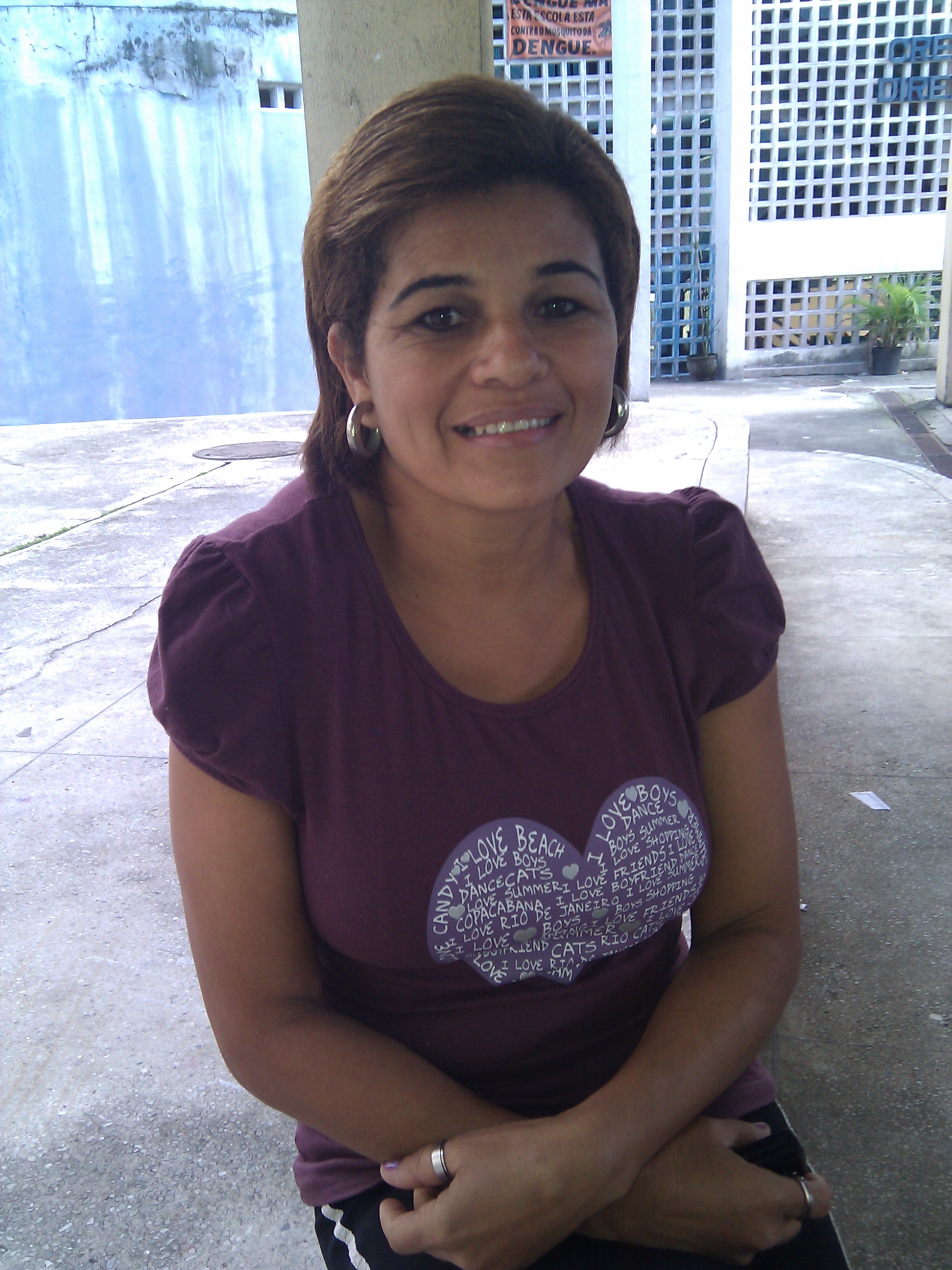
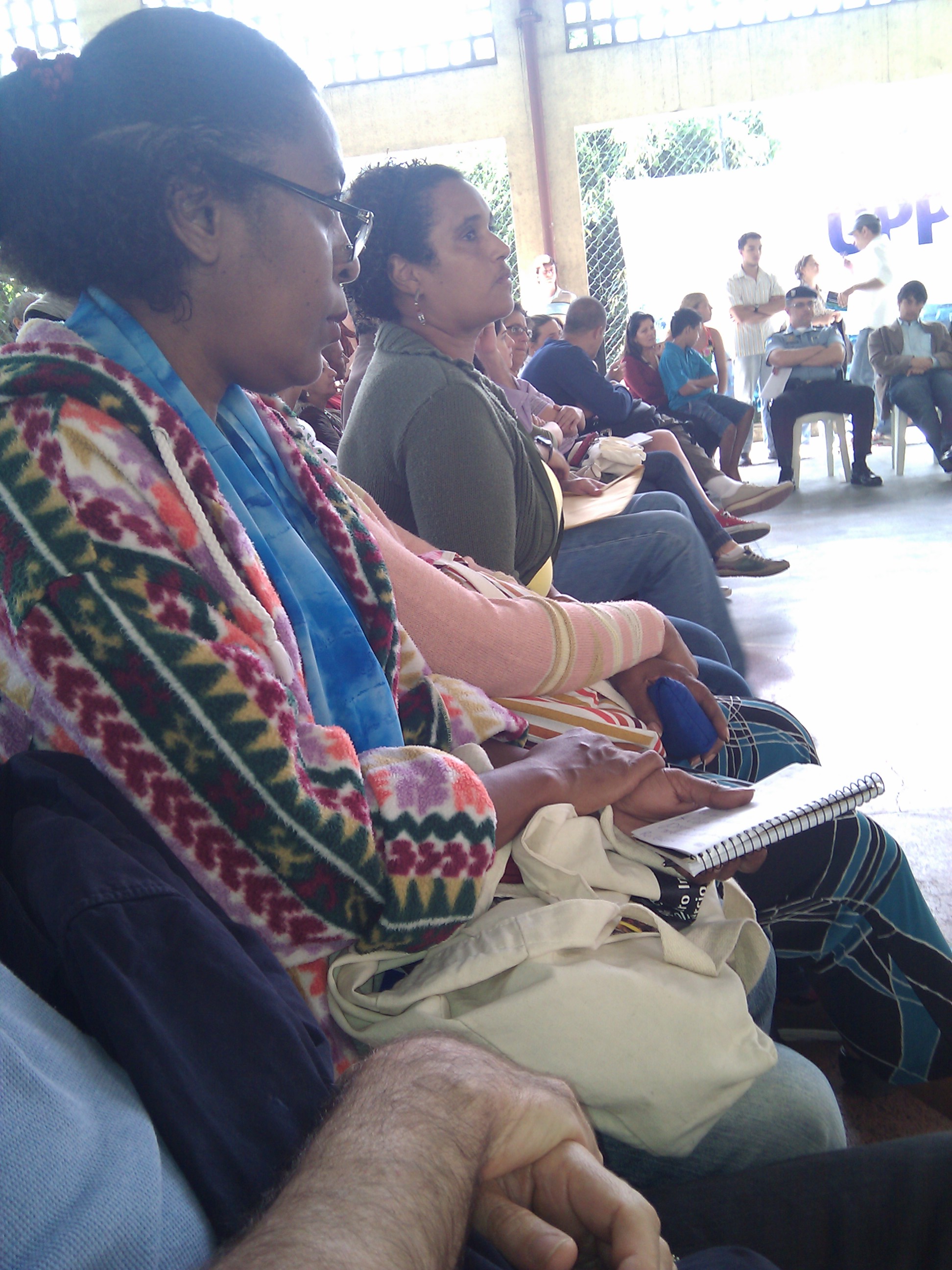
Beltrame is not alone in his concern. On May 20 in the Escondidinho favela of Santa Teresa, Keila Lima, a 43-year-old unemployed former maid, muttered her way through most of a forum of community leaders and social service providers. “It’s theater, it’ll come to nothing, just as I thought,” she grumbled.

“They talked and talked and then they left.”

Lima said her community has no neighborhood association president to voice local needs and complaints: food, health, a police outpost, loud music, and open television reception (instead of expensive cable). As a mere resident she didn’t feel comfortable taking up a microphone in the forum, which was held by the Social UPP.

Created in 2010 by Governor Sérgio Cabral, the Social UPP, responsible for identifying social needs and coordinating public and private actors to meet those needs, has indeed been slow to act. For both political and practical reasons, the program was moved from the state to the municipal level of government late last year. The first semester of 2011 has been dedicated to planning and organization.

UN Habitat and Social UPP roll up sleeves, at last

Lima didn’t know it– and maybe even Secretary Beltrame didn’t know it– but the May 20 forum kicked off a new, more active phase. The Social UPP has just partnered with the UN Habitat program to hire 60 people to identify social needs, intermediate social services and monitor performance in 30 pacified communities this year– three per month. Additional communities will be served in coming years.

A community leader, list in hand

According to Social UPP director José Marcelo Zacchi, the US$3 million equivalent partnership funds the formation and salaries of 9 teams. Eight five-person teams, each one responsible for 3-4 pacified communities, will walk alleyways and meet with residents, leaders, local social service providers, and police, to identify needs. They will then coordinate public agencies, NGOs and the private sector to meet those needs. Performance monitoring is the third phase of their work. A ninth team of 20 people will manage the other eight teams.

Zacchi says that instead of solving residents’ problems themselves, police will fill out forms describing complaints, which will be sent on to the responsible agency. The Social UPP, he underscores, is like a hub, and meant to become obsolete; pacified favelas will get services no better nor worse than the rest of the city. “We will leave behind the era when they were off-limits,” he adds.

Most likely Secretary Beltrame knows all this– and the interview he gave to O Globo arose from an accumulation of frustration and impatience.

But Beltrame, an urban hero who himself went beyond the call of duty and gave out gifts last Christmas in a newly-liberated favela, isn’t quitting– he just wants to see more involvement.

Posted in Brazil, Transformation of Rio de Janeiro / Transformação do Rio de Janeiro | Tagged , , , , , , , , , , , , | 3 Comments

Rio: a nova Veneza?

For Rio: the new Venice? click here

A sustentabilidade requer política

A areia da praia do Arpoador começou a sumir no verão passado, bem antes do encolhimento sazonal de inverno. Os vendedores de salgadinhos e cerveja, permissionários do município para trabalhar em um local sumido, demandavam um novo ponto.

Não se sabe se conseguiram, mas na era de aquecimento global o Rio de Janeiro certamente terá que lidar com esse tipo de problema, e com muitos de maior gravidade, no futuro próximo.

“O mínimo vai subir”, disse o economista Sérgio Besserman durante um debate recente do grupo Rio de Encontros , “e isso quer dizer que a dengue vai crescer, porque não teremos as temperaturas baixas para matar os mosquitos. Teremos mais leptospirose, por causa de enchentes, e o índice de mortes pelo calor vai crescer. Vai chover mais forte e vai chover mais forte mais vezes”.

Nuvens carregadas no litoral carioca

Qualquer carioca dirá que  o futuro que Besserman descreve já chegou; tanto a vida como a topografia urbana se pontuam pelos dias em que as enchentes paralisam a cidade.

“O Rio de Janeiro é a maior metrópole litorânea do Brasil”, disse o geográfo Paulo Gusmão, que fez uma apresentação no mesmo evento. “É um polo de petróleo e gás, com uma população regional de 11,5 milhões. O risco é rotina. Não há uma entidade metropolitana para pensar isso e se planejar para ele. Como as cidades contíguas competem por recursos, a cooperação entre elas não é provável”.

As indústrias de petroquímica e aço se encontram nas baixadas cariocas -áreas de risco- com cerca de R$ 93 bilhões já investidos em seus projetos. Gusmão disse que terão que lidar com enchentes.

Boas ondas

Neste momento mágico para o Rio de Janeiro, não se fala muito sobre meio ambiente. Poderia-se dizer que a Cinderela está focada em achar uma bolsa que combine com o sapato de cristal, enquanto ela e o príncipe deveriam estar calculando o transbordamento da fossa.

Aproveitando o mau tempo

“Os holandeses vão fazer propaganda dizendo ‘Vocês estão precisando de uma coisa que a gente sabe fazer,'”, disse Besserman . Toda obra terá que levar isso em conta, gastando dez, vinte, trinta por cento a mais porque o nível do mar vai subir.

Poucas pessoas estão pensando a vocação energética da cidade, tampouco. Como se a economia global fosse continuar a se alimentar sempre de combustíveis fósseis, os governos e a mídia tendem a se concentrar em novas descobertas de petróleo e em um debate que começou no ano passado, sobre a permanência ou não dos royalties de petróleo no estado. Mas o quadro já mudou.

Um futuro inteligente?

O potencial do Rio é o ponto principal de um ensaio imprescindível no livro recém-publicado Rio: a hora da virada, organizado por economistas André Urani e Fabio Giambiagi  (o livro inteiro é leitura obrigatória para quem quer entender o que está acontecendo no Rio e quais são os desafios em todas as esferas da existência urbana).

“Há um novo deslocamento do centro dinâmico. O dinamismo da economia brasileira, para além dos fatores conjunturais, dependerá de sua capacidade de enfrentar a mais ampla e acelerada transição tecnológica da história econômica: aquela que irá levar as sociedades desenvolvidas do planeta da civilização dos combustíveis fósseis  à economia de baixo teor de carbono nas próximas décadas”, escrevem Sérgio Besserman, Rodrigo Rosa e Clarissa Lins em Sustentabilidade é competividade: para o Rio e para o Brasil.

Os autores afirmam que a cidade do Rio de Janeiro está muito bem posicionada na conjuntura dessa transição global: “[…] no mundo e no Brasil existem cidades mais avançadas do que o Rio de Janeiro em políticas e práticas sustentáveis. Mas não há cidade com 6,2 milhões de habitantes, cerca de 12 milhões na sua região metropolitana, vasto espaço construído e com três grandes florestas urbanas, duas grandes baías, um sistema lagunar e um extenso e oceânico litoral”, ressalta o ensaio. Não é por acaso que em 2012 o Rio de Janeiro, eles acrescentam, será anfitrião da Conferência das Nações Unidas sobre Desenvolvimento Sustentável, a Rio+20,U.N. , que dará seguimento à ECO-92, também acolhida aqui.

Um estudo da Economist Intelligence Unit, patrocinado pela Siemens, coloca o Rio entre as cidades mais verdes da América Latina, quando elencadas por sustentabilidade ambiental.

Saneamento falho agora, -- mas daqui a alguns anos essa favela pode virar o pedaço mais chique da cidade

“Há razões muito fortes para que a agenda da sustentabilidade seja um dos eixos, senão o principal eixo, das grandes transformações pelas quais a cidade do Rio de Janeiro está passando”, dizem Besserman, Rossa e Lins. Com a ajuda do setor privado, a cidade já definiu uma meta de emissões de gases do efeito estufa, está expandindo o sistema de transportes públicos, trocou o antigo aterro sanitário de Gramacho por um novo, de tecnologia avançada, em Seropédica, e está efetuando a limpeza da Lagoa Rodrigo de Freitas e da baía de Guanabara.

Ainda falta muito. De acordo com o ensaio, um modelo novo de desenvolvimento sustentável e de governança é um projeto de alta prioridade. Em apenas 30% dos domicílios existe saneamento público. Precisa-se de educação ambiental para ajudar a mudar os hábitos dos cidadãos. O programa de urbanização de favelas Morar Carioca poderia incorporar painéis de energia solar e a reutilização de água da chuva. Os reguladores precisam de ferramentas melhores para medir custos ambientais e sociais, o setor privado deve ser induzido a contribuir mais com a cidade, e deve haver uma maior participação comunitária na elaboração e implementação de políticas públicas.

De olho na zona oeste

A grande preocupação desses e outros ambientalistas é o desenvolvimento que ocorre nos entornos e dentro da baía de Sepetiba, na zona oeste.  O ensaio sugere um modelo de governança baseado na criação de uma poderosa agência apartidária e técnica, para ajudar na formulação de metas e na monitoração de desempenho dos que utilizam a costa e as águas da baía.

E ao menos um ambientalista, o sociólogo e cientista político Sérgio Abranches, que também fez uma apresentação no debate Rio de Encontros, acha necessária uma avaliação mais radical da vocação do Rio de Janeiro. O foco atual em aço e petróleo leva ao retrocesso, diz ele; o futuro não está num retrovisor que reflete os chaminés industriais dos anos 50, e sim à frente, nas atividades baseadas em conhecimento, tais como os biocombustíveis, a nanotecnologia e a neurociência.

Dar uma guinada em direção ao futuro talvez seja a tarefa mais difícil de todas para o Rio de Janeiro. “É preciso valorizar o conhecimento”, disse Besserman. “As pessoas pensam que o problema no Brasil é o acesso à educação, dos pobres. Mas nós, a elite, não temos valorizado o conhecimento porque nunca precisamos dele para competir”.

Os cariocas devem deixar de utilizar sacos de plástico e andar mais de bicicleta, para ajudar o Rio a se tornar mais sustentável? Sim, disse Besserman. Mas precisamos também nos envolver mais- de “fazer política com P maiúsculo”.

Posted in Brasil, Transformation of Rio de Janeiro / Transformação do Rio de Janeiro | Tagged , , , , , , , , , , , , | 1 Comment