Rio violence: does Mayor Bloomberg get his own coffee?

The  unexpected occupation of  Complexo do Alemão and Vila  Cruzeiro unearths more than weapons, drugs and bandits.

After a week of violence, fear and uncertainty, this past Monday Rio de Janeiro had calmed down enough for an emotional thank-you from mayor’s Eduardo Paes’  waiter to state public safety secretary José Mariano Beltrame. Gyleno dos Santos, age 73, commented that morning to the mayor that for the first time in his life he’d set out for work unafraid, now that the Complexo do Alemão favelas had been “taken” from drug traffickers by police and army troops, and that he’d like to thank the man responsible. By chance, Beltrame was expected for lunch at the City Palace.

“At lunch, Gyleno asked for a moment and hugged Beltrame,” Paes told O Globo. “He was moved to tears. If you know Beltrame, you know he’s a strange fellow. He doesn’t laugh or cry. He’s got that closed expression of someone totally focused on work. Gyleno expressed everybody’s sentiments.”

In the story’s accompanying picture, Gyleno poses holding a tray of water glasses, wearing a gold-buttoned white jacket with a Nehru collar, one arm behind his back.

Now look at the picture accompanying this October 2010 New York magazine article about New York mayor Michael Bloomberg’s cubicled workspace for 52 people. Would a white-jacketed fellow manage to flit around in there with trays of coffee, tea and water, the way waiters and the traditional coffee ladies do in the Brazilian workplace? RioRealblog so far hasn’t managed to discover if Bloomberg has a waiter, hug-distributing or not, but a Brazilian who recently showed her Manhattan apartment to Bloomberg says the Big Apple turned up alone to see it, tape measure in hand. “He didn’t even bring an architect,” she marvels.

Separate and unequal

On Wednesday, secretary Beltrame and other public safety officials visited the liberated complex of favelas wearing the official shirts of their favorite soccer teams, in an evident bid to reduce the socioeconomic gulf between people like Gyleno — who actually doesn’t live in the Complexo, just near enough to be terrified– and themselves. With four good-sized teams in their city, cariocas often begin a relationship with a new person by asking which team he roots for, then building on similarities or differences by joking around just enough for both people to get comfortable.

That gulf is the root of all evil; as its dangerous toll climbs and Brazilians travel more and experience more egalitarian cultures, they’re becoming more critical of it and are in some cases (see the video inserted in this earlier post, if you haven’t already) working to overcome it. Even as Rio’s public safety policy surges forward in an ever-positive environment– yesterday governor Sérgio Cabral said he and Beltrame are working to present a proposal in  Brasília to change the constitution to unify the military and civil police forces and make other needed changes– anthropologist Alba Zaluar noted this week in a presentation at the Casa de Rui Barbosa that military policemen and officials eat in separate dining areas, underlining hierarchy and blocking needed communication. Such differentiation is rare in large Brazilian organizations and multinational businesses that are in constant contact with practices abroad, but this legacy of slavery is quite common otherwise.

Social stratification extends even to carioca transportation, which mayor Paes is also trying to sort out before the 2016 Olympics begin. Standing on the sidewalk along the beach with the aim of climbing aboard a vehicle headed downtown calls to mind the famous Burger King Have it Your Way slogan: you can take a mini-van for 5 reais, a cheap and rickety illegal “pirate” bus with no airco for 2 reais, a legal bus with no air conditioning for R$2.40, a bus with air conditioning and regular seats for 3 reais, a frescão bus with air-conditioning and comfy seats for R$4.50, or a comum yellow and blue taxi for about 25 reais. Or you can plan ahead and call a comum radio taxi, a fancy radio taxi, or hire a driver at your hotel. Those who ride the pirate bus are likely to have never hopped into a frescão, and vice-versa.

Shortening the ladders of everyday life is of course not at all easy. Mayor Paes isn’t about to fire Gyleno, who’s worked at the City Palace since 1982. Soccer shirts are a start; officials have also signaled their recognition of real human need by moving quickly to clean up the streets of the Complexo and bring in social services, while police and the army conduct a house-to-house search for bandits, weapons and drugs that will last months. Several TV personalities broadcast directly from the area this week, and today even a few Brazilian tourists appeared in a place that no one had ever sought to visit.

For how long will the Complexo do Alemão and Vila Cruzeiro stay on the map? Many of its drug traffickers got away, apparently through sewage pipes, and they could pop up again. So many other poor communities demand government attention. And cariocas know from their long experience with Carnival, when mostly poor blacks dress up as 18th-century nobles in the commissão de frente section to present each samba school in the parade, that on Ash Wednesday, coaches turn back into pumpkins.

It’s still who you know

Gyleno got it right. Beltrame, 53, is a local hero due much thanks, though he’s originally from the southern state of Rio Grande do Sul, having come up the ranks of the federal police corps. But his behavior brings to light a worrisome characteristic of Brazilian policymakers.

Asked in this O Globo interview about how his team prepared the invasion of Vila Cruzeiro and Complexo do Alemão, Beltrame said he was able to get help from the federal police because “it’s my house”,  and mentions the Rio branch  federal police chief by his first name, Ângelo, with the same degree of familiarity that the mayor used in speaking of his waiter.

So, Ângelo and José Mariano root for the same team?

Better than Wikileaks, maybe

It’s clear to all that the main impetus for Rio’s UPP favela pacification program, which now covers 13 key favelas and will extend as soon as possible to what have become the city’s two most famous communities, are the upcoming international sports events. For the first time, the whole world is watching Rio de Janeiro; cariocas want to fazer bonito, to look good.

And one healthy new element in Brazil’s tradition-laden social equation– technology– is also allowing cariocas to watch each other and track behavior, for the first time, on Twitter, YouTube, news sites, and in the ever-more-realtime-internet-linked broadcast media. Here in fact is a video of a weeping Vila Cruzeiro resident accusing police of having trashed his home; news reports said they also robbed a large quantity of cash he had saved up.

Asked by a Complexo local in an email (favelas have cyber cafés for those who don’t own a computer) if residents can video police as they conduct their house-to-house searches, governor Sérgio Cabral said “Of course; residents have the right to video police work in their own homes, in this technological world”. Just in case, the military police has just banned its men from carrying backpacks, in response to dozens of accusations now under investigation.

Posted in Transformation of Rio de Janeiro / Transformação do Rio de Janeiro | Tagged , , , , , , , , , , , , , , , , | 2 Comments

War in Rio Roundup #2

[UPDATED DEC. 1, with links below to suggested reading] Schools reopened, faucets were robbed, and narcos were tracked into drainage pipes; shooting overnight in Água Santa, between druglords and militia members; shots heard in Complexo do Alemão as well. Two hundred public health workers began mapping families’ needs and started work to prevent dengue fever.

On Nov. 30, 31 municipal schools in the north zone areas of Vila Cruzeiro and Complexo do Alemão reopened, while soldiers and police continued to surround the favelas and carry out  house-to-house searches for criminals, weapons and drugs. According to O Globo, so far 123 suspects have been arrested, while 42 tons of marijuana and 300 kilos of cocaine, plus a great deal of cash, weapons and vehicles have been found.

Residents complained that police have mistreated them, damaged their homes, and in some cases, robbed them. Police officials set up an office to process these claims, say they’re following up on accusations and that punishment will occur as necessary. Residents swam in the pools and looted the luxurious homes of the absent drug-traffickers; one house was flooded because neighbors yanked off all the faucets. Cariocas are also calling the police hotline in unprecedented numbers– since Nov. 20, 3,630 calls came in regarding the two recently-occupied favelas. And this intelligence is being utilized efficiently, according to O Globo, which reports last week’s creation of a task force that represents a historic integration of military representatives and law enforcement agencies at the federal, state and municipal levels of government.

The authorities are also following up on information that many of the estimated 600 local narcotraffickers may have escaped through rainwater drainage pipes recently built under the federal government’s PAC, or accelerated growth program. TV Globo and other media reported on rumors that PAC workers had in fact been paid or pressured to add a getaway network onto the original pipes, which run two kilometers under the Complexo do Alemão and end at a major avenue.

Officials estimate that the drug traffic has suffered a US$ 60 million equivalent loss with the exodus from the Complexo do Alemão, where so much was left behind.

In a presentation Nov. 30 at the Casa de Rui Barbosa, anthropologist Alba Zaluar, who’s been researching Rio’s favelas for over 30 years, said that the region functioned as a kind of warehouse for weapons and drugs in Rio de Janeiro. The two recently “retaken” areas and others nearby came to be dominated by the drug traffic, she said, because of their proximity to Rio’s main points of entry: Avenida Brasil, the port and the airport. This is why the west zone was left for militias to expand, starting in the middle of the past decade.

Zaluar also mentioned that military policemen and their officials suffer from poor communication; they eat in separate dining facilities–  a reflection of Brazil’s hierarchical society that led to the creation of favelas in the first place.

O Globo reports that the army may stay at the Complexo do Alemão for seven months, until a police pacification unit (UPP) is installed there.

For more, see:

  • Stunning pictures taken in the last few days at the Complexo do Alemão
  • Twitcam interview published Nov 30 in O Globo, with state public safety secretary José Mariano Beltrame, in which he says he believes that narcotraffickers escaped by way of newly-installed sewage pipes, that the plan was to go into the Complex in a year or so but had to be moved up because of the vehicle torching, that military police salaries will rise 70% over the next four years, and that Brazilians should pressure the federal government to crack down on arms and drugs coming in over the borders with Bolivia and Paraguay.
  • Economic columnist Miriam Leitão, in O Globo Nov. 30, on the “day after”, in which she suggests that the federal government monitor suspicious banking transactions more closely, as part of efforts to crack down on the drug trade.
  • Long but useful blog post by police expert Luiz Eduardo Soares
  • Thought-provoking Asia Times analysis by São Paulo-based Pepe Escobar, where the “big picture” points towards the global drug trade: “Now, with Brazil collectively engaged in a major drive to become an essential global player, there seems to be a consensus that the time is right to start tackling the big picture. It will be a long and winding road, full of treacherous, slum-dwelling alleyways, before the 2014 Football World Cup and the 2016 Summer Olympic Games – where Rio will be the superstar. So cleaning up is a must.”
  • Excellent post by a gringa blogger who was in Rio for a wedding, about what last week felt like.
  • Another interview with state public safety secretary José Mariano Beltrame, in Globo, about how his team prepared the invasion of Vila Cruzeiro and Complexo do Alemão. Notably, he says he was able to get help from the federal police because “it’s my house”; and he calls the Rio chief of the federal police by his first name. Beltrame worked for the federal police for many years. Personal contacts… are everything.
  • Listing in Extra from civil police stats of all arrests and aprehensions to date in Vila  Cruzeiro and Complexo do Alemão


Posted in Transformation of Rio de Janeiro / Transformação do Rio de Janeiro | Tagged | Leave a comment

Rio opens doors long kept shut / Abrem-se portas cariocas, após décadas

It used to be that the more money you had, the more you shut yourself off from the rest of society in Brazil. This is what many Rio de Janeiro restaurants looked like until around 2008.

Antigamente, quem tinha mais recursos era quem mais se isolava do restante da sociedade brasileira. Até por volta de 2008, esta era a cara de muitos restaurantes cariocas.

The good life, behind closed doors

Street life did exist, but was mostly restricted to working-class neighborhoods, bars and choperias– and the ever-present street market.

Havia vida nas ruas, mas era bastante restrita a bairros de classe operária, bares e choperias − e à tradicional feira.

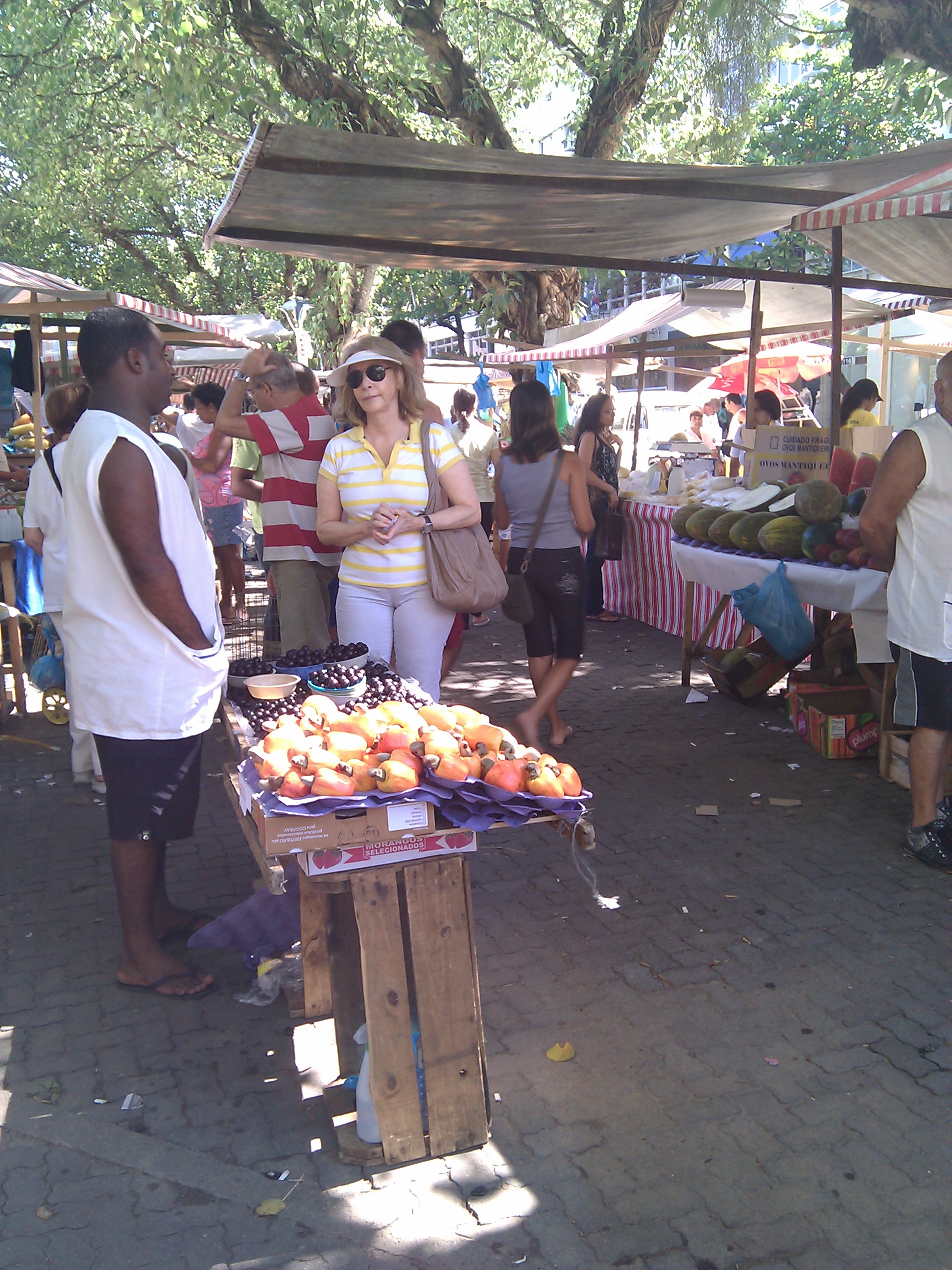
Here you could always eat a pastel or try a slice of fruit

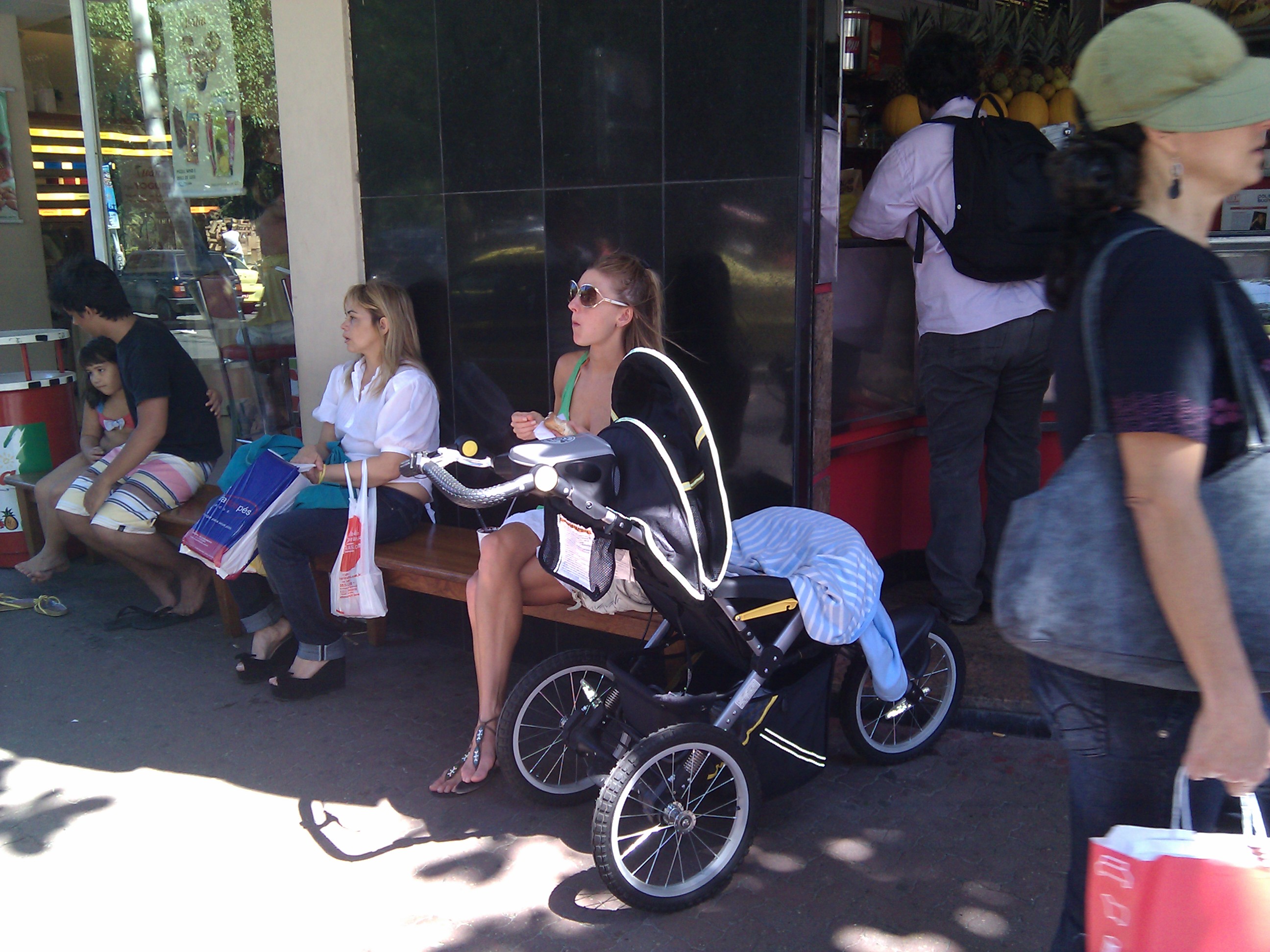
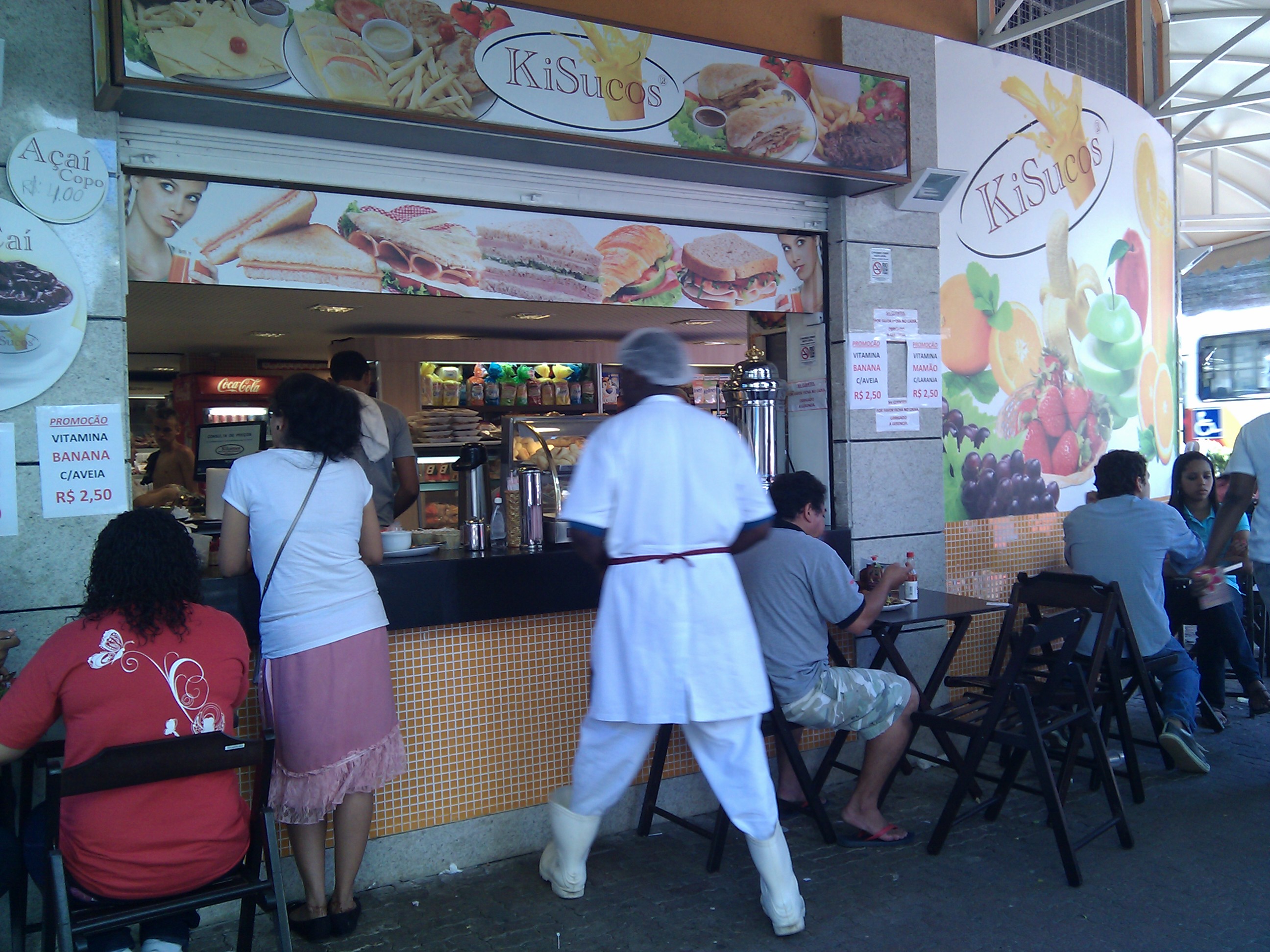
Eating in front of others requires sharing, according to Brazilian etiquette– something not so easy to do in streets where the poor predominate. This is why until recently, people in Rio didn’t walk around carrying ice cream cones, pão de queijo, esfihas and such. There were no benches or tables outside snack bars.

Quando se faz um lanche ou uma refeição na frente dos outros, deve-se compartilhar, reza a etiqueta brasileira − o que não é fácil em ruas onde a pobreza predomina. Por isso, até recentemente os cariocas não passeavam com sorvete, pão de queijo, esfihas e similares nas mãos. Não havia bancos ou mesas nas calçadas de padarias ou bares de suco.

Novos tempos

Com uma classe média em crescimento e melhorias na segurança pública, o Rio de Janeiro redescobriu o prazer de comer ao ar livre.

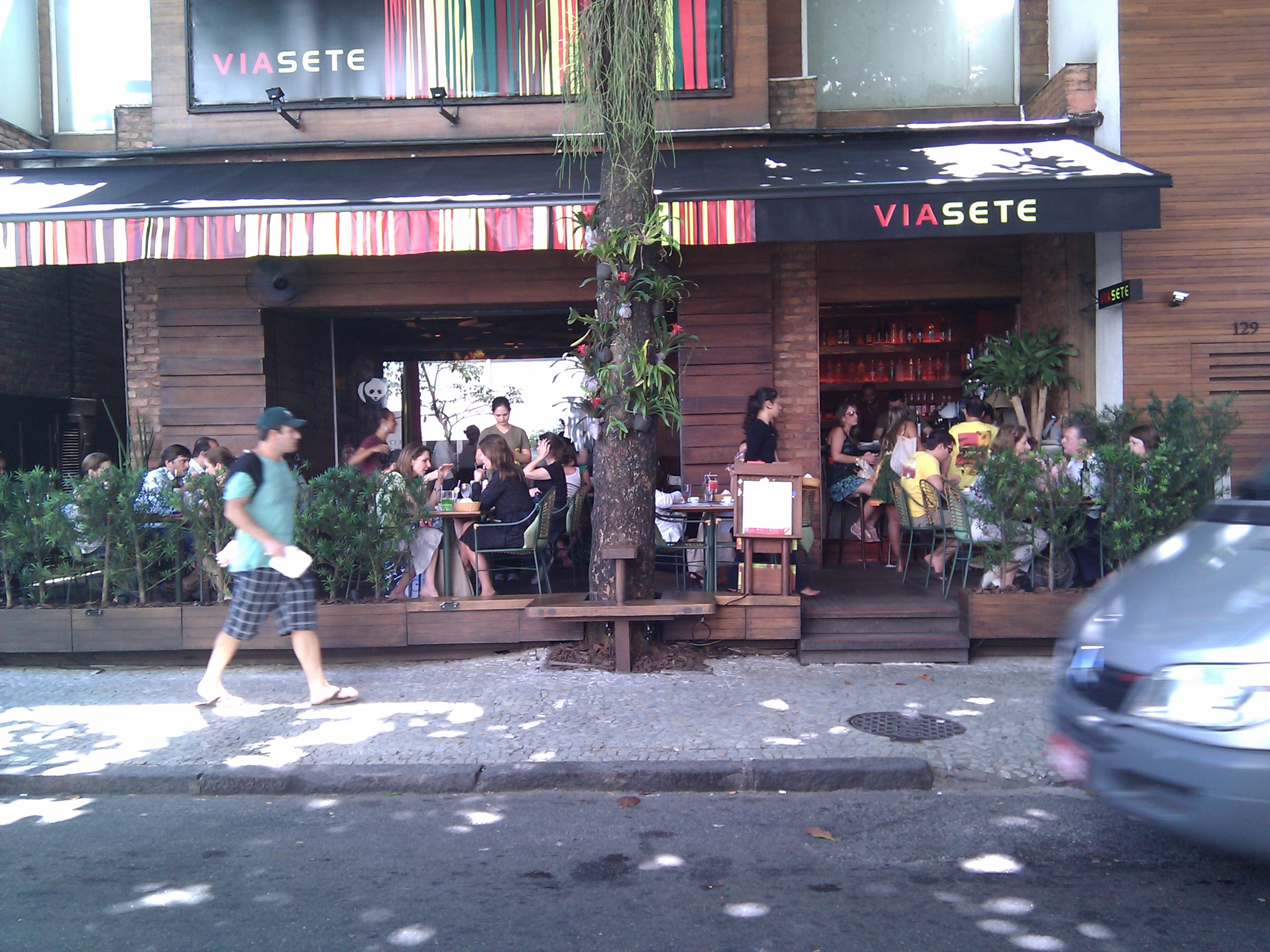
With a swelling middle class and improved public safety, Rio is discovering the sidewalk .

A new sense of openness

A tendência está se estendendo a todo tipo de estabelecimento.

The trend is spreading to all kinds of establishments

Mercearia em Ipanema

“A modernidade consiste em compreender e julgar as condutas e situações particulares, e mesmo individuais, em termos universais.” − Alain Touraine, sociólogo francês.

“Modernity consists of comprehending and judging, in universal terms, particular  and even individual behaviors and situations .” — Alain Touraine, French sociologist.


Posted in Transformation of Rio de Janeiro / Transformação do Rio de Janeiro | Tagged , , , , , , , , | 1 Comment

Guerra no Rio: Nem [que] se prepare

O MURO DE BERLIM DO BRASIL CAI; E AGORA?

Segunda-feira de manhã. “Rio de alma lavada”, anuncia a manchete de um jornal pendurado na banca da esquina. O batalhão de empregadas domésticas que vive na Rocinha ou tem parentes que moram lá chega para mais um dia de trabalho na Zona Sul. E, assim, as patroas ficam sabendo dos supostos preparativos do Nem, o chefe do tráfico nessa favela e na favela vizinha, o Vidigal, ambas encravadas na área do Rio mais exposta ao olhar de fora.

De acordo com os rumores espalhados por elas, o Nem teria uma arma capaz de derrubar um helicóptero, estaria enterrando minas terrestres na mata em volta das favelas e construiu uma bomba dentro de um fogão, que vai ser instalada na curva do S, onde fica a UPA, ou posto de saúde municipal. “Tem pregos, ferros, pedaço de tudo que é coisa ruim”, diz uma empregada cujo primo teria visto essa arma medieval no alto do morro.

Nada disso foi confirmado; boatos correm soltos no Rio, onde o único assunto de conversa é a “retomada” das duas favelas na Zona Norte e tudo que decorre dela.

Ainda bem que existe o Disque-Denúncia, que tem recebido um número crescente de ligações na última semana de moradores de favela que querem ajudar a polícia.

E assim, todo mundo na Zona Sul– tanto patrões como empregados– se pergunta quando e como será a invasão policial dessas duas favelas, que atualmente abrigam em torno de 100 mil pessoas. O banho de sangue será evitado, como foi até agora na Vila Cruzeiro e no Complexo do Alemão?

A tarefa de tirar o Nem e seus comparsas de lá é apenas uma das muitas que aguardam os cariocas. Hoje, o RioRealblog soube que algum tipo de atuação social de rápida implementação está para acontecer na Vila Cruzeiro e no Complexo do Alemão, áreas tomadas nos últimos dias pelas polícias militar e civil com a ajuda do Exército. Para saber desta e outras prioridades, enumeradas por um observador que atua há muitos anos em prol do Rio de Janeiro, o economista e presidente do IETS André Urani, leia o artigo dele de hoje no jornal O Dia.


Posted in Transformation of Rio de Janeiro / Transformação do Rio de Janeiro | Tagged , , , , , , , , , , , , , , , , | Leave a comment

BRAZIL’S BERLIN WALL FALLS; NOW WHAT?

Rio’s South Zone celebrates and worries

Monday morning. Rio de alma lavada, “Rio’s soul washed clean”, touted a newspaper hanging off a corner newstand. In only four days, civil and military police, with the help of the Brazilian army and navy, took possession of Vila Cruzeiro and Complexo do Alemão, two of Rio’s largest and most crime-infested favelas, arresting dozens of criminals, and aprehending tons of weapons and drugs.

State public safety secretary José Mariano Beltrame had said that the Complexo do Alemão would be occupied and pacified much later in his strategic timeline; he knew that criminals from the 13 favelas his men had pacified so far were moving in there and he was waiting for the right moment, presumably when the pacification program, begun two years ago, was consolidated and he had enough manpower.

But about ten days ago the process accelerated, when young men obeyed the orders of imprisoned drug traffickers displeased with pacification, fanning out into the city to set cars, trucks, buses and vans on fire. The federal government then sent in 800 army personnel plus the necessary military equipment and tanks. TV Globo showed footage of an army massing in the alleyways of Vila Cruzeiro. The imprisoned drug traffickers were transferred to other penitentiaries and some of their family members and lawyers were arrested, accused of passing on the orders for the torching. Police and soldiers invaded. Bandits fled. And early yesterday afternoon, the flags of Brazil and the state of Rio were raised high over the Complexo do Alemão, where the federal government has just built a cable car system under its PAC program.

Souls were indeed washed clean as television newscasts yesterday showed, among much compelling news, a convicted murderer under arrest, his clothing wet with his own urine.

This morning, the legion of maids who live in or have relatives in the favela of Rocinha arrived for another day of cooking, cleaning and child care. This is how the people they work for are learning about the suppposed preparations of Nem, the drug trafficking chief there and in the neighboring favela, Vidigal, both straddling hills in the south zone area of Rio, the one most open to foreign scrutiny. Vila Cruzeiro and Complexo do Alemão are on the other side of the Rebouças Tunnel, in the north zone, sans ocean views.

According to the rumors spread by this workforce, Nem has a weapon capable of bringing down a helicopter, is supposedly installing land mines in the brush surrounding the favelas, and has built a bomb out of a stove , to be set up on the “S curve” road where the UPA, or city health clinic is located. “It has nails, pieces of metal, pieces of everything that’s bad stuff,” says a maid whose cousin says he saw this medieval weapon at the top of Rocinha’s hill. None of this has been substantiated; Rio is full of rumormongering.

One gives thanks for the Disque-Denúncia police hotline, which has received a growing number of calls in the last week from favela residents who want to help the police.

Everyone in the south zone is wondering when and how the police invasion of these favelas, home to about 100,000, will take place. Will it be as peaceful as it’s been so far in Vila Cruzeiro and the Complexo do Alemão?

Removing Nem and his gang is just one of many tasks awaiting cariocas. Today, RioRealblog learned that some kind of rapidly-implemented social effort is about to be set up in Vila Cruzeiro and the Complexo do Alemão.

To read about all the remaining priorities, outlined by an observer who’s been advocating for Rio for many years, economist and IETS think-tank president André Urani, here is his original article in Portuguese, published in today’s O Dia newspaper. Below, a translation:

The (almost) total joy over the reconquest of the Complexo do Alemão is more than justified; this moment may symbolize an important step in the turnaround we have so long dreamed of.

It’s early, however, for jumping up and down; we have a lot of work, hard work, ahead. This is a short and by no means complete list of our homework:

  1. This time, the forces of order should remain permanently– in contrast to what occurred in Vila Cruzeiro in 2008 and in the Complexo do Alemão in 2007;
  2. Other communities ruled by narcotraffic need to be liberated, starting with  Rocinha and Vidigal;
  3. We must move with greater decision to face down militias (in the 13 communities  pacified so far, only Batam was ruled by them);
  4. The strategy whereby the three levels of government have been working together must be consolidated. On the one hand, the reconquest of new territories cannot solely be the responsibility of the [state] Safety Secretariat; the events of this past weekend prove that this depends in large measure on the systematic participation of the Armed Forces and Federal Police. On the other, we should have already learnt that urbanization programs such as the [federal government’s] PAC or or [the municipal] Morar Carioca [see the Cariocapédia tab, above] can only be effective in communities that have previously been pacified;
  5. Pacififcation and urban integration are necessary but insufficient for true integration – which is, above all, economic and social. Initial work in this area is already occurring, under the aegis of the State Secretariat of Social Assistance and Human Rights. But it’s a complex agenda, which involves a vast collection of public and private actors, the results of which will appear only in the long term;
  6. Last, the causes that led these communities to fall into the hands of a parallel power system must be wiped out. Basically, these lie in the generalized informality that we allowed to exist there, in the real estate and labor markets, in small businesses, energy consumption, transportation,  etc. This is an agenda that is quite similar to the previous one– and will also produce tangible results only in the long term.

At any rate, thank you [State Public Safety Secretary José Mariano] Beltrame, for allowing us to dream ahead!

Posted in Transformation of Rio de Janeiro / Transformação do Rio de Janeiro | Tagged , , , , , , , , , , , , , , , , , , , | 3 Comments

Complexo do Alemão conflict: check out the RioRealblog Facebook page

Here’s the page.

Click on Like and you’ll receive automatic updates on breaking news, links and news sources.

Posted in Transformation of Rio de Janeiro / Transformação do Rio de Janeiro | Tagged , , | Leave a comment

War in Rio: attitude shift

[Clique para português]

The news is nonstop and so are the rumors, although these are beginning to slow. At this moment, José Junior, coordinator of Rio’s most successful NGO, AfroReggae, is in the Complexo do Alemão set of favelas, negotiating a surrender with the drug traffickers under siege there by the military police and the army. If he’s successful, the pacification of the North Zone’s Complex, which covers 13 favelas home to more than 65,000 people, will certainly shift police attention to the Rocinha favela, along with a great deal of drama and danger. But the trend is clearly in the direction of peace and safety for more cariocas than ever before.

It’s impossible for a blog to keep up with breaking events in Rio de Janeiro, but the best up-to-date information can be found in O Globo, the Extra crime column, O Dia and TV Globo.

If you have a moment and would like to think about the transformation of Rio de Janeiro, read what follows, made available to RioRealblog by an anonymous observer, on the events of the last few days:

1 – For the first time, cariocas aren’t thrilled to be receiving the army. They trust the police, especially the Bope, the special ops battalion;

2 – For the first time, people aren’t talking about “[Governor] Cabral’s police”, as they used to do with “[former governor] Brizola’s police, [former governor] Garotinho’s police” etc… Now, the police belong to them;

3 – For the first time, the enemy doesn’t have a face. We’re not talking about hunting down Crazy so-and-, Fernandinho what’s-his-name, nor Cabbage Snot !!!! The enemy is now crime itself. The policy of inventing a Public Enemy Number 1 no longer exists;

4 –  TV Globo’s images ruined any glamour that these criminals might have had. As someone wrote, the CV [Comando Vermelho, or Red Command] has become Run Crapola!

Posted in Transformation of Rio de Janeiro / Transformação do Rio de Janeiro | Tagged , , , , , | 2 Comments

Guerra no Rio: guinada de atitudes

É uma enxurrada de notícias (e boatos, que já estão diminuindo). Neste momento, o coordenador do AfroReggae, José Junior, está dentro do Complexo do Alemão, negociando um rendição dos traficantes ali sitiados pela polícia e o exército. Se ele tiver êxito, a pacificação do Complexo, que na Zona Norte abriga 13 favelas e mais de 65 mil pessoas, levará as atenções com certeza à Rocinha– transferindo o drama e o perigo para a Zona Sul. Mas a tendência é claramente uma de paz e segurança para um número histórico de cariocas.

É impossível um blog manter uma cobertura adequada dos acontecimentos no Rio de Janeiro. O Globo, a coluna Extra que cobre o crime, O Dia, e a TV Globo são as melhores fontes de informação atualizada.

Se você tiver algum momento calmo e quiser refletir na transformação do Rio de Janeiro, leia esse texto que um observador anônimo disponibilizou para o RioRealblog sobre os acontecimentos dos últimos dias:


1 – Pela primeira vez, o carioca não festeja o Exército. Confia na polícia e, em especial, o Bope;

2 – Pela primeira vez, não fala que é “a polícia do Cabral”, como foi “a polícia do Brizola, do Garotinho” etc… Agora, a polícia é dele;

3 – Pela primeira vez, o inimigo não tem rosto. Não é uma caça ao  Maluco de tal, ao Fernandinho de não sei o que, nem o Meleca das Couves !!!! O inimigo, agora, é o crime. Acabou a política de fabricação do inimingo público número 1;

4 –  As imagens da Globo derrubaram qualquer glamour que a bandidagem ainda poderia despertar. Como escreveu uma pessoa, o CV virou Corre Vagabundo!

Posted in Transformation of Rio de Janeiro / Transformação do Rio de Janeiro | Tagged , , , , | 3 Comments

War in Rio: roundup

The controversial decision to utilize 800 army personnel plus airforce helicopters to battle Rio’s druglords means war, indeed. O Globo‘s headline today, pictured at the lower right-hand side of the screen, is “D Day for the War on Drug Traffic”.

Here is a TV Globo video that everyone was watching yesterday, of a narcotraffic army fleeing the Vila Cruzeiro favela in the north zone Penha section of Rio, as police moved in to successfully occupy it. The armed men fled under gunfire on foot, by motorcycle and in a crammed pickup truck to the Complexo do Alemão group of favelas, over an unoccupied  hill separating the two areas.

Many cariocas lamented that the men got away, but police say they plan to hunt them down and arrest them.

Authorities say they plan to install a police pacifying unit, or UPP, in Vila Cruzeiro and Complexo do Alemão, but lack sufficient men to do so immediately. Forty favelas are to be occupied in Rio, eventually, of the city’s one thousand shantytowns. So far there are 12 fully operational UPPs. In addition to help from the army, military police yesterday got help from the navy, with the loan of night vision glasses, tanks and weapons.

Overnight, only four vehicles were set on fire, indicating that the terrorism may be on the wane. But many cariocas found themselves stranded last night, with virtually no buses, vans or other transportation available. A total of 44 vehicles were attacked in the state of Rio yesterday. A handful of people have suffered burn injuries.

Yesterday the police hotline Disque-Denúncia received a record number of calls topping any statistic in its 15 years of existence, with over 800 calls, most of them regarding the ongoing conflict.

Rumor continue to fly about what’s occurring and what might happen next. Twitter users came up with #everdade (it’s true) to tweet news that has been confirmed. O Globo published a special “War in Rio” insert today.

With the additional manpower and equipment, Rio’s police are expected to return the city to normalcy within days. And then, the challenges of maintaining the peace, of bringing social programs to occupied favelas, and of facing down militias will await us all.

Posted in Transformation of Rio de Janeiro / Transformação do Rio de Janeiro | Tagged , , , , , , | 1 Comment

O conflito no Rio de Janeiro só pode terminar em paz

Click here for English

Este vídeo, gravado ontem por uma equipe da TV Globo que voava a bordo de um helicóptero perto da Vila Cruzeiro, na Penha, é bastante assustador. Nele, homens armados se juntam numa viela da favela, saltando de motos na medida em que chegam. De acordo com jornais, o vídeo levou as autoridades à decisão de sitiar a favela hoje, como parte de uma resposta ampla ao conflito que, de acordo com O Globo, deixou até agora 23 mortos em combates armados em favelas, 37 veículos incendiados, 47 prisões e 112 pessoas detidas para averiguações. Policiais militares, num total de 17.500 homens, contam com o respaldo das polícias civil e rodoviária, além da Marinha.

O vídeo assusta, mas um olhar cuidadoso e um pouco de reflexão levam à conclusão de que o estado logo trará a paz de volta às ruas da cidade que está tão empenhada nos preparativos para sediar as Olimpíadas de 2016. Seguem algumas ideias para a consideração dos leitores do RioRealblog:

  • Os homens de Vila Cruzeiro estão se juntando numa viela. A maioria das favelas cariocas possui difícil acesso. Ao passo que isso beneficia o tráfico de drogas, constitui um problema para líderes que organizam uma resistência à polícia em grande escala. Notavelmente, mais para o fim do vídeo começa um tiroteio. Um motoqueiro larga a moto e corre para se proteger, enquanto outros homens armados atiram em sua defesa. O vídeo mostra muitos homens armados, mas eles estão claramente na defensiva.
  • De acordo com rumores, os narcotraficantes da Rocinha, supostamente agora duas facções unidas, teriam uma arma capaz de abater um helicóptero, como aconteceu há um ano no Morro dos Macacos. Mas os narcotraficantes não têm helicópteros; enquanto a polícia e a mídia dispõem deles. Para obterem informações, os traficantes dependem da mídia, de comunicações por telefone e rádio e da internet.
  • Essa comunicação é altamente monitorada pela polícia. A corrupção policial ainda existe e deve-se presumir que alguma informação vaza para os criminosos, mas a polícia conta com uma inteligência mais completa.
  • As ordens para a guerrilha vieram de traficantes presos, que estão sendo transferidos para cadeias onde será mais difícil o contato com seus subordinados. Os subordinados tiveram que obedecer a essas ordens, mas agora se veem sem comunicação com os chefes. Isso pode enfraquecer a firmeza deles, sobretudo ao passo que se encontram sitiados e atacados pela polícia, que estão fazendo blitz pela cidade e contam com ajuda da polícia rodoviária para bloquear o fluxo de armas para o Rio.
  • Nesse meio tempo, o tráfico de drogas, o recurso mais importante dos guerreiros, certamente secou.
  • As armas dos traficantes intimidam e ameaçam moradores de favelas, mas a maioria desses quer a paz, não apoia os chefes locais e pode optar por ligar para o Disque-Denúncia e fornecer informações à polícia e, em alguns casos, ganhar recompensas.

O que você acha? Por favor, deixe seu comentário. E lembre-se, as notícias dramáticas de violência são apenas uma parte da transformação do Rio de Janeiro. Desça a página, leia mais, compartilhe, e assine de graça, se quiser.

Posted in Transformation of Rio de Janeiro / Transformação do Rio de Janeiro | Tagged , , , , , , , , , , , , , , | Leave a comment