Política no Rio: mundo pequeno, de muitas trocas, com grande impacto na receita

ccc

Reportagens bombásticas em momento crítico para o estado

Desconfiar de políticos no Rio de Janeiro é praxe para a maioria dos cidadãos do estado. Não é fácil encontrar e apresentar provas de fraude, de enriquecimento possivelmente ilícito , de conluios em geral. E mesmo quando tais provas aparecem na mídia, é raro que tenham um impacto amplo e duradouro.

Será que, no contexto das investigações Lava-Jato, da recessão e da instabilidade política em todo o país, isto está para mudar?

Para o Rio, seria bom– se as novas acusações forem acolhidas pelo Ministério Público e comprovadas em julgamento. Empobrecido pela recessão e pela queda nos royalties de petróleo, o estado precisa urgentemente da receita supostamente desviada ou perdoada por motivos que não servem à sociedade como um todo. Fecham-se serviços de saúde. Funcionários públicos aguardam salários atrasados. Policiais deixam de ganhar hora extra e tampouco recebem em dia.

O Governador Pezão está de licença, em tratamento para um linfoma não-Hodgkins; seu vice, Francisco Dornelles, continua na busca desesperada por recursos, num momento de penúria igual em Brasília. Dornelles tem 80 anos; o próximo na linha de sucessão do executivo estadual é o deputado estadual Jorge Picciani, justamente foco das reportagens do jornal O Globo, resumidas mais abaixo.

Já surgiu uma denúncia direta relacionada com as obras olímpicas aqui. O Ministério Público diz que houve fraude na terraplanagem do Complexo de Deodoro, local de competições de esportes radicais.

De moral baixo e bolsos vazios, teremos policiamento adequado durante os Jogos? Não está claro se a extensão do Metrô até a Barra da Tijuca ficará pronta a tempo de atender turistas olímpicos — depende de um financiamento do Banco do Brasil. E quem vai bancar a reforma da Delegacia de Atendimento ao Turista, no Leblon (Deus queira que fique às moscas, durante os Jogos), de acordo com a coluna “Gente Boa”, de hoje, no Globo, é a Associação Brasileira de Hotéis.

A dívida ativa do estado — ou seja, impostos devidos porém não pagos — é, de acordo com O Globo, de R$ 66 bilhões. A quantia seria mais que três vezes o déficit nas contas estaduais deste ano, de R$ 20 bilhões.

O jornal publicou matérias extensas, hoje e ontem, na seção Rio, detalhando encontros suspeitos, inusitados negócios imobiliários, estranhos benefícios fiscais, laços familiares e de amizade, compras de gado por fornecedores ao estado — e doações eleitorais questionáveis. A autonomia das fabricantes de cerveja para ditar as regras do jogo, por um lado, e a proximidade delas às autoridades governamentais, por outro, lembram as relações entre a Refinaria de Manguinhos e o estado e também, as empresas de ônibus no Rio de Janeiro, com a prefeitura.

As matérias giram em torno de Jorge Picciani, do partido PMDB, presidente da Assembleia Legislativa do estado do Rio e raíz de uma família política em plena expansão. Jorge é pai de Leonardo, deputado federal do PMDB; de Rafael, deputado estadual licenciado e secretário municipal de transportes no Rio de Janeiro; de Felipe, que dirige a empresa agropecuária da família; e do pequeno Artur, nascido em 2011.

As reportagens do Globo levantam a pergunta: é assim com todo negócio no Rio? A fiscalização é sempre tão falha? Os técnicos são tão frequentemente ignorados?

São reportagens difíceis de digerir, repletos de dados. Segue um resumo. Vamos ver se o trabalho árduo dos repórteres Chico Otávio e Gustavo Schmitt causa impacto nas finanças e na política locais, ou não. No mínimo levará o leitor a pensar duas vezes antes de beber uma Itaipava.

  • Visitas repetidas, em 2014 e 2015, de três fiscais de ICMS, à Agrobilara, empresa de gado da família de Jorge Picciani. Algumas dessas visitas coincidiram com a visita do contador da cervejaria Itaipava. Nenhum dos fiscais é encarregado de fiscalizar empresas pecuárias; trabalham nas áreas de bebidas e de “substituição tributária”. A Corregedoria da Receita Estadual é contrária a “encontros de auditores com fiscalizados fora de repartição fiscal”, de acordo com a reportagem.
  • Jorge Picciani e Walter Faria, dono do grupo Petrópolis, fabricante da cerveja Itaipava são, de acordo com a reportagem, amigos e sócios. O nome de Faria aparece, aliás, entre os “Panama Papers”, em reportagem publicada ontem, parte de um esforço internacional de análise de informações vazadas sobre o negócio de constituir empresas offshores.  Faria é sócio, junto com a Agrobilara (dos Picciani), da Mineradora Tamoio, fornecedora de brita para obras olímpicas.
  • Um dos fiscais visitantes à Agrobilara tem um grande e valioso patrimônio imobiliário, parte do qual foi negociado com o dono de uma rede de supermercados, já denunciado por fraudes tributárias. O fiscal é responsável por fiscalizar a rede de supermercados. Outro fiscal também é grande investidor na área imobiliária.
  • O contador da Itaipava já foi denunciado por crimes de corrupção em Mato Grosso.
  • As distribuidoras da Itaipava deviam, em 2015, mais de R$ 1 bilhão ao estado. Mesmo assim, o estado do Rio concedeu benefício fiscal à Itaipava no valor de R$ 687 milhões em 2015, contrariando o parecer jurídico da Secretaria estadual de Desenvolvimento Econômico, que desaconselhou o benefício.
  • Em novembro de 2015, o Secretário estadual de Fazenda, Julio Bueno, extinguiu um mecanismo que permitia que o estado atualizasse o imposto devido para acompanhar a inflação e a sazonalidade dos preços de cerveja. Também no ano passado, a Secretaria da Fazenda barrou o acesso do Ministério Público aos dados fiscais do estado.
  • Toda vez que o estado abriu um processo contra o Grupo Petrópolis por ser devedor de ICMS, entre 2010 e 2015, o Grupo venceu na hora de recorrer  da decisão inicial de impor multa. Não foi o caso, aparentemente, do concorrente, Ambev, que consta da lista dos maiores devedores do estado, com R$ 525 milhões de dívidas (tendo perdido os recursos relacionados a essa quantia).
  • O Grupo Petrópolis doou um total de R$ 101 milhões a campanhas, nas eleições de 2014. Disso, R$10,8 milhões foram para o PMDB fluminense. A campanha do governador em licença, Luiz Fernando Pezão, recebeu R$ 1 milhão do Grupo.
  • As distribuidoras de bebidas do Grupo Petrópolis formam um complexo emaranhado que, de acordo com o Ministério Público, conforme relata uma das matérias do Globo, funcionam para diminuir, de forma ilegal, a carga tributária do Grupo.
  • Fornecedores do estado participam de leilões de gado da empresa Agrobilara, da família de Jorge Picciani. Veja a relação dos compradores e das compras, que incluem R$1 milhão pago por 50% do clone de um animal. De acordo com a revista Dinheiro Rural, o negócio foi um dos primeiros de um valor tão alto.

As matérias do Globo trazem respostas das pessoas e dos órgãos governamentais envolvidos nas acusações.
Posted in Brasil, Transformation of Rio de Janeiro / Transformação do Rio de Janeiro | Tagged , , , , | Leave a comment

Hipótese enganada de golpe direitista : leitura errada do Rio de Janeiro

Nesta Nação, não

For English, click here

O jornalista norteamericano Dave Zirin publicou na revista The Nation, há dois dias, um artigo entitulado “Como as Olimpíadas no Rio poderiam cimentar um golpe brasileiro”.

Sua blogueira, até então, ficara quieta, observando fatos e ouvindo os outros. Aqui, porém, se viu obrigada a opinar. Pois não tem feito outra coisa nos últimos cinco anos, a não ser aprender sobre a política e os negócios locais, sempre dentro do contexto maior da sociedade brasileira.

Aí, confeccionou uma resposta ao Zirin, publicada em inglês ontem, aqui e na plataforma Medium:

Direita e esquerda não são termos úteis no Brasil. A política aqui é centrada em pessoas, em vez de ideologia. As alianças são mutáveis, constantemente reavaliadas e refeitas. Os políticos mudam de partido do mesmo jeito que nós experimentamos uma dieta nova para emagrecer. Além disso, há o que vemos e daí, aquilo que não vemos (como soubemos, de maneira tão dolorosa, pelas gravações da semana passada).

O prefeito do Rio, Eduardo Paes, hoje do PMDB (tendo passado por mais dois outros partidos) é bom pé de samba, como reparou a revista Piauí num perfil recente. Mas — as coisas que ele disse na conversa gravada com o ex-presidente Lula?

Pode ter sido um tiro fatal naquele pé dançante. O desdém dele pelos pobres foi evidente como nunca antes. As palavras do prefeito também revelaram uma relação problemática com o governador peemedebista Luis Fernando “Pezão”, vitima de doença grave, hospitalizado — e mencionado várias vezes na investigação Lava Jato, porém ainda não acusado formalmente. Então, Dave, não se pode dizer que os dois estão administrando o Rio na maior tranquilidade.

Você escreve “Paes e Pezão do PMDB administraram um processo pelo qual [a construção dos] equipamentos olímpicos tiveram propostas elaboradas por ‘consórcios’ de empresas imobiliárias, como o grupo Rio Mais (More Rio), que incluía Odebrecht, além das empresas Andrade Gutierrez e Carvalho Hosken”.

A construção do Parque Olímpico é regida pelo município, sem participação do estado do Rio. É por isso, aliás, que a baía de Guanabara não foi limpa, conforme as autoridades prometeram ao Comitê Olímpico. Isso era responsabilidade do estado.

Havia apenas um consórcio. Não de empresas imobiliárias — de construtoras. E não esperaram até a última hora para terminar as obras. Há problemas, mas está tudo mais ou menos de acordo com o projeto.

Não sei se há ou houve negócios olímpicos suspeitos, mas quem examina a documentação vai ver que as três construtoras fizeram um ótimo negócio: o Rio lhes DEU o terreno, (provavelmente sub-)valorizado em R$ 1.2 bilhões, para construir o Parque Olímpico, que podem utilizar depois dos Jogos, com uma mudança no gabarito que lhes permite construir até 18 andares, em vez de doze. O município também lhes paga R$ 462 milhões pelas obras, e perdoou uma dívida tributária de R$ 7.6 million, da Carvalho Hosken.

Você iria superfaturar ou adiar a construção com um negócio desses — fechado em cima de um estudo feito pelas próprias empresas, praticamente sem governança (mais sobre isso, aqui)? Acho que as Olimpíadas servem, acima de todos, às empreiteiras envolvidas na Lava Jato. A ausência, porém, de contratos olímpicos no escândalo, até agora, não indica, necessariamente, que está se protegendo o PMDB para que possa assumir o governo do Brasil.

Na capital, o deputado federal Eduardo Cunha, carioca e presidente da Câmara no Congresso, não dispõe de apoio sólido, entre os colegas no PMDB, na sua batalha para ficar longe da cadeia. Odiado por brasileiros em geral, é acusado de sonegação de impostos, pagamentos ilegais e de ter utilizado investigações no Congresso para pressionar empresários a acertarem contas com ele. Se, como imagina o Dave, a direita brasileira junto com grupos empresariais vencerem nesta crise — com o PMDB tomando as rédeas na hora da saída da presidente Dilma — teremos muitos problemas ao passo que os políticos e os empresários negociam entre si seus interesses, enquanto quem está fora da parada exerce pressão para avançar suas próprias necessidades e demandas. Seria um processo interminável.

Isso levanta mais um elo fraco no cenário de golpe de direita: pense bem, o Brasil não está prestes a voltar ao ano 2002. O país mudou de forma fundamental durante os mandatos do Lula. Sim, hoje, muitos dos trinta ou 40 milhões que sairam da pobreza estão voltando para ela. Na minha experiência de fazer reportagens sobre o Rio, nos últimos cinco anos, e na minha vida diária também, vi muitos brasileiros sairem da invisibilidade para a visibilidade. Para estrangeiros (e para muitos brasileiros das classes mais altas), é difícil enxergar essa mudança porque não conseguem imaginar como é viver a vida de cidadão de segunda classe.

Isto é central — e a internet é uma força enorme. Ontem à noite, presenciei o lançamento de um novo aplicativo, o “Nós por Nós”, que permite o usuário a documentar abusos de direitos humanos, ao fazer um streaming de vídeo e/ou aúdio, para um destino seguro, para se proteger caso seu telefone celular seja destruído ou levado embora. Foi desenvolvido pelo Fórum de Juventudes, uma rede de grupos de moradores de favela da região metropolitana.

“Presente!”, gritou o grupo, punhos no ar, lembrando jovens e uma mãe mortos pela polícia do Rio de Janeiro.

Se tivermos um governo direitista, opressiva, não será fácil tirar qualquer elemento disso — sobretudo a sensação entre esses jovens de que eles têm o direito de se defenderem da polícia, de utilizar a mídia social, de criar redes de apoio, de sonhar e realizar esses sonhos.

É fácil descrever classes sociais e instituições por meio de traços gerais. A realidade foge à palavra. Existe, porém, toda sorte de gente entre os milhões que deixaram a pobreza e há toda sorte de gente entre as classes média tradicional e a alta, também. Nem todos que recebem a Bolsa Família ficam no sofá vendo TV e comendo batatinha, esbanjando gratidão ao Lula. É da natureza humana, sobretudo entre jovens, querer aprender e se sentir útil. Muitos brasileiros pegaram a grana e deram uma volta por cima. Trabalham muito, dão valor ao trabalho duro e pensam que quem rouba deve ir para a cadeia. Não irão querer aturar um governo do PMDB que se alimenta do povo.

Os brasileiros desconfiam hoje de qualquer político. Quem não for preso e resolver se candidatar a um cargo público será foco de escrutínio especial. Graças a Deus, até agora, não temos uma versão local de Donald Trump, nos dizendo que não é preciso se preocupar, que ele vai cuidar de tudo. Mais do que nunca, os brasileiros estão debatendo a crise atual, prestando atenção, aprendendo o que fazem o Tribunal Superior de Justiça, a Polícia Federal, o Congresso e o Procurador Geral da República. Ouve-se palavras recém-descobertas, pipocando em conversas na rua e no ônibus.

A matéria de Catherine Osborn entrou em território virgem, ao revelar a participação de estrangeiros na polítical nacional. Nos conta que o capítulo brasileiro do Students for Liberty (Estudantes para a Liberdade) tem mais de mil membros. Mas são poucos, comparado ao eleitorado (142 milhões), ou até ao número total dos que marcharam de verde e amarelo no dia 13 de março (por volta de três milhões). Onde, aliás, era uma minoria que clamava por intervenção militar. Se o Brasil se tornar mais conservador, não serão os irmãos Koch por trás da mudança; estudos demonstram que é o que acontece quando as pessoas sobem a pirâmide socioeconômica. Mesmo assim, no Brasil vai demorar bastante até que a ideologia venha substituir plenamente a política personalista, baseado na troca de favores.

E nem a Globo é monolítica. Sim, tende à manutenção do status quo. Porém, igual aos políticos brasileiros (sobretudo o PMDB), seus laços com a sociedade são flexíveis e egoistas. E a “gigante tipo Fox News vitaminada”, como o Dave a chama, é uma fonte de informações sempre menos importante para os brasileiros, enquanto as mídias sociais e independentes lhes tiram público. O momento não é de lavagem cerebral, mas de lutar para sobreviver a recessão e fazer algum sentido de uma gama de fontes de notícias.

Trata-se de um grande desafio para a maioria das pessoas, sobretudo face ao monopólio da Globo durante tanto tempo e à experiência de conviver com um governo militar entre 1964 e 1985. Os brasileiros dispõe de motivos para acreditar em teorias de conspiração, mas são, enfim, teorias. Vamos todos respirar fundo e ver o que mais vai acontecer com a Lava Jato — e com tanta outra coisa.

Posted in Brasil, Transformation of Rio de Janeiro / Transformação do Rio de Janeiro | Tagged , , , , , , | 1 Comment

Right-wing coup scenario off the mark: Rio information is wrong

Not this Nation

Ah, Dave Zirin, this blogger has to argue with you.

Right-wing and left-wing aren’t useful terms when it comes to Brazil. Politics here revolve not around ideology, but people. The alliances are fluid, constantly reevaluated and remade. Politicians switch parties the way dieters switch menus. Plus, there is what the public sees and then, what we don’t see (as we learned, so painfully, from last week’s wiretaps.

Rio mayor Eduardo Paes, now with the PMDB (having cast off two other parties) is certainly good at samba, as Piauí magazine described in a recent profile. But the things he said in the tapped phone conversation with ex-president Lula? Who knows if his career will ever recover. His disdain for the poor was evident as never before. His words also revealed a problematic relationship with PMDB governor Luis Fernando “Pezão”, himself seriously ill in the hospital, named, yet so far not prosecuted, in the Lava Jato investigation. So it’s not like the two of them are smoothly running Rio, Dave.

You write “Paes and Pezão of the PMDB oversaw a process where Olympic facilities were bid upon by “consortiums” of real estate firms, like the Rio Mais (More Rio) syndicate, which included Odebrecht as well as the companies Andrade Gutierrez and Carvalho Hosken.”

The process was completely up to the city, not the state of Rio. This is why, by the way, Guanabara Bay never got cleaned up, as officials had promised the Olympic Committee. The state was in charge of that.

There was only one consortium. Not of real estate firms, but construction companies. And they didn’t wait until the last minute to complete the work. There are problems, but they are pretty much on schedule.

I don’t know if there was or is Olympic hanky-panky but if you look at the documents involved you can see that the three construction companies had a good deal, on the up and up: Rio GAVE them the land, (probably under-)valued at R$ 1.2 billion, to build the Olympic Park on, which they get to develop after the Games, with a change in zoning rules such that they can go as high as 18 floors, instead of twelve. The city also pays them R$ 462 million for the work done, and forgave a tax debt of R$ 7.6 million, owed by Carvalho Hosken.

Would you overbid or delay construction with a deal like that– struck based on a study done by the companies themselves, with no governance to speak of (more on this here)? I do think the Olympics serve, first and foremost, the construction companies involved in Lava Jato. But the absence of Olympic contracts in the scandal, so far, may not mean the PMDB is being protected so it can take over Brazil.

Meanwhile, in his battle to stay out of jail, Eduardo Cunha, the Rio congressman and speaker of the house in Brasília, has far from solid support among other PMDB party members. Despised by Brazilians across the board, he’s been accused of tax evasion, illegal payoffs and using congressional investigations to pressure businesses to pay up. If, as Dave imagines, the Brazilian right and business interests have their way– with the PMDB taking the reins as president Dilma leaves office — there are likely to be many problems as politicians and business sort out their interests and those outside such circles pressure for their own needs and wishes. The process would never end.


Which brings up another weakness in the right-wing coup argument: it’s not like Brazil is about to return to the year 2002. Under Lula, Brazil changed fundamentally. Yes, many of the thirty or forty million who left poverty thanks to his policies are now falling back into it. But in my experience reporting on Rio over the last five years and in my daily life as well, I have seen many Brazilians move out of invisibility and into visibility. It’s hard for foreigners (and many upper class Brazilians) to appreciate this, because they can’t imagine what it’s like for a person to live life as a second-class citizen.

This is key and the internet has been a huge factor. Just last night I attended the launch of the new app “Nós por Nós” (Us by Us), which allows the user to document human rights abuses, streaming video and/or audio to a safe destination in case his or her cell phone is destroyed or taken away. It was developed by the Forum de Juventudes, or Youth Forum, which is connected to groups of favela residents from all over metropolitan Rio.

Presente, the group cried out, fists in the air, remembering young men and a mom killed by Rio police.

If we get an oppressive right-wing government, it won’t be easy to take any of this away- particularly young people’s sense that they have the right to defend themselves from the police, to use social media, to create support networks, to dream and realize those dreams.

It’s easy to characterize social classes and institutions in broad strokes. Reality can defy description. But there are all sorts of people among the millions who left poverty and there are all sorts among the traditional middle and upper classes, too. Not everyone who receives the Bolsa Família income transfer sits at home watching television and eating potato chips, feeling grateful and beholden to Lula. It’s part of human nature, particularly for young people, to want to learn and to feel useful. Many Brazilians took the money and went places with it. They work hard, they value hard work and they think people who steal should go to jail. They aren’t going to want to put up with a PMDB government that feeds off everyone else.

Brazilians are wary of all politicians now. Depending on how many of them go to jail, those left to run for office will be under special scrutiny. Thank God that so far, there’s no local version of Donald Trump, telling people not to worry, he’ll take care of things. More than ever before, Brazilians are debating the current crisis, paying attention, learning about what the Supreme Court, the Federal Police, Congress and the Attorney General do. You can hear newfound words popping out of conversations on the street and in the bus.

Catherine Osborn’s piece did get into some interesting virgin territory. It tells us that the Students for Liberty’s Brazil chapter has more than a thousand members. But that’s not many, compared to the electorate, (142 million) or even the total number of those who marched in yellow and green March 13 (around three million). Where, by the way, a minority was calling for military intervention. If Brazil becomes more conservative, the Koch brothers won’t be behind the change; studies show this often happens as people climb the socioeconomic ladder. Even so, in Brazil ideology has yet to fully replace personalist politics based on the exchange of favors.

Globo isn’t monolithic, either. Yes, it tends towards maintaining the status quo. But, like Brazil’s politicians (particularly the PMDB), its bonds with society are flexible and self-serving. And the “Fox News-on-steroids media giant”, as you call it, is a shrinking source of news for Brazilians, as independent and social media eat away at it. The moment isn’t one of brainwashing, but one where we are all struggling to survive the recession and make sense of a plethora of sources of information.

This is a tall order for most people, particularly given Globo’s longtime virtual monopoly, and the 1964-1985 military government. Brazilians have good reason to believe in conspiracy theories, but they are just that, theories. Let’s take a deep breath and see what’s yet to happen with Lava Jato — and so much else.

Posted in Brazil, Transformation of Rio de Janeiro / Transformação do Rio de Janeiro | Tagged , , , , , , | 29 Comments

National crisis: the view from Rio

When’s the last time any of our elected officials discussed public policy in a meaningful way?

gg

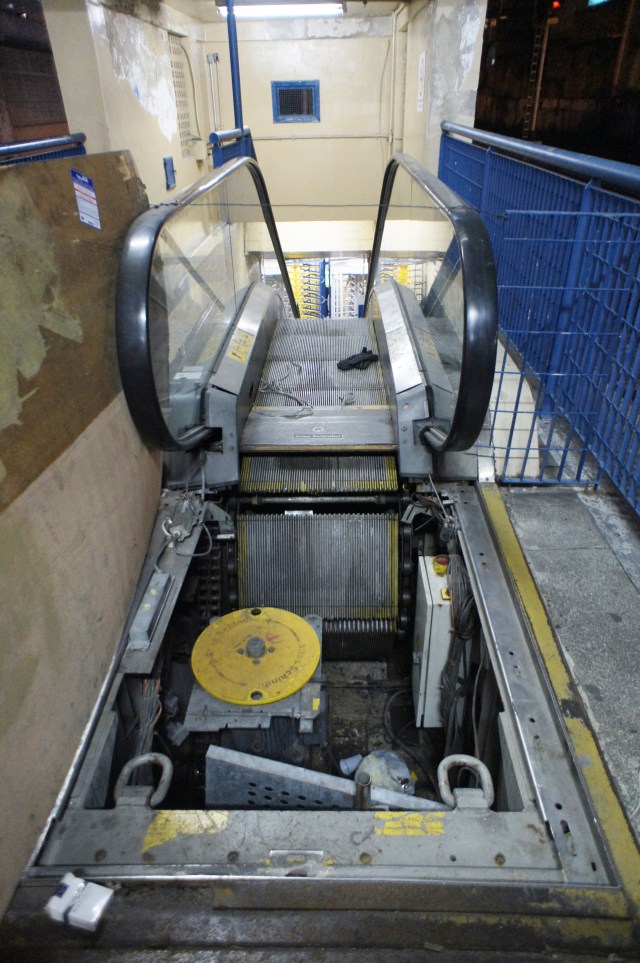
Ugly innards: can they be fixed? From a SuperVia Rio train station

Rio’s governor, Luiz Fernando “Pezão” de Souza, is in the hospital with an undiagnosed infection (and rumors of his death), while the state’s wage payments and services fall seriously behind, teachers strike, and the crime rate climbs back up. The city’s mayor, Eduardo Paes, reportedly revealed arrogance and insensitivity, in dealing with a doctor at a public hospital this past Sunday.

A day earlier, Paes’ rainwater cistern project failed to protect the Praça da Bandeira from flooding. Until now, he enjoyed telling listeners about how he’d fooled Dilma into paying for the cistern, saying it would be necessary during the Olympics even though it rarely rains in August here.

Prices and unemployment are high. Could things get worse?

Brazilians tend to rely on personal networks to solve their problems. This blogger once received a distressed phone call from a neighbor, as a brush fire threatened her home. “Do you know anyone at the fire department?” asked the neighbor. Dialing the Rio version of 911 was no use.

Nevertheless, for most Brazilians it was a shock to learn, from the wiretapped conversations of former president Lula, that he too calls on friends to help solve his problems.

And that friendly politicos’ conversations, such as the wiretapped one that mayor Eduardo Paes had with ex-president Lula, include banter revealing that Brazil’s social divide, which Lula helped to reduce, lies at the heart of so much that goes on here. “You have the soul of a poor man,” the mayor (who grew up in middle-class Jardim Botânico and spent weekends in chic Angra dos Reis) told Lula. “Your country house is tacky”. The comment, made to the Brazilian who has experienced the most social mobility of any, can be interpreted as a supreme, if jocular, put-down.

Yesterday’s revelations, only part of the distressing information Brazilians have learned about their politicians since the Lava-Jato investigations began in 2014, with more yet to come, pose many challenges to the country’s public institutions.

The tension between personal networks and public institutions is growing; just how it will play out is at the core of this crisis. Will Lula continue on as Dilma’s chief of staff? Was his appointment meant to protect him from Lava-Jato or will he help fortify her government and broken economic policy? What will the Supreme Court do? Will Congress move forward in an effort to impeach Dilma? What will happen to the dozens of politicians accused of wrongdoing, particularly Rio congressman Eduardo Cunha– who has his own network? If we have new elections, who will run?

Meanwhile, Brazilians active on social media express different opinions regarding right and wrong. We would like to think that these are patent, clear values. But, as voters discover, repeatedly, in many countries around the world, life is not lived in black and white. In fact, citizens need to constantly reflect on right and wrong, to constantly monitor those they elect and what they do in office. In Brazil, with social and alternative media starting to eat away at a longtime journalism quasi-monopoly, this task demands ever more thought and engagement.

Here, one big question, with answers sharply dividing the political spectrum, seems to be how much wrong a citizen can identify among or forgive from politicians. Brazil’s long history of inequality, with different rules for different members of society, has brought us to this.

Posted in Brazil, Transformation of Rio de Janeiro / Transformação do Rio de Janeiro | Tagged , , , , , | 2 Comments

Mayor at last presents urban upgrade plan for Vila Autódromo

Residents and RioRealblog kept out

12805827_10153586547160787_3186038655804051836_n

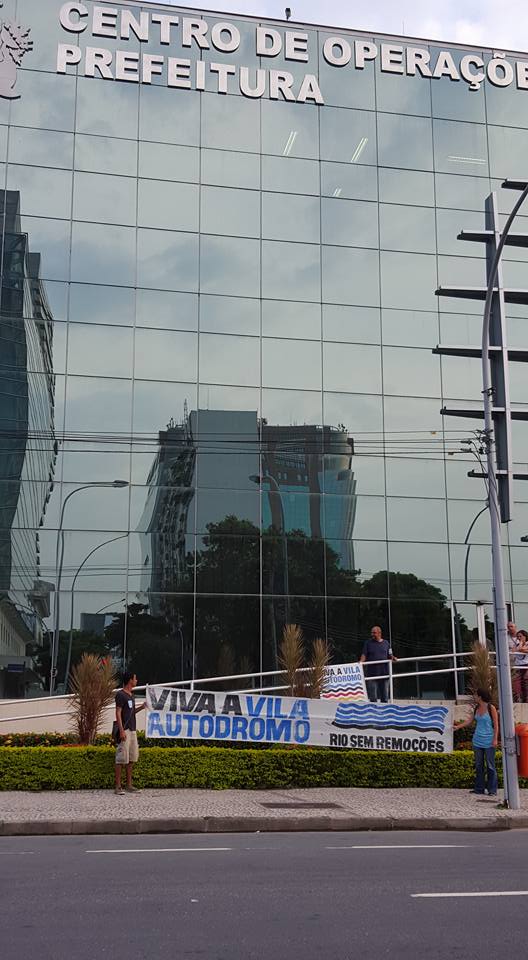
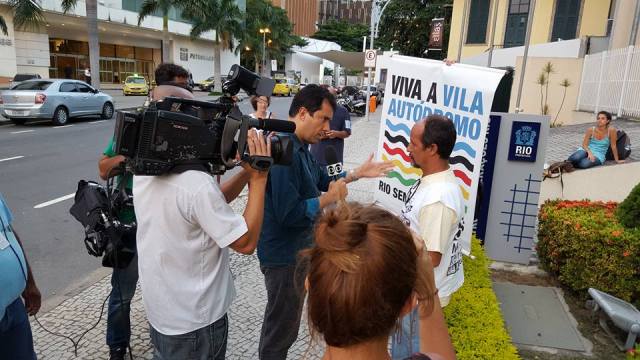
In front of the Cidade Nova Operations Center, VA resident Delmo de Oliveira gives an interview to TV Globo

Clique aqui, para português

Yesterday at lunchtime, foreign and local journalists were invited to a press conference with Mayor Eduardo Paes, for that same day, to hear about his plans to upgrade what’s left of Vila Autódromo. It was set for five p.m. at the Palácio da Cidade (City Palace) in Botafogo. Two hours later, around 3:30 p.m., came more news: the press conference would be at 4:30 p.m. at the city’s Operations Center. It was a race to reschedule the day and get over there. For Vila Autódromo residents, too. They had planned a demonstration outside the Palácio.

Then there was a third bit of news, this time at the entrance to the Operations Center. Despite having received the invitation and the rescheduling email for the press conference, RioRealblog was not allowed to attend it. No reason given.

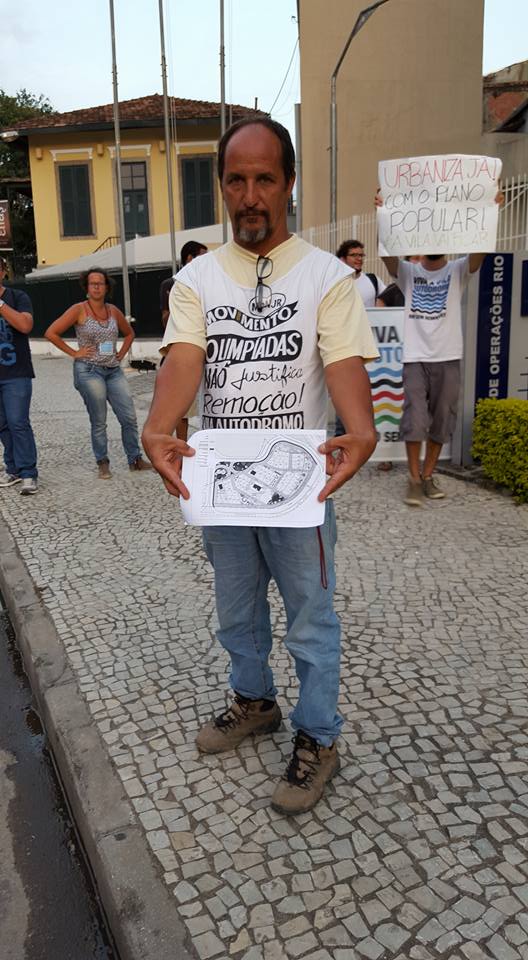
Hanging out on the sidewalk with residents, activists and other alternative journalism folks, waiting for colleagues to come out and tell us about the urbanization plan, was the best Plan B.

It was a relatively light lesson in exclusion. While an activist stretched a banner out in front of the building, a security guard asked him to remove it. “This is my area,” he said. “It’s public space,” the activist told him. The banner stayed.

cc

A message that shortened the 37-kilometer distance between the Operations Center and Vila Autódromo: Long live Vila Autódromo, Rio without Removals

Everyone there supported the remaining residents of Vila Autódromo, who occupy thirty houses. The thirty-first house, belonging to community leader Maria da Penha Macena, was knocked down yesterday morning.

This is all part of a very complex story; you can read this post if you want to find your way into it. After publication, RioRealblog learned, from reading documents of the Tribunal de Contas Municipal (Municipal Accounting Court), that:

  1. the Public-Private Partnership (PPP) to build the Olympic Park specifically includes Vila Autódromo;
  2. the PPP gives the land where the Vila and a racetrack sat, valued at R$ 1.2 billion, to the Rio Mais consortium (construction companies Carvalho Hosken, Andrade Gutierrez e Odebrecht);
  3. in addition to handing over the land, the city is paying the consortium a total of R$462 million and increased the building height limit from twelve to 18 floors for planned real estate development. The PPP’s total value is R$ 1.7 billion;
  4. the city pardoned a tax debt of R$ 7.6 million, owed by Carvalho Hosken;
  5. The Accounting Court staff found irregularities in the terms of the PPP and in its execution. In general, such items went uncorrected, accepted as is by the court’s councillors, named by the mayor or the City Council, due to short Olympic Park construction deadlines.

The PPP, as is usual for such urban development instruments, didn’t come under City Council scrutiny. Yet it’s part of a barely-debated urban development public policy, encouraged by the location of the Olympic Games in the West Zone: the city’s expansion in that direction.

And this subject was a fascinating reason to stay on the sidewalk outside the city Operations Center, while the mayor presented journalists inside with his new urban upgrade plan for Vila Autódromo.

The sidewalk was also hosting Renato Cosentino, the young author of the dissertation, “Barra da Tijuca e o Projeto Olímpico” (Barra da Tijuca and the Olympic Project), presented in 2015 at UFRJ. There in Cidade Nova (the New City neighborhood, new only in the era of mayor Pereira Passos, as it was the destination of residents he removed from the city center in the early twentieth century), Cosentino said he believes City Hall took out most of Vila Autódromo’s residents so as to leave the area free and clear for real estate developers to make their business bets.

RioRealblog argued that the bets make no more sense, given the current recession. Cosentino disagreed. The region’s big landowners, Carlos Carvalho (Carvalho Hosken owner) and Mauro Pasquale, would wait out the recession. The PPP had given them the legally required infrastructure for future development.

RioRealblog brought up examples of abandoned developments in Florida and Spain, bets based on unrealistic market, credit and infrastructure calculations. The same could happen in the West Zone, which, despite the new dedicated BRT articulated bus lanes, still depends a great deal on the ever less sustainable automobile — and is susceptible to flooding. Rio de Janeiro isn’t growing, doesn’t need to expand.

Nope, said Cosentino. Cariocas dream of living in one of these apartments in a gated community. The North Zone is falling apart. As soon as the economy improves, many of its residents will leave to enjoy what the West Zone has to offer. Construction companies will put in landfill to prevent flooding. Wait and see.

We will wait and see. But let’s just note that the removal of Vila Autódromo residents is the result of a public policy drafted, almost exclusively, by the executive branch of government. Whether or not it serves the public good is an open question.

O plano de urbanização revisado, elaborado por especialistas e moradores

The revised urban upgrade plan, produced by specialists and residents

Our wait ended with journalists emerging from the building. They had no copies of the plan the mayor had presented. Hours later, they received emails with his PowerPoint presentation attached, 24 pages long: thirty two-bedroom houses with backyards, two schools (recycled from the Games’ handball court), a paved road, sanitation, drainage, lighting, play areas, at a cost of R$ 3.5 million, excluding the schools.

It’s worth noting that ten of the 24 presentation pages deal with the progressive shrinkage in the number of resident families, from 824 to 25 families. The presentation says nothing about the negotiations, threats and intimidation that residents report, which led the vast majority to opt for a Minha Casa Minha Vida apartment or cash reimbursement, nor does it speak of the work the state Public Defenders’ office has done to prove the removals are illegal.

The residents haven’t seen the plan, which brings up more doubt than certainties. Asked why he waited until now to present it, Paes said he needed to know how many residents would stay and that he had to keep it secret to avoid new arrivals in the Vila, looking for a chance to live in a just-upgraded neighborhood.

Except that the urbanization plan drafted by specialists and residents could have included all residents, from the start of what’s been — probably for everyone — a costly and painful experience. The plan presentation actually came in the wake of an online campaign calling for the upgrade of the remains of Vila Autódromo; it may be that without such noise from residents, actors, academics, journalists and activists, the mayor wouldn’t have ever promised, as he did yesterday, that everything will be lovely in time for the Olympics.

We also still don’t know how former residents will react when they find out that if they’d hung in there till the last demolition they could have had the pleasure of staying on in Vila Autódromo.

Posted in Brazil, Transformation of Rio de Janeiro / Transformação do Rio de Janeiro | Tagged , , , , | 2 Comments

Prefeito apresenta plano de urbanização para Vila Autódromo, enfim

Moradores e RioRealblog ficaram do lado de fora

12805827_10153586547160787_3186038655804051836_n

Diante do Centro de Operações na Cidade Nova, o morador Delmo de Oliveira dá entrevista à TV Globo

Na hora do almoço ontem, jornalistas, estrangeiros e nacionais, foram convidados para uma coletiva do prefeito Eduardo Paes, ontem mesmo, para conhecer seu plano de urbanização para a Vila Autódromo. Seria às 17 horas, no Palácio da Cidade. Duas horas depois, por volta das 15h30, uma novidade: a coletiva seria às 16h30, no Centro de Operações (COR) da prefeitura. Para se organizar e chegar, foi um corre-corre. Inclusive para os moradores, que haviam marcado uma manifestação do lado de fora do Palácio.

Aí, veio mais uma notícia, desta vez na porta do COR. O RioRealblog, apesar de ter sido convidado à coletiva, não pôde entrar. Motivo desconhecido.

O jeito foi ficar na calçada, com moradores, ativistas e outros representantes do jornalismo alternativo, aguardando a saída dos colegas, para saber como é o plano de urbanização.

De maneira bem leve, um exercício em exclusão. Enquanto um ativista estendia uma faixa de protesto pela frente do prédio, um segurança pedia para retirá-la. “Essa área é minha”, dizia. “É espaço público”, corrigia o ativista. A faixa ficou.

cc

Uma mensagem que encurtou a distância entre Vila Autódromo e o COR: 37 quilômetros

Todos que estavam aí apoiavam os moradores remanescentes da Vila Autódromo, que ocupam trinta casas. A 31a casa, da líder comunitária Maria da Penha Macena, foi demolida ontem de manhã.

Trata-se de um tema complexo; quem quiser adentrar a complexidade pode ler esse post. Depois da publicação dele, o RioRealblog soube, ao ler documentos do Tribunal de Contas Municipal, que:

  1. a Parceria Pública Privada (PPP) para a construção do Parque Olímpico inclui, formalmente, a Vila Autódromo;
  2. a PPP passa os terrenos do Autódromo e os da Vila, avaliado em R$ 1.2 bilhões, para o consórcio Rio Mais (as construtoras Carvalho Hosken, Andrade Gutierrez e Odebrecht);
  3. além de doar o terreno, o município se comprometeu a pagar o consórcio um total de R$462 milhões e aumentou o gabarito de doze para 18 andares para o futuro empreendimento imobiliário dele. O valor total da PPP é de R$ 1.7 bilhões;
  4. a prefeitura perdoou uma dívida tributária  ao município de R$ 7,6 milhões, devida pela construtora Carvalho Hosken;
  5. os técnicos do TCM encontraram falhas nos termos da PPP e na sua execução. Em geral, as que não foram corrigidas acabaram sendo aceitas, pelos conselheiros da corte, nomeados pelo prefeito o pela Câmara dos Vereadores, por motivo da pressa de construir o Parque Olímpico.

A PPP, como é praxe com esse tipo de instrumento de desenvolvimento urbano, não passou pelo crivo da Câmara dos Vereadores. Faz parte, porém, de uma política de desenvolvimento urbano pouco debatido, incentivada pela localização dos Jogos Olímpicos na Zona Oeste: a expansão da cidade nesta direção.

E esse assunto foi um motivo fascinante para ficar na calçada do lado de fora do Centro de Operações da prefeitura, enquanto o prefeito apresentava, a jornalistas, o novo plano de urbanização para a Vila Autódromo.

Pois na calçada estava também o jovem Renato Cosentino, autor da dissertação “Barra da Tijuca e o Projeto Olímpico“, apresentada na UFRJ em 2015. Ele dizia acreditar, ali na Cidade Nova (nova apenas na época do prefeito Pereira Passos, pois foi o destino de moradores removidos da área central da cidade, no começo do século XX), que a prefeitura retirava a maior parte dos moradores da Vila Autódromo para que a região ficasse totalmente à disposição dos empreendimentos imobiliários que lá fazem suas apostas comerciais.

RioRealblog argumentava que, com a recessão atual, tal aposta não faz mais sentido. Cosentino discordava. Os donos de grandes áreas de terra na região, Carlos Carvalho (da Carvalho Hosken) e Mauro Pasquale, teriam a paciência de esperar tempos melhores. Por meio da PPP, já ganharam a infraestrutura necessária, pela lei, à futuros empreendimentos.

RioRealblog levantou os exemplos de empreendimentos imobiliários abandonados na Flórida e na Espanha, apostas baseadas em cálculos pouco realistas de mercado, crédito, infraestrutura. Poderia acontecer o mesmo na Zona Oeste que, apesar dos novos BRTs, ainda depende em grande parte do cada vez menos sustentável automóvel — e é suscetível a enchentes por ser uma região alagadiça. O Rio de Janeiro não cresce, não precisa se expandir.

Nada a ver, disse Cosentino. O carioca sonha em morar num desses apartamentos de condomínio fechado. A Zona Norte está decadente. Logo que o quadro econômico melhorar, muitos de seus habitantes irão sair dela para desfrutar das novidades da Zona Oeste. As construtoras irão aterrar a região para que não alague. Espera para ver.

Esperaremos. Mas vamos nos dar conta de que a remoção dos moradores da Vila Autódromo é resultado de uma política pública traçada, quase exclusivamente, pelo braço executivo do governo. Se visa o bem maior da cidade é uma questão em aberto.

O plano de urbanização revisado, elaborado por especialistas e moradores

O plano de urbanização revisado, elaborado por especialistas e moradores

Logo nossa espera chegou ao fim, os colegas saindo da coletiva. Não carregavam o plano apresentado pelo prefeito. Horas depois, receberam, por email, cópia da apresentação em PowerPoint, de 24 páginas: trinta casas de dois quartos com quintal, duas escolas (advindas da quadra de handebol, dos Jogos), uma via pavimentada, saneamento, drenagem, iluminação, áreas de lazer, num custo de R$ 3,5 milhões, excluído o valor das escolas.

Notavelmente, dez das 24 páginas da apresentação tratavam da progressiva redução no número de famílias residentes, de 824 a 25 famílias. A apresentação não fala das negociações, ameaças e intimidações que os moradores relatam, que levaram a grande maioria a optar por um apartamento do projeto Minha Casa Minha Vida ou por uma indenização, nem do trabalho da Defensoria Pública estadual, para provar a ilegalidade das remoções.

Os moradores ainda não conhecem o plano, que já suscita mais dúvidas do que certezas. Perguntado por que esperou até agora para apresentá-lo, e por que fez isso primeiro para jornalistas, Paes falou que precisava saber quantos moradores iriam ficar no local e que era necessário fazer sigilo, para evitar a chegada de novos candidatos a morador na área a ser, agora, urbanizada.

Só que o plano de urbanização elaborado por especialistas e moradores poderia ter contemplado todos os moradores, desde o início do que tem sido uma experiência custosa e dolorosa, provavelmente, para todas as partes. A própria apresentação do plano veio na esteira de uma campanha online, de vídeos pedindo a urbanização do que resta da Vila Autódromo; pode ser que sem esse barulho, feito por moradores, artistas, academicos, jornalistas e ativistas, o prefeito não teria prometido, como fez ontem, que tudo ficará bonito e pronto até o início das Olimpíadas.

Também não se sabe, ainda, como irão reagir os ex moradores, ao saber que, se tivessem permanecido até a última demolição, poderiam ter tido o prazer de continuar a morar na Vila Autódromo.


Posted in Brasil, Transformation of Rio de Janeiro / Transformação do Rio de Janeiro | Tagged , , , | 1 Comment

Rio is no Barcelona


They moved to Rio from Minas Gerais

[translation of an op-ed piece published March 6 in O Globo, by your blogger]

The idea was to host mega events, to brand the metropolis, attracting tourists and investment. Barcelona was our model, even after Rio was chosen for the 2016 Olympics. The Games would have to serve the city, not the opposite, as mayor Eduardo Paes often said, quoting what he’d learned in the capital of Catalonia.

But Rio de Janeiro isn’t the capital of a province, a charming city, though a smaller one among the gamut of European destinations. The population of Barcelona is 1.6 million, while ours is 6.4 million.

How could we think our problem lay in the realm of marketing?

Traditional economists theorized for decades that the country’s dependence on other nations was the main cause of Brazilian poverty. They couldn’t see the obvious: that in large part, the problem was our ability to maintain poverty. We invested in import substitution, helping large companies move forward. Petroleum – not the classroom – was ours!

In the same fashion, officials here — and their consultants, Catalan and local — were blind.

The typical tourist in Rio de Janeiro gets around on foot and by public transportation (which I suspect not to be the case of our officials or consultants). Those who experience the more human scale of the metropolis become enchanted with the street life that our climate allows, in contrast to many other cities. They love the spontaneity, the music and the creativity of the people here. They applaud the sunset, shake their hips, enjoy a freshly made tapioca, bought from a street vendor.

When opinion polls ask about downsides, the tourist does note problems: crime and pollution. We’re working to improve these aspects. But did we need mega events to create police pacification units and to fine litterers? As for Guanabara Bay, not even the Olympic Games were able to sufficiently mobilize our officials.

It’s always easier to look outward than to study one’s real self in the mirror. We think of the mega events as a way to change our relationship with the world. What we missed is the fact that our product was already very good. Rio de Janeiro is one of the most beautiful cities in the world, with a unique, unforgettable lifestyle. In spite of complaints, it’s common to hear visitors say they dream of living here.

There’s another aspect that’s tough to face up to, though. Branding will never change it, either. It’s our inequality. We’re so used to it we don’t question it. We travel to other cities, ones that are cleaner, more organized and safer — and we think that what Rio de Janeiro needs is order!

We don’t wonder what the disorder comes from. Could it be that its roots are not only in poor education and cultural levels but also in impunity for the more powerful, in land whose owners can’t easily be identified, in the belief that we’ll always have someone to clean up after us? In other words, might it not spring from inequality?

This time around, we missed the chance to face our problems squarely. The Olympic legacy will be mobility, a controversial subject for today’s public transportation passengers. Morar Carioca, touted in these same [O Globo] pages, a program meant to upgrade all favelas by  2020, effectively didn’t happen. Pacification limps along, health care is worsening and there’s still an abyss between public and private schools. The bay wasn’t cleaned, much less the waters around the Olympic Park.

I hope to live long enough to see the next round, when metropolitan Rio de Janeiro rethinks housing, sanitation, health, and education. A round not of order and strategic goals, but of vision and justice. Only then will we have a “product” good enough to sell — an easy task for our truly marvelous city. Word of mouth will do the trick.

Posted in Brazil, Transformation of Rio de Janeiro / Transformação do Rio de Janeiro, Uncategorized | Tagged , , , , , | 5 Comments

Carnaval 2016: mais tolerância, mais reflexão

Apesar de orçamentos reduzidos e de o mosquito da Zika, tanto o carnaval de rua como os desfiles, neste ano, deram bem certo.

12728927_10153530497865787_1513460744968110802_n

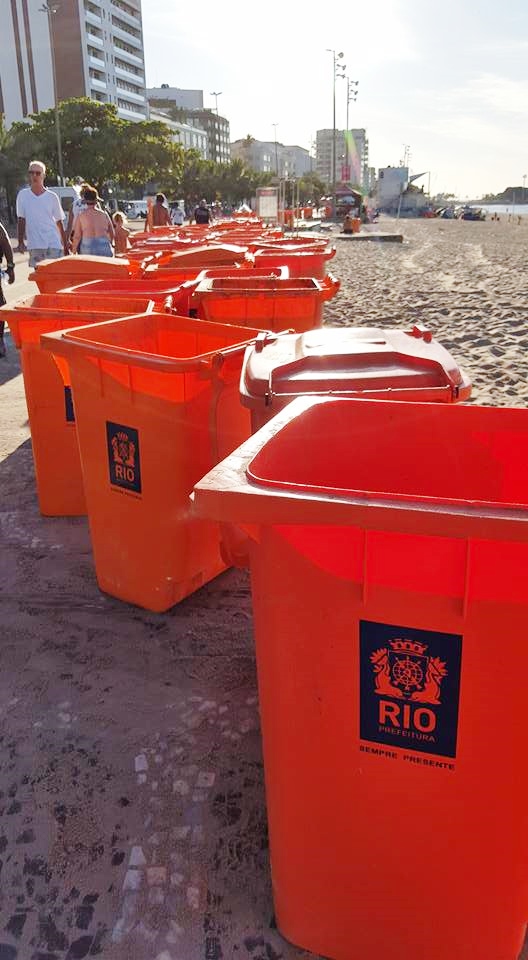
Uma floresta de latas de lixo, mais do que necessárias

Ontem à noite, porém, houve uma batalha assustadora (sem vítimas, aparentemente) entre policiais e moradores, em Inhaúma, perto do Complexo do Alemão. De acordo com moradores, alguns policiais tentaram atropelá-los e deram tiros de fúzil para cima.

Click here, for Carnival 2016: more tolerance, more reflection

Cariocas e fluminenses fizeram de tudo, nos últimos dias, para esquecer seus problemas — ou, pelo menos rir deles. Enquanto alguns foliões usaram máscaras com os rostos do deputado federal Eduardo Cunha (accusado de corrupção) e o “japonês da Federal” (que costuma prender os acusados de crimes de colarinho branco, da Lava Jato), a escola de samba Mocidade de Padre Miguel escolheu o tema de Dom Quixote para cantar e dançar o escândalo do Lava Jato, com plataformas de petróleo, ratos, malas de dinheiro e sambistas sem cabeça, uma das quais vestia um blazer vermelho, fazendo referência à presidente Dilma Rousseff.

Em alguns blocos, folionas se fantasiaram de “as mulheres de Pedro Paulo”, manchando um olho de roxo, para lembrar o candidato sucessor do atual prefeito, Eduardo Paes. A ex mulher de seu coordenador de governo, Pedro Paulo Carvalho, o acusou de ter batido nela duas vezes — e depois, apoiou a candidatura dele.

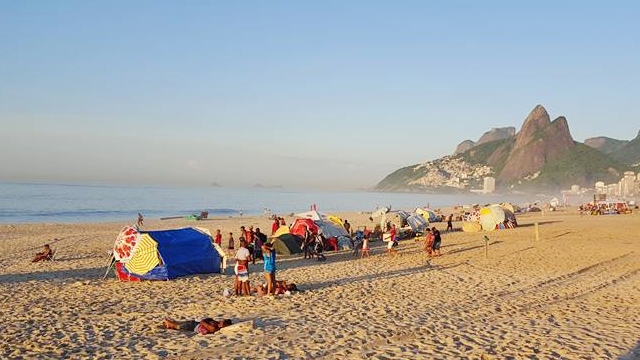
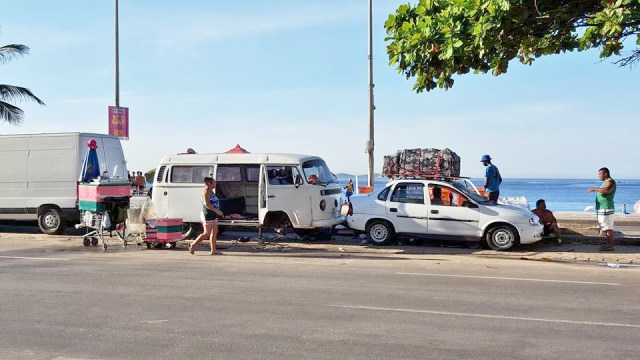
O carnaval de rua, como sempre, focou parcialmente na Zona Sul, sobretudo Ipanema. Enquanto os foliões deixaram bastante limpos a praia e calçadão de Copacabana, o lar da bossa nova levou a pior dos blocos e dos ambulantes que acampam nas ruas e na praia. As áreas principais dos festejos estão cobertas em areia e fedem a urina.

12715785_10153530388655787_8783885070362055933_n

Ambulantes e suas famílias acamparam na praia de Ipanema por quase uma semana

Packing up, on Ash Wednesday

Na quarta-feira de cinzas, ambulantes fazem as malas

Não está claro por que a prefeitura, que não tem problema nenhum em mandar sua Guarda Municipal para atuar nos casos de ambulantes no centro da cidade ou de moradores de favela a serem removidos, fecha os olhos no caso dos ambulantes que acampam nas praias. Será que é porque quem os organiza é a Dream Factory, empresa de eventos que pertence ao Roberto Medina, que faz a Rock in Rio? Ou porque vendem cerveja e refrigerantes fabricados pela Ambev, patrocinadora do carnaval?

Pela primeira vez, jovens brasileiras falaram abertamente sobre um aspecto tradicional da carnaval de rua: assédio sexual. Em posts no Facebook, desabafaram sobre o desconforto e até fizeram acusações sobre comportamentos que até então eram aceitos, na única época do ano quando todo mundo tem o “direito” de desprezar as normas e agir de forma irresponsável. Ao mesmo tempo, casais LBGT pareciam andar sem preocupação nas ruas do Rio, onde as tradicionais regras sociais parecem estar se afrouxando.

fff

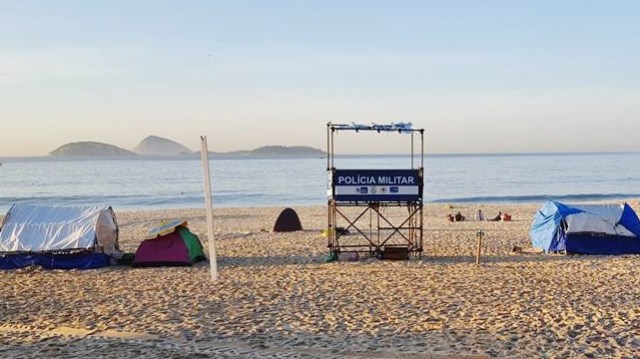
Que tal um pouco de design thinking para esse posto da Polícia Militar que, em noites mesmo fora da época de carnaval, atraem quem precisa de um banheiro?

E agora começa o ano de 2016 que, como a prefeitura nos avisa em placas por toda parte, é um ano que veio “para ficar”, seja o que isso quer dizer.

Posted in Brasil, Transformation of Rio de Janeiro / Transformação do Rio de Janeiro, Uncategorized | Tagged | Leave a comment

Carnival 2016: more tolerance, more reflection

Despite budget cuts and disease-bearing mosquitoes, both street carnival and the carnival parades went off pretty much without a hitch this year.

12728927_10153530497865787_1513460744968110802_n

A forest of trash cans, more than necessary

Last night however, there was a horrific battle (apparently without victims) between police and residents in Inhaúma, near the Complexo do Alemão. Residents say police tried to run them down with a vehicle and shot rifles into the air.

Rio natives did their best over the last several days to forget, or at least laugh at, their troubles. While some revelers wore masks with the faces of congressman Eduardo Cunha (accused of corruption) and the Japonês da Federal (a Japanese Brazilian federal police agent who often takes accused Lava Jato white collar criminals to jail), the Mocidade de Padre Miguel samba school used a Don Quixote theme to sing and dance the Lava Jato scandal, with oil rigs, rats, money-filled briefcases and headless dancers, one of whom wore a red blazer, in reference to President Dilma Rousseff.

In some blocos, women dressed up as “the [battered] women of Pedro Paulo [Carvalho]”, painting black eyes on themselves to point a finger at current mayor Eduardo Paes’ successor candidate for this year’s election, his government coordinator. His ex-wife accused him of beating her, twice– and then went to bat for his candidacy.

Street Carnival, as always, partially focused on the South Zone, especially Ipanema. While revelers left Copacabana relatively clean, the home of bossa nova took the brunt of revelers and the street vendors who camp out in streets and on the beach. The main bloco areas are covered in sand and stink of urine.

12715785_10153530388655787_8783885070362055933_n

Street vendors and families camped out on Ipanema beach for almost a week

Packing up, on Ash Wednesday

Vendors packing up, on Ash Wednesday

It’s unclear just why the city, which often sets its tough municipal guard on street vendors downtown and favela residents meant for removal, turns a blind eye to the vendor-campers. Could it be because they are organized by the Dream Factory, a production company owned by Rock in Rio’s Roberto Medina? Or because they sell beer and soft drinks manufactured by Ambev, a Carnival sponsor?

For the first time, young Brazilian women spoke up about a traditional facet of street Carnival: sexual harassment. Postings on Facebook discussed their discomfort and downright accusations of behavior that until now has simply been an accepted aspect of the one time of year when everyone has the “right” to flout convention and shirk responsibility. At the same time, same-sex couples seemed to feel very much at home on Rio streets, as longtime Brazilian social conventions ease up.

fff

And so begins the year 2016, which, City Hall tells us in banners everywhere, is a year that  is “here to stay”– whatever that means.

Posted in Brazil, Transformation of Rio de Janeiro / Transformação do Rio de Janeiro | Tagged | Leave a comment

A troublesome mayor in Rio de Janeiro

 Vila Autódromo reveals facets of institutions and officials 

SONY DSC

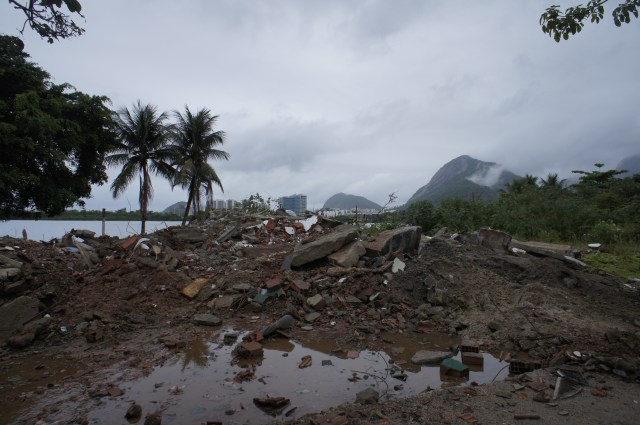
A house was here. What will be in this spot in 2018?

You’d think the removal of residents in the path of the Olympic Games would be part of a public plan, with a clear and convincing rationale.

Para Uma prefeitura difícil,em Rio de Janeiro, clique aqui

After all, cities everywhere, with a view to the greater good, often need to shift homes and people, for various reasons.

In the case of the West Zone informal settlement Vila Autódromo, mayor Eduardo Paes answered a question from RioRealblog this past January 19 saying that the land would be used for access roads to the Olympic Park. After the Games, he added, he wants to recycle a handball court and set up a school there.

Once housing more than 600 families, Vila Autódromo is home today to a small remnant of a once vibrant and safe community.

Asked if buildings would go up there after the Games, Paes said no. Claiming that Vila Autódromo isn’t in the Parceria Público Privada do Parque Olímpico (Public-Private Partnership for the Olympic Park, a business deal that includes a little-known R$ 7.6 million municipal tax debt owed by the Carvalho Hosken real estate developer), Paes said that this is public land that can’t be built on — and that “the buildings will be just in the area of the [now-demolished] race car track, where they already were –”

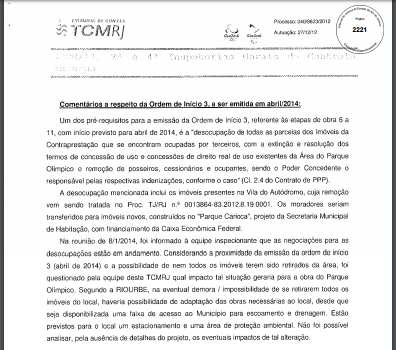
The area was never part of the Nelson Piquet Racetrack land, which confusingly changed hands over the years, between city and state. It is however — contrary to the mayor’s claim — part of the Public-Private Partnership, or PPP. Otherwise why would the Municipal Accounting Court be including Vila Autódromo in its comments on the PPP contract, as seen below?

Capturar

The blog didn’t have a chance to ask what the mayor meant when he said  “where they already were –“.

Vila Autódromo came into existence in the 1970s as fishermen and construction workers who helped build the racetrack made their homes there. In the 1990s, hundreds of families received, from then-governor Leonel Brizola, a real usage concession for 99 years, renewable for 99 more. Since 2005, part of the Vila constitutes an Área Especial de Interesse Social (Special Social Interest Area), which means that it can only be used for low-income housing.

Interestingly, since the 1990s there have been several attempts to remove Vila Autódromo residents. Brizola was no great ally of then-mayor César Maia, for whom current mayor Paes was vice-mayor for most of the West Zone. One should also remember that real estate prices in the region increased in the last several decades, and gained momentum when it was decided that the Games would take place in this relatively safe, low-density area.

RioRealblog thought it pertinent to ask about City Hall’s plans for the spot where Vila Autódromo sits because it has never publicly presented a project for it. The mayor’s office told the Municipal Accounting Court that there would be a parking lot and an environmentally protected area.

In recent years there has also been mention of, in connection with the removal of Vila Autódromo, widening Embaixador Abelardo Bueno and Salvador Allende Avenues; building the Olympic Media Center; a safety perimeter for the Olympic Park; a “Marginal Protection Strip”; and a connection between two highways under construction (apparently the Transolímpica and the Transcarioca).

SONY DSC

The mayor answers questions at an OsteRio event in January 2016, in Ipanema

The only plan –to upgrade the existing area –was drawn up by university (UFF and UFRJ) specialists, together with residents, and won an award, the Deutsche Bank Urban Age Award, with a check of US$ 80,000. Carrying out this project would have cost taxpayers less than what is now being done (removal, expropriation payments, construction of Minha Casa Minha Vida apartaments on land purchased for this purpose), according to a comparison made by critics of City Hall. In October 2013, the award ceremony, set to take place during a cocktail party at the Palácio da Cidade, with the mayor’s participation, was suddenly canceled.

Instead of an upgrade, removal: hundreds of families have left Vila Autódromo in the last three years. They either accepted a nearby apartment or came to a financial agreement with the city.

During the January OsteRio Q and A event, the mayor said that the 30 families still living there are free to stay.

Vila Autódromo is far from Ipanema. Few of those present will have the chance to see with their own eyes what goes on there. Fortunately, the O Globo e Extra newspapers published a piece on it last week (strangely placed in the sports sections). There are also São Paulo newspapersindependent sites and social media. Below, a video made by a resident who wasn’t allowed in to feed his mother’s dogs:

Families who still live in Vila Autódromo aren’t having a comfortable time of it. City Hall usually requires residents to leave right after (in some cases, hours) receiving payment. Then they destroy the unoccupied property. This has led to damage in neighboring homes. Residents say the city and utilities have interrupted power and sewage collection. They complain of intimidation, of aggressive municipal guards, and of being kept away from their homes. They say they’ve have received death threats and that milicianos have appeared among the municipal guards.

They fear the city will carry out demolitions during Carnival, when most people’s attention is taken up with partying.

A recent court decision requires the city to remove rubble without delay and to take care of dangerous puddles. A fine was set for non-compliance.

Citizen hardship isn’t always  — nor should it be — a determining factor when it comes to making public policy. Government officials weigh the pros and cons of their decisions. In the case of Vila Autódromo, it’s unclear exactly who or what benefits from residents’ removal, while the disadvantages surely are theirs.

So it’s a good thing that institutions exist to make a contribution to the fair exercise of power. Up to 2013, the Subprocuradoria de Justiça, Direitos Humanos e Terceiro Setor (state attorney general’s office for justice, human rights and the third sector), principally assistant attorney general Leonardo Chaves, was keeping watch over City Hall. That year, he was transferred to another post. Nevertheless, Chaves wrote an opinion in 2014, in favor of residents’ full right to stay in their homes.

Today, Chaves told RioRealblog, “the Subprocuradoria [de Justiça, Direitos Humanos e Terceiro Setor] exists in name only”.

At the state Public Defenders office, the Núcleo de Terras e Habitação (housing and land nucleus) underwent a strange internal battle that same year. Defenders had filed the Brazilian equivalent of a class action suit to nullify the city’s demolition license for the homes, but their nucleus Coordinator claimed that demolition was “an essential condition for a change in housing, whether by the express will of titled residents, or indispensable to avoid illegal occupation by third parties, creating future problems for the city.”

Despite the threat to the defenders’ constitutional autonomy, they stayed in their jobs and today continue to represent those who want to stay in Vila Autódromo.

In comparison to other Brazilian states, Rio de Janeiro is equipped with strong institutions to defend citizens’ rights. Both the state attorney general’s office and the state public defender’s office bring a wide variety of issues to the judiciary’s attention. Not infrequently, the courts take decisions that penalize the legislative and executive branches of local government.

Yet there is a problem, according to José Augusto Garcia, UERJ law professor and general director of the state Public Defender’s office’s Center of Legal Studies. “Compliance with a court decision is more difficult than getting a decision,” he told RioRealblog, mentioning as an example a recent decision to ban manual body searches of women visitors to state prisons. “The judiciary’s power to enforce its own decisions is weak.”

As is the case with many land issues in Brazil, Vila Autódromo’s legal history is a confusing tangle of decisions and documents. Public defender Adriana Bevilaqua took over an hour to explain it to RioRealblog last week.

Legally, she says, the mayor cannot expropriate by decree (as he did in March 2015) homes that lie in the part of Vila Autódromo denominated a Special Social Interest Area, which includes the neighborhood association’s building and the home of community leader Maria da Penha. A new law would be necessary, according to Bevilaqua.

The end of this story, still in the courts, is yet to come.

Meanwhile, life goes on and the Carvalho Hosken, Andrade Gutierrez and Odebrecht construction companies are carrying out their parts as specified in (with some provisos from the Municipal Accounting Court) the Olympic Park Public-Private Partnership.

“How can you put poor people there?” asked Carvalho Hosken owner Carlos Carvalho in mid-2015, in an interview with BBC reporter Jefferson Puff. He was referring to his post-Games real estate development in the Olympic Park. “A poor person has to live nearby because he lends a service and earns money from those who can pay, but you should only put those who can pay there, otherwise you spoil everything, you throw money out the window.”

In Carvalho Hosken’s plans for Vila Autódromo, according to the report, there will be a green area in front of “upscale condominiums.”

Years will pass before we know what will be where Vila Autódromo now lies. One thing is certain, however: if all its residents leave, as the city would like, its story will be just one more in metropolitan Rio’s real estate saga, where the treatment of different social groups is sadly unequal.

*  *  *  *  *

Read Rioonwatch’s reporting on resident intimidation here .

Read a 2013 opinion from engineers, architects and university experts here .

Read a 2015 report in The Guardian here .

Posted in Brazil, Transformation of Rio de Janeiro / Transformação do Rio de Janeiro | Tagged , , , , , , | Leave a comment