Rio: the new Venice?

Sustainability needs politics 

This past summer, the sand at Arpoador Beach began to disappear, long before the customary winter shrinkage. Snack and beverage vendors, licensed by the city to operate in a now nonexistent spot, demanded a new venue.

It’s not known if they got one,  but a globally-warmed Rio will certainly be dealing with such problems, and many more serious, in the not-too-distant future.

“Temperature lows are going to rise,” said economist Sérgio Besserman at a recent Rio de Encontros environmental debate, “and this means that dengue fever will increase, because we won’t have the usual chilly winter temperatures killing off mosquitoes. Increased flooding will also lead to more leptospirosis, and to more deaths due to heat. It’s going to rain heavier and with greater frequency.”
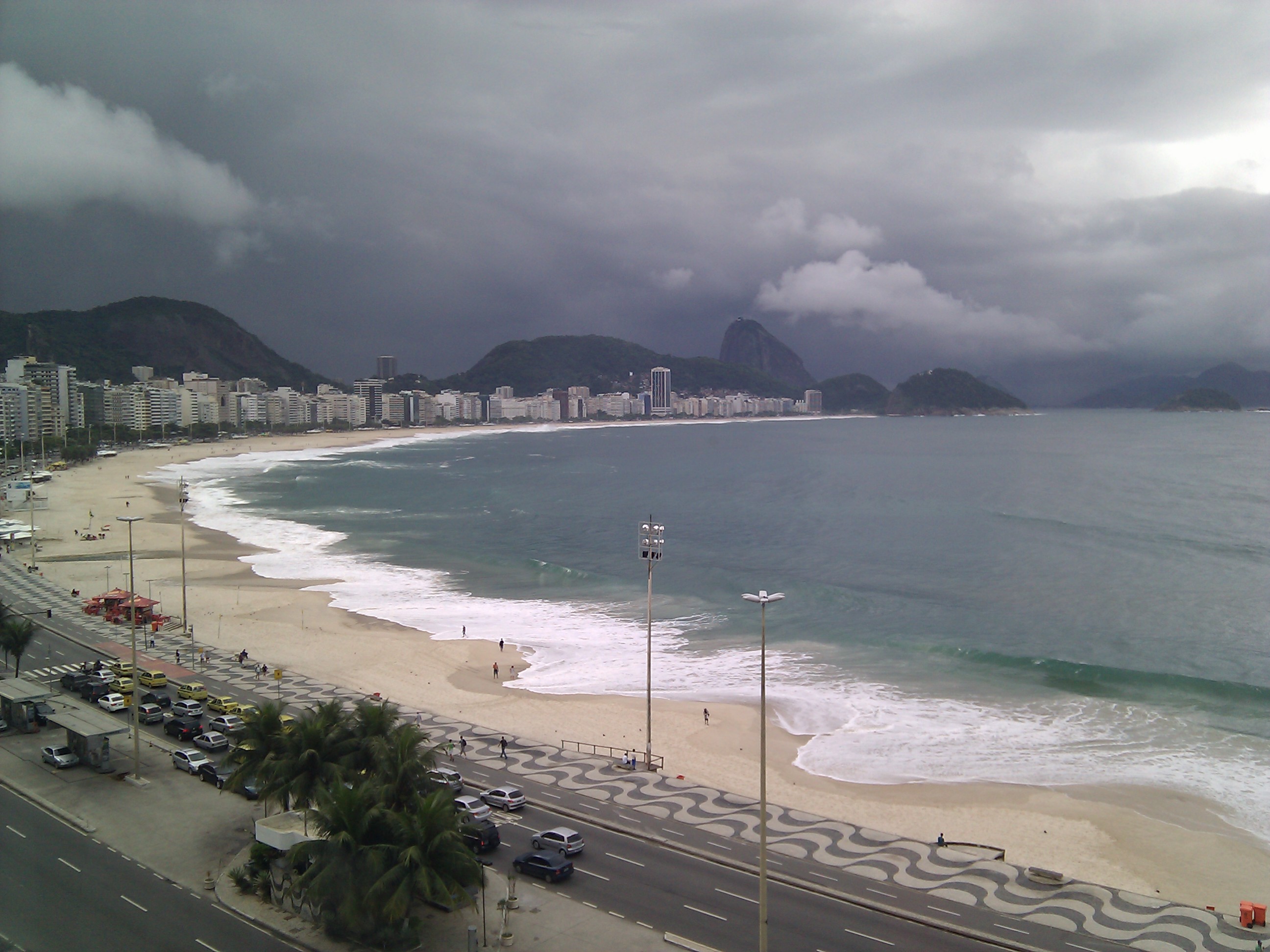
Storm clouds for Rio's coastline

Any carioca can tell you the future Besserman describes is here; both urban life and terrain are marked by the days when mudslides bring the city to a standstill.

“Rio de Janeiro is the largest coastal metropolis in Brazil,” said geographer Paulo Gusmão, speaking at the same event. “It’s a major oil and gas producer, with a regional population of 11.5 million. Risk has become routine. And we have no metropolitan entity to think about this and plan for it. Since the contiguous cities compete for resources, they are unlikely to cooperate with each other.”

Rio’s petrochemicals and steel industries are located in lowland areas at risk, with about US$ 60 billion already invested in their projects. Gusmão said flooding will be a key issue for them.

Surf’s up

At this magical moment for Rio de Janeiro, we don’t hear much about the environment. You might say that Cinderella is obsessing over finding a purse to match her crystal pumps, when she and the prince ought to be calculating moat overflows.
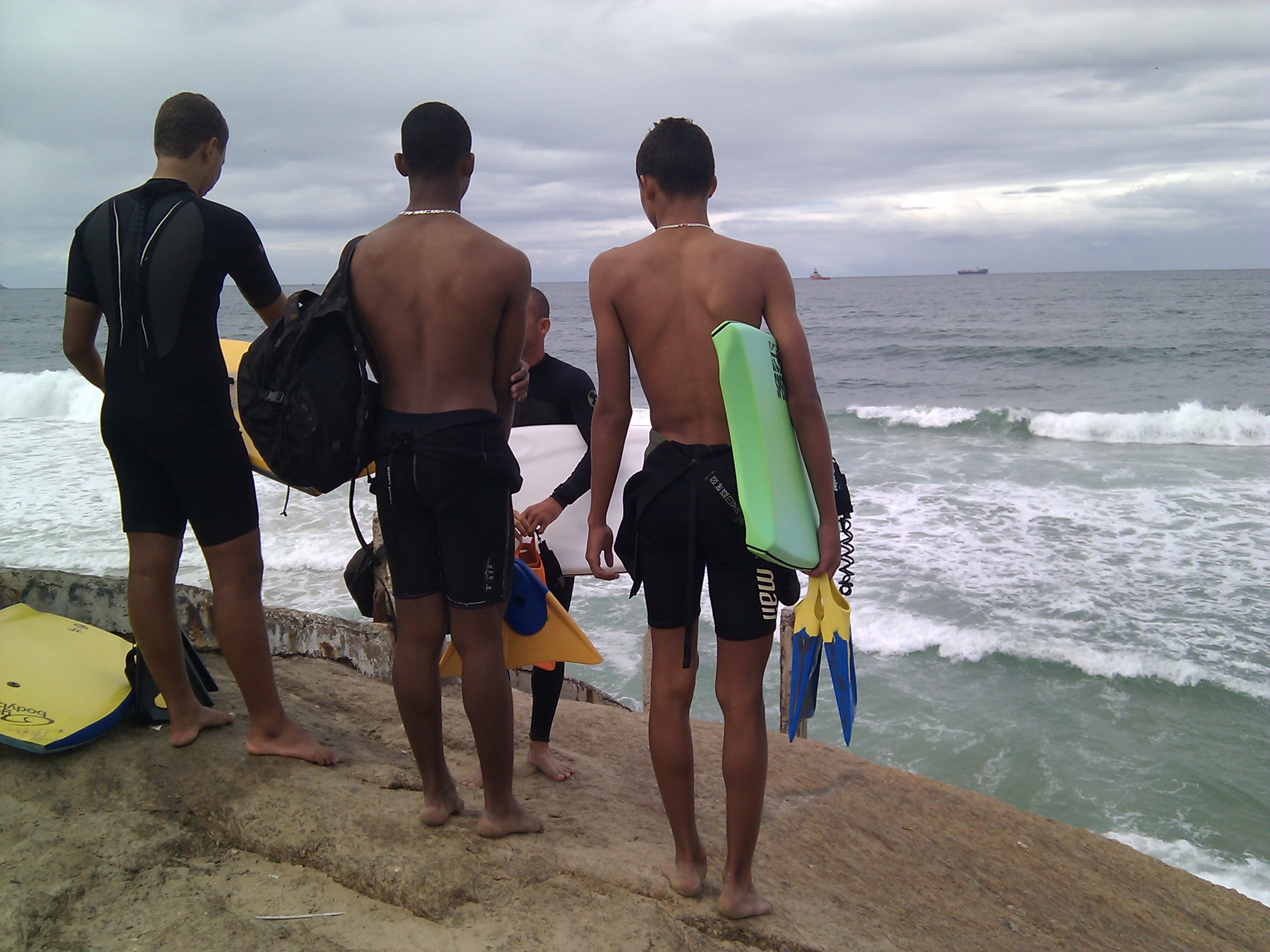
Making the most of bad weather

“We’re going to have the Dutch at our door, saying ‘you need something we know how to do’,” Besserman said. Every ongoing project should spend up to 30% more than budgeted, he added, to prepare.

Not many people are thinking about the city’s energy vocation, either. As if the global economy will ever continue to be fed by fossil fuels, goverment officials and the media tend to focus on new oil discoveries and a debate begun last year over whether petroleum royalties should be kept in-state or not. But the picture has already flipped.

Using our heads to get ahead?

Rio’s potential is the focus of a must-read essay in the newly published Rio: a hora da virada, organized by economists André Urani and Fabio Giambiagi  (the entire book is required reading for anyone who has a grasp of Portuguese and wants to get the word from experts on what is happening in Rio and what the challenges are, in every sphere of urban existence).

“The dynamic center has shifted. The dynamism of the Brazilian economy, far beyond momentary phenomena, will depend on its capacity to face the broadest and most rapid technological transition in economic history, one which in the next couple of decades will bring the planet’s developed societies from a civilization of fossil fuels to a low-carbon economy,” write Sérgio Besserman, Rodrigo Rosa and Clarissa Lins in Sustentabilidade é competividade: para o Rio e para o Brasil (Sustainability is competitiveness: for Rio and Brazil).

The authors argue that Rio de Janeiro is uniquely positioned as the world makes this transition. “… in the world and in Brazil there are cities more advanced than Rio de Janeiro in terms of sustainable policies and practices. But there is no city with 6.2 million inhabitants, about 12 million in its metropolitan region, with a vast constructed space and three large urban forests, two bays, a lagoon system and a long ocean coastline,” the essay notes. It’s not for nothing that Rio, they add, will host the 2012 U.N. Conference on Sustainable Development, followup to the 1992 environmental conference also held here.

A Siemens-sponsored Economist Intelligence Unit study puts Rio among the top Latin American cities ranked by environmental sustainability.
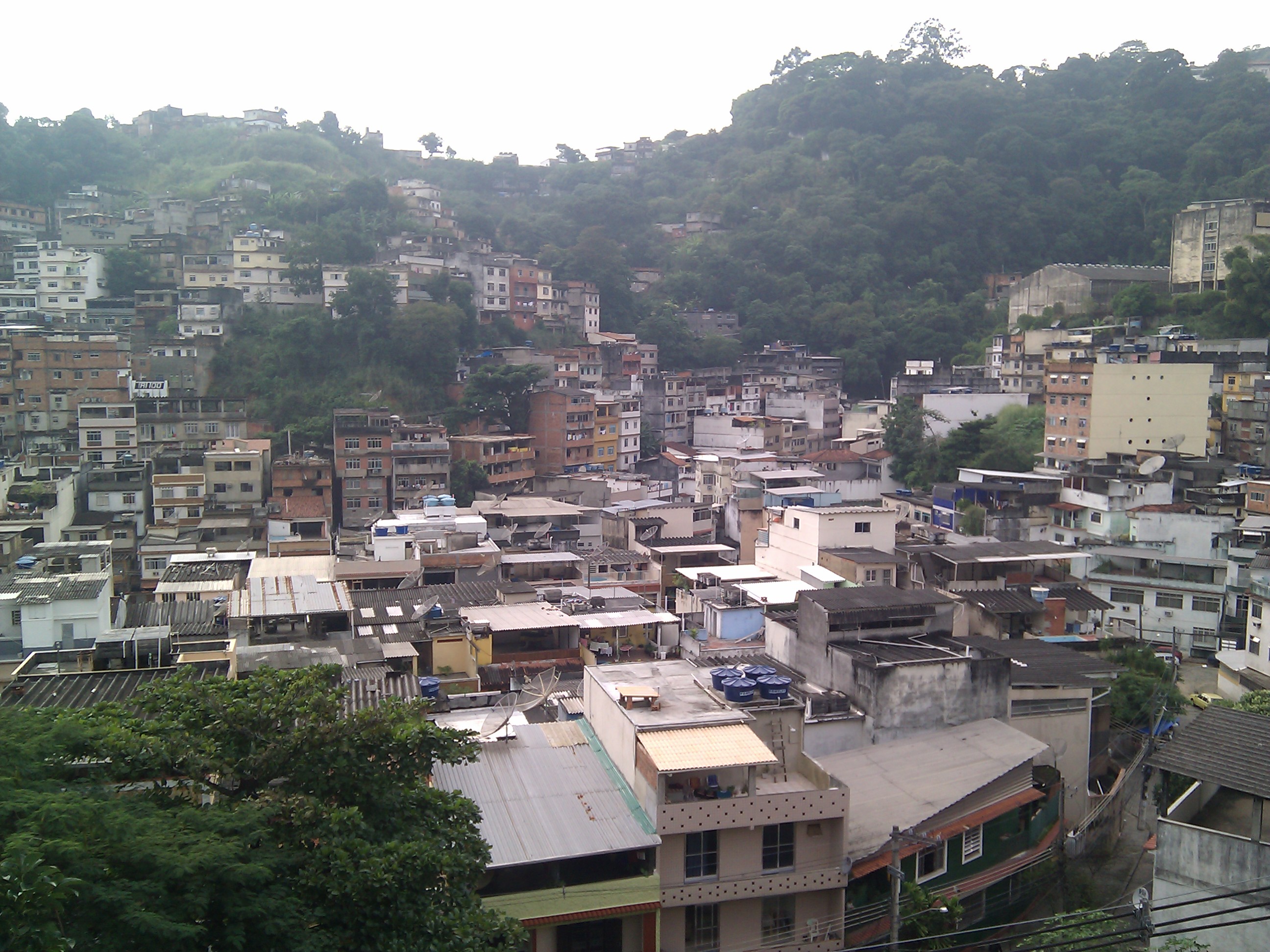
Poor sewage coverage, now-- but in a few years this favela could become prime real estate

“There are very strong reasons for the sustainability agenda to be one of the axes, if not the principal axis, of the great transformations now taking place in Rio de Janeiro,” say Besserman, Rossa and Lins. Already, the city has set greenhouse gas emission reduction goals, begun to expand mass transportation, substituted the old Gramacho trash dump with a state-of-the art landfill in Seropédica, and started to clean up the Lagoa and Guanabara Bay.

Much remains on the agenda; a new model for sustainable development and governance is a high priority, the essay notes. Sewage treatment covers only 30% of all households. Environmental education is needed to help change citizens’ habits. The Morar Carioca favela upgrade program could incorporate solar panels and rainwater utilization. Regulators need better tools for measuring environmental and social costs, business should be induced play a bigger environmental role in the city, and there should be more community participation in policymaking and implementation.

All eyes on the West Zone

Of particular concern to these writers and other environmental experts is the development occurring in and around Sepetiba Bay, in the city’s West Zone.  The essay suggests a governance model based on the creation of a powerful non-partisan technical agency to help the city set goals and monitor performance of those who utilize its shores and waters.

And at least one environmentalist, sociologist and political scientist Sérgio Abranches, who also spoke at the Rio de Encontros debate, urges a more radical rethink of Rio de Janeiro’s vocation. The current focus on steel and petroleum is backward, he says; the future is not in the rearview mirror to the smokestack 1950s, but forward to knowledge-based activity, such as biofuels, nanotechnology and neuroscience.

Turning around to the future may be Rio’s most difficult task of all. “Knowledge must be valued,” Besserman said. “People think the problem in Brazil is access to education, for the poor. But we, the elite, haven’t valued knowledge because we didn’t need it to compete.”

Should cariocas stop using plastic bags and ride bicycles to help Rio become more sustainable? Yes, said Besserman. But we also need to get more involved, to “make politics with a capital P”.
Posted in Brazil, Transformation of Rio de Janeiro / Transformação do Rio de Janeiro | Tagged , , , , , , , , , , , , | 2 Comments

Quem (ou o quê) está prestando ajuda?

For Who (or what) is doing the helping?, click here

Os brasileiros sabem muito bem se relacionar, mas…

“Uma viciada em crack no morro do Turano, onde trabalho na UPP, estava deitada no chão perto de mim e pediu ajuda,” contou o cabo Evandro Frossard ao RioRealblog enquanto patrulhava os jardins do Palácio da Cidade na quarta-feira passada. “O chefe do tráfico já tinha tacado fogo nela e também quebrado as pernas dela. Agora ela queria sair dessa. Então eu fiz uma busca na Internet, achei um centro de recuperação, e a levei. Ela já ficou quatro meses, está bem melhor. Havia perdido a guarda do filho, e  já o conseguiu de volta. Ganhou peso, está com o cabelo preso.”

Ele a visita toda quarta-feira. “Faço isso porque gosto de fazer, me faz sentir bem,” ele diz. “Pensam que quero ser político, mas não quero. Nem moro por ali.”

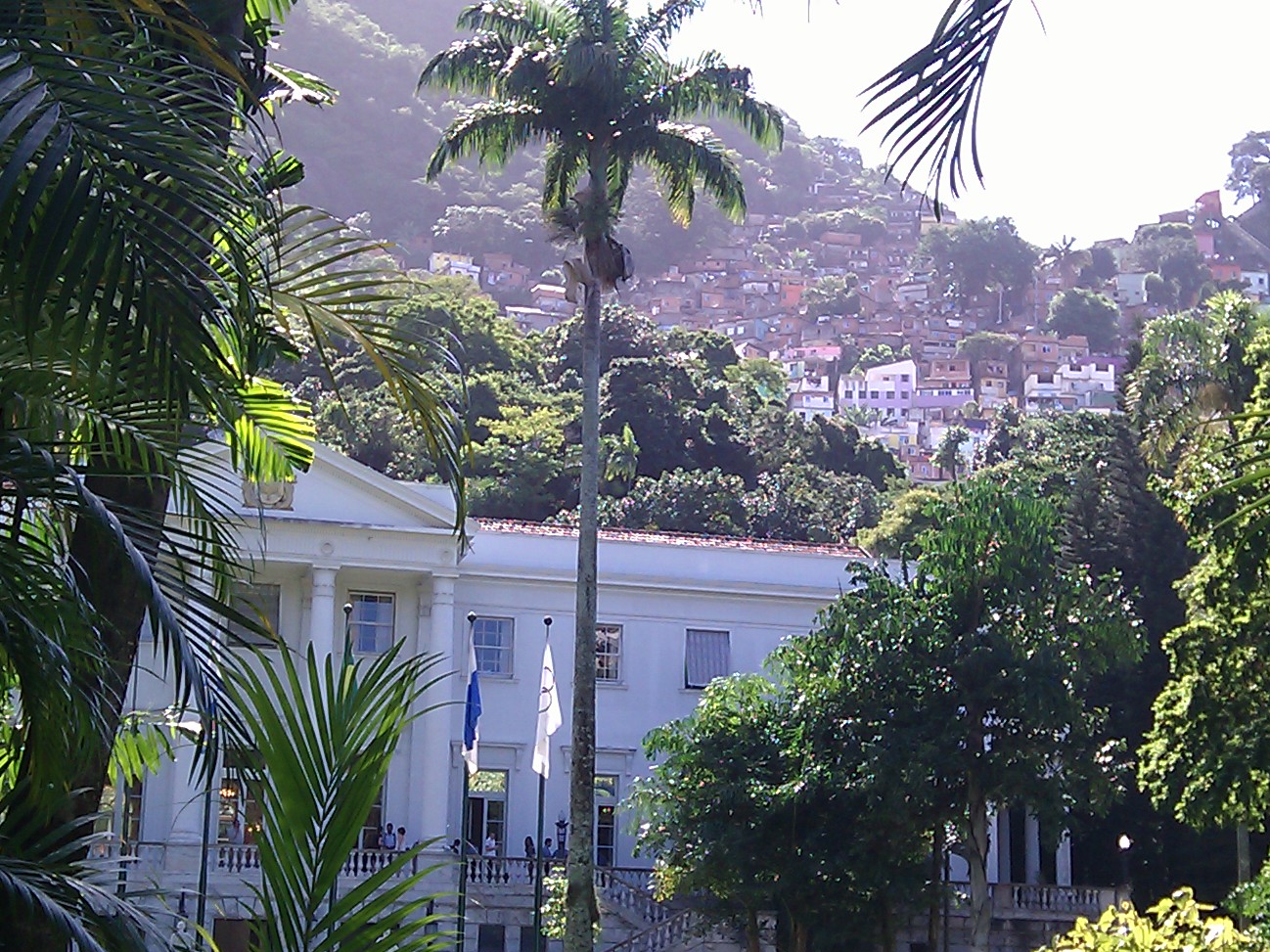
O Palácio da Cidade

Trata-se de uma boa ação, um trabalho bem feito, ou as duas coisas? A polícia de pacificação está em 17  morros do Rio de Janeiro para mantê-los em paz, para mediar conflitos e para contribuir no processo de inclusão social. Mas será que cada elemento da força UPP irá reagir a um viciado de crack da mesma maneira que fez o cabo Frossard?

“Não posso responder pelos meus colegas,” diz ele. “Mas estamos lá para servir e proteger, não apenas para manter a paz, mas para ajudar. Semana passada, um rapaz de 22 anos chegou para mim e disse que queria aprender a ler,” ele acrescenta. “Tinha vergonha de falar isso para qualquer outra pessoa.” Frossard se surpreendeu ao saber que os presidentes das associações de comunidade até então não haviam ajudado a viciada, que todo mundo já conhecia.

Seu treinamento não incluiu a divulgação de programas de alfabetização ou de recuperação de vício em drogas. Mas a polícia de pacificação está aprendendo cada vez mais e utilizando táticas de mediação e práticas de primeiros socorros— e estão fazendo partos.

O Rio de Janeiro está mudando, mas as fronteiras entre pessoas físicas e pessoas jurídicas – sejam entidades governamentais, empresas ou ONGs— não estão claras. O vácuo de necessidades sociais, educativas e físicas, que por cinco décadas o governo não preencheu, foi ocupado ao acaso por todo tipo de pessoas e grupos, formais e informais, inclusive traficantes de droga e milicianos. Agora, os papeis começam a se definir.

Alvos novos para a polícia carioca

A necessidade de se sentir parte de algo maior—e melhor

Como parte desse processo, um novo estudo da polícia de pacificação, realizado por Silvia Ramos, Julita Lemgruber, Barbara Musumeci Soares e Leonarda Musumeci, do Centro de Estudos de Segurança e Cidadania da Universidade Cândido Mendes, CESeC, revelou que muitos policiais da UPP se sentem um tanto alienados. “O que se destaca, finalmente, dessa primeira etapa do levantamento, é a importância de que a formação dos policiais valorize os princípios do policiamento de proximidade, enfatizando os elementos capazes de reforçar a identificação dos agentes com o projeto, de ressaltar a novidade do modelo e a importância do trabalho realizado por cada um,” o estudo ressalta. “Embora, até o momento, as UPPs estejam colhendo muito mais sucessos do que fracassos, há diversos desafios a serem enfrentados para que elas se tornem efetivamente sustentáveis. Um deles é fazer com que os policiais de ponta sintam-se também beneficiários do projeto e responsáveis diretos pela mudança das relações entre população e polícia.”

Falta uma sensação de pertencer, dizem as pesquisadoras; poucos policiais de pacificação sentem orgulho, compromisso. Nem estão seguros de que estarão no cargo por muito tempo. Um total de 70% dos 359 policiais entrevistados no fim do ano passado concordaram com a afirmação de que as UPPs foram criadas apenas para garantir a segurança pública durante a Copa e as Olimpíadas.

A sensação de fazer parte de algo maior do que seu próprio círculo social não é muito comum no Brasil, onde, durante séculos, as instituições débeis e uma sociedade aristocrática levaram as pessoas a depender de sua capacidade relativamente limitada para criar relacionamentos. Pesquisas de ciências sociais revelam que poucos brasileiros se sentem próximos ou confiam em pessoas além de seus parentes e amigos íntimos. “Uma implicação especialmente negativa dos resultados [disso] é que a ineficácia de instituições públicas como o Judiciário e a polícia em conter a transgressão delapida um ativo intangível como a confiança, enfraquecendo a capacidade de famílias, comunidades e organizações religiosas de balizar um leque de comportamentos aceitáveis. Por sua vez, a perda de capital social debilita as instituições, distanciando-as mais ainda da população e realimentando o sentimento de insegurança e alienação,” escrevem os cientistas políticos Amaury de Souza e Bolivar Lamounier em seu livro novo, A classe média brasileira: ambições, valores e projetos de sociedade.

Pesquisadora do CESeC Silvia Ramos, Secretário Municipal de Habitação Jorge Bittar, Diretor do UN Habitat para América Latina e Caribe Alain Grimard, Presidente do Instituto Pereira Passos Ricardo Henriques, Presidente da Associação de Moradores do Morro dos Prazeres Elisa Brandão, Comandante das UPP Coronel Robson Rodrigues

Dando nome aos bois

Enquanto o cabo Frossard desfrutava dos luxuriantes jardins do Palácio da Cidade, o responsável pela UPP Social, Ricardo Henriques (presidente do Instituto Pereira Passos), estava dentro do palácio apresentando seu trabalho e anunciando uma nova parceria de R$ 5 milhões com o programa Habitat da ONU. Ao dar exemplos de como funciona a UPP Social, ele explicou que, uma vez identificadas as necessidades de uma comunidade, são alocadas para o “Alex, Osório, ou Hans”. Eis como o Henriques denominou algumas secretarias do governo municipal. Os dois últimos homens são fáceisde descobrir. Carlos RobertoOsório é o Secretário Municipal de Conservação Urbana, e Hans Dohmann é o Secretário de Saúde. Mas há vários Alexandres entre os 23 secretários municipais do Rio de Janeiro. Para quem está do lado de fora (e somos muitos), o quem é quem do governo carioca é um desafio e tanto. Novamente, a sobreposição do pessoal com o institucional; surgem dúvidas sobre a continuidade das boas obras e boas ações, uma vez que o “Alex” troca de cargo.

Rio de Janeiro é ao mesmo tempo um lugar de alguns avanços e atrasos no meio de bastante transformação. Os resultados da pesquisa do CESeC certamente serão incorporados ao esquema de treinamento da polícia de pacificação. E à medida que as instituições se tornem mais profissionais, mais responsáveis e transparentes, as pessoas precisam de ajuda de outros indivíduos. Será sempre assim.

Você conhece alguém que pode ajudar Vida Real a achar um novo local?

Foi por isso que a Move Rio, uma associação de jovens profissionais cariocas, na semana passada se juntou ao movimento Rio Eu Amo Eu Cuido e convidou amigos de Facebook para ouvir a história de Tião, que está na foto acima. Ex-traficante de drogas na favela Nova Holanda dentro do Complexo da Maré, faz tempo que o Tião parou de usar e vender drogas, “pelas minhas filhas”.

Uma pessoa leva a outra

Um dia, ele estava à toa em casa, desempregado, quando seu enteado chegou do colégio com a reclamação de que um grupo de meninas lhe havia dado uma surra. Tião foi falar com o diretor da escola. “Disse que não podia fazer nada. Eram namoradas de traficantes”. Então, Tião foi até o chefe do tráfico. “Ele chamou as meninas e seus namorados e aplicou-lhes um castigo: por dois anos elas não podiam frequentar lugar nenhum na favela, apenas ir e voltar de casa para a escola.”

Tião então voltou a falar com o diretor, para agora pedir uma providência. “Para minha surpresa, ele me ofereceu um emprego, de inspetor.”

Tião logo botou ordem no colégio.

Um dia, apareceu uma produtora de documentário, Renée Castello Branco, pedindo que ele encontrasse dez jovens que trabalhassem no tráfico e que pudessem ser entrevistados. “Depois das gravações, a Renée me telefonou com uma oferta de seiscentos reais por mês, querendo que eu os distribuísse entre os meninos para que pudessem sair do tráfico. Mas eu falei que não adiantava, que o que eles precisavam era de um lugar para ir, e atividades para se ocuparem.”  A produtora apresentou Tião a seu amigo Pedro Werneck, e em 2005 sua ONG Instituto da Criança ajudou a criar Vida Real, para jovens de entre 12 e 18 anos. “Começamos com cinquenta adolescentes escolhidos a dedo,” diz Tião. “Até o momento, mil jovens já passaram pela Vida Real. Seis morreram. Nenhum está no tráfico.” Por meio de 12 funcionários remunerados, os jovens têm acesso ao reforço escolar e a aulas de informática, grafite, aerografia,  design e artesanato, entre outras. Vida Real tem uma lista de espera com noventa nomes. O trabalho do Tião é tão bem conceituado que a FIRJAN fez parceria com a Vida Real para dar reforço escolar e treinar sessenta prostitutos e prostitutas jovens, e assim mantê-los longe da rua.

“Precisamos de mais espaço,” Tião falou para seu público em Ipanema na semana passada. Werneck, um empresário que se dedica em tempo integral ao terceiro setor desde 2007, explicou que Vida Real poderia funcionar dentro de um dos muitos prédios abandonados pela Avenida Brasil. “Mas o prédio que vimos pertence ao Governo do Estado, e não conseguimos chegar a um acordo,” ele acrescentou. “Assim é que, se você conhecer alguém que possa nos ajudar– “.

Posted in Brasil, Transformation of Rio de Janeiro / Transformação do Rio de Janeiro | Tagged , , , , , , , , , , , , , | Leave a comment

Who (or what) is doing the helping?

Brazilians are great networkers, but–

“A crack addict in the Turano favela where I work with the new police pacification force was lying on the ground near me and asked for help,” Corporal Evandro Frossard told RioRealblog as he patrolled just outside the mayor’s City Palace last Wednesday. “The druglord had once set her on fire and another time he broke both her legs. Now she wanted out. So I did a search on the Internet, found a rehab center, and took her there. She’s stayed four months, she’s much better. She had lost custody of her son, and now has him back. She’s gained weight, has her hair pulled back in a pony tail.”

He visits her every Wednesday. “I do it because I like to, it makes me feel good,” he says. “People think I’m going to run for political office, but I have no intention of this. I don’t even live in that area.”

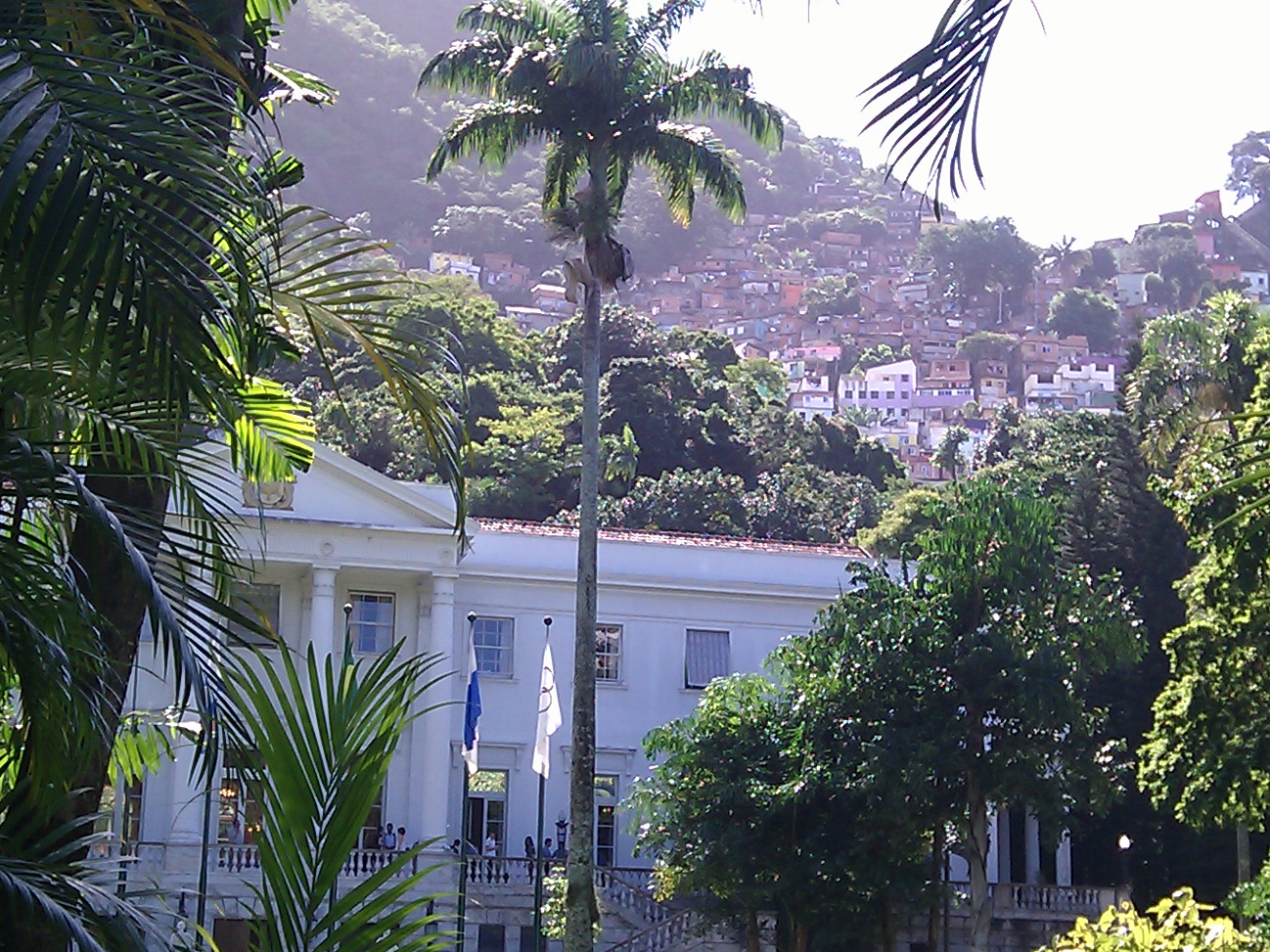
The City Palace

Is this a good deed, work well done, or both? The pacification police are in 17 Rio favelas to keep them peaceful, to mediate conflict, and to help along the process of “social inclusion”. But will every member of the UPP (the Portuguese acronym for police pacification unit, the first of which was installed in the Dona Marta favela in December 2008 as part of the state’s occupy-and-pacify policy to increase public safety) force react to a crack addict the way corporal Frossard did? Did helping the addict take him away from other work, possibly more important?

“I can’t speak for my colleagues,” he says. “But we are there to serve and protect, not only to keep the peace, but to help out. Last week a 22-year-old man came up to me and said he wanted to learn how to read,” he adds. “He was embarrassed to tell anyone else.” Frossard was surprised that the presidents of the favela’s neighborhood associations hadn’t yet helped the crack addict, since everyone in the community knew her.  His training didn’t include outreach for drug rehab or literacy. But pacification police are increasingly learning and using mediation tactics and first aid–  and delivering babies.

Rio is changing, but the boundaries between individuals and entities– be they government agencies, businesses, or NGOs, are still fuzzy. The void of social, educational and physical needs that government failed to fill for five decades has been haphazardly occupied by all sorts of people and groups, formal and informal, including drug traffickers and paramilitary gangs. Now, roles are being sorted out.

A change of pace for Rio police

A need to feel part of something bigger– and better

As part of this process, a new study of the pacification police, undertaken by Silvia Ramos, Julita Lemgruber, Barbara Musumeci Soares and Leonarda Musumeci at the Universidade Cândido Mendes’ Center for  Safety and Citizenship Studies, CESeC, has found that many UPP cops feel they are left to their own resources as they carry out their work. “What is most evident in this first stage of our survey is how important it is that police training should highlight the principles of proximity policing, emphasizing elements that can reinforce agents’ identification with the project, underline the newness of the model and the importance of each person’s work,” the study points out. “Though the UPPs are racking up much more success than failure, there are several challenges to be faced such that they can become truly sustainable. One of these is to make sure that on-site police feel they also benefit from the project and are directly responsible for the change in relations between the people and the police.”

A sense of belonging is lacking, these researchers say; pacification police don’t feel identity, pride, commitment. They’re not even sure they’re here to stay. A full 70% of the 359 police interviewed late last year agreed with a statement that UPPs were created only to guarantee public safety for the World Cup and the Olympics.

Feeling part of something bigger than one’s social circle isn’t very common in Brazil, where weak institutions and an aristocratic society have for centuries thrown people back on their (limited) networking capabilities. Social science research shows that many Brazilians don’t feel close to — or trust–many more people than their blood relatives and a close circle of friends. “One especially negative result [of this] is that the inefficacy of public institutions such as the judiciary and the police to contain transgression eats away at an intangible asset such as trust, weakening the capacity of families, communities and religious organizations to identify a range of acceptable behaviors. At the same time, the loss of social capital debilitates institutions, moving them further away from people and feeding on their feelings of insecurity and alienation,” write political scientists Amaury de Souza and Bolivar Lamounier in their new book, A Classe Média Brasileira: ambições, valores e projetos de sociedade (The Brazilian Middle Class: ambitions, values and goals for society).

CESeC researcher Silvia Ramos, municipal housing secretary Jorge Bittar, UN Habitat Latin American and Caribbean director Alain Grimard, Instituto Pereira Passos president Ricardo Henriques, Morro dos Prazeres Neighborhood Association president Elisa Brandão, UPP program commander Colonel Robson Rodrigues

Who’s on first?

While Corporal Frossard was taking in the lush gardens of the City Palace, Social UPP coordinator Ricardo Henriques (who is also president of the Instituto Pereira Passos) was inside, presenting his work and announcing a new US$ 3 million equivalent partnership with the UN Habitat program. Giving examples of how the Social UPP works, he explained that once community needs are identified, they’re passed on to “Alex, or Osório, or  Hans”. This was Henriques’ way of naming some of Rio’s municipal agencies. The latter two men are easy to identify. Carlos Roberto Osório is  the municipal secretary of urban conservation and Hans Dohmann is the health secretary. But there are several Alexandres among Rio’s 23 municipal secretaries. For the uninitiated (and we are many), the who’s who of the carioca government is a big challenge. Again, an overlap of the personal with the institutional; one wonders if all this good work will continue once “Alex” has moved onto another job.

Rio de Janeiro is a place of leaps and lags, amid great transformation. CESeC’s survey findings will certainly be applied to the pacification police training process. And as institutions become more professional, responsible, transparent and accountable, people still need help from individual people. They always will.

Know anyone who can help find a building for his NGO?

Which is why the Move Rio association of young carioca professionals, got together last week with the Rio Eu Amo Eu Cuido (Rio I love it I take care of it) movement and invited a bunch of Facebook friends to hear the story of Tião, pictured above. Once a top drug trafficker in the Nova Holanda favela in the Maré complex of favelas, Tião stopped using and selling drugs “for my daughters”.

One person leads to another

One day, he was lolling at home unemployed, when his stepson came in from school complaining that a group of girls had beaten him up. Tião went to speak to the principal. “He said he couldn’t do anything. They were drug traffickers’ girlfriends”. So Tião went to the local drug boss. “He called the girls and their boyfriends to appear before him and gave the girls a punishment: for two years they could only go from home to school and from school back home, and nowhere else in the favela.”

Tião then went back to the school principal, to ask him to keep an eye out for his stepson. “To my surprise, he offered me a job, as school secretary.”

Tião soon got the school organized and humming. One day a documentary producer, Renée Castello Branco, showed up, asking him to find ten young boys who worked for the drug traffic, who could be interviewed. “After the film was shot, Renée called with an offer of 600 reais a month to distribute among the boys so they could get out of that kind of work. But I told her that it would do no good, that what they really needed was a place to go, and activities to occupy them.” The producer introduced him to her friend Pedro Werneck, and in 2005 his NGO Instituto da Criança helped to create Vida Real, for kids from ages 12-18. “We began with 50 hand-picked teens,” says Tião. “By now, a thousand young people have passed through Vida Real. Six of these have died. None are in the drug traffic.” By way of 12 paid employees, the youngsters receive help with schoolwork, and can take courses in computer use, graffitti, silk-screening, design and handicrafts, among other subjects. Vida Real has a waiting list of 90. Tião’s work is considered so effective that FIRJAN, the Rio de Janeiro state industrial federation, has partnered with Vida Real to educate and train 60 teen prostitutes, male and female, and in the process get them off the streets.

“We need more space,” Tião told his audience in Ipanema last week. Werneck, a businessman who’s been dedicated fulltime to NGO work since 2007, explained that Vida Real could be housed in one of the many empty building along Avenida Brasil, a depressed and under-utilized area of Rio. “But the building we looked at belongs to the state government, and we haven’t been able to work anything out,” he added. “So if you know anyone who could help….”

Posted in Brazil, Transformation of Rio de Janeiro / Transformação do Rio de Janeiro | Tagged , , , , , , , , , , , , , | 4 Comments

Rio: new center of the universe?

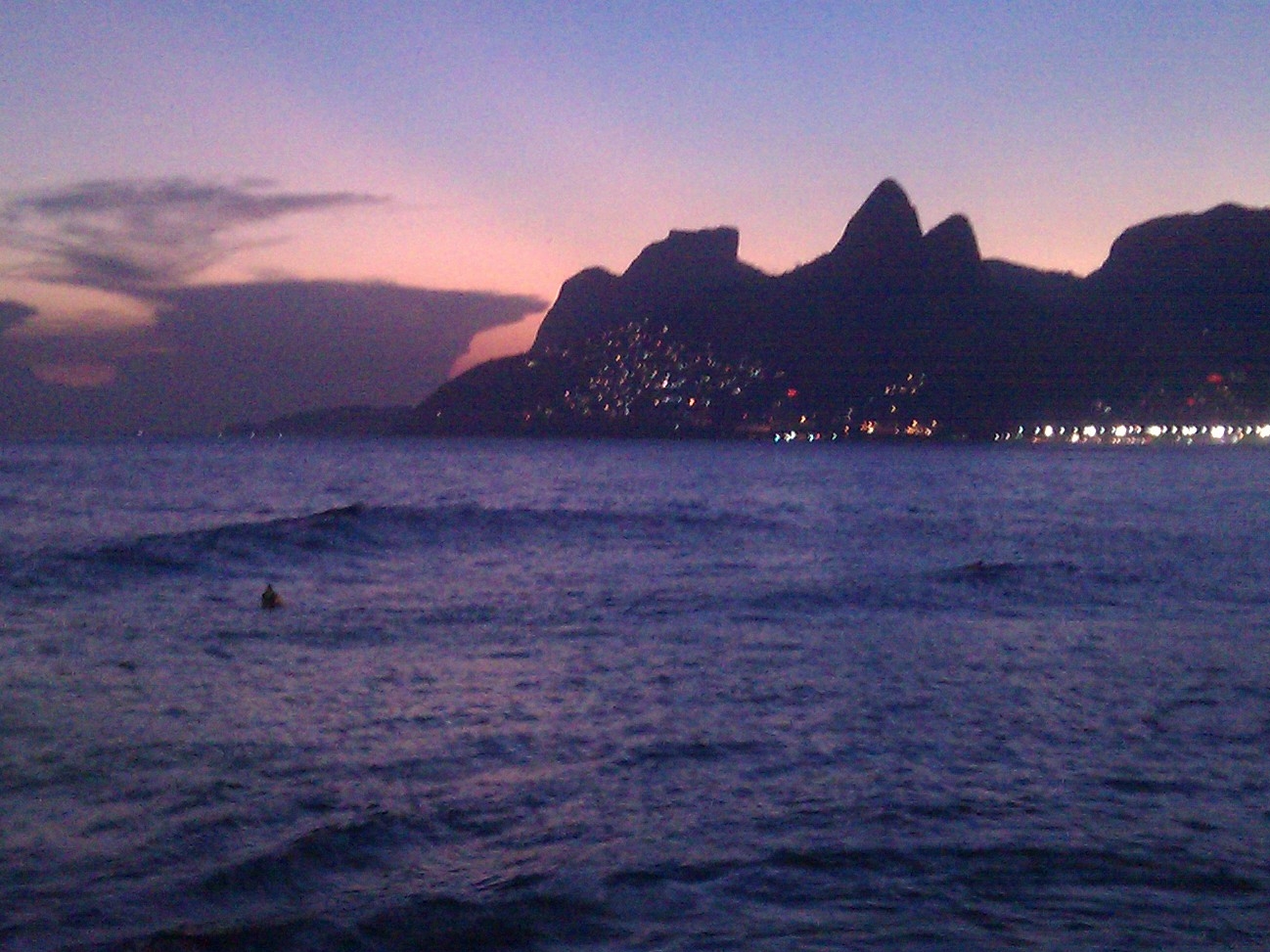
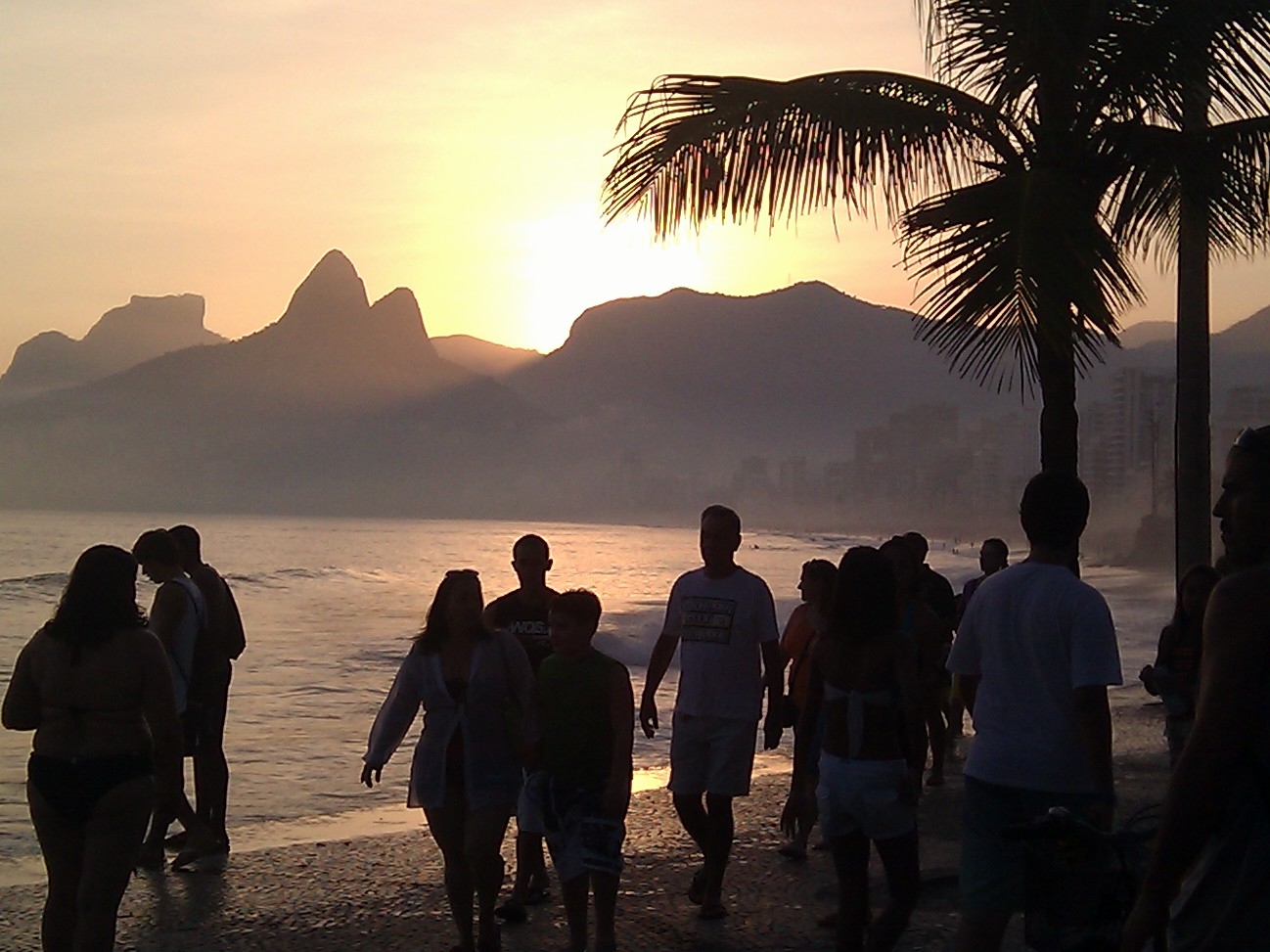
Pedra da Gávea and Dois Irmãos, from Arpoador

Dolphin visitors, Sonia Braga moving from New York to downtown Rio, movie premières right and left, the Today Show, Paul McCartney, Obama… why would anyone want to leave?

In this faux-crisp southern-hemisphere fall season, Rio is hotter than ever– but from tomorrow until the second week in May there’s no chance that RioRealblog will bump into Vin Diesel in his wifebeater and incredibly cool sunglasses. A short break is in the cards.

Despite the limitations of physical absence, coverage and analysis will continue.

At the moment, Realengo struggles to recover from the April 7 school shooting, which left 12 children dead and wounded 18. The shooter himself, a mentally disturbed man wounded by a police officer, took his own life. At this writing, one child remains in serious condition and only four others were still hospitalized. Neighbors repainted the graffitied outside wall of the shooter’s home, and school administrators made plans for remodeling, transfers and healing damaged psyches. Here’s an excellent article about school shootings and gun control, by Dorrit Harazim. The VivaRio NGO wants the government to buy back ammunition as well as weapons in a new disarmament campaign, moved up as a result of the Realengo massacre to May 6. Research shows that for every 18 weapons aprehended by the police, a life is saved.

Brazil held a gun control referendum in 2005, and the proposal didn’t pass. Now, proponents hope for a second round, but the Brazilian bar association criticized the initiative, saying that a national public safety policy to fight crime and weapons trafficking is what’s lacking, above all. A new referendum would cost almost US$ 190 million equivalent, while almost the same amount was spent to ask if weapons and ammunition purchases should be banned in Brazil, in 2005.

Mosquitoes are on peoples’ minds almost as much as bullets. Dengue fever is spreading in Rio, so far killing 35 in the state as a whole this year.

Meanwhile, there was additional violence, with five fatalities, in the Mandela favela April 13, as the BOPE elite squad moved in on drug traffickers. Some cariocas were disturbed by the portrayal of a violent Rio in the new Fast Five movie, but the city is in fact still unsafe in many areas, especially far from the south zone. Mandela is in Manguinhos, one of the dicier parts of the north zone.

And Rio’s truculent informal militias apparently suffered a setback April 13, with the arrest of city councilman Luiz André Ferreira da Silva, who reportedly used his city council office to run a paramilitary group controlling 13 favelas in the west zone area around Jacarepaguá. In addition to voter coercion and bribes, he’s been accused of planning to kill current Civil Police chief Martha Rocha, back when she was investigating him, in a previous post. According to O Globo newspaper, Ferreira da Silva is the fourth city councilman to be arrested for paramilitary activity in the last four years, “indicating that the Council functions as a port of entry for militia involvement in politics”.

Despite violence both onscreen and off, Rio and other Brazilian cities continue to prepare for the upcoming international sports events. Here is a worrisome column published last Sunday in O Globo by Merval Pereira about World Cup preparations; an earlier column discussed transportation issuesYesterday, FIFA president Joseph Blatter reversed an earlier critical stance regarding this. Ipea, a federal planning agency, released a report today concluding that nine out of 12 airports won’t be ready for the 2014 World Cup games.

Yet Rio continues to work towards realizing its terrific potential. Here’s an article by architect and urban thinker Sérgio Magalhães, suggesting a new kind of indicator to measure public service performance. City hall is moving in this direction, with the recent creation of a new telephone number, 1746, to centralize all complaints regarding the city. A smartphone application for the number allows users to send photos. Authorities have at last decided to build electrical wiring for lighting into the ceiling of the Zuzu Angel tunnel, to stop recurrent thefts, and they’ve finally tracked down the source of some of the sewage that’s been dumped into lagoons on Barra da Tijuca over the past 30 years or so. By June, renewal of the downtown Praça Tiradentes, Rio’s theater district, will be complete, with wider sidewalks, lots of trees, and better lighting. This means Rio’s nightlife is likely to expand beyond Lapa, which is contiguous.

For 50 years Rio de Janeiro’s been on the sidelines, a slowly crumbling forgotten former capital. The city’s turnaround, begun in 2009, still faces many challenges and could easily peter out, as have so many positive initiatives in Brazil. But the dolphins must know something…. and RioRealblog will be back, with reporting and analysis on public transportation, state and municipal efforts to turn around education, land titles for favela residents, what Columbia University’s new Studio X is up to, land appropriations related to the Olympics, foreigners investing in new enterprises in Rio, World Cup infrastructure bidding and construction, port revitalization, and how petroleum is affecting the region. Additional ideas are welcome!!

Posted in Brazil, Transformation of Rio de Janeiro / Transformação do Rio de Janeiro | Tagged , , , , , , , , , | 7 Comments

School shooting, a first in Rio

Sad first-world phenomenon spreads

A mentally disturbed shooter, possibly an AIDs patient, shot and killed 11 children this morning in a west zone Rio municipal school classroom today and wounded 18, four in serious condition. Wounded by a military policeman, he committed suicide.

The tragedy is a reminder that, even as the city emerges from the violence and difficulties of a third-world megalopolis, there will always be problems. Until now, Brazil had never experienced a school shooting like those that have occurred in the U.S. Analysts say better gun control and improved school security are needed. The killer, a former student who’d suffered bullying, entered the school saying he was going to give a talk there.

The moment is one of mourning, with the knowledge that much hard work lies ahead to expand and consolidate Rio’s turnaround.

“Now is the time to get things done,” VivaRio’s founder and executive director Rubem César Fernandes said recently, asked about how the pioneer NGO’s work has changed now that Rio boasts 17 police pacification units and has become a safer city than it had been for the last couple of decades. Fernandes explained that for years, VivaRio’s mission was to build consensus around the need for less violence in the city.

There is so much to do now. Last week, FIFA president Sepp Blatter criticized Brazil for being behind on its 2014 World Cup preparations, slower than South Africa. He reportedly attributed problems to political infighting, especially in Rio.  “It’s tomorrow. The Brazilians think it’s just the day after tomorrow. What they shall do is to give a little bit more speed now in the organization,” he was quoted as saying. Brazilian officials denied that they are behind.  Governor Sérgio Cabral attributed Blatter’s comments to internal politics at FIFA.

Public officials are investigating delays other problems with funding allocated for the victims of the mudslides in the mountains near Rio last January. A year has passed since the mudslides of Niterói, across the bay, where victims are reported to be homeless even at this late date. Many of Rio’s enchanting historic buildings are crumbling, with one, the Rio federal university’s 19th century palace in Urca, erupting into flames during remodeling late last month. Major favelas await police pacification units, and the Social UPP program is working to extend its reach in those that have been pacified, to meet residents’ needs and further integrate the city.

State and municipal officials rushed to the scene of the school shooting today. Governor Cabral has just returned from a visit to the U.S., where he negotiated a US$ 1 billion loan from the Inter-American Development bank. Of the total, US$ 130 million are earmarked for youth programs in pacified favelas and US$ 350 million will go to help clean up Guanabara Bay (which might have been cleaned up several times over, given the millions supposedly spent on this objective since 1994).  The loan would also finance state road-building and preservation.

Municipal education secretary Claudia Costin, who tweets world news many times daily to teachers and school administrators as part of the city’s education reform program, found herself far from the news, about to give a speech in Washington, D.C. She immediately headed for the airport.

Click here for excellent Miami Herald reporting by Taylor Barnes.

Posted in Brazil, Transformation of Rio de Janeiro / Transformação do Rio de Janeiro | Tagged , , | Leave a comment

How the movie Rio affects the real Rio

Joaquim Ferreira dos Santos’ column in today’s O Globo newspaper, fully translated– a hilarious must-read for anyone interested in the transformation of Rio de Janeiro.

The gringoes are coming

Are you ready?

After Rio, the masses are going to want to see the ‘happiest people on earth’

We were already dealing with the expectation of creating the best World Cup and the responsibility of going all out with the Olympic Games opening ceremony. Now we’ve got the tough challenge of bringing to life a cartoon city, the 3D stage of the happiest people on earth, where macaws love each other, confront eco-villains and bring eternity to the most beautiful species of the terrestrial nursery.

If I were the Rio the world awaits after seeing Carlos Saldanha’s gorgeous movie, I’d be paralyzed on an analyst’s divan. It’s the biggest tourism ad campaign Hollywood has ever given to a city.

No one — better stock up on coconuts and Globo biscuits! — can be that spectacular in real life.

Up to the day before yesterday this was earth’s end, the place where criminals came to spend their train robbery cash and have a grand old time, a civilization ruled by a scarcity of law and graced by a generous pagan belief that below the Equator, sin exists not. Ten percent payoffs were the order of business. This was “flying down to Rio”, the place-where-no-one-is-looking, the Nazi hideaway, the cheap sex, the say-what-you-may. The jungle where the Simpsons had to fight snakes in the streets.

This was how it was up until just a little while ago, when the symbol of this half-bandit, half-sex-maniac-psychopath civilization was the Englishman Ronald Biggs, thief transformed into good citizen by the tropical climate. The fellow took on the mantle of our native nice guys and let the Sex Pistols vomit at his gate in Santa Teresa.

Over and above the criminals, as of yesterday morning’s news, there was only the power of the mosquitoes.

This was an inhospitable forest, the trash dump of Gramacho, [movie bandit] Tião Medonho, fecal coliform bacteria and the American ambassador’s kidnapping. Low blows, Molotov cocktails on consulate glass, diarrhea, the runs, and the need for visitors to bring water from home were the all the rage.

Arriving tourists couldn’t say they hadn’t been warned. Falling-apart favelas were in all the movies.

All of a sudden, this became the Promised Land — and cariocas haven’t heard the message from their international peers because they’re yelling on the cell phone. No one dusted the furniture, yet the visitors are at the door. They expect to find the most beautiful people on earth dancing perfectly while giving directions on how to get to Lapa.

Better stock up on samba jam sessions, açaí and frescobol at water’s edge!

It took much less pressure for Ronaldo to have a convulsion during the French World Cup. The horse Baloubet de Rouet shied at the last obstacle of the Olympic gold medal.

The film Rio begins its world run this week and rachets up a sudden world expectation that this is the city worth being in this decade. To spend a weekend facing Copacabana Beach, Obama threw protocol out the window, filled Air Force One with the kids, the mother-in-law, the little wife, and came to confess at the feet of the Christ statue. His opponents went nuts, but Mr. President was flying over the Tijuca Forest. He didn’t give a shit. He said the city was blessed by God, beautiful by nature. Ever since, embracing black Michelle, he sleeps in a Flamengo team shirt.

Meanwhile, in the rest of the world, a bomb threat takes 3,000 tourists off the Eiffel Tower. New York is as tense as ever. Same for Tokyo, with its tremors, same for Rome, with Berlusconi’s boorishness, and there’s no other watering hole to find happiness in peace, a place without the  conformist biases of the old civilizations. The best place in the world is here, and even Al Jazeera, with no shootouts or drug traffickers to put on the news, has closed its offices.

Suddenly, though the streets are unpaved and local men haven’t been taught to keep their flies closed in public, Rio gets the title of most fascinating city from Wallpaper magazine. The metro goes only from here to there, but the gays don’t care. The airports are prehistoric, but — as long as there’s that sexy voice breathing down the public address system– young people are filling up the hostels of Ipanema.

Rio de Janeiro is now a city surrounded by little blue macaws — and the world, all excited over a movie about the experience of man living in harmony with his environment, will put on millions of flowered bermudas to satisfy its curiosity. Could it be true? Or is it that the wars of the Middle East, the tsunamis of Indonesia, and Fidel’s stupidity in Havana provided no alternative?

This was the ends of the earth, and from one moment to the next it has become the best world in existence. City of God, the last cinematic record received by the planet about what was going on, has been deleted. Zé Galinha, Zé Pequeno and all their friends from Cantagalo and Complexo do Alemão lie dead at the hand of [State Public Safety Secretary José Mariano] Beltrame’s civilizing police pacification units.

The gangs left last night and now in the afternoon, the funny [carnival] blocos reign.

No more stray bullets, long live the olive that illuminates the folkloric gourmet food of the five-star botequins.

All this international hope, of running away from problems at home and being happy here, is benign. Come. The problem is  that nature is ready, but deals must still be struck with the local actors, the taxi drivers, the waiters, the salespeople, the public pee-ers, the drugstore delivery boys, etc.

For lack of a good municipal psychoanalitic divan, moral repaving and sanitary education, no one can be cured of this cyclothymia. For lack of civilized driving behavior, this is going to end in a traffic jam. For lack of an airport, these planes will end up at the bottom of the bay.

After Rio, the masses will come in ever more urgent search for a marvelous bean appetizer and they’ll want their money back if these buses keep up their fury, and these children insist juggling balls at traffic lights. The carioca movie is fantastic, no one’s doubting it, but — better stock up on caipirinhas and tambourines for mulatto women! — we’re going to need an usher who keeps us civilized and shows the esteemed audience to the best places in the house.

Posted in Brazil, Transformation of Rio de Janeiro / Transformação do Rio de Janeiro | Tagged , , , | 6 Comments

Oba! Obama no Rio de Janeiro

For Oba! Obama in Rio, click here

Uma benção das mais importantes

“Obama” e seus “guardacostas”

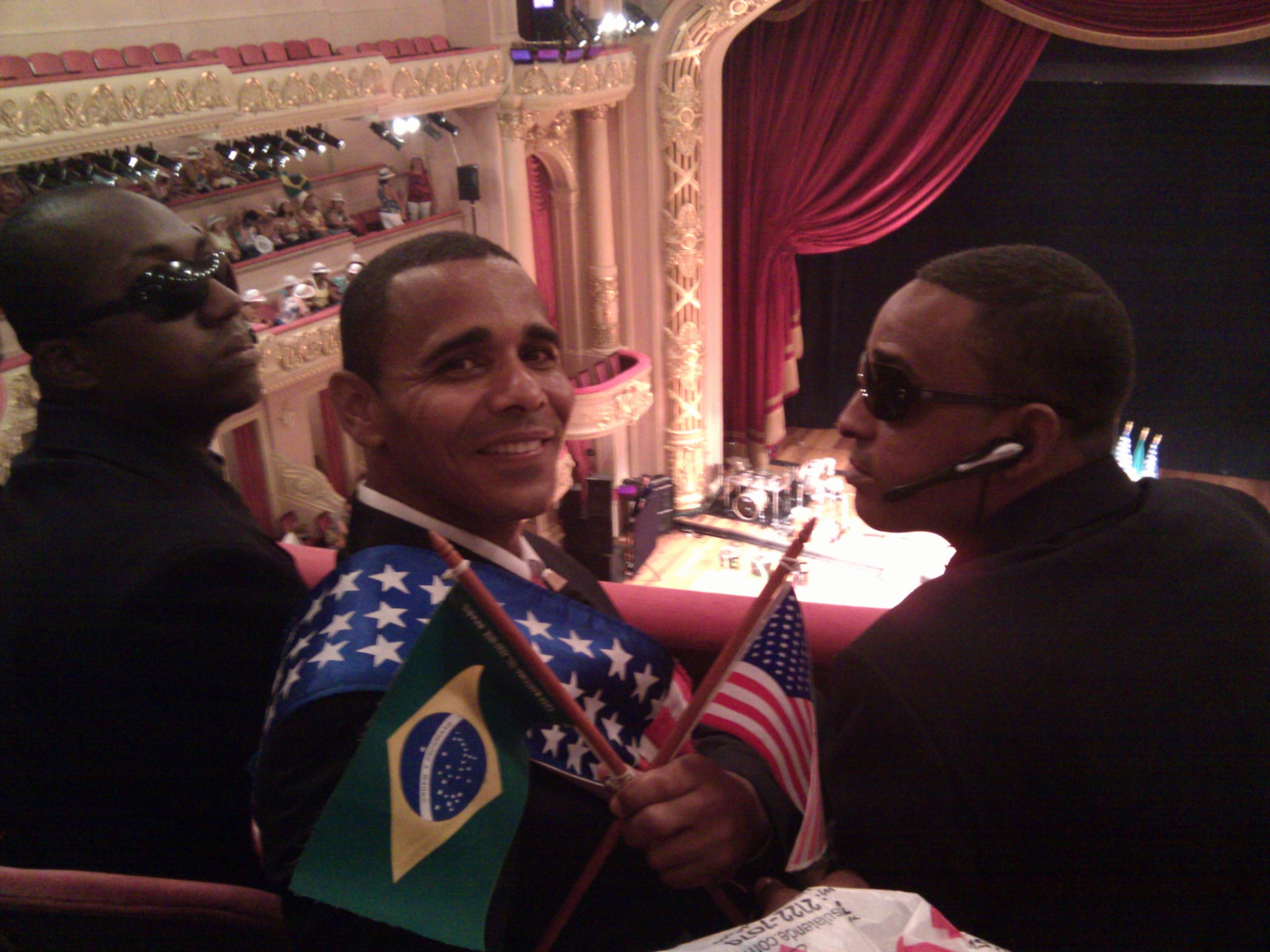
Domingo passado, havia fones de ouvido para a tradução do discurso do presidente norte-americano Barack Obama para um público de mais de 2 mil pessoas no Theatro Municipal, mas Rinaldo Gaudêncio Américo e seus dois guarda-costas (“Jack” e “Bauer”) os recusaram. Rinaldo estava vestido de Obama, e Obama não iria precisar de fones.

“Existe uma coisa que eu vejo no Obama, é uma simpatia, um carinho,” ele disse ao RioRealblog. Como Obama, também filho de um casamento misto, Rinaldo diz que sempre cumprimenta as pessoas na rua. “Faz uma diferença. E veja, ele está usando a mesma gravata, vermelha lisa!”

O Obama de verdade, subindo com entusiasmo numa plataforma no palco, era realmente simpático. Lançando mão do mesmo truque que os políticos brasileiros utilizam para se conectar com o público, ele começou com uma referência ao futebol. “[…] Quero fazer um agradecimento especial por estar aqui, porque me disseram que há um jogo do Vasco […]”

“‘Mengo!” gritaram alguns.

Aparentemente, os ausentes vascaínos tinham prioridades.

Pode ser que Obama não tenha acreditado quando a presidente do Flamengo, ao presenteá-lo mais cedo com uma camisa rubronegro personalizada, lhe contou que o Flamengo (que jogou depois de seu discurso) é o time carioca mais popular. Mas sabia muito bem como ganhar corações.

“Agora, talvez vocês saibam que essa cidade não foi minha primeira escolha para as Olimpíadas,” disse ele, fazendo referência à malsucedida candidatura de sua cidade natal.  “Mas se Chicago não pôde sediar os Jogos, não há outro lugar onde eu gostaria de que acontecessem, a não ser aqui no Rio de Janeiro.  E eu pretendo voltar em 2016 para ver o que vai acontecer.”

Chico Caruso, cartunista do jornal O Globo, entendeu o recado; sua charge de primeira página com o título de “Brazil-Obama Talk Show: Parte Final” mostrava o Obama se despedindo, prestes a embarcar no Air Force One, ao dizer “…e logo voltaremos!”. Impressiona bastante o fato de que um presidente norte-americano, atual ou ex, estará de vigilância. Certamente isso se junta ao apoio geral em prol da mudança aqui no Rio.

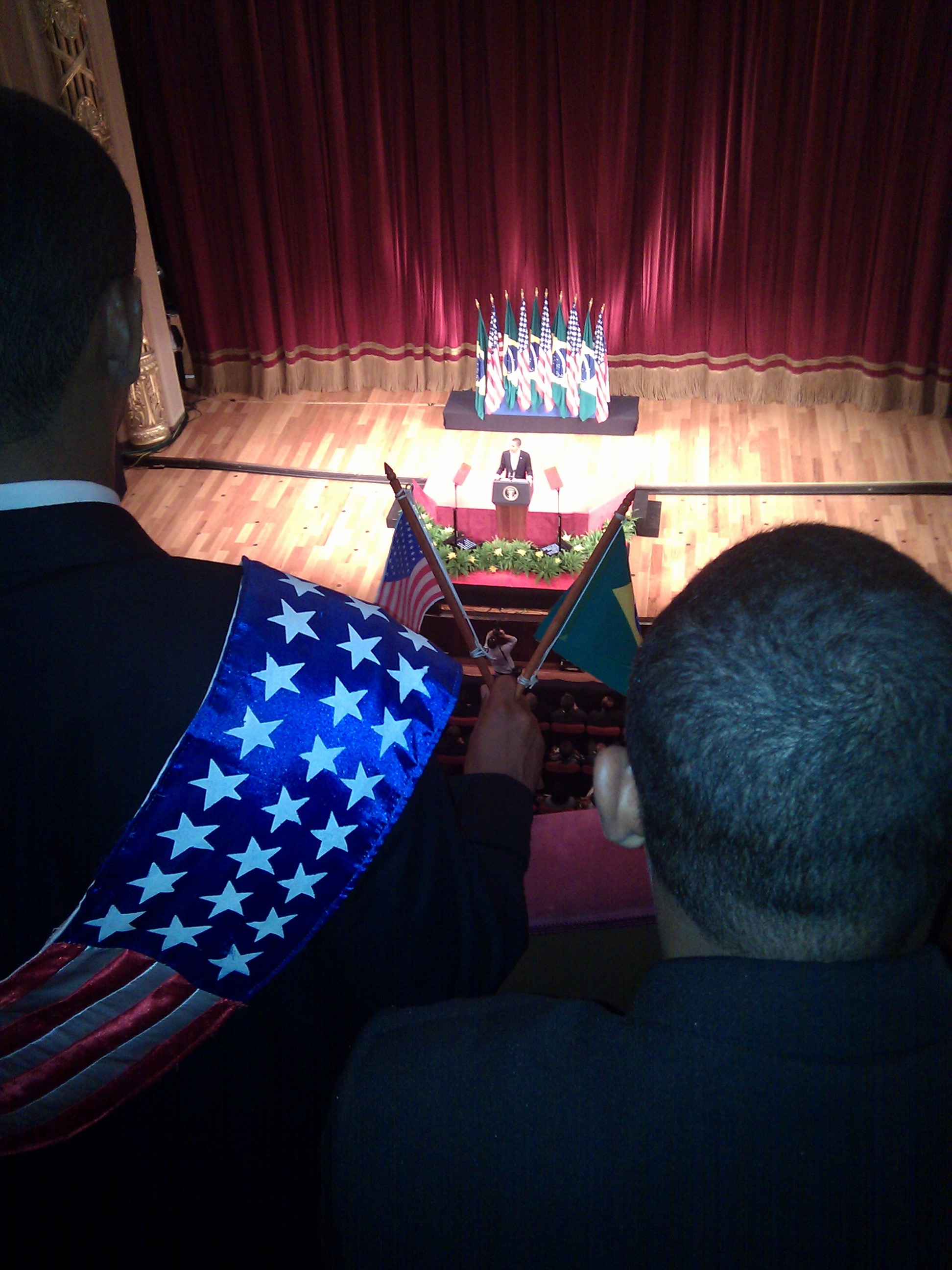
Enquanto o presidente falava, Rinaldo — motorista para repórteres da emissora de rádio CBN quando não está a caráter — se ajoelhou na frente de sua cadeira para agitar duas bandeiras, na esperança fervente de dar uma de doppelganger. Para ele, bastava que o Obama estivesse aqui para que ele também pudesse aparecer.


Espelho meu

Para os cariocas, a estadia presidencial na cidade – que incluiu uma visita à favela “pacificada” de Cidade de Deus – foi mais uma evidência de algo que eles já sabem há muito tempo: o Rio de Janeiro é um diamante bruto, em via de ser lapidado.

“Pela primeira vez, a esperança volta a lugares onde por muito tempo prevaleceu o medo,” disse Obama.  “Vi isso hoje, quando visitei a Cidade de Deus. Não se trata apenas do novo esforço de segurança e de programas sociais  — e quero parabenizar o prefeito e o governador pelo excelente trabalho que estão fazendo.” Ambos estavam presentes num camarote, e ganharam aplausos genuínos.

“Mas é também a mudança de atitudes,” continuou Obama.  “Como me disse um morador jovem, ‘As pessoas precisam olhar as favelas não com misericórdia, mas como fonte de presidentes e advogados e médicos, artistas, pessoas com soluções.’”

“Dilma” em Copacabana
Alguns manifestantes, na véspera, em Ipanema


No seu discurso, Obama não mencionou o fato de empresas americanas estarem ávidas para fazer negócios ligados às Olimpíadas e à revitalização urbana.  Mas para os cariocas, a escolha do Rio (e a exclusão de São Paulo) foi uma medida imediata e bem-vinda de quanto a cidade já progrediu  e de seu grande potencial. A família Obama não podia ter feito uma promoção melhor do turismo aqui, com uma visita ao Corcovado e presença em apresentações musicais e de capoeira, e também um pouco de futebol.


Ovação geral

Pobre Rinaldo não ganhou uma piscadela, um sorriso, nem um aceno, apesar de ter escolhido três lugares bem no centro da galeria, lá no alto do teatro recém-restaurado. “É difícil enxergar para além da iluminação, quando você está no palco,” ele filosofou.

O Obama verdadeiro também ofereceu um pouco de filosofia, terminando o discurso com uma citação de ninguém menos que Paulo Coelho: “Com a força de nosso amor, da nossa vontade, podemos mudar o nosso destino, e o destino de muita gente.”

Para a cobertura do Globo, clique aqui. Para um vídeo do discurso no Rio, em duas partes, clique aqui.


Posted in Brasil, Transformation of Rio de Janeiro / Transformação do Rio de Janeiro | Tagged , , , , | Leave a comment

Oba! Obama in Rio

A blessing of the highest order

"Obama" and "bodyguards"

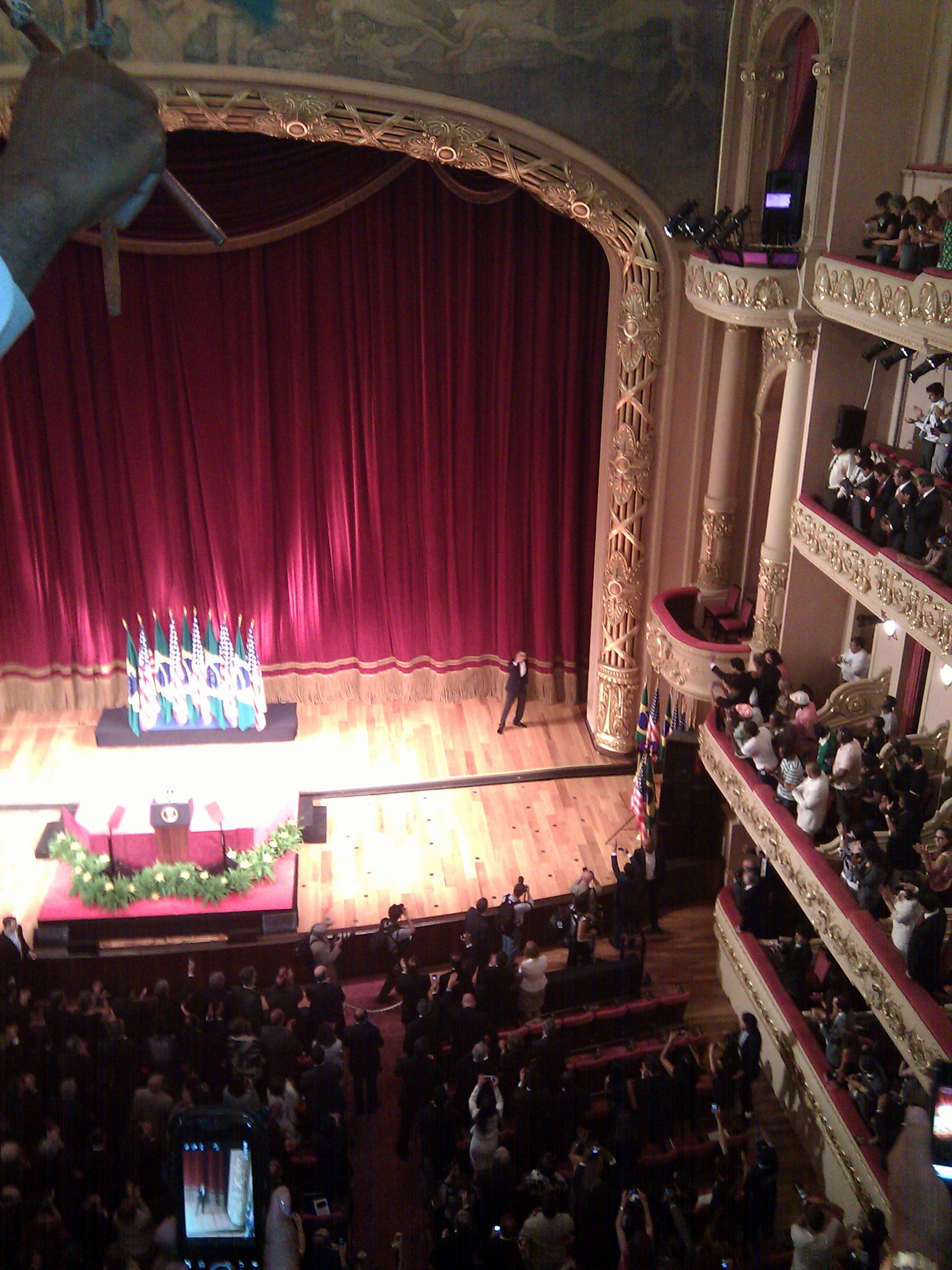
There were headsets for the Portuguese translation of U.S. President Barack Obama’s speech yesterday to an audience of over 2,000 at  Rio’s art deco version of the Paris Opera, but Rinaldo Gaudêncio Américo and his two bodyguards (“Jack” and “Bauer”) passed. Rinaldo was dressed up as Obama, and Obama wouldn’t need a headset.

“There’s a thing I see in Obama, it’s a simpatia, a carinho,” Rinaldo, also a son of a mixed-race marriage, told RioRealblog. “I always say hello to people I see in the street, it makes a difference. And you see, today he’s wearing the same tie I am, a silky smooth red one!”

The real Obama, hopping up with enthusiasm onto a raised platform from the stage, was indeed simpático. Using the same trick Brazilian politicians depend on to conjure rapport, he began with a reference to soccer. “…I want to give a special thanks to all of you for being here, because I’ve been told that there’s a Vasco football game…”

“‘Mengo!” the crowd cheered.

Apparently the absent vascainos had their priorities.

Obama may not have believed that Flamengo (which played after his speech) is Rio’s most popular soccer team, when its president Patrícia Amorim told him this earlier in the day, as she gave him a black and red team shirt with his name on it. But he did know exactly how to win corações.

“Now, you may be aware that this city was not my first choice for the Summer Olympics,” he said, referring to his hometown’s failed bid.  “But if the games could not be held in Chicago, then there’s no place I’d rather see them than right here in Rio.  And I intend to come back in 2016 to watch what happens.”

O Globo‘s cartoonist Chico Caruso got the message; his front-page cartoon titled “Brazil-Obama Talk Show: Last Part “ sported a waving Obama just about to board Air Force One, saying “…and we’ll be right back!”. Nothing like knowing a U.S. president, current or former, is checking up on you. This will certainly add to the momentum for change here.

Meanwhile, Rinaldo– who drives radio station reporters around the city when he’s not impersonating–  knelt in front of his seat and waved two flags, ardently hoping for a doppelganger moment. As far as he was concerned, all Obama had to do in Rio was show up, so he could, too.

Mirror mirror

For cariocas, the presidential stay– which included a visit to the “pacified ” City of God favela– was one more piece of evidence of something they’ve known for ages: Rio de Janeiro is a diamond in the rough, currently undergoing lapidation.

“For the first time, hope is returning to places where fear had long prevailed,” said Obama.  “I saw this today when I visited Cidade de Deus -– the City of God. It isn’t just the new security efforts and social programs  — and I want to congratulate the mayor and the governor for the excellent work that they’re doing.” Both were present in a box seat, and won a genuine round of applause.

“But it’s also a change in attitudes,” Obama continued.  “As one young resident said, ‘People have to look at favelas not with pity, but as a source of presidents and lawyers and doctors, artists, people with solutions.’”

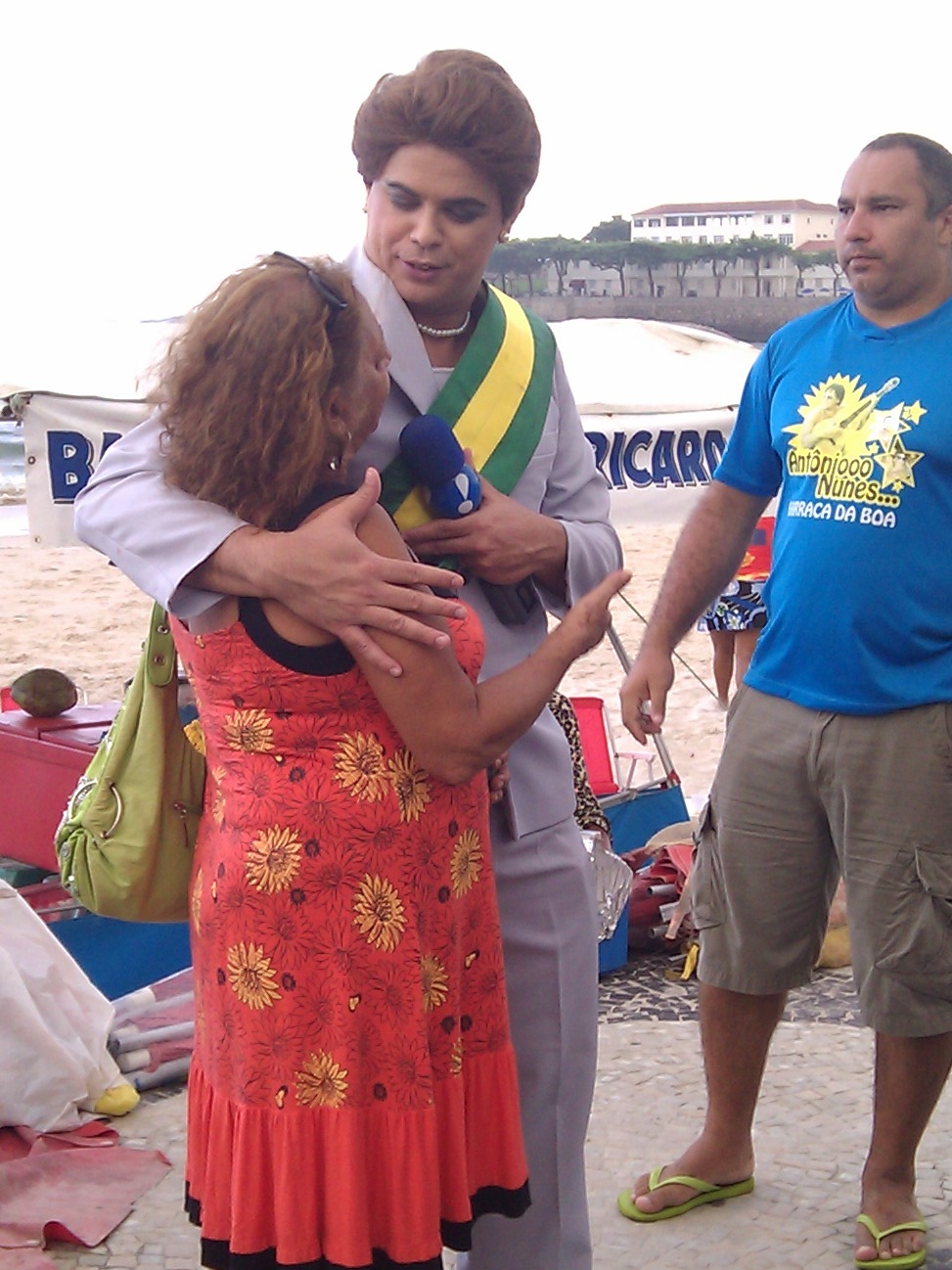
"Dilma" in Copacabana

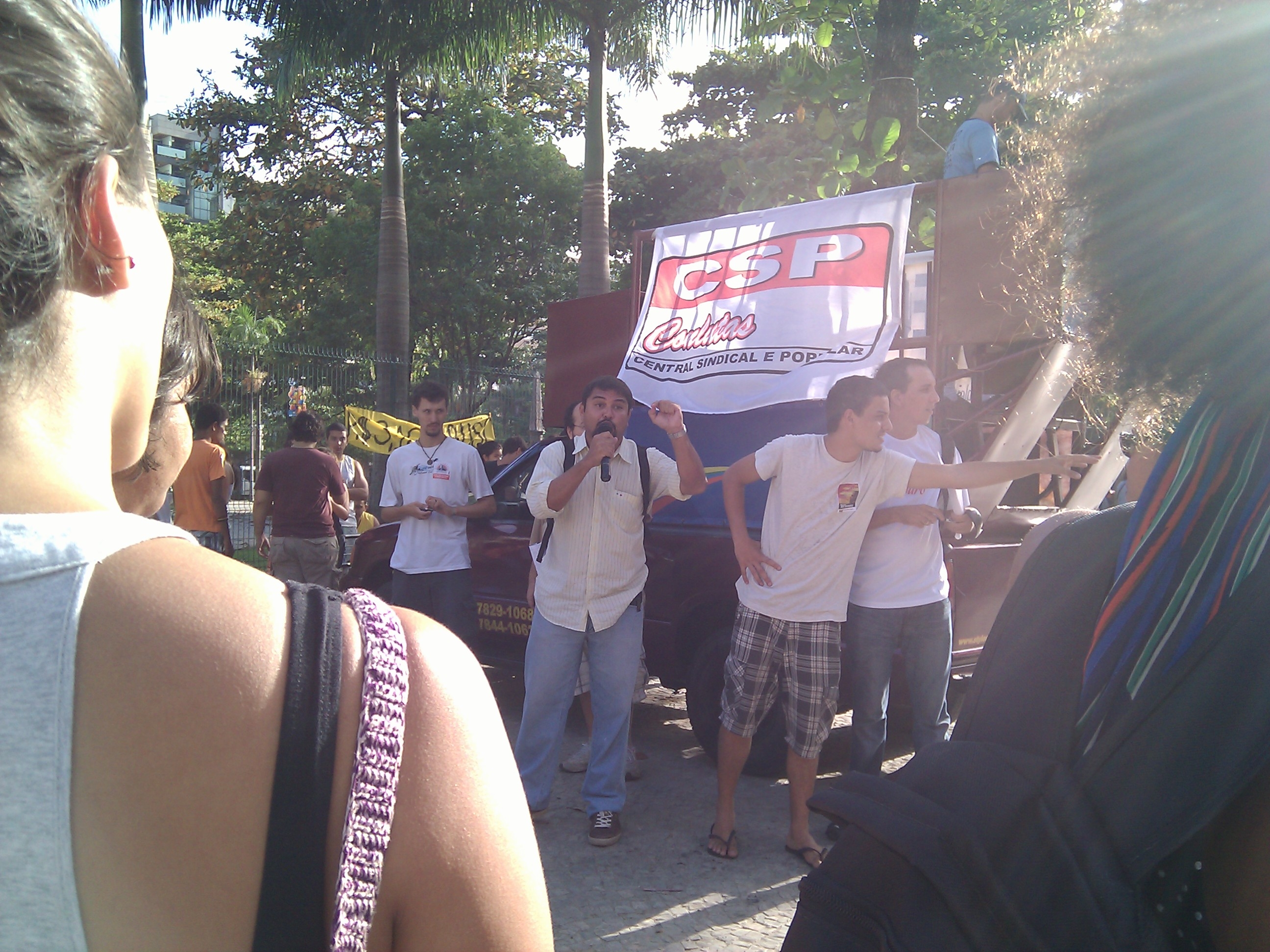
A few protesters, the day before in Ipanema

In his speech, Obama didn’t mention the fact that American companies are eager to win Olympics- and urban revitalization-related business.  But for cariocas, his choice of Rio (and exclusion of São Paulo) was an immediate and welcome measure of how far the city has come and the potential it bears. The Obamas couldn’t have done better to highlight tourism here, with visits to the Corcovado Christ statue, introductions to a variety of Brazilian music, a bit of soccer, and a capoeira presentation.

Standing ovation

Poor Rinaldo didn’t get a wink, a grin or a wave, despite his choice of seats dead center in the rafters of the recently restored theater. “It’s hard to see beyond the lights when you’re on the stage,” he philosophized.

The real Obama provided his own share of philosophy, ending his speech with a quote from, of all people, the popular Brazilian self-help writer, Paulo Coelho: “With the strength of our love and our will, we can change our destiny, as well as the destiny of many others.”

For local coverage in Portuguese, click here. For a two-part video of the Rio speech, click here.

Posted in Brazil, Transformation of Rio de Janeiro / Transformação do Rio de Janeiro | Tagged , , , , | 7 Comments

O melhor de todos os tempos — bem, o melhor em muitos anos

Click here for Best ever, well best in a very long time

Carnaval 2011

Foliões em todo lugar

A provável descoberta das ruínas centenárias do Cais do Valongo na véspera do carnaval desse ano pode ter trazido à tona, como aponta o articulista e historiador Elio Gaspari em sua coluna de quarta-feira de cinzas no jornal O Globo, o maior porto de escravos no mundo.  Que momento mais perfeito.

As ruínas apareceram bem no fim de fevereiro, durante as escavações de revitalização urbana do projeto Porto Maravilha — resultado do milagroso alinhamento, praticamente astrológico, entre os governos municipal, estadual e federal, que começou em 2009. Desse alinhamento surgiu uma série de políticas públicas que iniciaram uma inédita integração dos morros com o asfalto da cidade. Gaspari comenta que apesar de pelo menos 600 mil escravos terem passado pelas pedras do Cais do Valongo entre 1758 e 1851, a área estava enterrada e esquecida, devido “à astuta amnésia que expulsa o negro da História do Brasil”.

O ressurgimento do Cais do Valongo foi uma bela coincidência, na hora em que o Rio de Janeiro comemorava o carnaval com mais verve e plenitude do que a maioria dos cariocas tem memória. Até o irascível Arnaldo Jabor ficou impressionado. “Aos poucos, o país retomou sua autoestima e, especialmente no Rio, ela cresce nos últimos tempos, com o melhor controle da criminalidade e com o fim dos governos sórdidos que jogaram a cidade no buraco,” ele afirmou na sua coluna de terça-feira em O Globo. “[…] sente-se o renascimento de um desejo gregário, até de contato físico entre as pessoas, uma explosão de liberdade e de encontro que nos leva a concluir que houve uma democratização da convivência, um irresistível desejo de existir em comunidade.”

Nas alturas da felicidade

Já faz uns cinco anos que o carnaval de rua ganha adeptos. Mas neste ano um bloco atraiu 2 milhões de foliões ao centro da cidade no sábado de manhã, e outro subiu o morro até a favela do Cantagalo, agora pacificada, pela primeira vez em 27 anos. Três casais contraíram o matrimônio durante as festividades dos blocos—e três das 12 escolas de samba do Grupo Especial gozam de UPPs, enquanto outro território de escola de samba, o Complexo do Alemão, já está ocupado pelo Exército e deve receber uma UPP.

De acordo com O Globo, a polícia militar diminuiu sua presença no estado por mil soldados, porque as favelas em volta ao Sambódromo já têm UPPs. A  polícia também contou com o novo Centro de Comando Virtual, que trabalha na prevenção do crime ao ligar as forças policiais em todos os níveis de governo, e utiliza tecnologia da FBI norte-americana; com uma presença veicular incrementada; e com o monitoramento dos festejos através de trinta câmeras novas.

Pedindo informações aos durões

Existem tantos blocos—em torno de quatrocentos— que alguns irão se reunir apenas no fim de semana que vem. Neste ano, a prefeitura regulamentou os blocos e seus horários, colocou mais guardas municipais na rua, instalou mais banheiros portáteis do que nunca, e a polícia até prendeu quase setecentas pessoas (mais do que o dobro do ano passado), inclusive mulheres, por urinar em público. Rebocaram-se por volta de setecentos carros, também mais do que o dobro do ano passado. Infelizmente, a coleta de lixo aumentou para 849 toneladas, mais 12% em comparação com 2010. Uma empresa de cerveja pendurou centenas de placas bem-humoradas, instando o alívio off-road. Mesmo assim, o mau cheiro estava em toda parte, bares e restaurantes tiveram que trancar suas portas, e alguns cariocas sugeriram que talvez tenha chegado a hora de concentrar os blocos em um único local, possivelmente o Aterro, para manter a cidade limpa e sem congestionamentos.

Em função da redução da criminalidade e do maior conhecimento internacional da cidade do Rio devido aos vindouros eventos esportivos, estima-se  que o carnaval de 2011 tenha trazido à metrópole  um milhão de visitantes, muitos deles brasileiros de outras regiões. Quatorze cruzeiros atracaram aqui para a diversão, e espera-se que um total de cerca de um bilhão de reais tenha entrado na economia carioca.

Muitos bancos protegeram seus vidros

Os desfiles no Sambódromo fizeram muitas referências felizes à cidade maravilhosa, como por exemplo  uma ala inteira de Zé Cariocas (foto #9). Talvez a mais marcante tenha sido a bateria do Salgueiro, fantasiada de soldados do BOPE, à laTropa de Elite. A glorificação do BOPE pode ser um tanto exagerada,  já que aquelas tropas ainda são, em grande parte, um conjunto bastante violento e corrupto – especialmente quando contrastado com os novos recrutas das UPPs. Acabou-se de implantar uma UPP no Salgueiro; a bateria recebeu instrução para devolver as fantasias logo que possível, para não criar confusão.

Estação de metrô em baixo do elevador à favela do Cantagalo, construído com financiamento federal

Na terça-feira, o governador Sérgio Cabral disse, de maneira bastante humilde, que esse carnaval foi o melhor desde que ele assumiu o cargo em 2007, e que ainda há muito trabalho pela frente. O governo dele avança sem trégua, mesmo durante o carnaval, com a criação de duas novas subsecretarias, uma para reduzir as emissões de carbono no estadooutra  para promover o turismo de eventos e esportes.

Hoje, os garis da Comlurb estão dando duro. Só no  Sambódromo juntaram mais de quatrocentas toneladas de lixo. E o Rio de Janeiro precisa estar cintilando para  a visita do presidente dos EUA Barack Obama, dia 20 de março.

Aqui estão os planos da prefeitura para  quem quiser conhecer o Cais doValongo, que ainda precisam de aprovação do governo federal.

Posted in Brasil, Porto Rio de Janeiro, Transformation of Rio de Janeiro / Transformação do Rio de Janeiro | Tagged , , , , , , , , , , , , , , , | Leave a comment

Best ever, well best in a very long time

[UPDATE, October 2011 – Carnival blocos attracted a record 4.87 million to Rio’s streets, according to Riotur, the municipal tourism agency. This was 83% more than was expected. For Carnival 2012, 476 blocos have applied for a parade permit.]

Carnival 2011

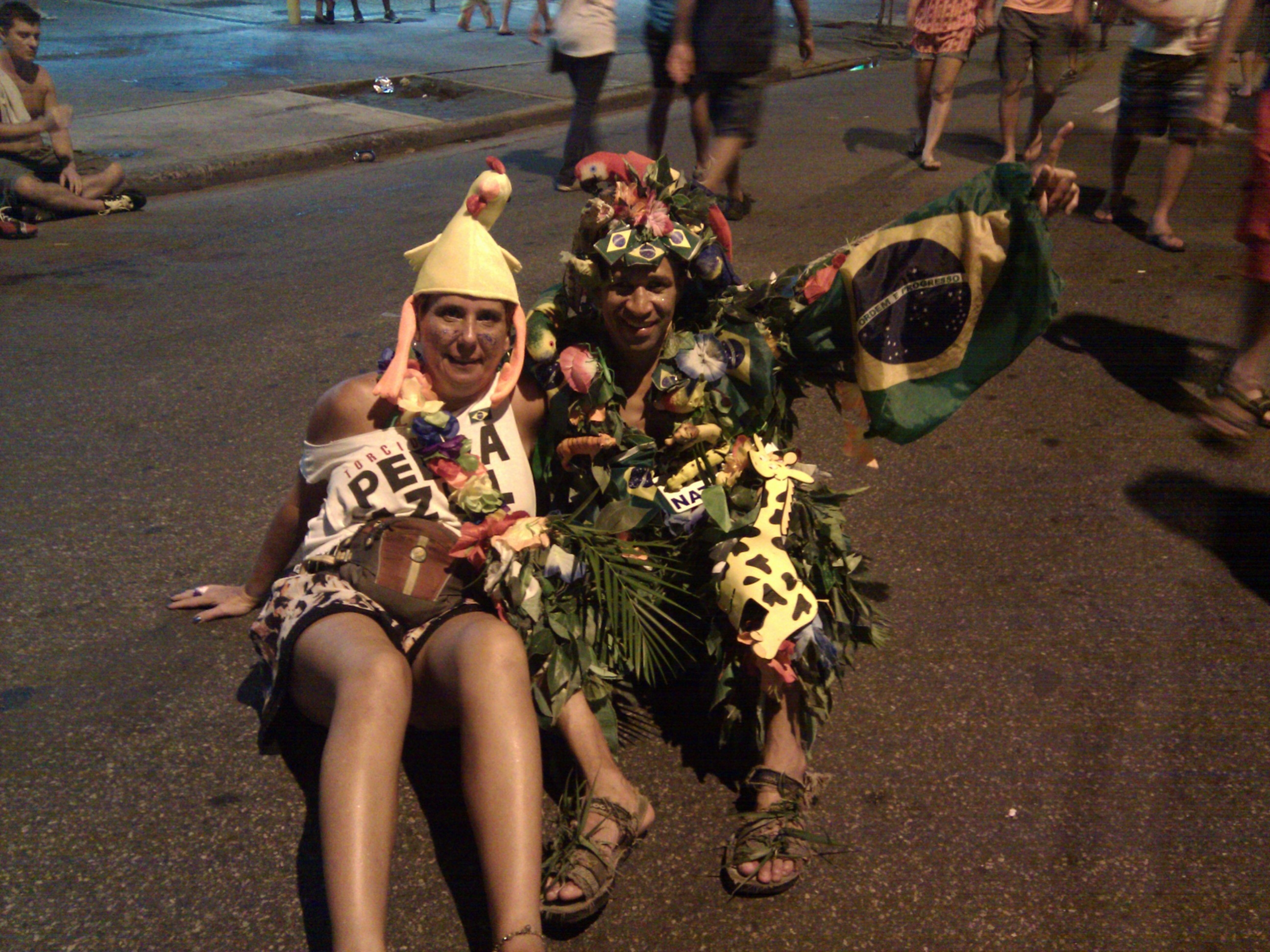
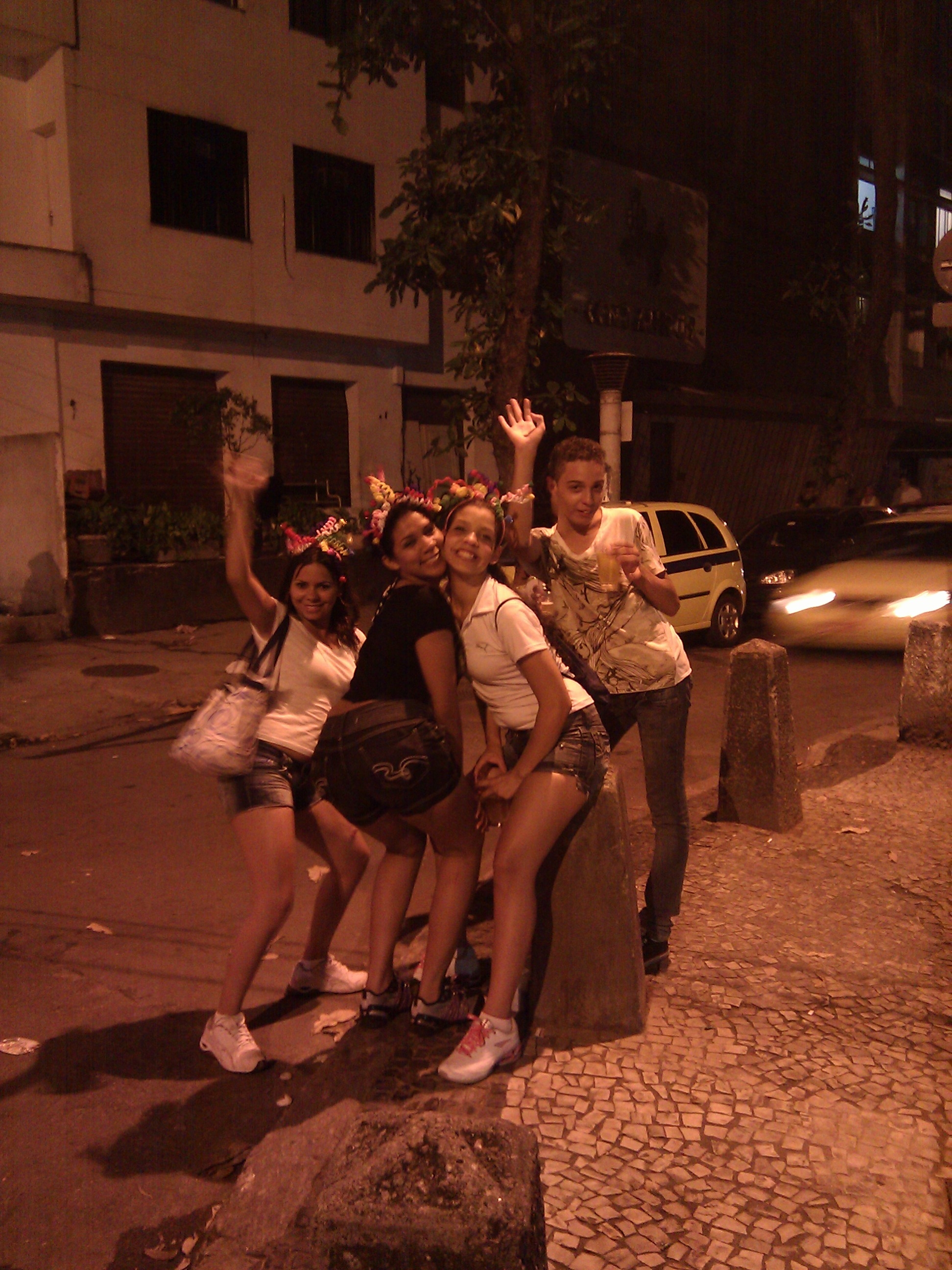
Revelers everywhere

The probable discovery of the 18th century Valongo dock ruins on the eve of this year’s carnival may have brought to light, as O Globo commentator and historian Elio Gaspari pointed out in his Ash Wednesday column, the largest slave port in the world.  What timing.

The ruins emerged just at the end of February, as the port area undergoes the Porto Maravilha urban revitalization work ensuing from the pratically astrological miracle of alignment among city, state and federal governments that began in 2009. From that alignment ensued a series of public policies that have begun to integrate the city’s largely hilltop favelas, or morros, with its more formal geography, the asfalto, as cariocas call it. Gaspari notes that although at least 600,000 slaves passed over the cobbles of the Cais do Valongo between 1758 and 1851, the area was buried and forgotten, “due to the astute amnesia that expels blacks from Brazil’s history”.

Nothing could be more apt than the reappearance of the Valongo dock, just as Rio de Janeiro celebrated Carnival with more verve and plenitude than most cariocas can remember as ever having been the case. Even grouchy Arnoldo Jabor, filmmaker and columnist, was wowed. “Little by little,” he wrote in his Tuesday O Globo column, “the country rebuilt its self-esteem, and, especially in Rio, it has increased lately, with improved control of crime and the end of the sordid governments that threw the city into a hole… one feels the rebirth of a gregarian desire, even for physical contact among people, an explosion of freedom and encounter that leads to the conclusion that there was a democratization of  life in common, an irresistible desire to exist in community.”

High spirits

Street carnival —blocos, large groups of costumed, dancing revelers– has been making a comeback over the last five years or so. But this year one bloco drew two million people to downtown streets on Saturday morning, and another climbed the hill to the Cantagalo favela, now pacified, for the first time in 27 years. Three couples got married during bloco festivities.

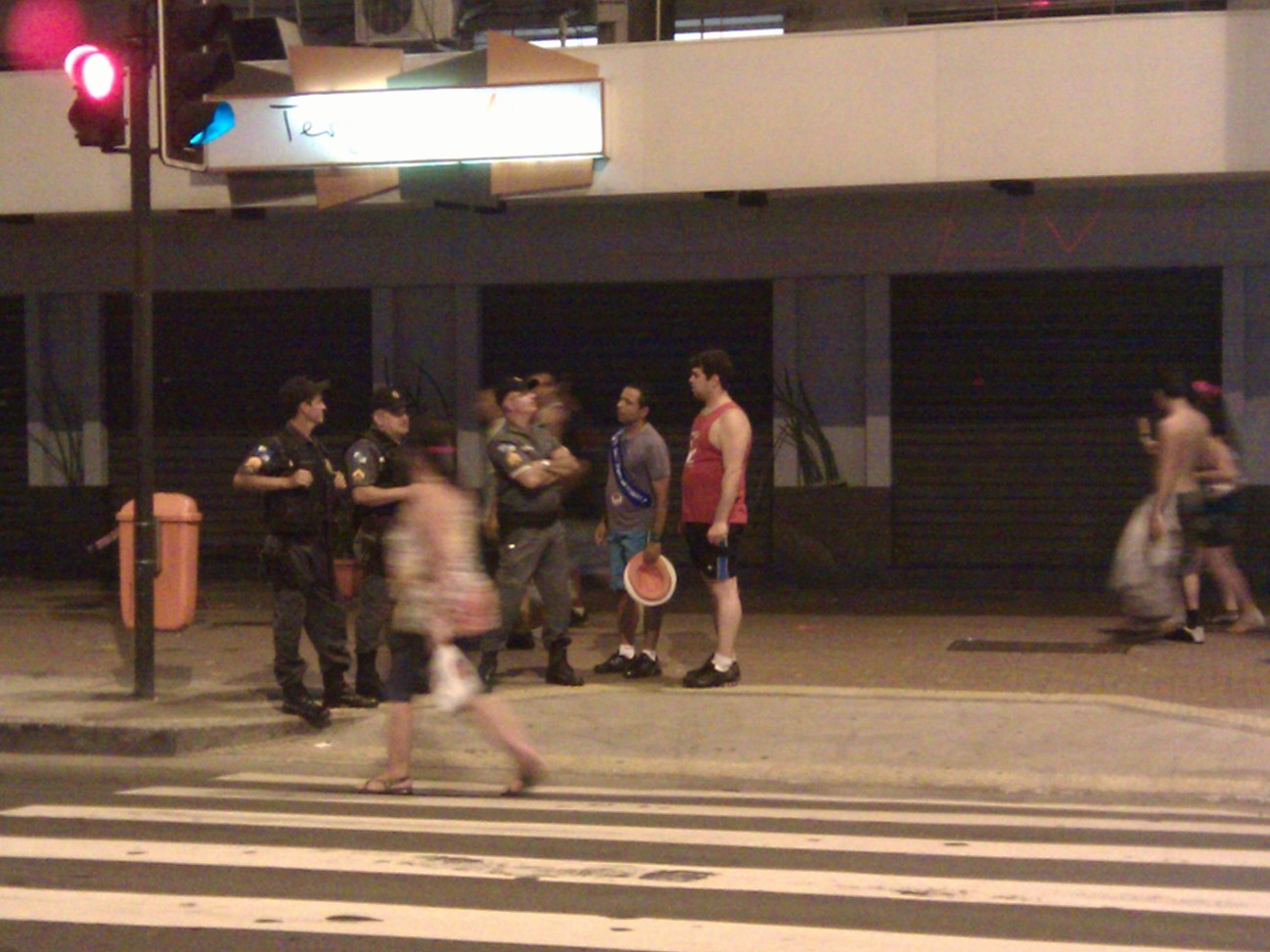
O Globo reported that the military police cut its presence statewide by 1,000 officers because the favelas surrounding the Sambadrome, where the Carnival parade took place Sunday and Monday nights, have all been equipped with police pacification units. The police also made use of the new preventive Centro de Comando Virtual (Virtual Command Center), which links police forces at all levels of government and is based on FBI technology; increased police vehicular presence; and kept an eye on the partying with 30 new cameras.

Asking directions of tough guys

There are so many blocos— about 400– that some will gather only next weekend. This year city hall regulated the blocos and their schedules, provided more policing, set up more porta-potties than ever before, and police actually arrested almost 700 people (more than double last year), including women, for public urination. Over 700 cars were towed, more than twice last year’s number. Unfortunately, trash collection also rose, to 849 tons, up 12% from 2010. A beer company hung hundreds of light-hearted signs urging off-street relief. Even so, the stench was pervasive, bars and restaurants found themselves locking their doors, and some cariocas suggested it might soon be time to concentrate the blocos in one spot, possibly the Aterro, to keep the city clean and uncongested.

Because of reduced crime and increased awareness of Rio due to the upcoming sporting events, this year’s carnival is said to have attracted a million visitors, many of them Brazilians from other regions. Fourteen cruise ships docked in Rio for the fun, and a total of about US$ 600 million is expected to flow into the city’s economy.

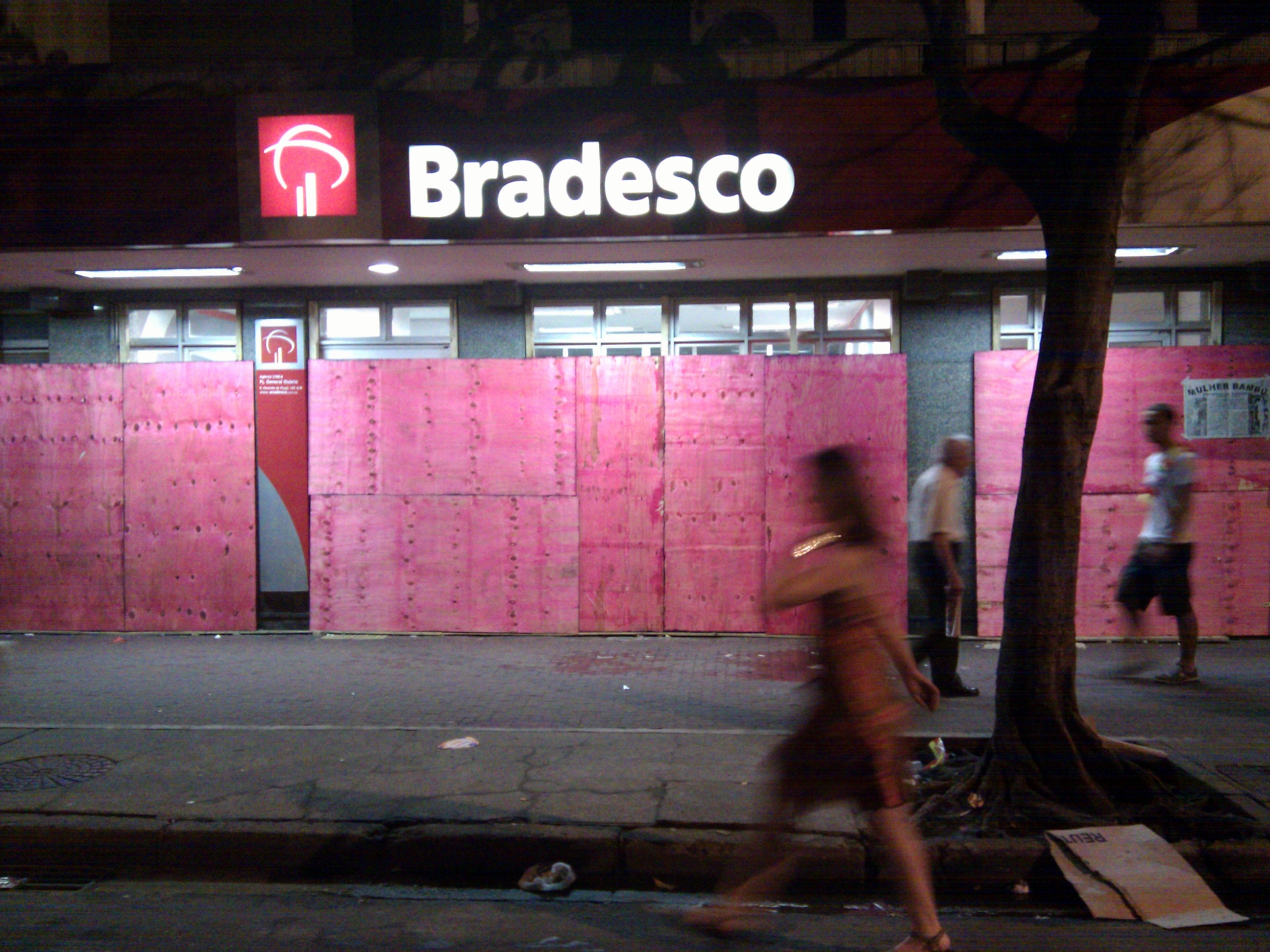
Many banks protected their windows

The formal Carnival parades at the Sambódromo highlighted the marvelous city in many ways, including a whole section of dancers dressed as the Disney Zé Carioca character (photo #9). Perhaps the most striking was Salgueiro samba school’s drummers, dressed en masse as BOPE soldiers, à la the two Elite Squad movies; some observers thought the BOPE glorification overdone, given that those troops are still a largely violent and corrupt bunch– especially in contrast to the fresh-faced police pacification units. Salgueiro is one of the most recently pacified favelas; the drummers have been instructed to return the costumes to the school forthwith, so as not to create confusion.

Metro station under the new federally-financed elevator to Cantagalo favela

Rio Governor Sérgio Cabral rather humbly said Tuesday this was the best Carnival since he took office in 2007, and that much remains to be improved. The festival must be in his blood, since his father– who paraded this year with the Mangueira samba school– is a historian of popular Brazilian music. Cabral’s government moves ever forward, even during Carnival, with the creation of two new agencies, one to reduce the state’s carbon emissions, and one to promote tourism related to events and sports.

Meanwhile, city sanitation workers continued a massive cleanup, with the collection so far of over 400 tons of trash just from the Sambadrome, alone. Rio’s got to be fresh and sparkling for U.S. President Barack Obama’s visit, March 20.

Here are the city’s plans for the Valongo dock for those interested in visiting it– the federal government must still give its approval.

Posted in Brazil, Transformation of Rio de Janeiro / Transformação do Rio de Janeiro | Tagged , , , , , , , , , , , , , , | 3 Comments