Barra Metro Linha 4: pode-se realizar o sonho?

Ponte bonita– agora é só construí-la e limpar a lagoa a qual atravessa!

Com a utilização de fotografia aérea e animação computadorizada, esse vídeo da Secretaria Estadual de Transportes oferece um retrato impressionante da linha 4 do metrô, que está atualmente em construção na Barra da Tijuca– um sonho antigo de milhões de cariocas que diariamente passam horas no trânsito.

Para aqueles entre nós que se lembram de quando a Barra era nada mais do que dunas e manguezais, e que assistiram ao seu desenvolvimento desenfreado de 30 anos, sem planejamento ou fiscalização adequados, o vídeo traz notícias quase boas demais para se acreditar. E de fato, essa matéria do jornal  O Globo afirma que o projeto de R$ 4 bilhões, que deve ficar pronto antes das Olimpíadas de  2016,  ainda não bateu o martelo sobre o design da ponte.

Mesmo assim…

O que você achou?

Posted in Brasil, Transformation of Rio de Janeiro / Transformação do Rio de Janeiro | Tagged , , , , , | Leave a comment

Barra Metro Line 4: can the dream come true?

Nice-looking bridge; now just build it and get the lagoon it runs over cleaned up!

Using aerial photography and computer animation, this State Transportation Secretariat video provides an impressive display of the #4 metro line now under construction in  Barra da Tijuca, a dream long held by millions of cariocas who daily spend hours in traffic.

For those of us who remember when Barra was but sand dunes and mangrove swamps, and who watched the development sprawl for 30 years without adequate planning or vigilance, the video is almost too good to be true. And in fact, this Globo piece states that the US$ 2.4 billion equivalent project slated for completion before the 2016 Olympics hasn’t yet determined that the bridge shown in the video will in fact look this way.

Still…

What do you think of it?

Posted in Brazil, Transformation of Rio de Janeiro / Transformação do Rio de Janeiro | Tagged , , , , , | 1 Comment

Redução de crime no estado do Rio, para níveis inéditos

[Click here for Crime is down in Rio state, to new lows]

O ano de 1991 no estado do Rio de Janeiro foi o de 1963 em Nova York

O secretário estadual de segurança pública José Mariano Beltrame declarou dia 31 de janeiro que os homicídios, assaltos, roubos de carro e outros crimes no estado atingiram no ano 2010 baixas inéditas — e que em alguns casos chegou-se a taxas recordes para o período durante o qual o estado mantém estatísticas confiáveis, desde 1991. O Rio de Janeiro metropolitano representa entre 75% e 80% da estatística estadual, de acordo com a assessoria de comunicação do secretário.

Os números da cidade de Nova York são confiáveis só a partir de 1963, embora os estados norte-americanos registrem seus crimes desde o século XIX.  Como podem ser manipuladas, as estatísticas criminais são frequentemente  questionadas. Mas a imprensa brasileira não tem duvidado dos números, que seriam resultado da política de segurança pública do governador Sérgio Cabral, no cargo desde 2007 e atualmente no início de um segundo mandato. Tal política é a de retomar territórios– tanto de maneira militar como em termos de serviços públicos– que por décadas ficaram à mercê de traficantes de drogas e outras autoridades informais.

Roubo de rua diminui pela primeira vez em sete anos

O número mais marcante que se apresentou foi a taxa de homicídios, com uma redução de quase 18% em 2010 comparado com 2009, a uma taxa per capita de 29,8 p0r cem mil habitantes. Os números per capita refletem agora o censo mais recente; a população do Rio de Janeiro vem crescendo mais devagar do que se supunha.

Pelo bom trabalho, o governador anunciou ontem acréscimos aos bônus salariais para a polícia militar.

Beltrame mostrou-se bastante humilde em relação aos resultados que ele e as polícias civil e militar produziram no estado, dizendo que”os números ainda não são excelentes”, e que as “porcentagens serão mais e mais difíceis de abaixar com o passar dos anos”. A taxa de homicídio do estado de Nova York em 2009 foi de apenas quatro por cem mil habitantes.

Reduções também se observaram aqui em roubo de veículos, roubo de rua, latrocínio e autos de resistência.

Secretário Beltrame, no centro

Ao responder à pergunta de um repórter, Beltrame disse que não existe nenhuma prova de que os criminosos estejam fugindo da política dura da capital a procura de abrigo em outras partes do estado do Rio– ou seja, que o crime esteja simplesmente mudando de endereço. Mas ele observou que os únicos que podem estar migrando são os líderes, deixando para trás os soldados do tráfico. E são essas pessoas o alvo dos programas sociais estaduais e municipais, além daqueles das empresas particulares, que têm como objetivo fazer com que os números do crime continuem em queda. “Indiscutivelmente, à medida que chegam ações de outras áreas de estado, isso influencia muito a segurança pública,” Beltrame afirmou.

RioRealblog perguntou se o Rio aprende com as experiências de outras cidades, tais como Medellín, onde o crime caiu e depois ressuscitou. Beltrame não respondeu diretamente, mas disse que o Estado está sempre monitorando a política em termos de estratégia e execução, fazendo adaptações de acordo com as circunstâncias. É interessante notar que ele mencionou não apenas as 14 tão louvadas UPPs da cidade, como componente estratégico da política de segurança pública, mas também suas Regiões Integradas  de Segurança Pública, que recebem bem menos atenção da imprensa. Essas regiões, criadas no fim de 2009,  servem como meios de coordenação entre as polícias civil e militar no Rio, com base regional. Tradicionalmente a polícia civil fazia um serviço de investigação na delegacia, enquanto a polícia militar trabalhava nas ruas. Mas a divisão de trabalho evoluiu para feudos concorrentes, frequentemente com objetivos conflitantes. Agora, cada região tem metas– e as reponsabilidades ficam mais claras.

A polícia civil também criou, em março último, sete DEDICs, ou seja, salas de delegacia dedicadas ao atendimento ao cidadão. De acordo com esse post do site do jornal O Globo, o programa se caracteriza por uma mudança nos horários de trabalho dos policiais, que passam a trabalhar  diariamente (em vez de em turnos de 24 horas seguidos de folgas de 72 horas, quando muitos trabalhavam fazendo bicos de segurança particular, o que criava amplas oportunidades para a corrupção e também interrompia a continuidade investigativa); e visitas domiciliares a vítimas de crime, marcadas pela Internet, para o preenchimento de formulários.

Possivelmente mais alentadora do que os novos números do crime foi esta afirmação do Beltrame: “As polícias mudam definitivamente sua lógica. Elas saem de uma lógica mais voltada para o combate, mais voltada para o confronto, para a guerra, e vêm para uma política de prestação de serviços. Mais de mil policias de UPP já agem dessa forma, a polícia dos DEDICs já agem dessa forma.”


Posted in Brasil, Transformation of Rio de Janeiro / Transformação do Rio de Janeiro | Tagged , , , , , , , , , | Leave a comment

Crime is down in Rio state, to record lows

Rio state’s 1991 is New York City’s 1963

State Public Safety Secretary José Mariano Beltrame announced yesterday that Rio de Janeiro state’s 2010 homicides, robberies, car thefts and other crimes have hit startling lows— and in some cases set records for the period in which the state has been keeping reliable statistics, since 1991. Greater Rio de Janeiro accounts for 75-80% of total state statistics, according to Beltrame’s press office.

New York City’s numbers date back to 1963, but U.S. states have been keeping records since the 19th century. Crime statistics are often questioned, as they can be manipulated. But the Brazilian press hasn’t doubted the numbers, which are said to reflect the public safety policy of governor Sérgio Cabral, who took office in 2007 and has just begun a second term. That policy centers on retaking territories– both militarily and in terms of public services–  that had been left for decades to the vagaries and violence of drug traffickers.

Street theft down for the first time in seven years

The most striking number announced is the homicide rate, down almost 18% in 2010 from 2009, to a per capita rate of 29.8 per hundred thousand inhabitants. The per capita numbers now reflect the latest census figures; Rio’s population has been growing more slowly than estimated earlier.

Governor Cabral announced police pay bonuses today for work well done.

Beltrame was quite humble about the results he and Rio’s civil and military police have produced in the state, saying that “the numbers still aren’t excellent”, and that the “percentages will be harder and harder to bring down as the years go by”. New York state’s per capita homicide rate for 2009 is a mere four per hundred thousand people.

Other reductions were seen in car theft, street crime, robbery-related murder, and murder at the hands of the police in confrontation.


Secretary Beltrame, in white shirt

In answer to a reporter’s question, Beltrame said there’s no hard evidence that criminals are fleeing his crackdown in the capital for other areas in the state of Rio– i.e., that crime is merely moving around. But he noted that if anyone is migrating it’s the ringleaders, not the small fry. And the latter are some of the people whose needs state and municipal social programs, as well as private businesses, are focusing on, to keep crime statistics falling. “Indisputably, as other state agencies take action, this influences public safety a great deal,” he noted.

RioRealblog asked if Rio is learning from the experiences of other cities such as Medellín, where crime fell and later perked back up. Beltrame didn’t respond directly, but indicated that the state is constantly monitoring its policy strategy and execution, adapting according to circumstances. Interestingly, he mentioned not only the city’s 14 much-praised UPPs, or police pacification units, as a key strategic component of public safety policy, but its Integrated Safety Regions, which have gotten much less press. These were created in late 2009 as a means of coordination between Rio’s civil and military police, on a regional basis. Traditionally, the civil police did  investigative office work and the military did the street work, but the division of labor evolved into competing often cross-purposed fiefdoms. Now the regions have goals to achieve, and responsibilities are clearer than before.

The civil police also created, last March, seven DEDICs, or departments of police stations dedicated to citizen service. According to this post on the Globo newspaper site, the program’s distinguishing features are a change in work schedules such that officers work normal hours (instead of 24-hour shifts followed by 72 hours off during which many officers hold second jobs in private security, providing ample opportunity for corruption as well as interrupting investigative continuity); and home visits to crime victims, set up via the Internet, to complete paperwork.

Perhaps even more heartening than the new numbers was this statement, from Beltrame: “The police forces are changing their logic. They’re coming out of a logic of combate, confrontation and war, and moving to one of a service-oriented force. More than a thousand police in the UPPs are already working in this manner; the police in the DEDICs are working in this manner.”


Posted in Brazil, Transformation of Rio de Janeiro / Transformação do Rio de Janeiro | Tagged , , , , , , , , , | Leave a comment

Repensando a arquitetura do Rio de Janeiro

Click here for Rethinking Rio architecture

“Se você fechar os olhos e fingir que não tem montanha e mar, é uma tragédia.”

— Lauro Cavalcanti, diretor do Paço Imperial e arquiteto, no Globo de 29 de janeiro de 2011

A seção Segundo Caderno do jornal O Globo publicou no último sábado uma matéria de capa (que não está disponível on-line) na qual os arquitetos mais importantes do Rio de Janeiro afirmam que nenhum acontecimento importante na área tem ocorrido na cidade desde pelo menos os anos 1950. Isso pode estar prestes a mudar.

“Na situação hipotética da visita de um amigo estrangeiro ao Rio, quais construções arquitetônicas representativas da cidade indicar?”, o texto pergunta, citando a seguir o Palácio Gustavo Capanema, o Museu de Arte Moderna, o Edifício Biarritz, a Cinelândia e a Praça XV. Todos datam de antes de 1960.

Os arquitetos entrevistados na matéria fazem as seguintes constatações:

  • Não existe debate no Rio de Janeiro sobre o que é belo;
  • Nos anos 1980 e 1990, o Brasil “se descolou de um debate internacional”, perdendo contato com o pensamento arquitetônico mundial;
  • O Rio de Janeiro priorizou o mecânico e as máquinas, a despeito do pensamento humano;
  • O governo municipal tem um papel importante a desempenhar;
  • Os arquitetos precisam se organizar, e as faculdades de arquitetura devem ajudar no desenvolvimento de um novo pensamento sobre a cidade.

Não foi por acaso que o belo tenha perdido primazia nos anos 1980 e 1990, pois o perigo levou os cariocas a se refugiarem dentro de casa e nos seus próprios bairros. Alguns colégios até deixaram de levar os alunos para conhecer a cidade, por causa dos perigos de sequestro, balas perdidas e assaltos. Com as UPPs, isso começou a mudar desde o fim de 2008; na semana passada, o governador Sérgio Cabral declarou que a próxima UPP, a 14a da cidade, será instalada na favela do Morro de São Carlos, na zona norte. A Polícia Civil e o BOPE já estão ocupando a área, o passo preparativo para a instalação de uma UPP.

A cidade dispõe de grande potencial arquitetônico, diz o presidente da seção carioca do Instituto de Arquitetos Brasileiros (IAB), Sérgio Magalhães. De acordo com ele, isso provém da multiplicidade de espaços urbanos, onde as diferenças se encontram, enriquecendo a cultura. Junto com o governo municipal, o IAB organizou no ano passado um concurso inédito para selecionar 40 projetos para ajudar na integração das favelas cariocas com a cidade formal, o programa Morar Carioca. No dia 28 de janeiro, houve uma cerimônia de diplomação dos escritórios selecionados, que começam a trabalhar em março e irão focar na urbanização de 216 das mais de mil favelas cariocas, em áreas perto de instalações olímpicas. De acordo com O Globo, essa segunda fase do Morar Carioca irá beneficiar 312 mil pessoas.

“Esses projetos são a primeira contribuição arquitetônica contemporânea nacional à arquitetura mundial”, Magalhães disse ao Globo. Aqui estão os projetos selecionados.

Outro concurso organizado pelo IAB está em andamento para o programa Porto Olímpico, a fim de selecionar o melhor projeto arquitetônico e de urbanismo para as instalações olímpicas e seu entorno, na área portuária do Rio. Estão contemplados as vilas de imprensa e de árbitros, um hotel e um centro de convenções.

Posted in Brasil, Transformation of Rio de Janeiro / Transformação do Rio de Janeiro | Tagged , , , , , , , , , , | Leave a comment

Rethinking Rio architecture

“If you close your eyes and pretend there’s no mountains or sea, it’s a tragedy.”

–Lauro Cavalcanti, Paço Imperial museum director and architect, in O Globo Jan. 29, 2011

O Globo‘s culture section, the Segundo Caderno, ran a cover story today (not online) in which Rio’s top architects conclude that nothing of architectural interest has happened in Rio de Janeiro since at least the 1950s. This might be about to change.

“In the hypothetical situation of a foreign friend visiting Rio, what representative architecture would you recommend?” asks the piece, going on to name the Palácio Gustavo Capanema, the Museum of Modern Art, the Edifício Biarritz, Cinelândia and Praça XV. All were built before 1960.

The architects interviewed make the following points:

  • There’s no discussion in  Rio about what is beautiful
  • In the 1980s and 90s Brazil lost touch with what was going on in architecture worldwide
  • Rio has given priority to the mechanical, to machines, and needs to focus more on human thought
  • City hall has an important role to play
  • Architects must organize, and university architecture departments should help people to rethink the city

Rio entered a long period of decline when the Brazilian capital moved to Brasília in 1960. It’s no coincidence that beauty was sidelined in the 80s and 90s, when the city became so dangerous to move around in that tourism fell off and cariocas retreated more and more to their own neighborhoods and homes. Fearing kidnapping, stray bullets, and robberies, schools even did away with student field trips. This has begun to change now, as the state government takes back territory from drug traffickers, setting up police pacification units, or UPPs. Crime has fallen significantly. This past week governor Sérgio Cabral announced that the next UPP, Rio’s 14th, will go to the Morro São Carlos favela, in the north zone. The civil police and the military police elite squad, BOPE, are already occupying the area.

The city has great architectural and urban potential, according to the president of the Rio chapter of the Brazilian Architects’ Institute (IAB), Sérgio Magalhães. He says this is because Rio draws on a multiplicity of spaces,  encouraging differences that bump up against each other, enriching culture. In conjunction with city hall, last year the IAB organized a groundbreaking contest to select 40 projects to help integrate Rio’s favelas with the rest of the city, the Morar Carioca (Carioca way of life) program. On Jan. 28 a ceremony was held to formally recognize the 40 projects, which begin work in March and will focus on bringing 216 of Rio’s 1000-plus favelas up to standard code, in areas close to Olympic installations and activities. According to O Globo, this second phase of Morar Carioca will benefit 312,000 people.

“[Morar Carioca is] Brazil’s first contribution to world contemporary architecture, ” Magalhães told O Globo. Here are the selected projects.

Another IAB-organized contest is now underway for the Porto Olímpico (Olympic port) program, which will select the best architectural and city planning project for the Olympic installations and vicinity, in Rio’s port area. These include the press and referees’ villages, a hotel and a convention center.

Posted in Brazil, Transformation of Rio de Janeiro / Transformação do Rio de Janeiro | Tagged , , , , , , , , , , | Leave a comment

Rio onscreen at the Oscars

Wasteland documentary will walk the red carpet

With the Brazilian blockbuster Elite Squad 2 making the rounds of the Sundance and Berlin film festivals and the animated feature Rio preparing for a global launch in April, Fernando Meirelles’ Wasteland was selected yesterday to represent Brazil at the Oscar awards. The documentary, directed by Lucy Walker, João Jardim and Karen Harley, was highly praised by U.S. reviewers for its upbeat angle, and has just opened in Brazil.

Not bad for the “marvelous city”, although Hollywood and the world may remember Rio more for its corrupt, violent police force and its vile trash dump– than as the scenery for an avian love story. Ticket sales will tell.

Lixo Extraordinário, 1992

Wasteland is about how renowned Brazilian artist Vik Muniz transformed trash into art and just possibly as well, the trashpickers he connected with at Jardim Gramacho, Rio’s overflowing dump that is said to be Latin America’s largest. Informal recycling has been going on there since the dump , which is actually located on the edge of Guanabara Bay in the poor bedroom suburb of Duque de Caxias, came into existence in the 1970s.

Comlurb, Rio’s trash collection and urban cleaning service, has been working to improve the dump since 1995 and has had some success. However, as Wasteland documents, there are still legions of trashpickers living off it in highly dangerous conditions. Worse, engineers have long been condemning it due to ground instability that could cause decomposed trash to pour into the bay– an ecological disaster in waters already too polluted.

In a risk-fraught situation similiar to that of the informal housing built on hillsides  that contributed to the recent mudslides in the mountains north of Rio, causing more than 800 deaths, no definitive action has been taken to deal with Rio de Janeiro’s trash disposal. Brazil’s growing middle class and its consumer spree exacerbates the problem. Gramacho is reportedly slated to close in 2012, once a new dump in Seropédica–a city further west than Duque de Caxias– is ready. Formal trash recycling in Rio de Janeiro is spotty. Here is a municipal site describing the new dump and plans to close the old one.

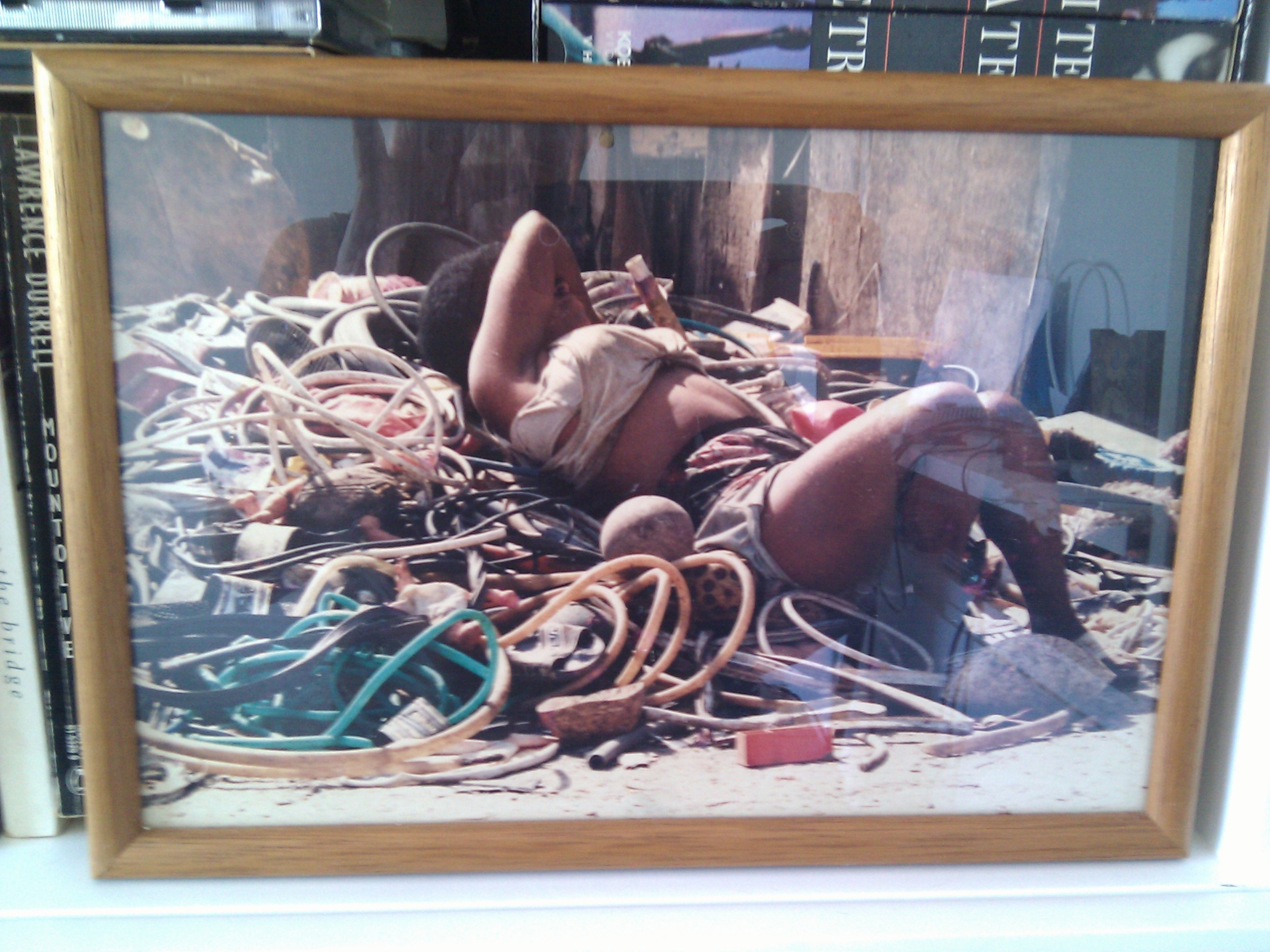
The photo above was taken on a visit almost 20 years ago to Jardim Gramacho, during the U.N. Earth Summit in Rio de Janeiro. Trashpickers wearing only their underwear separated different kinds of plastic that were then weighed onsite and trucked back out for processing. At that time Governor Leonel Brizola had vowed to close the dump. “It’s like a mother to me,” lamented a frightened trashpicker whose shack was fully furnished from it. A slimy, smelly, invasive mother by now.

Click here to read more about this film and trashpicking, in English.

Posted in Brazil, Transformation of Rio de Janeiro / Transformação do Rio de Janeiro | Tagged , , , , , , , , , , , , | Leave a comment

Elite Squad 2 at Sundance: sole online critic so far loved it

“Face-meltingly kick-ass” is how blogger “Vince Mancini” described the Brazilian blockbuster , which portrays a Rio de Janeiro under the thumb of paramilitary groups, strongly suggesting that the root of the problem lies in state politics.

The film was exhibited hors concours at the Sundance Festival, yesterday, at the same time as Red State, which drew most journalists. Next month it’s on at the Berlin film festival. In April the DVD goes on sale in Brazil, but it’s not yet known when it premiers in the USA.

“I loved Elite Squad 2.  It’s meat and potatoes and more.  It melted my face off and kicked my balls in,” writes Mancini.

The comments on the post are worth a read, too. “I haven’t seen the movie,” says one. “But after reading this review, I need a cigarette.”

See also this post, written at the time the film premiered in Brazil. For a preview in English with review blurbs, click here.

Posted in Brazil, Transformation of Rio de Janeiro / Transformação do Rio de Janeiro | Tagged | Leave a comment

Elite Squad 2 em Sundance: único crítico online até agora amou

Face-meltingly kick-ass, como traduzir? Foi assim que o blogueiro “Vince Mancini” descreveu o blockbuster brasileiro, que retrata um Rio de Janeiro dominado por grupos paramilitares, sugerindo com força que a raíz do problema reside na política estadual.

O filme foi exibido hors concours no festival Sundance nos EUA, ontem, na mesma hora que Red State, o que atraiu a maioria dos jornalistas. Está programado para o festival de Berlim, em fevereiro. Em abril, o DVD estará a venda no Brasil, mas não se sabe ainda quando Tropa de Elite 2 vai para as telas norte-americanas.

“É prato feito com tudo que tem direito e mais,” Mancini resumiu. “Me deixou de cara no chão e me acertou em cheio no saco.”

Os comentários no post dele valem muito uma lida, também. “Não vi o filme,” diz um, “mas depois de ler essa crítica, preciso de um cigarro.”

Posted in Brasil, Transformation of Rio de Janeiro / Transformação do Rio de Janeiro | Tagged | Leave a comment

Questionable cultural upkeep

O Globo reported this past Saturday on the city of Rio de Janeiro’s spotty support for most of its ten cultural centers, citing  lack of planning, partnerships, budgets, staff and exhibits, plus leaky roofs and broken air conditioning. According to the report, the cause of what the paper calls a “culture of abandonment” is lack of continuity. “Planning was suspended with the arrival of the new municipal culture secretary, Emílio Kalil,” says Globo. “who substituted Ana Luisa Lima, who in turn  took the place of Jandira Feghali, in April”. Feghali left the post to run for congress, and was elected in October 2010.

Tourists visiting Rio on a rainy week are often hard put to occupy their time, once they’ve  seen the vibrant cultural centers of the Banco do Brasil and the Caixa Econômica Federal. Many museums suffer a lack of public and private support.

But RioRealblog’s Cariocapédia tab lists many new cultural undertakings being planned or built. Will they receive long-term support?

Posted in Brazil, Transformation of Rio de Janeiro / Transformação do Rio de Janeiro | Tagged , , , , , | 1 Comment