What is going on? Sirens and helicopters not effective enough to stem crime

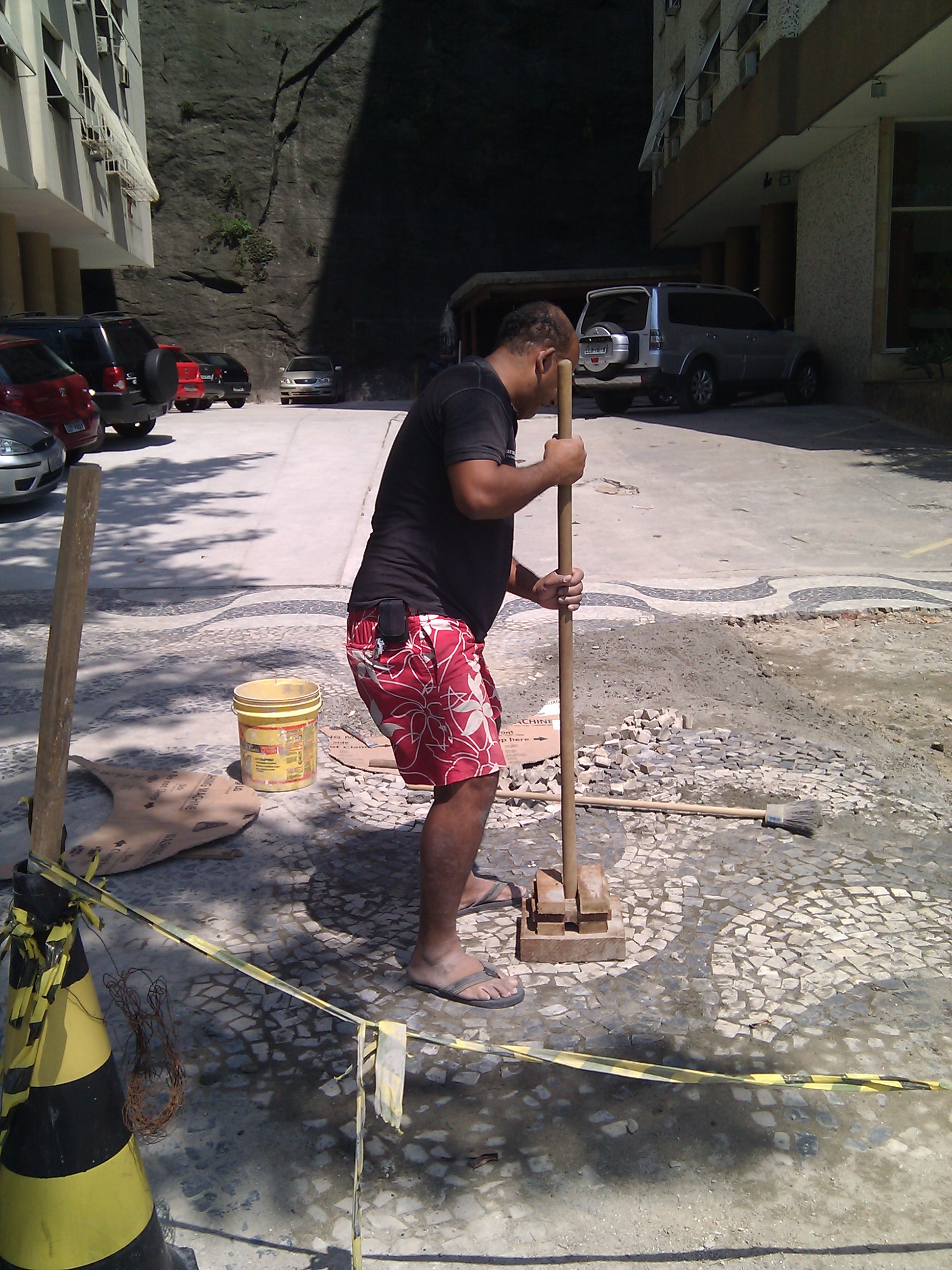
Carioca "arrastões" used to take place on the beach, with everybody barefoot


Rio’s police have successfully occupied and “pacified” 13 favelas since late 2008. They’ve also begun to turn their attention to the extortionist paramilitary groups prevalent in poor neighborhoods where drug traffickers are absent. And the state is moving fast to increase its presence in the pacified favelas, with the innovative social UPP program.

The military police also successfully ended a ten-day battle between rival drug trafficking gangs in Madureira, late last week.

But a wave of attacks on motorists in a variety of locations throughout the city continues unchecked. An attack of this sort in Rio de Janeiro, on several cars at once, is called arrastão in Portuguese, which literally means dragnet. Like dragnet, arrastão refers to fishing using a large net, but in Rio it’s the robbers who do the fishing, not the police.

Officials so far haven’t said who is carrying out the arrastões or if the perps might by any chance be drug traffickers or militia members, pushed out of their territories. Middle and upper-class support for the state’s public safety policy, evident in Sérgio Cabral’s Oct. 3 landslide reelection to the governorship, could erode fast if such crime continues for much longer.

The problema may be semantic. Gustavo de Almeida, press advisor for the state’s general commander of the military police,  Mário Sérgio Duarte, thinks that the word arrastão is being used too loosely, to describe almost any robbery taking place in the non-favela parts of the city. The so-called wave, he says, may be just a random collection of crimes that are part of normal urban life. There’s no way of knowing the robbers’ origins, and they aren’t part of any organized movement to destabilize the state’s public safety policy.

He adds, in an exclusive statement for RioRealblog:

In no way do I wish to minimize the impact of or the trauma that these robberies cause for victims, and, of course, for the citizens of Rio who hear about these events. What I question, always, is the usage of the word for different ocurrences. In the distant past we used the word arrastão for any robbery committed by multiple agressors with multiple victims. Today, the press calls any “rapid” robbery taking place on a public roadway an arrastão (as if all robberies weren’t rapid).
I have serious doubts about this. Not that I deny the existence of arrastões in Rio de Janeiro. For example, the other day there was an attack on a bus with 45 passengers, on Avenida Brasil. Now, with that many victims, isn’t that an arrastão? Why is it just an “attack on a bus”? Is there some kind of chart we can use to quantify an arrastão?
So the use of this word serves to categorize events that are common (although undesirable, of course) in a large city like Rio de Janeiro, as serious crimes. The press colors these crimes as much more serious than they really are, and end up hurting the image of a city that today has a well-defined public safety policy, and a military police that is constantly improving, adapting its methods and procedures.
A month ago, we were asked about arrastões on Avenida Martin Luther King, which used to be called Avenida Automóvel Clube, in the north zone. We set up a meeting with the commander of the capital’s police command, colonel Marcus Jardim. The same day he went through the police blotter and found that in a two-week period, over fifteen miles of roadway, there had been six automobile thefts (in separate occurrences) and two motorcycle thefts.
Of course these are thefts we cannot minimize and that shouldn’t occur. But unfortunately what we have today in the western world is a model for a metropolis where the “ideal” is the “lowest possible rate”, with the recognition that zero is impossible.

TV Globo’s newsroom consciously avoids the word arrastão, but the same group’s print media has a different approach. A search for the word arrastão on the Extra newspaper’s “Caso de Polícia” blog turned up almost 20 cases of victims who fell into the fishnet since early September. Two people, including a child, died from bullet wounds in the attacks; two others were wounded. The military police have recently taken to using helicopter patrols and have made personnel changes in an attempt to create a more effective anti-crime strategy, but so far the results aren’t impressive. Last Monday night in Humaitá, near the Casa de Espanha, three armed men stopped cars and collected three motorists’ valuables, as well as keys to two of the cars involved. It took police fifteen minutes to arrive at the scene; they later appealed to drivers to pull over in traffic on hearing police sirens.

But locals know this can be dangerous. Just ten days ago one carioca lost his Fiat Uno to a “policeman” driving a motorcycle with the siren turned on. It was only when he was getting out of his car, at the officer’s order, that he noticed the uniformed fellow was wearing tennis shoes instead of regulatory black boots.

Posted in Transformation of Rio de Janeiro / Transformação do Rio de Janeiro | Tagged , , , , , , , , | 2 Comments

Afternoon Delight in UPP territory: a way to value favela history

O Globo reported today on a new Rio state government program to fund late-afternoon street shows that draw on local memory, in occupied favelas this summer. Dubbed O Verão das UPPs, or Summer in the UPPs, the program has funds totaling US$ 312,000 to support projects in the favelas of Batan, Borel, Chapéu-Mangueira, Babilônia, Cidade de Deus and Providência. These are six of the 12 Rio de Janeiro communities that have been occupied and “pacified” by “police pacification units”, or UPPs, since late 2008.

The groups chosen to receive funding are to create community workshops to produce the shows. Marcus Vinícius Faustini, a young man who grew up in a public housing project in the west zone neighborhood of Santa Cruz, and has long experience with the arts in low-income areas, directs the program, a part of the social outreach that follows on pacification.

“Rio’s vocation in 2014 and 2016 is not an indoor stage, but the street,” he told O Globo. “After applauding the sunset on Ipanema Beach, a tourist can go hear some samba at Providência or see an MC show in Borel. Rio is a city of encounters. We can’t let it become a city of fear.”


Posted in Transformation of Rio de Janeiro / Transformação do Rio de Janeiro | Tagged , , , , , , , , , , , | Leave a comment

MARRIOTT DE COPACABANA TROCA DE DONO EM MOMENTO DE TRANSIÇÃO POLICIAL E APROFUNDAMENTO DE PACIFICAÇÃO

O Globo noticiou nesta semana que a Host Hotels & Resorts comprou o Hotel Marriott de Copacabana por US$ 47,5 milhões. Contudo, a Host Hotels é uma empresa muito próxima à Marriott, que vai continuar como administradora da propriedade − assim, a compra talvez seja mais um lance de contabilidade do que um investimento de grande destaque. O Marriott tem 245 quartos; hoje em dia, no Rio de Janeiro, constroem-se e reformam-se muitos mais para acomodar hóspedes para a Copa do Mundo de 2014 e a Olimpíada de 2016.

A troca de proprietário acontece no meio de algumas mudanças importantes. Nesta semana, a Polícia Militar ocupou o Morro dos Macacos, em preparação para a chegada da 13ª UPP do Rio de Janeiro. Não houve sequer um tiro; de acordo com a imprensa, os traficantes exilaram-se na Rocinha e no Morro do 18. A Rocinha deve ser ocupada em 2011.

A ocupação do Morro dos Macacos representa um marco no processo de pacificação. É o local  onde, há exatamente um ano, travou-se uma batalha entre polícia e traficantes, que abateram um helicóptero policial, matando três PMs. Um total de 26 pessoas morreu no conflito. Na época, o Rio tinha apenas quatro UPPs, e o Secretário de Segurança Pública, José Mariano Beltrame, disse que esperava que a violência fosse entendida como o 11 de Setembro do Rio de Janeiro.

Agora falta ocupar e pacificar apenas uma favela no entorno do Maracanã, que irá abrigar grande número dos jogos da Copa do Mundo de  2014 : a Mangueira.

Sexta-feira, crianças no Morro dos Macacos brincavam em cima do caveirão, utilizado na ocupação. No local onde os traficantes costumavam queimar os inimigos ao vivo, o microondas, a BOPE instalou seu centro de comando. Não muito longe dali, encontraram-se no dia 18 de outubro 10 ossadas humanas , num cemitério clandestino dos traficantes.

Na semana passada, a Polícia Militar decidiu fazer algumas mudanças de pessoal em cargos importantes e de voltar à utilização de helicópteros, como resposta a uma onda de assaltos a pedestres e arrastões em vias públicas. A frota da PM consiste de apenas três helicópteros; no passado consideraram-se as patrulhas aéreas caras demais. A governadora Benedita da Silva tentou, em 2002, controlar o crime por meio de um dirigível — que durou apenas dois meses no ar, pois o custo mensal de manutenção chegava a R$ 929 mil.

A Polícia Civil também instituiu algumas trocas de quadro, depois de balear por engano um juiz e sua família, numa blitz. Críticas na imprensa comparando a resposta rápida da polícia a esse incidente com o comportamento policial depois da morte por engano de um morador de favela levaram a um momento marcante de solidariedade entre as vítimas.

A Jones Lang LaSalle Hotels, uma empresa de consultoria em investimento hoteleiro, disse que a compra do Marriott resultou da expectativa de que o Brasil irá subir de oitava para a quinta economia no mundo até 2016. As forças policiais cariocas, em face à violência de traficantes de droga e de milícias urbanas, estão trabalhando duro para preparar a cidade para os Jogos. Certamente uma ajuda da Marriott seria muito bem-vinda, em conjunto com outras empresas que já estão cofinanciando as UPPs, como a Coca-Cola, a EBX de Eike Batista, a Bradesco Seguros, a CBF e a Souza Cruz.

Posted in Transformation of Rio de Janeiro / Transformação do Rio de Janeiro | Tagged , , , , , , , , , , , , , , , , | Leave a comment

Copa Marriott changes ownership amid police flux and further occupation

O Globo reported this week that Host Hotels & Resorts is buying the Copacabana Marriott hotel for US$ 47.5 million. However, Host Hotels is closely related to Marriott, which will continue to manage the property– so the purchase may be more of an accounting move than a newsworthy investment. The Copa Marriott, located right across the street from one of the world’s most famous beaches, has 245 rooms. Many more are being built and remodeled to accomodate guests in Rio for the 2014 World Cup and the 2016 Olympics.

The hotel changeover, such as it is, takes place in a moment of flux here. In Rio, public safety duties are divided up among military police, civil police, traffic police, and the municipal guard (there is also a highway police force and the local branch of the federal police, an FBI equivalent). Today the military police occupied the Morro dos Macacos favela in the Tijuca neighborhood, in preparation for Rio’s 13th UPP, or police pacification unit. Not a bullet was fired; the drug traffickers reportedly exiled themselves to the south zone’s Rocinha favela and the north zone’s Morro do 18. Rocinha is due to be occupied next year.

The occupation of the Morro dos Macacos represents a landmark in the pacification process because it’s where a shootout between drug traffickers and police occurred exactly a year ago, and a police helicopter was downed, killing three officers. A total of 26 people died in that conflict. At the time, Rio had only four UPPs and state public safety secretary José Mariano Beltrame said he hoped the violence would be seen as Rio’s September 11.

Now only one favela in the  area  surrounding the Maracanã soccer stadium, where many of the 2014 World Cup soccer games will be played, has yet to be occupied: Mangueira, famous for its samba school.

Friday, children in the Morro dos Macacos romped on the caveirão, the police tank which the elite squad (BOPE) of the military police use to occupy favelas. In the spot that drug traffickers used for burning their enemies alive, dubbed microondas, or microwave, the BOPE set up camp and their command center. Not far from there, ten human skeletons were discovered on Oct. 18, in the drug traffickers’ clandestine cemetery.

Last week, the military police decided to make some top personnel changes and to return to the use of helicopters, in response to a wave of robberies targeting pedestrians and motorists. The helicopter fleet is composed of a mere three vehicles; in years past the police have found helicopter patrols to be exorbitantly expensive. One state governor tried back in 2002 to control crime using a dirigible, but it took only two months to retire the “Pax Rio”, as it was called. Monthly maintenance, according to O Globo, came to US$ 580,000, equivalent.

Rio’s civil police (who do investigative work, primarily) have also been making personnel changes, after the erroneous and near-fatal police shooting of a judge and his family at a roadblock. Press outcry criticizing the civil police’s quick response to that incident, in comparison to the corps’ unresponsive behavior after a wrongful fatal shooting of a favela resident, led Wednesday to a striking show of solidarity among the victims.

Jones Lang LaSalle Hotels, a hotel investment consulting firm, said the Marriott purchase took place as a result of the expectation that Brazil will move up from number 8 to the world’s fifth-largest economy by 2016. Rio’s police forces, faced with the violence of drug traffickers and urban militias, are working hard to prepare the city for the Games. They could certainly use some help from Marriott, in concert with other companies which have been co-funding Rio’s favela pacification program, including Coca-Cola, Eike Batista’s EBX, Bradesco’s insurance arm, the Brazilian Football Confederation (CBF) and the Brazilian subisidiary of British American Tobacco, Souza Cruz.

Posted in Transformation of Rio de Janeiro / Transformação do Rio de Janeiro | Tagged , , , , , , , , , , , , , , , , , , , | Leave a comment

Deu no New York Times / It was in the Times

Uma visita à UPP na Cidade de Deus, relatada no jornal norteamericano, junto com uma entrevista com o Secretário Estadual de Segurança Pública, José Mariano Beltrame, se encontra aqui:

http://www.nytimes.com/2010/10/11/world/americas/11brazil.html?_r=1&sq=rio%20de%20janeiro%20upp&st=cse&scp=1&pagewanted=all

O secretário falou ao NYT que as UPPs são formalmente garantidas apenas até o fim de 2014, mas que o êxito do programa iria dificultar seu desmantelamento por políticos no futuro. Moradores citados na matéria afirmam que a presença da polícia na favela é positiva, mas que incomoda, ao mesmo tempo. Há medo de represálias por parte de traficantes.

A matéria não menciona o papel da UPP social enquanto peça consolidadora das UPPs, nem os enormes desafios que ela apresenta para o governo de estado. Tampouco fala das milícias, outro elemento chave a ser eliminado, no processo de “pacificação” da cidade do Rio.

Posted in Transformation of Rio de Janeiro / Transformação do Rio de Janeiro | Tagged , , , , , , , | Leave a comment

TROPA DE ELITE 2: UMA CHAMADA PARA A MUDANÇA POLÍTICA

O “paz e amor” da UPP ainda falta em grande parte da cidade

[ATUALIZAÇÃO 19 DE JANEIRO 2011] Tropa de Elite, com público brasileiro de mais de 11 milhões, estreia neste domingo no festival de Sundance nos EUA, hors concours, de acordo com O Globo. Dia 10 de fevereiro estará disponível em DVD no Brasil.

Tropa de elite 2 faz enorme sucesso no Brasil, com um recorde de público. Quase 8,5 milhões de pessoas já assistiram ao novo filme do roteirista-diretor José Padilha– segundo na história do cinema nacional, apenas atrás de Dona Flor e seus dois maridos, de 1976. O filme, que já rendeu uma receita de R$ 27,7 milhões, será apresentado nos festivais Sundance e de Berlim, em 2011.

A continuação de Tropa de elite mostra um Rio de Janeiro 13 anos depois do primeiro filme, em que grupos paramilitares dirigidos e integrados por policiais já tomaram grande parte da cidade, e o nó a ser desfeito é político. No filme, a mídia trabalha de mãos dadas com políticos atrás de votos nas comunidades regidas pelas milícias. O resultado disso é que a polícia age a favor das necessidades dos políticos, em vez de pelas da população geral — permitindo que as milícias agreguem poder e territórios sem limites institucionais.

Em quase todas a sessões, surge forte aplauso quando Beto Nascimento, agora coronel-tenente na Polícia Militar carioca, bate forte no secretário estadual de Segurança Pública.

Os filmes Tropa de elite se baseiam parcialmente em livros de memórias ficcionalizadas, escritos por policiais (e outros), e muitos eventos no filme novo vêm da realidade. Rodrigo Pimentel, um dos roteiristas, deu essa entrevista sobre o assunto. Dias antes do lançamento, o representante estadual do PSOL Marcelo Freixo, inspiração de um personagem que denuncia as milícias no Rio, foi reeleito na maior votação da casa.

UM CHAMADO À AÇÃO NUMA CIDADE QUE LUTA PARA MUDAR DE COMPORTAMENTO

“A realidade do Rio hoje coloca uma questão séria para as UPPs,” Padilha disse ao Globo na noite da pré-estreia. “Daqui a dez anos, como a polícia vai agir nas comunidades que ela ocupou? A Cidade de Deus já tem casos de milicianos fazendo tráfico. Sem reformar a corporação que está aí hoje, quem garante que a gente não vai estar trocando traficantes por mafiosos de farda?  […] Enquanto a UPP estiver na mídia, a polícia vai manter a ordem. Mas já que o salário da polícia não aumenta e não há mudanças no processo de seleção de seu pessoal, como vai ficar? Se era tão fácil entrar nas favelas para desarmar o tráfico, por que não fizeram antes? Porque a polícia corrupta é sócia do tráfico.”

Ao contrário da declaração de Padilha, o governo estadual está sim transformando a polícia militar, com aumentos de salário, a recrutação de novos integrantes e um novo foco em direitos humanos. Mas o BOPE, a tropa de elite da polícia militar, é bem diferente dos jovens homens e mulheres que estão ocupando e “pacificando” favelas no Rio de Janeiro. E as milícias, com seus próprios representantes eleitos na Assembleia Estadual e na Câmara Municipal, dominantes na zona oeste (a mais pobre do Rio), talvez sejam um problema pior do que os traficantes.

Mais para o fim de Tropa de elite 2, um abatido Beto Nascimento, interpretado com maestria por Wagner Moura, depõe perante uma Assembleia Estadual que ele mesmo chama de corrupta, “menos uns seis ou sete fichas limpas”. “Quando tinha dez anos, meu filho me perguntou por que meu trabalho é matar”, ele diz. “Não sei a resposta. Mas sei que a polícia não puxa o gatilho sozinha […] a PM tem que acabar.” E passa-se para uma vista de Brasília, com foco no Congresso Nacional.

PESADELO AO VIVO E EM CORES

Talvez não seja por acaso que, no dia do lançamento do novo filme de Padilha, a polícia civil do Rio (diferente da polícia militar, dedicada principalmente à inteligência e à investigação) tenha feito oito prisões de milicianos na Zona Oeste, dentre eles um inspetor da polícia civil, um oficial do Exército e dois policiais militares. De acordo com O Globo, há seis meses o inspetor da polícia civil prendeu um grupo de milicianos da Zona Oeste, passando então a exercer as próprias atividades deles: venda de sinais de TV a cabo e botijões de gás, além da extorsão de R$ 50 semanais de comerciantes, a título de “taxa de segurança”.

Como já se relatou aqui, as ações policiais nos feudos milicianos do Rio têm tido um êxito parcial, apenas. Após a recente prisão de 15 milicianos na Zona Norte, entre eles ex-policiais militares e alguns ainda de farda, envolvidos em violência, extorsão e atividades ilegais, traficantes de droga tomaram sem alarde o território — território que eles mesmos haviam perdido anteriormente para a milícia.

Padilha se diz inspirado pelo diretor grego Costa-Gavras, a quem ele presta homenagem em uma cena de Tropa de elite 2 com uma marquise de cinema. Padilha afirma que, como Costa-Gavras, ele também pretende intervir na realidade. Executivos de cinema, exultantes na noite da pré-estreia, disseram ter uma expectativa de casas cheias por muito tempo. E isso, no mínimo, levará brasileiros a conversar, pensar e, possivelmente, agir.

DADO INTERESSANTE: O policial militar André Batista, em quem o personagem de Tropa de Elite André Matias foi inspirado, negociou com o sequestrador do ônibus 174, em 2000. A negociação fracassou; depois de mais de 4 horas tensas, com a cena passando ao vivo na televisão, o sequestrador Sandro Barbosa do Nascimento, sobrevivente da chacina da Candelária, matou a refém Geisa Firmo Gonçalves e ele mesmo foi morto pela PM.  “[…]eu sabia o que fazer, mas não conseguimos salvar a vida da menina,” Batista contou numa recente entrevista ao Globo. “Faltavam equipamentos. Os fuzis de precisão tinham lunetas mofadas. E não tínhamos um grupo armado treinado para entrar e matar o sequestrador. Naquele momento, foi a falência completa.” Um documentário desses eventos foi o primeiro longa-metragem de José Padilha.

Posted in Transformation of Rio de Janeiro / Transformação do Rio de Janeiro | Tagged , , , , , , , , , , , , , , | 2 Comments

Eleição presidencial: continuidade para o Rio de Janeiro, com muitos desafios

Uma combinação imbatível, até agora

Toda mudança social no Brasil tem acontecido sob pressão, de maneira gradual e tardia. Por isso, apesar do partido de José Serra ter beneficiado e muito os excluídos do país, os argumentos e promessas dele convencem menos do que os da candidata do presidente Lula, Dilma Rousseff. O mais provável é que ela ganhe a eleição do dia 31.

Isso deve ser bom para o Rio de Janeiro, já que o governador reeleito Sérgio Cabral e seu partido, o PMDB, são aliados fortes do PT. O vice da Dilma, Michel Temer, também é do PMDB.

A política no Brasil baseia-se cada vez mais em alianças desta natureza. Para o Rio, a questão principal no dia 1 de novembro será se o casamento PT-PMDB  vai durar, depois da lua de mel.

O governador Sérgio Cabral se reelegeu no dia 3 de outubro, com uma votação recorde de 66% de votos válidos, maciça demonstração de apoio pela sua atuação na área de segurança pública — as UPPs presentes até agora em doze favelas. Cabral prometeu expandir o programa e continuar a priorizá-lo. Deve continuar a trabalhar em conjunto com o prefeito Eduardo Paes, já que a próxima eleição municipal acontecerá apenas em 2012.

O governo estadual também tem um grande aliado em Brasília, onde a vaga para a presidência continua em aberto até o segundo turno, no fim deste mês. Cabral apoia a candidata do PT, Dilma Rousseff, mas os participantes de um painel no dia 4 de outubro do OsteRio, cuja finalidade era analisar os resultados eleitorais, concluíram que haverá harmonia mesmo no caso de uma vitória do candidato oposicionista do PSDB, José Serra. “O Cabral fala com o Serra todo dia”, assegurou Aspásia Camargo, que acabou de se eleger para a Assembleia Legislativa pelo Partido Verde. Os analistas, que incluíam os cientistas políticos Ricardo Ismael e Fabiano Santos, disseram que a composição um tanto mudada da Assembleia não terá efeito nos programas de Cabral, que fez suas reformas mais amplas no primeiro mandato, com uma Assembleia bastante dócil.

Parece fácil, mas não é


Os participantes do OsteRio admiraram a capacidade política de Cabral; a política no estado do Rio requer que o governador atraia o voto “popular” (ou seja, os eleitores vulneráveis a populistas como Anthony Garotinho) e o das classes mais altas, também. Ninguém conseguiu se lembrar de um secretário de Segurança Pública que tenha permanecido no cargo por um mandato inteiro, como está sendo o caso de José Mariano Beltrame, que continua no segundo mandato.

O êxito da política de segurança pública do governador depende de muito mais do que de suas habilidades políticas; não se pode esquecer de “combinar com os russos”, ou seja, os traficantes de drogas e os milicianos, que devem ser eliminados do mapa carioca — e também do das cidades vizinhas, como São Gonçalo, Niterói e Duque de Caxias. Além disso, a UPP social precisa seguir no rastro das UPPs, com empregos, saúde, títulos de propriedade e tantas outras questões.

Finalmente, as áreas de saúde e educação precisam de maior atenção no estado do Rio. Cabral disse essa semana que haverá maior investimento nelas do que durante o primeiro mandato, e verbas maiores serão também destinadas para a infrastrutura e os transporte. Sua carreira política terminará em 2014, ele acrescentou — acredite quem quiser.

Posted in Transformation of Rio de Janeiro / Transformação do Rio de Janeiro | Tagged , , , , , , , , , , , , , , | Leave a comment

Elite Squad 2: a call for political change

The "peace and love" of the UPP has yet to be felt in much of the city

[UPDATE JAN. 19, 2011 With Brazilian  ticket sales of over 11 million, Elite Squad 2 premieres in the U.S. this Sunday at the Sundance Festival, hors concours. DVD sales in Brazil begin Feb. 10]

Tropa de Elite 2 (Elite Squad 2) is already a huge sucess in Brazil, breaking a 20-year box office record (see the trailer via this link). Almost 8.5 million people have seen writer-director José Padilha’s new film so far, a Brazilian cinema number second only to audiences for Dona Flor and Her Two Husbands, in 1976. The film, which has already brought in US$  17.3 million equivalent, will be shown at the Sundance and Berlin film festivals in 2011. More complex than the first Elite Squad, the sequel may present difficulties for those unfamiliar with the public safety issues and the changes taking place in Rio de Janeiro. But Padilha seems to be more concerned with influencing local events by way of his film, than with selling popcorn in Peoria.

The continuation of Elite Squad portrays a Rio 13 years down the road from the first movie, where cop-run paramilitary groups have taken over much of the city and the knot to be untied is political. In the movie, the media work hand-in-hand with politicians who curry votes in communities ruled by militias. As a result, the police answer to politicians’ needs instead of those of the general populace– allowing the militias to garner power and territory, unchecked.

Audiences everywhere applaud wildly when Beto Nascimento, now a lieutenant colonel in Rio’s military police force,  punches out the state public safety secretary.

The Elite Squad movies are partly based on fictionalized memoirs by real-life cops (and others) and many events in this new film are drawn from reality. Rodrigo Pimentel, one of the screenwriters, gave this interview about the subject,  in Portuguese. Just days before the film launch, PSOL state legislator  Marcelo Freixo, on whom a character who denounces militia activity is based, was reelected by a landslide.

A CALL FOR ACTION AS RIO STRUGGLES TO CHANGE ITS WAYS

“Today’s situation in Rio poses a serious question for the UPPs,” Padilha is quoted as saying at the premiere. “In ten years, how will the police behave in the communities they occupied? Cidade de Deus already has some militia members going into the drug business. If today’s police force doesn’t change, it may well be that we are substituting drug traffickers for uniformed paramilitary troops… as long as the UPP is in the media, the police will keep order. But police salaries aren’t increasing and there’s no change in the personnel selection process, so what will happen? If it was so easy to go into favelas and disarm the druglords, why didn’t they do it before? Because corrupt police are the drug traffickers’ partners.”

Contrary to Padilha’s statement, the state government is changing the face of Rio de Janeiro’s police force, with pay raises, fresh recruits and a new focus on human rights. But the BOPE, the elite squad of the military police at the center of the film, is altogether a different animal from the young men and women occupying and “pacifying” favelas. And the militias, with their very own elected representatives in the state legislature and city council, prevalent in the city’s poorest western sector, are perhaps a worse problem than the druglords.

In the final scenes of Tropa de Elite 2, a dispirited Beto Nascimento, masterfully played by Wagner Moura, testifies before a largely corrupt Rio de Janeiro state legislature. “When he was ten, my son asked me why I killed people, ” he says. “I don’t know the answer to that question. But I do know the police don’t pull the  trigger on their own… The military police must cease to exist.” And the scene switches to Brasília, with a sweeping view of the congressional buildings.

REALITY CHECK NOT REALLY NECESSARY

Perhaps not coincidentally, the same day Padilha’s new movie premiered, Rio’s civil police force (separate from the military police, dedicated primarily to intelligence and investigative work) made eight militia-related arrests in the western part of the city, including those of a civil police inspector, an army officer and two military police officers. According to O Globo, six months ago the police inspector arrested a local paramilitary group and then took on their illegal activities, which included the sale of cable tv signals, bottled gas and the extortion of a  R$50 weekly “security fee” from shopkeepers.

As reported here, police action in Rio’s militia fiefdoms has been only partially successful. After a crackdown last month on militia members in the North Zone, which included the arrest of former and current military police officers involved in violence, extortion and illegal activities, drug traffickers quietly took over the territory– which they’d previously lost to the militia.

Padilha says he is inspired by Greek director Costa-Gavras, whom he honors in one scene of Elite Squad 2 with a movie marquee. “Costa-Gavras is known for making political movies meant to intervene in reality. We made both Elite Squad films this way,” Padilha told O Globo. Cinema executives, exuberant after seeing the new flick, say they expect full houses for a long time to come. And this, at very least, will lead people in Brazil talk, think, and just possibly, act.

INTERESTING FACT: Military policy officer André Batista, on whom the Tropa de Elite character André Matias is based, negotiated with the hostage-taker of the #174 bus, in  Rio de Janeiro in 2000. The negotiations failed; after more than 4 tense hours, with live tv broadcast from the scene, hostage-taker Sandro Barbosa do Nascimento, a survivor of the 1993 Candelária massacre of children, killed hostage Geisa Firmo Gonçalves– and he was then killed by the military police.  “… I knew what to do, but we couldn’t save the girl’s life,” Batista said in a recent O Globo interview. “We didn’t have the equipment. The telescopes on the precision rifles were mildewed. And we didn’t have an armed group, trained to go in and kill the hostage-taker. At that moment, it was a total failure.” A documentary about these events was José Padilha’s first feature-length film.


Posted in Transformation of Rio de Janeiro / Transformação do Rio de Janeiro | Tagged , , , , , , , , , , , , , , , | Leave a comment

Fewer stray bullets/menos balas perdidas


A report released today by the Rio de Janeiro Public Safety Institute (ISP), a state agency, shows a drop in the number of victims of stray bullets, from 2009 to 2010. In the first half of this year, the victim count was 84, or 18% fewer than in the same period of 2009, when there were 103 such cases.

This year, 11 of the stray bullets killed their victims. Stray bullets have a direct impact on real estate values, since residential buildings in shooting distance of violent areas became seriously dangerous in the last fifteen years or so. With the advent of the police pacification program in South Zone neighborhoods, stray bullets are less of a problem than they were previously, and real estate values have risen partly as a result of this.

Still, Rio is a dangerous city. In the last week there have been several cases of arrastões downtown, in the Jardim Botânico neighborhood and elsewhere, in which motorists are stopped and robbed by armed men. A motorist and his family were also the apparent victims of police error earlier this week. Seeing a roadblock he believed to be set up by criminals, he refused to stop; he and two small children were seriously wounded by gunfire.

Um relatório divulgado hoje pelo Instituto de Segurança Pública, uma autarquia estatal, mostra uma queda no número de casos de balas perdidas no estado, a maior parte acontecendo na capital. Diz o relatório:

“Os Registros de Ocorrência mencionaram 84 (oitenta e quatro) vítimas por “bala perdida” no período de janeiro a junhode 2010, sendo 11 (onze) fatais e 73 (setenta e três) não-fatais. Em comparação com o mesmo período de 2009 (103(cento e três) vítimas, sendo 4 (quatro) fatais e 99 (noventa e nove) não-fatais), observou-se um decréscimo de 18,4%.”

As balas perdidas têm um impacto direto nos valores imobiliários no Rio de Janeiro, pois nos últimos quinze anos ficou muito perigoso morar em prédios ao alcance de armas de fogo. Com a chegada das UPPs em bairros da Zona Sul, há menos balas perdidas;  os preços de imóveis aumentam parcialmente em função desta mudança.

O Rio de Janeiro ainda é uma cidade perigosa. Na última semana houve vários arrastões, no centro, no bairro do Jardim Botânico e outros lugares. Um motorista e sua família também foram vítimas de erro policial, aparentemente, nesta semana. Ao ver uma blitz policial que acreditou ser falsa, ele se recusou a parar; tanto o motorista como dois filhos pequenos sofreram feridas graves provenientes de disparos.

Posted in Transformation of Rio de Janeiro / Transformação do Rio de Janeiro | Tagged , , , , , , , , , , , , | Leave a comment

Presidential election: continuity for Rio de Janeiro; challenges remain

Unbeatable pattern, so far

All social change in Brazil has occurred under pressure, gradually and late. This is why, despite the fact that José Serra’s PSDB has greatly benefited the country’s excluded population, his arguments and promises are less convincing than those of Lula’s candidate, Dilma Rousseff. It’s very likely she’ll win on October 31.

This will be good news for Rio de Janeiro, since recently reelected governor Sérgio Cabral and his party, the PMDB, are strong PT allies. Dilma’s vice-presidential candidate, Michel Temer, is also a PMDB member.

Brazilian politics count ever more heavily on this kind of alliance. For Rio, the question on Nov. 1 will be if the PT-PMDB marriage will last beyond the honeymoon.

Rio de Janeiro governor Sérgio Cabral was re-elected Oct. 3 by a record 66% percent of valid votes, demonstrating massive support for his public safety program, based on the UPPs, the Police Pacification Units that have been set up in 12 favelas so far. Cabral promised to expand the program and to continue to give it top priority. He is expected to continue to work hand in hand with current mayor Eduardo Paes, as municipal elections will take place only in 2012. The state government has also been closely allied with the federal government, where the presidency is still up for grabs since no one candidate got more than 50% of the vote and a second round of voting will be held Oct. 31. Cabral supports Workers’ Party candidate Dilma Rousseff, but observers at an Oct.4 OsteRio panel to analyze election results concurred that in the case of an opposition win by PSDB (Brazilian Social Democracy Party) presidential candidate José Serra, harmony will still reign. “Cabral talks to Serra every day,” said newly elected state legislator Aspásia Camargo, of the Green Party. Analysts, who included political scientists Fabiano Santos e Ricardo Ismael, said that the somewhat changed makeup of the state legislature won’t affect Cabral’s policies, since he enacted most major reforms in his first term, with a docile assembly.

Easier said than done


Those present at the panel admired Cabral’s political capability; Rio’s politics are such that governors must capture both the “popular” (i.e. those vulnerable to populists such as former governor Anthony Garotinho) and the middle and upper class vote. No one could recall a public safety secretary who had stayed in office an entire term, as has been the case with the much-lauded José Mariano Beltrame– who will stay on for Cabral’s second term.

Success for Cabral’s public safety policy depends on a great deal more than politics, of course. In Portuguese there’s a saying about people who make all kinds of plans and then “forget to let the Russians know”; in this case the “Russians” are the drug traffickers and paramilitary groups who must still be fully wiped off the carioca map– and most likely off that of neighboring contiguous cities as well, such as São Gonçalo, Niterói and Duque de Caxias. Also the social UPPs must follow close on the police “pacification”, with jobs and health clinics and land titles and so much else.

And the areas of health and education need attention in the state of Rio. Cabral said this week that these areas will receive greater investment than in his first term, as will transportation and infrastructure. Tuesday, Cabral announced the name of his new education secretary, economist Wilson Risolia, whose profile indicates a focus on adminstrative improvements. The state also authorized the temporary hiring of 1,600 teachers this week, just months before the end of the Brazilian school year in December.

Cabral also said that his political career will end in 2014– believe it or not.

Posted in Transformation of Rio de Janeiro / Transformação do Rio de Janeiro | Tagged , , , , , , , , , , , , , | Leave a comment