Veja magazine interview with Rio’s military police commander

Veja’s “yellow pages” interview Sept. 15 with colonel Mário Sérgio Duarte, available in Portuguese online by way of the Acervo Digital icon at the top of the magazine’s home page, portrays a man determined to transform Rio’s main police force, the military police. Herewith some highlights in  English:

  • Illegal behavior on the part of police officers has reached “suffocating levels in the last several years”, says Duarte. Three hundred officers were kicked out in 2009 for corruption, extortion, robbery or murder. Being a military policeman, explains the colonel, is “a career for the few”. This is because most of those who wear a uniform and carry a weapon do not know how to deal with the power this implies. The only way to change this is to end impunity on the police force.
  • Duarte has thus accelerated cases under investigation and in the judging process. Impunity derives from too much bureaucracy and protection among colleagues within the ranks. Discipline questions were judged in the exact same police station where the accused worked. Thus police justice tended to be incestuous. Duarte has transferred judging procedures to a central internal affairs office.
  • The police undermine their own efforts. Duarte cites as an example the case of Antônio “Nem” Bonfim Lopes, the drug trafficker who rules Rocinha and Vidigal favelas. Nem has fled police action a number of times. “For money,” says Duarte, “a group of police officers has helped Nem and other criminals”.
  • Over a period of 20 years, Rio’s criminals have amassed thousands of weapons. In the 1980s and 1990s, he explains, the received wisdom was that drug traffickers would disappear from favelas once the social problems had been dealt with. It was thought that the police caused more problems than they solved. The military police simply didn’t enter Rio’s favelas. “Electoral politics were always at the root of this complacency,” says Duarte. He calls for more severe sentences for convicted drug traffickers, who under existing rules are often paroled.
  • Duarte says that while Rio’s leading drug traffickers are moving to the Complexo do Alemão, an agglomeration of favelas ruled by the Comando Vermelho (Red Command) gang, some traffickers are still in business in “pacified” favelas. “What we’ve done away with is seeing bandits walking around with automatic rifles and imposing their own laws, in a system that is totally outside the State. It’s just a beginning, I admit. As the police move into more territories ruled by drug traffickers, the idea is that they lose ground for their criminal activity, until it gets to a point where they just can’t do business,” notes Duarte.
Posted in Transformation of Rio de Janeiro / Transformação do Rio de Janeiro | Tagged , , , | 2 Comments

Next year in Rocinha/ Ano que vem na Rocinha [UPDATED]

Anselmo Gois noticiou em sua coluna que mil recém treinados recrutas da polícia militar irão ocupar e pacificar a Rocinha em janeiro 2011. Para ler o principal do que segue em português, clique nos links embutidos ou leia o Anselmo aqui. No dia da eleição, o governador Sérgio Cabral confirmou que a Rocinha terá uma UPP em 2011, mas não disse em qual mês que isso irá ocorrer.

O Globo columnist Anselmo Gois reported Sept. 18 2010 that one thousand newly trained military police recruits are set to occupy and pacify Rocinha favela in January. On election day, Governor Sérgio Cabral (who was reelected by a record number of voters, with 65% of valid votes) confirmed that Rocinha will have a UPP in 2011, but didn’t say in which month this will occur.

The news is unsourced, but the pacification of Rocinha– whenever it takes place– will make a huge difference for Rio’s South Zone.  Gois didn’t mention Vidigal, the contiguous favela which is also ruled by “Nem”, Rocinha’s drug boss.

Home to an estimated minimum of 100,000 residents, Rocinha straddles a mountain between two of Rio’s wealthiest neighborhoods, São Conrado and Gávea. Many domestic and other service workers who live in the two favelas work at homes and businesses in these neighborhoods, as well as at the upscale Fashion Mall and the Escola Americana, which serves many foreign families, as well as Brazilians. Rocinha is an in-your-face reminder to many cariocas of the urgent need to improve public safety– not only for its well-off neighbors, but for the residents themselves, whose lives are governed by the violent comings and goings of the drug traffic.

In late August a portion of Nem’s personal army engaged in a shootout with police , invaded a São Conrado hotel and took hostages — later released unharmed. Gois comments in his column that this would have been the perfect moment to invade the favela– but at the time, the military police didn’t have a large enough force available.

Elsewhere, Rio’s military police have been the target of shooting attacks, allegedly by angry drug traffickers, according to the Jornal Extra. Three attacks took place in less than 12  hours; one officer has died and a wounded bar customer is in serious condition. The police are on high alert, as a protective measure. The drug traffickers are thought to be unhappy about two recent confrontations with police, in which a total of 11 supposed criminals have died. Police were attacked in Jacarepagua and Ilha do Governador. In Jacarepaguá, the attackers were clad in bullet-proof vests and carried rifles.

The confrontations apparently are not directly connected to the state’s favela pacification program, which has so far been carried out with little violence.

And the program expands; this past Friday Rio’s 12th UPP was inaugurated , in Tijuca’s Salgueiro favela, with a population of 5,000. Governor Sérgio Cabral (running for reelection on October 3 and far ahead in the polls) said that by year-end, additional UPP beachheads will be established in the favelas of Morro dos Macacos, Mangueira, Maracanã and possibly Morro de São Carlos.

The governor said his strategy  is to pacify the entire South Zone and Tijuca area first, to then move into other areas dominated by drug traffickers.

The challenge grows for human rights secretary Ricardo Henriques, coordinator of the social UPP program meant to follow on the heels of the police.

Posted in Transformation of Rio de Janeiro / Transformação do Rio de Janeiro | Tagged , , , , , , , , | Leave a comment

Ugly Ducklings


Picture Postcard

A new image

Excluded and excoriated for years, Rio’s hilltop favelas –the pacified ones, especially– will now vie with Sugarloaf and the Corcovado for tourists’ attention. With this in mind, Sebrae, a non-profit agency funded by federally-mandated payroll deductions and dedicated to small business entrepreneurship issues, is spearheading Rio Top Tour, a tourism project in Botafogo’s Santa Marta (also called Dona Marta) favela, the first to be “pacified”, in 2008.  Sebrae is working together with the state business credit agency Investe Rio, the Rio de Janeiro state tourism agency and the tourism ministry, at the federal level, to map locations and develop events, get the word out, train guides and foster small businesses aimed at tourist pockets. The Botafogo favela will host a five-night jazz festival next month, featuring well-known Brazilian performers. Plans are under way for a hiking path there as well as in Alto Leme, the new name of the Morro da Babilônia favela next to Leme, a neighborhood at the end of Copacabana. The state tourism agency will also hold a competition for the best New Year’s Eve celebration in each of the 12 “pacified” favelas in Rio; the views are spectacular from the hills. Next on the tourism agenda is Ipanema’s Pavão-Pavãozinho favela, where a new room-size elevator connecting “asphalt” to “hill” has drawn an average of 4,500 tourists a month since it opened three months ago.


Posted in Transformation of Rio de Janeiro / Transformação do Rio de Janeiro | Tagged , , , , , , , , , , | Leave a comment

Patinhos feios

Cartão postal

Nova imagem

Excluídos e condenados por anos, os morros cariocas –sobretudo os já pacificados– irão competir agora com o Pão de Açucar e com o Corcovado pela atenção dos turistas. Pois a Sebrae, uma agência sem fins lucrativos (custeada por contribuições obrigatórias de folha de pagamento) que fomenta o empreendedorismo, lidera o Rio Top Tour, um projeto de turismo na favela Santa Marta, (também chamada de  Dona Marta) , a primeira a ser “pacificada”, in 2008.  A Sebrae está trabalhando junto com a Investe Rio, a Secretaria Estadual de Turismo e o Ministério do Turismo, para desenvolver roteiros e eventos, fazer divulgação, treinar monitores e fomentar empresas pequenas que miram os bolsos dos turistas. A favela de Botafogo fará um festival de jazz durante cinco noites em outubro, com renomados músicos brasileiros. Há planos também para o eco-turismo no Santa Marta, e também no Alto Leme, o nome novo do Morro da Babilônia. A secretaria estadual de turismo também fará um concurso para a melhor festa de reveillon nas doze favelas já “pacificadas”, com direito a vistas espetaculares.  O próximo ponto turístico a ganhar as atenções da secretaria será a favela do Pavão-Pavãozinho, onde desde a inauguração há três meses, o novo elevador que liga o asfalto ao morro atrai uma média de 4.500 turistas por mês. .

Posted in Transformation of Rio de Janeiro / Transformação do Rio de Janeiro | Tagged , , , , , , , , , , | Leave a comment

As forças múltiplas do Rio de Janeiro: uma chance de trabalhar juntas, enfim

Polícia militar: uma de quatro contingentes formais

Fora do gancho?

Um dos maiores problemas brasileiros é a multiplicidade de funções, a fragmentação.  Pois é alentador ler no Globo de hoje que, no Rio, oito agências e três níveis de governo serão reunidos no novo Centro Integrado de Comando e Controle (CICC) http://oglobo.globo.com/rio/mat/2010/09/13/comecam-as-obras-de-centro-de-controle-que-reunira-orgaos-do-municipio-do-estado-da-uniao-917619970.asp. Orçada em R$ 36 milhões, a construção do CICC no Centro da cidade começa neste mês e deve ser finalizada até março de 2011. Irá abrigar funcionários administrativos e de emergência da Polícia Militar, o Corpo de Bombeiros, a Defesa Civil, a CET-Rio, a Polícia Civil, o SAMU e a Polícia Rodoviária Federal. O órgão foi criado a partir de visitas a agências semelhantes em várias cidades do mundo:  Nova York, Los Angeles, Washington D.C., Cidade do México, Roma, Madri e Istambul.

Finalmente, surge a possibilidade de que todas essas entidades possam começar a se comunicar.

Com quatro forças policiais distintas, podia-se pensar que o Rio de Janeiro já amarrara a questão de segurança pública, mas não. Há uma quinta: as milícias. Esses grupos assassinos e paramilitares monopolizam a venda de botijões de gás na Zona Oeste e extorquem pequenos comerciantes e cooperativas de transporte, em troca de “proteção”.

Talvez as milícias sejam um desafio maior para a Secretaria Estadual de Segurança Pública do que o despejo dos traficantes de drogas dos morros. Na semana passada, dois ex-PMs, presos por supostas ações ligadas à milícia na violenta Zona Leste, fugiram da cadeia. De acordo com uma versão da história, eles teriam escapado por um muro nos fundos da prisão que eles mesmos estavam reformando; de acordo com outra, publicada no Globo de hoje: http://oglobo.globo.com/rio/mat/2010/09/13/fuga-de-dois-ex-pms-do-batalhao-especial-prisional-bep-teria-custado-200-mil-917620942.asp, eles teriam pago R$ 200 mil aos guardas, para então sair pela porta da frente, em Benfica. Um dos dois seria o novo chefe da milícia na Zona Oeste (com uma arrecadação mensal estimada em R$2 milhões), agora que seu antecessor, Ricardo “Batman” Teixeira da Cruz, mais um ex-PM, está preso no Mato Grosso.

Esse tipo de comportamento levou o estado a empregar novos recrutas, recém-treinados e jovens, nas UPPs, as unidades de “pacificação” das favelas.

O CICC será construído perto da avenida Presidente Vargas, na Cidade Nova, local da atual revitalização relatada num post anterior: https://riorealblog.com/2010/08/22/whats-new-on-av-presidente-vargas-o-que-tem-de-novo-na-av-presidente-vargas/. Aí se encontra a Prefeitura e um novo centro de convenções http://www.ccsulamerica.com.br/. Também é onde fica o o Hospital São Francisco de Assis, hospital-escola construído em 1879 e objeto de reforma: https://riorealblog.com/2010/09/10/hospital-de-1879-pode-ser-restaurado-1879-hospital-may-be-restored/.

Além disso, é o berço do samba, o que é frequentemente esquecido, apesar de ser pertinho do Sambódromo, inaugurado em 1984. Na casa da Tia Ciata, na praça Onze, agora um mero nome de rua numa placa, Donga e Mauro de Almeida compuseram Pelo Telefone, em 1916. A praça Onze era o ponto de encontro dos residentes mais pobres do Rio de Janeiro, para desfilar e sambar no Carnaval, mas toda a área foi nivelada em 1941 para abrir caminho para a avenida Presidente Vargas (também foi reduto de imigrantes judeus). Quem sabe agora ela recupera algo da vitalidade perdida.

Ah, e qual era o tema do samba Pelo Telefone? O modo como a polícia telefonava para os apostadores fora da lei antes de baixar lá, para que pudessem vazar.

Posted in Transformation of Rio de Janeiro / Transformação do Rio de Janeiro | Tagged , , , , , , , | Leave a comment

Rio’s many-armed police: a chance to work together, at last

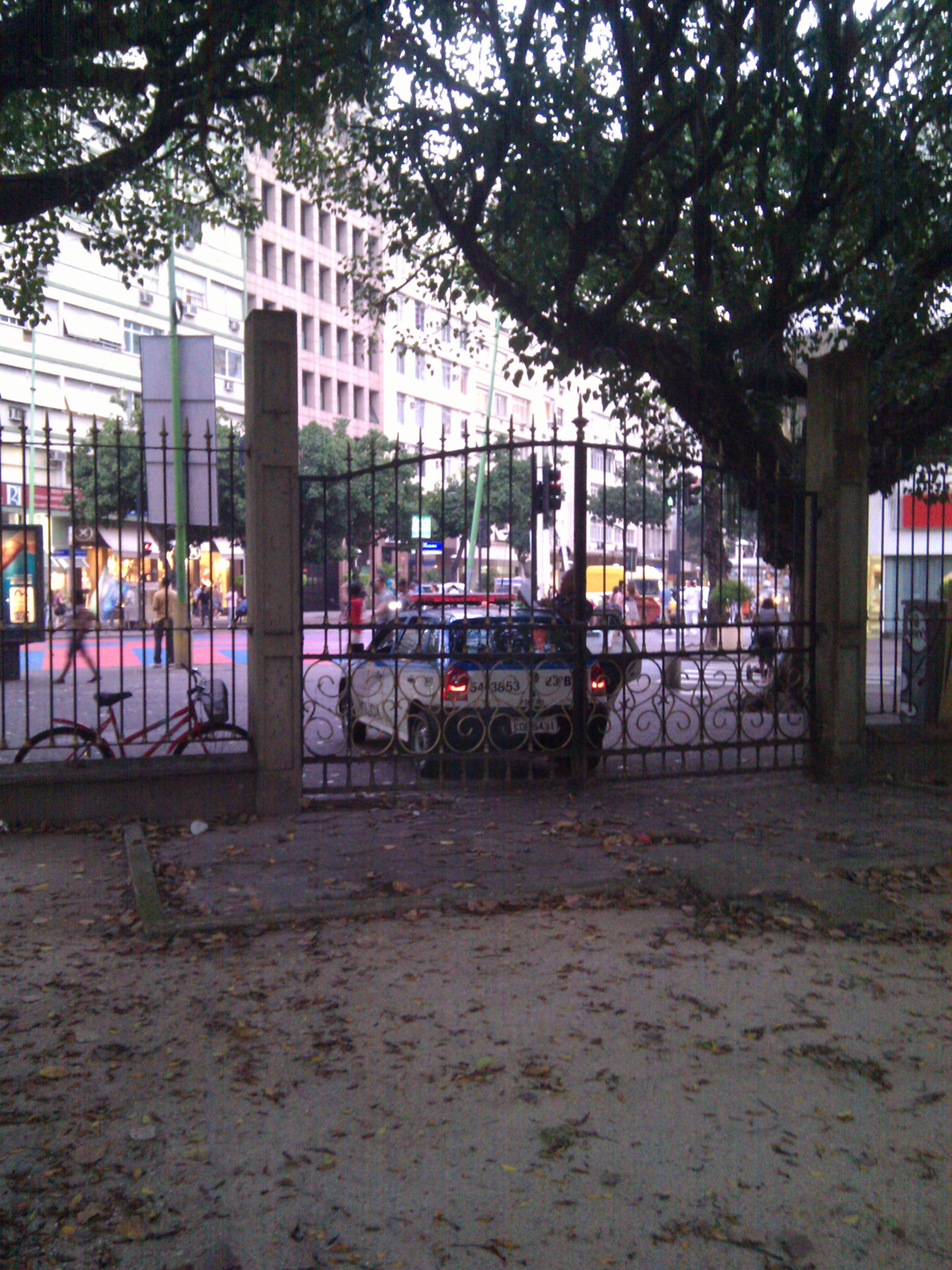
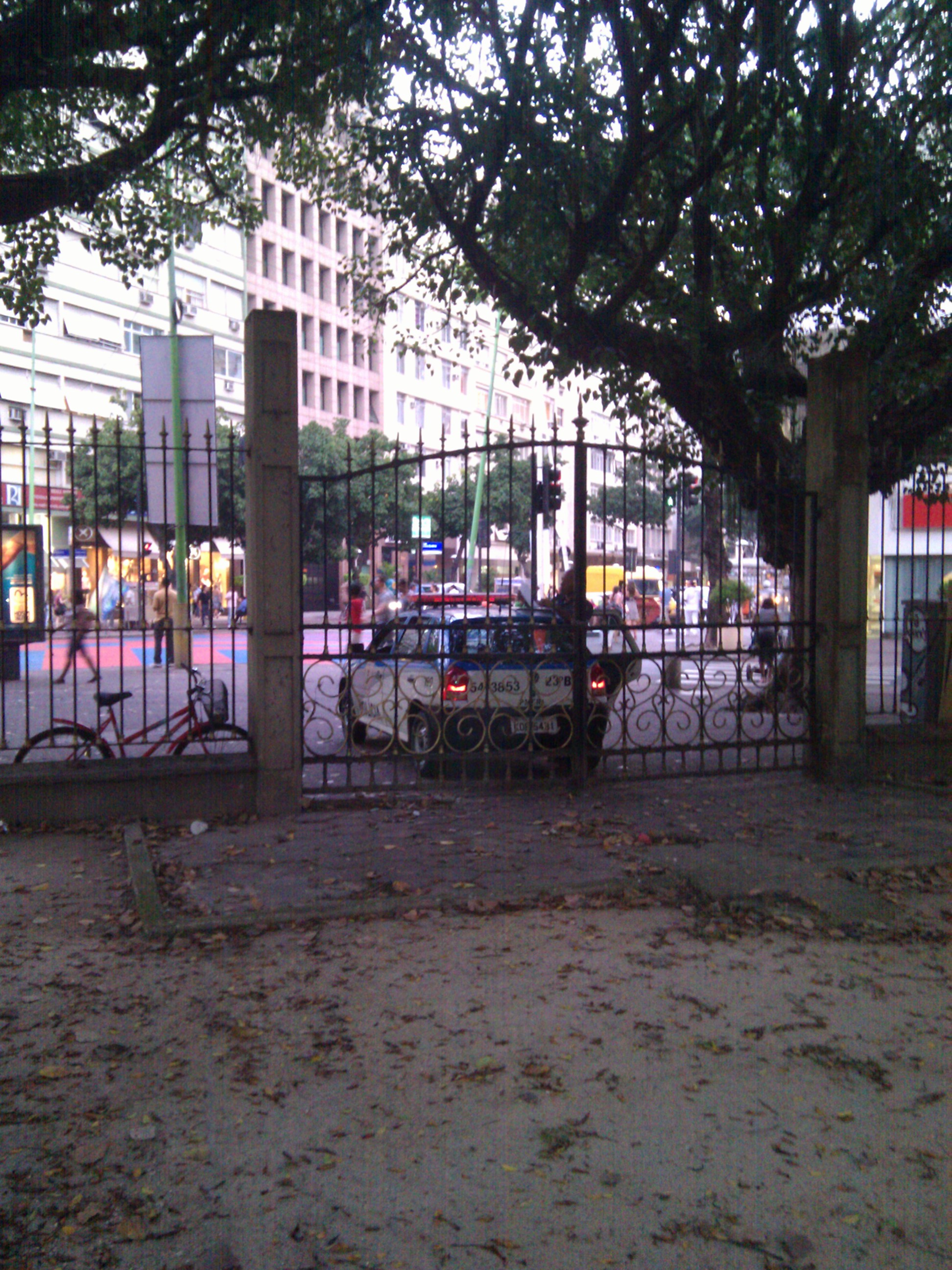
Military police: one of four formal forces

Off the hook?

One of Brazil’s biggest problems is too much division of labor, so it’s heartening to read in today’s O Globo that in Rio, eight agencies and three levels of government will be brought together in a new Centro Integrado de Comando e Controle (CICC, the Portuguese acronym for Integrated Command and Control Center) http://oglobo.globo.com/rio/mat/2010/09/13/comecam-as-obras-de-centro-de-controle-que-reunira-orgaos-do-municipio-do-estado-da-uniao-917619970.asp. At a cost of US$ 21 million equivalent, construction of the  center downtown begins this month and is set to be complete in March 2011. It will house administrative and emergency staff belonging to the military police, the fire department, the municipal civil defense agency, the traffic police, the civil police, the city ambulance service, and the federal highway police. The center was designed based on visits to similiar agencies in cities around the world, including New York, L.A. Washington D.C., Mexico City, Rome, Madrid, and Istanbul.

At last, there’s a chance these agencies will talk to each other.

With four different police forces, you’d think Rio has public safety locked up. But no; there’s a fifth one, the informal milícias. These murderous paramilitary groups monopolize the bottled gas business and extort payments from small businesses and transportation services, in exchange for “protection”; they may be even more of a challenge for the state public safety agency, than the drug traffickers now being kicked off favela hilltops. Last week two former military policemen, jailed for alleged militia activity in the violent western part of the city, made a prison break. One version has it they climbed over a back wall they were rebuilding; another, published in today’s O Globo http://oglobo.globo.com/rio/mat/2010/09/13/fuga-de-dois-ex-pms-do-batalhao-especial-prisional-bep-teria-custado-200-mil-917620942.asp, is that they paid US 118,000 equivalent to their jailers and walked out the front door of the prison in the Benfica neighborhood. One of the two is said to be heading up the west zone’s militia, which reportedly rakes in US$1.2 million a month, now that the former boss, Ricardo  “Batman” Teixeira da Cruz, another ex-military policeman, is in jail in the state of Mato Grosso.

This sort of behavior is why the UPP pacification process employs newly recruited and trained young military police men and women.

The CICC will be built near the Avenida Presidente Vargas, in an area called Cidade Nova, a locus of renovation visited in an earlier post https://riorealblog.com/2010/08/22/whats-new-on-av-presidente-vargas-o-que-tem-de-novo-na-av-presidente-vargas/. This is where Rio’s city hall is located, as well as a new convention center http://www.ccsulamerica.com.br/ It’s also where the 1879 vintage hospital school, the Hospital São Francisco de Assis, set to undergo renovation https://riorealblog.com/2010/09/10/hospital-de-1879-pode-ser-restaurado-1879-hospital-may-be-restored/.

And it’s the birthplace of samba, an oft-forgotten fact although it’s just down the street from the Sambadrome, inaugurated in 1984. A house in Praça Onze, now a mere name on a street sign, is where Donga and Mauro de Almeida composed Pelo Telefone in 1916. Praça Onze was a meeting place for Rio’s poorer residents to parade and dance at Carnival, but the area was razed in 1941 to make way for Avenida Presidente Vargas (It was also home to Jewish immigrants). Perhaps now it will recover some of its vitality.

Oh, and what was the samba Pelo Telefone about? How the police used to call ahead and warn gamblers that a raid was about to descend on them.


Posted in Transformation of Rio de Janeiro / Transformação do Rio de Janeiro | Tagged , , , , , , , , , , , , , | Leave a comment

Citizenship hunger

Could things be better?

“The multitudes nibble at the edges, with patience and moderation, slowly but surely, but the hunger of these people is insatiable.”

–Daniel Aarão Reis, writing in O Globo (Sept. 7, 2010)

Lula’s presidency has been a great help to the city of Rio de Janeiro, since he and the governor and mayor get along well and his government supported Rio’s successful bid for the 2016 Olympics. After decades on the outs with the rest of the country, this in itself is earth-shattering for Brazil’s former capital.

But an article in last week’s Globo http://arquivoglobo.globo.com/pesquisa/texto_gratis.asp?codigo=4377152 suggests that Lula may leave a greater mark than we realize on the “marvelous city”.

With Lula’s candidate Dilma Rousseff so far ahead in the polls (she’s got over 50% while PSDB contender José Serra has under 30%), it’s clear that the working classes plan to vote with their wallets –although Dilma has never run for office. But, as UFF contemporary history professor Daniel Aarão Reis writes in “A Great Inversion”, something else is at work in Lula’s surprising capacity to elect this untried (and often tongue-tied) sucessor:

“…the gradual acess of the working classes to citizenship. Lula is the best expression of this. He is seen as the politician who pushed for this access more than anyone else. This has to do with material goods, of course. But there are other goods, symbolic, more important than our daily bread. This is what the rabid right and the radical left don’t perceive. Common people, since the 1980s and in growing numbers, are starting to discover the appeal of institutions and institutional struggles. Politics, the domain of rich white people, has begun to belong to brown, black, indigenous and poor white people, too.”

Reis notes that back in 1964 access to politics was on the agenda. “However,” he writes, “the popular movements wanted a great deal and they wanted it fast. It couldn’t happen. We had the coup, which paralyzed and then rolled back the process. “

Things are different now, he says. “When regular people understand the benefits of democracy, they want it, too. It’s shallow to think that it’s all about bread… They want to play the political game like big people, the way only white rich folks did. It’s a great inversion.”

The way the big people have played the political game so far in Brazil leaves a great deal to be desired. Lula’s government has often come under attack for corruption and other questionable behavior; the nightly “political hour” on the runup to the election is more of a comedic pastime than a chance to learn about platforms and positions. In São Paulo, the clown Tiririca is running for congress http://www.tiririca2222.com.br/.

Tiririca’s motto is “It can’t get worse than this”– and he might be right. The political game certainly needs better players, referees, and cheerleaders, as well as public at large. More intelligent politics require better education, which Lula hasn’t spent nearly enough on. The state of Rio de Janeiro led the nation in the number of candidates investigated by the Federal Police for electoral fraud between 2006 and 2008, according to O Globo.

But one aspect of politics, as Brazil’s neighboring President Chávez has wisely observed, is access to information. And this is without question growing in Brazil: the new members of the middle class are snapping up televisions, computers, and cable tv. O Globo reports that of the record 63 million domestic passengers expected to fly this year, about 10% will be flying for the first time in their lives.

There’s nothing like watching The Big Bang Theory for discovering that knowledge is power.

Whether Lula is an institutional expression of a long-due tsunami, or the leader of a social inclusion trend, as it’s called here, isn’t important. What we do know is that Rio’s transformation has jolted property values, even in favelas; charmed investors; fostered pay raises and created jobs. And, as Reis points out, people don’t live by bread alone: cariocas are also capitalizing on less paranoia, more freedom to move around the city and an expanding view of other people’s lives. Sounds like a healthy environment for citizenship.

Will the “great inversion” work? “We’ll see,” writes Reis. “But one thing is for sure: it’s not going to be easy to keep the wave from coming”. Which could hold true not only for Brazilian politics, but also for the growing connections between Rio’s favelas and the rest of the city.


Posted in Transformation of Rio de Janeiro / Transformação do Rio de Janeiro | Tagged , , , , , , | Leave a comment

Fome de cidadania

Podia ser melhor?

“A multidão come pelas bordas, com paciência e moderação, devagar e sempre, mas a fome destas gentes é insaciável.”

–Daniel Aarão Reis, em O Globo (7 set., 2010)

A presidência do Lula tem sido de grande auxílio à cidade do Rio de Janeiro, já que ele, o governador e o prefeito se dão bem, e que seu governo apoiou a exitosa candidatura municipal para as Olimpíadas de 2016. Depois de décadas de mal com o resto do país, isso em si já é uma notícia estrondosa para a ex-capital do Brasil.

Mas um artigo no Globo da semana passada http://arquivoglobo.globo.com/pesquisa/texto_gratis.asp?codigo=4377152 sugere que Lula pode deixar uma marca maior do que pensamos na cidade maravilhosa.

Com a enorme vantagem da Dilma nas pesquisas de opinião (ela tem mais de 50%, enquanto Serra está com menos de 30%), fica claro que a classe popular pretende votar com o bolso – apesar de Dilma nunca ter se candidatado a um cargo público. Mas como o professor de história contemporânea da UFF, Daniel Aarão Reis escreve em “Uma grande inversão”, existe algo mais profundo na surpreendente capacidade do Lula para eleger esta sucessora inexperiente:

“[…] o acesso progressivo das classes populares à cidadania. Lula é a expressão maior disso. Ele é visto como o político que promoveu como ninguém este acesso. Isto tem a ver com bens materiais, sem dúvida. Mas há outros bens, simbólicos, mais importantes que o pão nosso de cada dia. E é isto que as direitas raivosas e as esquerdas radicais não percebem. As pessoas comuns, desde os anos 1980, e cada vez mais, começaram a achar graça nas instituições e nas lutas institucionais. Política, assunto de brancos ricos, começou a ser também de pardos, negros, índios e brancos pobres.”

Reis assinala que em 1964 o acesso à política fazia parte da agenda nacional. “Entretanto,” ele escreve, “os movimentos populares queriam muito e muito rápido. Não deu. Veio o golpe, paralisou e reverteu o processo.”

Tudo mudou agora, ele diz. “Quando as pessoas comuns compreendem os benefícios da democracia, querem para elas também. É raso imaginar que tudo se esgota no pão […] Querem jogar o jogo político como gente grande, como antes só os brancos ricos faziam. Uma grande inversão.”

A maneira de as pessoas grandes jogarem o jogo político até agora no Brasil deixa muito a desejar. O governo do Lula tem sido frequentemente acusado de corrupção ou de outros comportamentos questionáveis; a hora política na televisão é mais um passatempo cômico do que uma chance para avaliar plataformas e posições. Em São Paulo, o palhaço Tiririca é candidato a deputado federal http://www.tiririca2222.com.br/. O lema dele é “Pior que tá não fica”—e talvez ele tenha razão.

O jogo político certamente precisa de jogadores, juízes, torcedores e um público geral de maior qualidade. Uma política mais inteligente requer mais educação, e Lula não tem gasto o suficiente nisso. O estado do Rio de Janeiro foi líder em número de candidatos investigados pela Polícia Federal por fraude eleitoral entre 2006 e 2008, de acordo com O Globo.

Contudo, um aspecto da política, como nosso vizinho Chávez tão sabiamente já observou, é o acesso à informação. E isso está crescendo no Brasil, sem dúvida: os novos integrantes da classe média compram a granel televisores, computadores e assinam TV a cabo. O Globo informa que dos 63 milhões de passageiros estimados a voar no país neste ano – um recorde — cerca de 10% estarão no ar pela primeira vez na vida.

Nada como assistir a Big Bang Theory para descobrir que saber é poder.

Se Lula é a expressão institucional de um tsunami marcada há muito, ou o líder de uma tendência de inclusão social, não importa. O que sabemos, sim, é que a transformação do Rio de Janeiro eletrizou o mercado imobiliário, até nas favelas; seduziu investidores; abriu caminho para o aumento de salários e criou empregos. E, como Reis nos conta, as pessoas não vivem apenas de pão: os cariocas estão gozando de menos paranoia, mais liberdade para andar na cidade e de percepções mais abrangentes das vidas dos outros. Pode ser um ambiente saudável para a cidadania.

A grande inversão vai vingar? “Veremos,” escreve Reis. “Mas uma coisa é certa: não vai ser tão fácil deter essa onda.” O que pode ser verdade não apenas para a política nacional, mas também para as crescentes conexões entre as favelas do Rio e o resto da cidade.

Posted in Transformation of Rio de Janeiro / Transformação do Rio de Janeiro | Tagged , , , , , , , | Leave a comment

A way back? / um retorno?

Renatinho, ex-soldier / Renatinho, ex-soldado

Click on the link below to read (in Portuguese) the story of Renatinho, a soldier in the Andaraí favela drug traffic until July, when the area was “pacified”. The bigshots left the area, but young men like Renatinho were left behind. He wants to go back to school now, find a job, and stay close to his mom, daughter and his pregnant girlfriend.  The filmed interview –not much to say– shows how ill-prepared Renatinho is for the world beyond Andaraí. Great photographs.

http://www.blogdapacificacao.com.br/andarai/jovem-que-trabalhou-no-trafico-procura-policiais-da-upp-andarai-para-pedir-ajuda-e-agora-quer-um-trabalho/comment-page-1/#comment-110

Clique no link acima para ler a história de Renatinho, soldado no tráfico de drogas da favela de Andaraí até julho, quando instalou-se uma UPP. Os chefões foram embora, mas jovens como Renatinho foram deixados para trás. Ele quer estudar agora, arrumar um emprego, e ficar perto da mãe, filha, e namorada, que está grávida. A entrevista do vídeo — ele não diz muita coisa– demonstra que Renatinho está muito mal preparado para o mundo além de Andaraí. Fotos excelentes.


Here’s a link to another article about this same topic, in O Dia

http://odia.terra.com.br/portal/rio/html/2010/9/ex_traficantes_jovens_procuram_pms_em_upps_para_obter_emprego_formal_109879.html

Acima, link para mais uma matéria sobre o assunto, em O Dia

Posted in Transformation of Rio de Janeiro / Transformação do Rio de Janeiro | Tagged , , , , , , | Leave a comment

Hospital de 1879 pode ser restaurado/ 1879 Hospital may be restored

O hospital cheio de graffiti que se vê no vídeo abaixo (https://riorealblog.com/2010/08/22/whats-new-on-av-presidente-vargas-o-que-tem-de-novo-na-av-presidente-vargas/) tem boa chance de passar por uma bela restauração, de acordo com O Globo de hoje. O BNDES estaria analisando um pedido de financiamento de R$1,8 milhão da parte do proprietário do Hospital Escola São Francisco de Assis, a UFRJ. Informações adicionais sobre esse prédio, que ainda funciona como hospital universitário, aqui: http://www.hesfa.ufrj.br/indexhist.html. Mais um plus para a Avenida Presidente Vargas.

The graffiti-laden hospital seen in the video below (https://riorealblog.com/2010/08/22/whats-new-on-av-presidente-vargas-o-que-tem-de-novo-na-av-presidente-vargas/) may well be restored, according to today’s O Globo. The national development bank (BNDES) is said to be considering a request from the owner of the Hospital Escola São Francisco de Assis, the Rio de Janeiro Federal University (UFRJ) for a US$ 1 million loan, equivalent. Additional information in Portuguese on the building, which still functions as a university hospital, is here: http://www.hesfa.ufrj.br/indexhist.html. Chalk one more up for Avenida Presidente Vargas.

Posted in Transformation of Rio de Janeiro / Transformação do Rio de Janeiro | Tagged , , , , , , , | Leave a comment