Gentrificação, a new word in Portuguese

(apologies to those who receive this twice, due to a WordPress glitch)

Imagine what Rio will look like by the time the Olympic torch is lit– and after

Rio, a city of encounters

Will the city’s more accessible and safer favelas be a laddered version of Santa Teresa, with funky pizzarias and tapas bars, cool sidewalk music and superb views? Will many of their residents, land titles in hand, have sold up and moved to Guaratiba, Santa Cruz or Rio das Pedras? Will the city then continue divvied up into pockets of the like-minded, with funkeiros, hipsters and Country Club members each snuggling in their comfort zones?

Or will Rio manage to maintain and feed a rich mosaic that draws us across zones and through tunnels into the sort of chance encounters that spark creativity and light up lives?

Urban myths abound. One is that zero tolerance for broken windows and the like helped to revive New York City. Another may be that land titles empower the poor.

Land titling

A pioneer land titling effort in Rio’s South Zone Cantagalo favela is examined in a book published last year by Paulo Rabello de Castro: Galo Cantou: A conquista da propriedade pelos moradores do Cantagalo [The Rooster Crowed: The conquest of property by the residents of Cantagalo]. In order to begin the titling process, a team of young volunteer lawyers had to convince Governor Sérgio Cabral to change the state constitution.

Comprehensive land titling is now the policy of both Rio’s state and city government, following a precept first stated in the 1980s by Peruvian economist Hernando de Soto. He said that a deed brings access to credit, information and other benefits of the formal market economy.

So it was a bit of a shock recently to hear favela advocate Jailson de Souza, longtime resident of the North Zone Complexo da Maré, talk about how to prevent gentrification. “The last step should be land titling,” he said, adding that favela residents need time to gain the economic, cultural and educational wherewithal to keep their homes.

Construction at the edge of Pavão-Pavãozinho favela, Ipanema

De Souza said he supports the creation of “cultural spaces”, utilizing Rio’s 1992 APAC (Áreas de Proteção de Ambiente Cultural) model, which focuses on protecting physical buildings.

In Recife, zoning has been a fairly effective mechanism to protect low-income housing from speculation, according to Brazilian lawyer and urban planner Edesio Fernandes’ Lincoln Institute of Land Policy Report, Regularization of Informal Settlements in Latin America. Fernandes cites a study saying that a Special Zone of Social Interest, known by the Portuguese acronym ZEIS, with “… limits on plot sizes, building heights, and number of plots allowed per individual, can significantly reduce development pressures in newly regularized communities when used in conjunction with titling programs”.

In some Latin American cities, policymakers tried to limit the transfer of newly titled property by requiring approval from residents’ associations or banning sale for several years (the case with Minha Casa Minha Vida apartments). Such schemes, says Fernandes, have merely led to new types of informal transactions.

Soon to be overtaken by events?

Perhaps to the advantage of those who agree with de Souza, in Rio a large-scale titling process is expensive, bureaucratic and slow, with only a handful of favela residents in possession of a deed so far.

Meanwhile, favela rents and property values are rising fast, construction is boominga growing number of foreign residents may constitute a vanguard, and gentrification is clearly taking place in parts of the formal city contiguous to pacified favelas.

Nevertheless, not much debate is taking place.

Of course, gentrification doesn’t (so far) much affect areas such as the North Zone’s Complexo do Alemão. But the South Zone’s income mix, fed by proximity to beaches, is arguably at the core of the entire city’s vibrant lifestyle that is so attractive to both natives and visitors. And in an era when we live so much in the virtual world, a vibrant urban lifestyle is a unique and terrible thing to waste.
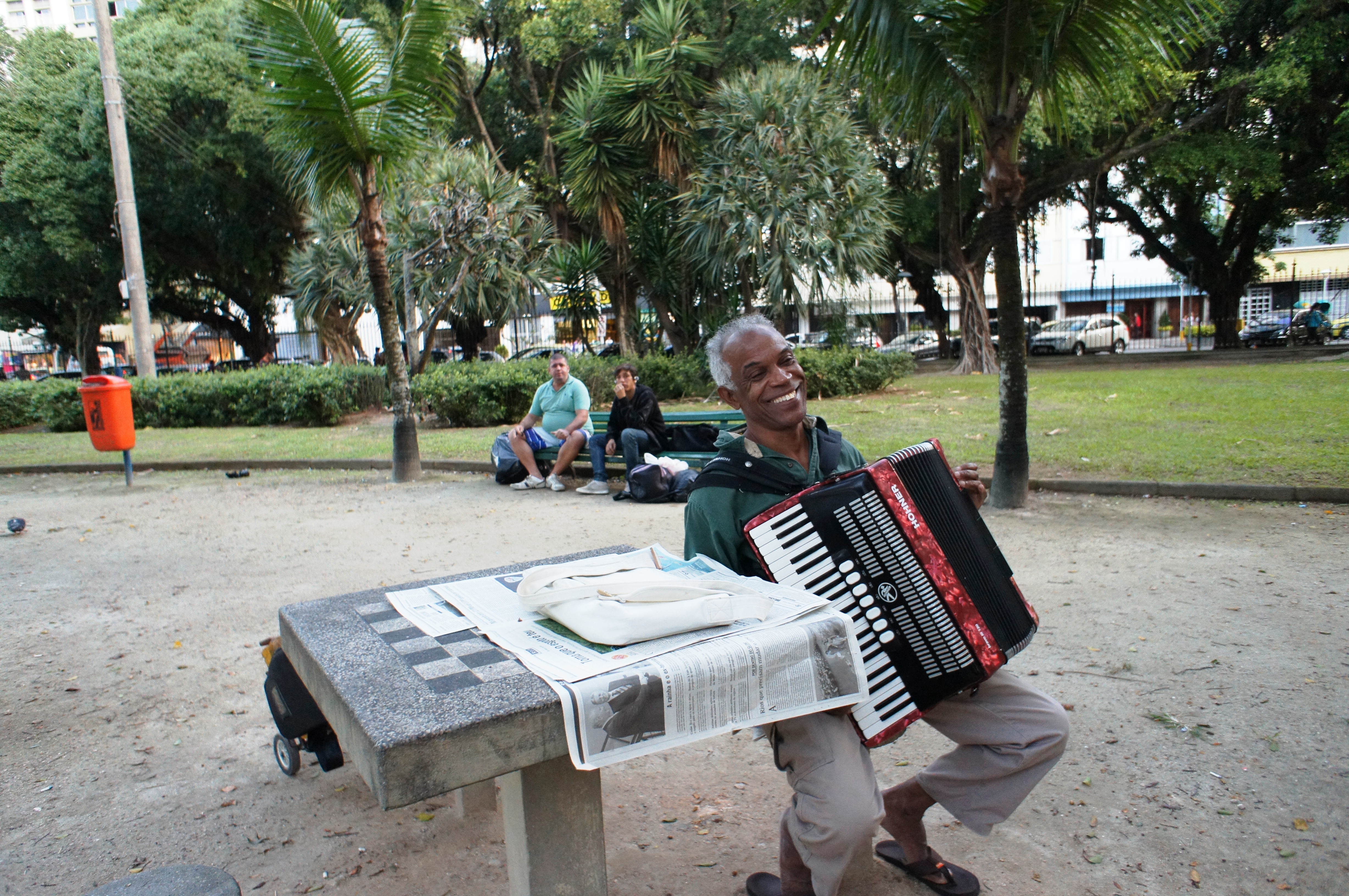
Nossa Senhora da Paz Square: self-taught musician is practicing his music

Community Land Trusts: favela housing owners could make money

Back in the 1960s, some Americans were concerned about the fate of those being pushed out of low-income neighborhoods. This is when the Community Land Trust (CLT) model was created, with a commitment to “balancing individual and community interests”, according to the Community Land Trust Handbook.

The key issue in creating a land trust model is how to preserve some degree of market value while protecting a community from real estate booms or speculation, or both.

Is this possible? One of the oldest community land trusts was created in 1984 in Burlington, Vermont, reportedly to protect parts of the city from a booming weekend home market (spurred by wealthy New Yorkers). An impact study has revealed long-term positive results. There, the trust (i.e. the community) intermediates purchases and sales. Owners can earn 25% of the increase in value that occurs between the time they buy and sell a home. The study found that owners did accumulate wealth while affordability was preserved.

The percentage could be adapted to the Rio market.

Additional features of  a Community Land Trust

  • Land is treated as a common heritage. Title to multiple parcels is held by a single non-profit owner that manages these lands on behalf of a particular community, present and future.
  • Land is removed from the market at large, never resold by the non-profit owner. Land is put to use, however, by leasing out individual parcels for the construction of housing, the production of food, the development of commercial enterprises, or the promotion of other activities that support individual livelihood or community life.
  • Structural improvements are owned separately from the land, with title to buildings held by individual homeowners, business owners, housing cooperatives, etc.
  • A ground lease lasting many years gives the owners of these structural improvements the exclusive use of the land beneath their buildings.

The Vermont trust emerged with government and activist support, and a municipal grant to help it get started. Of course this is just one example, which could be adapted to different environments. And there are other frameworks being used  to prevent gentrification in the U.S. and other Latin American countries.

Over the years, the Vermont trust has developed a variety of housing and community roles linked to its original mission.
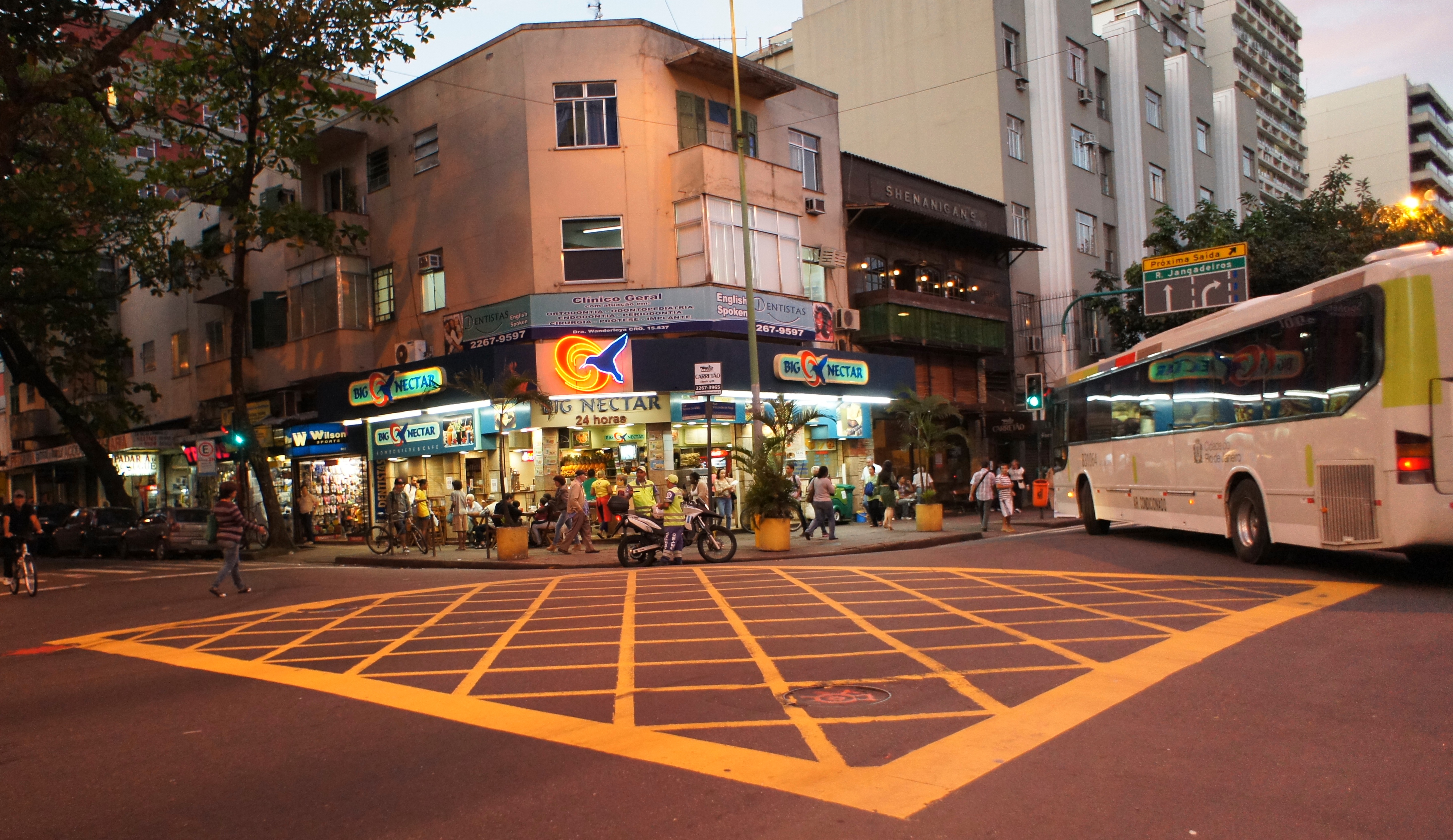
Juice bars are inviting to all

Clap your hands if you believe in fairies

To set up structures along these lines in Rio de Janeiro would require an enormous amount of patience, idealism, and determination. So many values and assumptions would need to change. Community participation, once strong in Rio favelas, but undermined by drug traffickers, would have to pick up steam. And policymakers would have to rethink a generally top-down approach.

Also, rules are needed for collective decision-making– and they must be widely observed. “Economic pressure to bypass such rules and sell plots informally became widespread in Mexican ejidos located near fast-growing cities, thus undermining the original community goals,” Edesio Fernandes reports.

Gentrification is only one of many issues challenging Brazil’s unequal, autocratic and classist society. Rio’s turnaround is part of a larger picture, in which millions have left poverty over the last decade, to an unprecedented extent gaining access to information, markets and virtual networks.  Little of this is reversible, and it implies huge long-term changes in attitudes and behaviors.

Now is the time to create arenas for community participation and the legitimization of institutions and laws. For democracy is a process, slow and painful, and there are no alternatives.
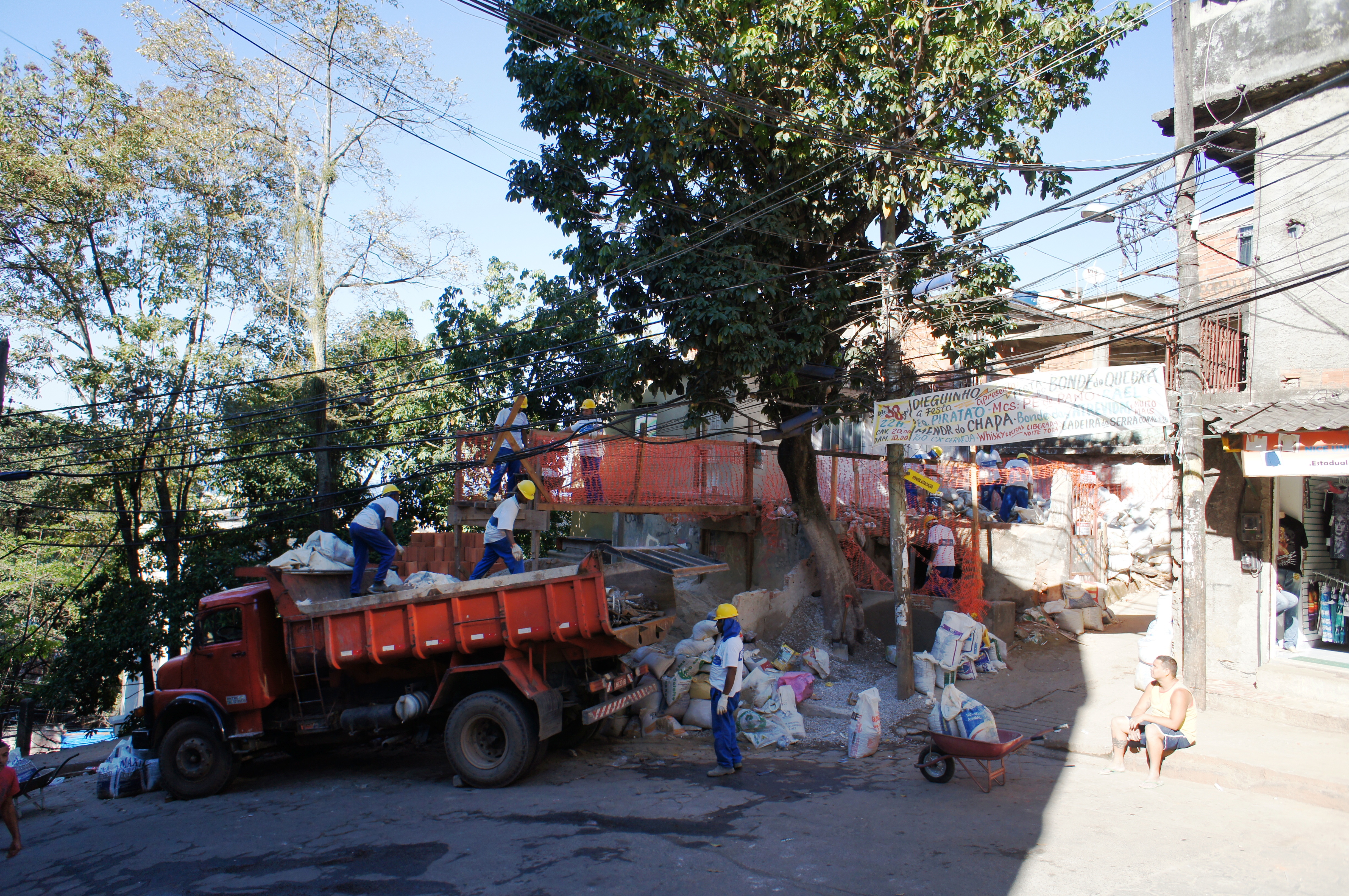
More construction in Pavão-Pavãozinho

What those in the know are saying

“If people who are really interested in preserving the community “on the hill” are serious, they have to find mechanisms to empower the community independent of  the state, politics and the private sector,” says Robert Wilson, founder of Startup Rio. Wilson, who’s working on a venture capital initiative to prevent gentrification of favelas, suggests a comprehensive program whereby residents would learn how to own, control and administer the land and buildings in their communities in partnership, and to generate revenue individually and collectively.

Matias Sueldo wrote about gentrification for his newly-earned Yale Law School degree, completed in conjunction with a Masters in Public Administration at the Kennedy School of Government. He suggests that Rio consider either government concessions for land use with limited transfer rights, or titling with strict zoning regulations. “Either way,” he adds, “Rio’s titling policy needs to be re-thought before gentrification drives some of its oldest and most vibrant communities to society’s margins”.

Theresa Williamson, who founded the favela advocacy non-profit Catcomm, notes that Rio’s favelas, the product of decades without regulation or zoning legislation,  are problems becoming opportunities. “Ultimately these neighborhoods provide affordable, well-located housing, each different from the other with unique manifestations of cultural and architectural development,” she says. “A Community Land Trust model would allow each communities’  assets to be determined, strengthened and consolidated”.
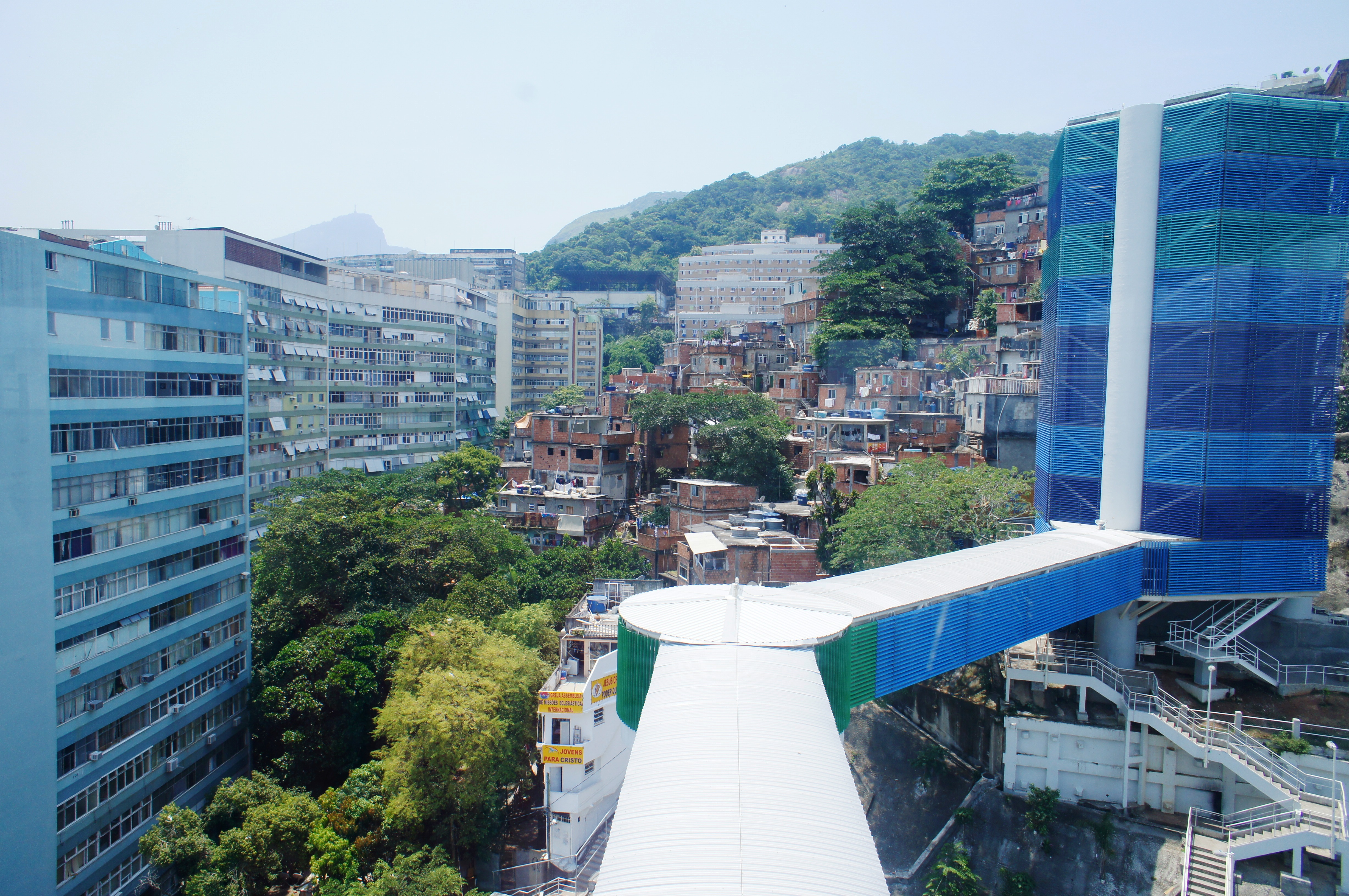
The Ipanema mix, now connected more than ever

 What do you think? Please share, and leave comments below.

Posted in Brazil, Transformation of Rio de Janeiro / Transformação do Rio de Janeiro | Tagged , , , , , , , , , | 4 Comments

What if technology undermines drug violence?

Some young people may now have better things to do

Tiago Borba, Beá Meira, Vera Íris Paternosto and Eliane Costa

Al Jazeera and the Associated Press recently reported on drug dealers who’ve decided to stop selling crack in two large favelas of Rio de Janeiro. One of the many questions this unusual news brings up is the actual state of drug trafficking in Rio. The question is a central one, as we approach the mega-events, as the number of police pacification units mounts (up to 26 as of this week), and as journalists make statements such as:

Let’s stop kidding ourselves: Rio will never be safe. The violence can only be contained, and only through random good fortune. I’ve seen it from both sides: with the cops in body armor and with the drug traffickers who control the favelas, blowing the life expectancy graph if they pass 20.

How solid is the business, really?

We often think of the drug trade as monolithic bad guys who are just there, who may fight among themselves, and change address with the arrival of a police pacification unit, but whose methods and overall grip are an urban constant. But, according to a former top police commander cited in the AP story, “dealers turned to crack when their other business started losing ground within the city”.

The story continues: “Police started taking back slums long given over to the drug trade as Rio vied to host the 2014 World Cup and the 2016 Olympics. The plan disrupted trade, and the factions began hemorrhaging money, said Duarte. Crack seemed like the solution, and the drug flooded the market.”

Some specialists say the traffickers’ grip was weakening long before the advent of pacification. One analysis points to the rise of synthetic drugs such as ecstasy, sold by middle class dealers– driving lucrative cocaine out of favelas– as the real reason crack-selling (and thus using) spread here.

There seems to be no consensus narrative for the carioca drug trade, and many unanswered questions.

For example, how are the capos now swearing off crack making a living? Are they earning more from marijuana? Has marijuana increased in price? Is demand for it growing in favelas, as residents’ disposable income has (presumably) increased? Is it growing in the formal city as well, for the same reasons? What’s the effect of pacification on drug prices?

Some new voices

Please, someone study this!

And then there are the actual people involved, aside from the traffickers themselves. If before pacification thousands of young people in favelas spent time working in the drug trade and/or using drugs, how are they spending their time after pacification? Police pacification units now serve 600,000 cariocas.

Folks from outside favelas usually don’t associate work with people who live in favelas. So much so that the first sentence a uttered to the media or police in defense of a resident who’s just been shot dead by cops, as if to disprove the assumption, is often “Ele era trabalhador!” He was a worker.

But Julio Ludemir, a writer who has long worked with favela youth, says that favela parents have traditionally exhorted their children to find jobs and make a living as soon as they’re able. In this post about passinho dancers whose creativity depends on Internet interactions, he explains that today, for the first time ever, many young favela residents have the luxury of dreaming and experimenting, as middle- and upper-class kids do.

There are 108,000 Lan houses, or cyber cafés in low-income neighborhoods, in all of Brazil, according to Eliane Costa, until recently responsible for culture grants at the Petrobras state oil giant. By contrast, National Book Foundation statistics for 2007 indicate a total of 5,110 libraries across the country.

It’s about the screen, mouse and keyboard, stupid

Could it be that a growing number of favela youth are doing exactly what a growing number of middle- and upper-class young Brazilians are doing? In Rio, people with experience like that of Ludemir say favela youth are surprisingly tuned in.

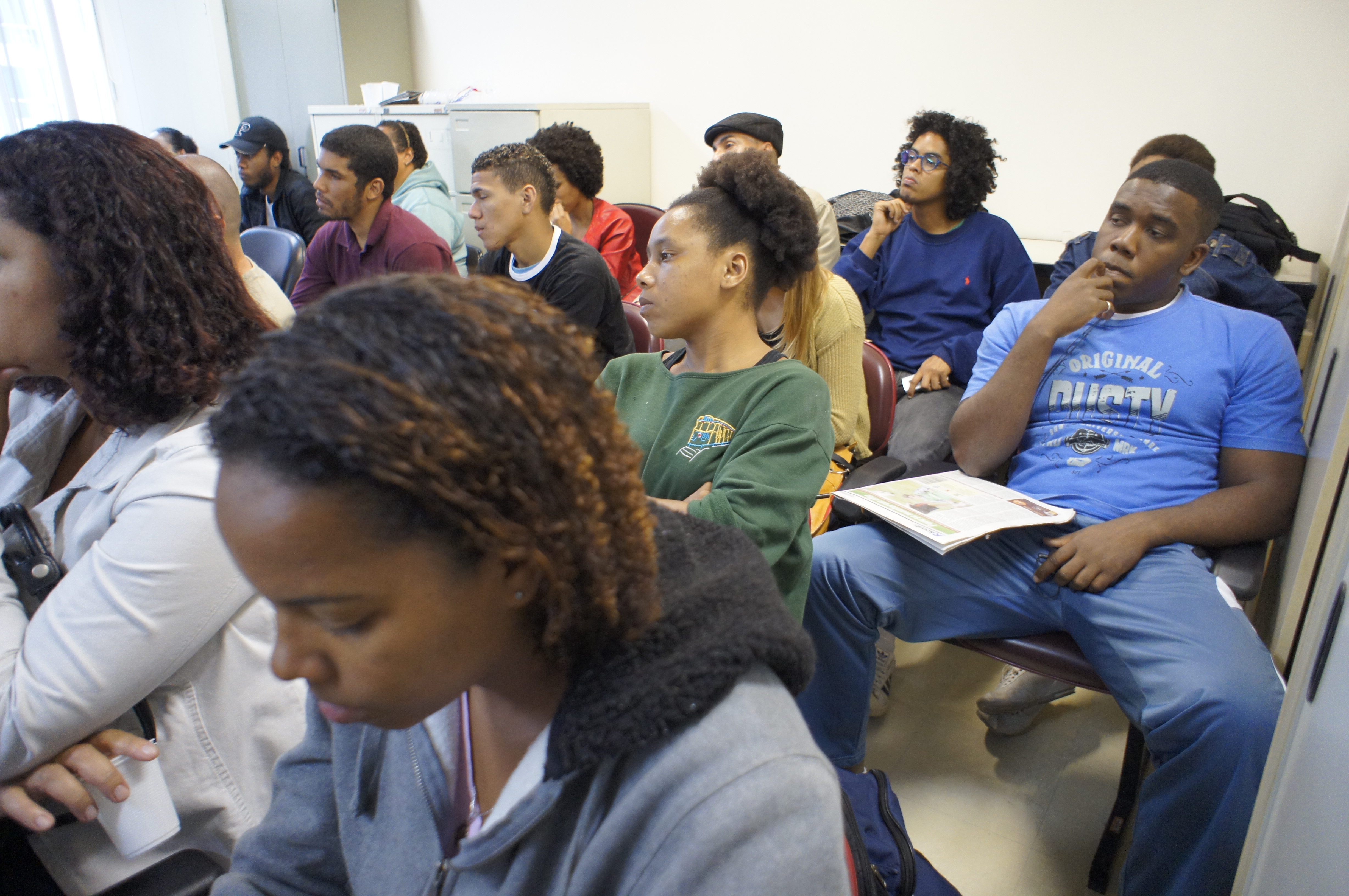
Beá Meira is teaching coordinator at the Universidade das Quebradas, an arts and culture extension of the Federal University of Rio de Janeiro targeted at low-income students. At last week’s Rio de Encontros debate on youth mobilization programs, organized by O Instituto and the Agência de Redes para Juventude at the Casa do Saber, she reported that these young people are conversant in a variety of media. “They edit video, write poetry, take photographs– they see art as belonging to everyone, part of everyday existence. They don’t ask permission, they just do it,” she said.

“The favela, as [Agência Redes para Juventude creator and director] Marcus Faustini likes to say, is a place of power, originality, solutions,” remarked Eliane Costa during the same meeting. She’s now dedicated to a doctorate at the Sorbonne, on digital and peripheral culture.

“I never imagined I’d be working with a street-sweeper,” commented Vera Íris Paternostro, who directs a new Rio, São Paulo and Brasília venture at TV Globo, in which 44 young people (selected from 12,500 candidates, no less) this year reported on their own low-income communities. The reporting resulted in 150 solutions to community complaints– and, says the tv executive, changed the way Globo reporters and editors think about their coverage.

Paternosto pointed out her street-sweeper/reporter in the Rio de Encontros audience, then stumbled over the name of a youth also present, “Petter MC” the “Rappórter”.  Petter, who lives in the bedroom city of Nova Iguaçu, had his own blog before reporting for TV Globo. Now he’s on the staff of Esquenta, a popular Sunday afternoon Globo offering.

They just do it

Young people from the Agência Redes para Juventude were also present at the debate. Last year, 300 young residents from pacified favelas transformed ideas into projects. The thirty chosen to receive R$ 10,000 from Petrobras and implement the projects are now competing for additional funding, with development help from Sebrae, a non-profit small business entrepreneurship agency, funded by federally-mandated payroll deductions.

Agência activity focuses on building networks across the city, both real and virtual, as a crucial step towards making ideas happen.

It’s hard to quantify the aggregate reach of the many programs in Rio that aim to mobilize young favela residents. Those discussed last week are relatively small, though over a thousand young people have just applied to the Agência’s  new round of project development. But thousands are still peanuts, considering that in 2010 the state of Rio boasted a total population of 16 million, with  almost 3.5 million of school age. Greater Rio accounts for three quarters of the state’s overall population.

“Public policies for youth are very pulverized,” said Social UPP coordinator Tiago Borba at the debate last week. “If more planning and strategy were involved they’d be more efficient and effective.”

As Rio attempts to integrate its formal and informal urban areas, lessons and models are in the making.

Brazil’s 1970s-1980s baby boom is peaking now, with the 15-29 age cohort just starting to decline in numbers. It can be said that the future of Brazil’s poor youth will in large part determine the country’s own future– just as American baby boomers influenced so much of their country’s politics and culture.

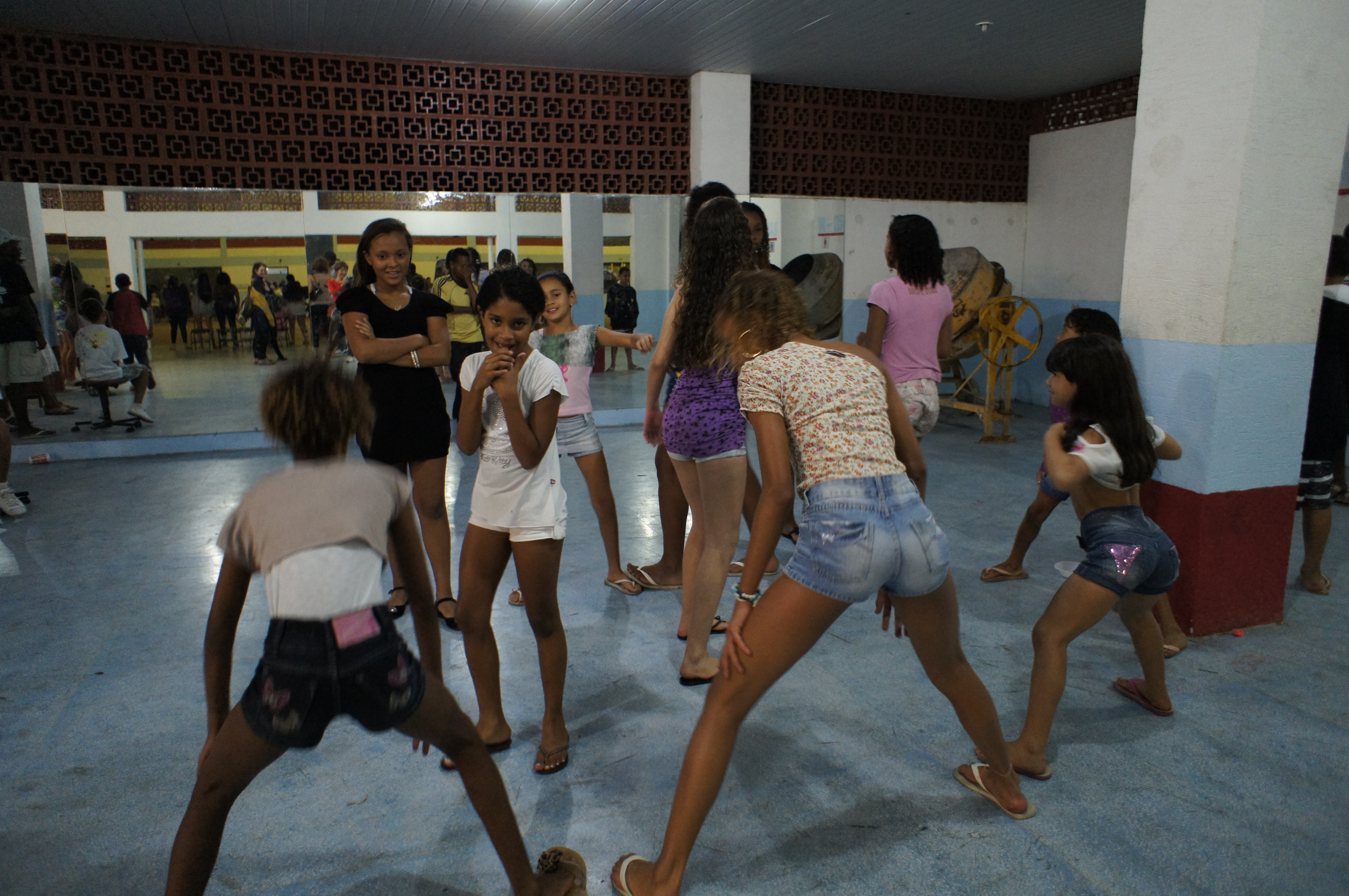
Warming up for the afternoon funk dance –and the future

So?

Whether or not increased access to information and technology weaken the drug trade and empower young people in favelas on any significant scale, the youth mobilization now taking place in Rio de Janeiro brings up some thorny questions, as do the young people themselves.

During the debate, a young participant criticized the communication and selection process for local Social UPP field agents, who are mapping Rio’s pacified favelas– and naming alleyways. A young community TV entrepreneur wanted to know how he could possibly compete for government funding without a long resumé. Another participant fretted about program continuity; and a fourth’s question about the Social UPP program and police behavior brought on a tirade on the ban against nighttime funk dances in pacified favelas.

“[Police rule on this issue is] a quasi-dictatorship,” said a furious Junior Perim, founder of the Crescer e Viver circus arts NGO.

Never say never, when it comes to this town

Marcus Faustini, who moderated the debate, summed up the tense moment: “Many actors want a say. There’s going to have to be a lot of participation in this transformation.”

And so ends a post that asks more questions than it answers. Please comment!

And don’t forget to follow RioRealblog on Facebook, for an endless supply of links and comments on the transformation of Rio de Janeiro.  

Posted in Brazil, Transformation of Rio de Janeiro / Transformação do Rio de Janeiro | Tagged , , , , , , , , , , , , , , , | Leave a comment

A pacificação poupa vidas: o primeiro grande estudo de impacto

Mesmo assim, precisa avançar, diz avaliação

For Pacification saves lives, click here

Policial UPP na favela Fallet, Santa Teresa

Desde o começo da pacificação no Rio de Janeiro, em novembro de 2008, ouvimos (e temos dito) que é preciso suprir as necessidades sociais. Ao passo que cresce o número de UPPs (atualmente em 26, empregando  5 mil homens e mulheres, com a meta de 40 unidades até 2014), o Secretário Estadual de Segurança Pública José Mariano Beltrame– e muitos outros– repete a  mantra sobre o outro lado da moeda.

UPP Social começou de maneira conturbada, pois em dezembro 2010 as necessidades políticas do governador Sérgio Cabral empurrou-a do ninho estadual para o ninho municipal,  sob a égide do Instituto Pereira Passos. Desde o primeiro dia, porém, foi administrada por Ricardo Henriques (que semana que vem passa o cargo para a ex Secretária Municipal de Fazenda Eduarda La Rocque, que deve manter o atual diretor Tiago Borba) e uma equipe crescente, em parceria com o programa Habitat da ONU.

Séculos de abandono e a repetição do mantra levaram à percepção geral no Rio de Janeiro de que a pacificação policial está ultrapassando, de maneira perigosa, a capacidade da cidade para suprir as necessidades sociais.

Mas a primeira avaliação abrangente do impacto da pacificação policial revela que, apesar de ter produzido uma redução significativa  na violência das favelas UPP e nas suas cercanias, o próprio projeto central da notável virada do Rio de Janeiro precisa de reformas amplas.

Felizmente, a polícia ouve. Ignacio Cano, o coordenador do estudo, que tem uma longa história de pesquisa na área de segurança pública e direitos humanos, está atualmente dialogando com os homens e mulheres de uniforme. É de se esperar que eles estejam examinando com todo cuidado seu  ‘Os donos do morrro’: uma avaliação exploratória do impacto das unidades de polícia pacificadora (UPPs) no Rio de Janeiro.

“Há apenas uma década, tratando-se tanto de treinamento como de pesquisa, a polícia em geral queria pouco trato com a comunidade acadêmica, e rejeitava categoricamente ou se recusava a cooperar com pesquisadores,” observa Liz Leeds, fundadora do Forum Brasileiro de Seguranca Publica e criadora da Iniciativa de Polícia Democrática quando era assessora de programa da Fundação Ford no Rio de Janeiro, no começo dos anos 2000.  “Hoje, essa cooperação não apenas é possível mas a polícia frequentemente procura ela,” continua Leeds.  “Claro que a polícia nem sempre está feliz com os resultados de pesquisa independente quando as conclusões são negativas. É um processo que envolve a eliminação gradual de desconfianças e preconceitos mútuos de longa data, entre as duas comunidades”.

Otimismo

O estudo de Cano, custeado por meio do Forum Brasileiro de Seguranca Publica pelo Banco de Desenvolvimento da América Latina, com sede em Caracas, trabalhou as estatísticas de crime com grande cuidado metodológico. Isso só faz crescer a alegria que se sente ao descobrir que as estatísticas para as favelas UPP, para as delegacias que as atende, e para seus arredores geográficos mostram igualmente que as UPPs diminuem a violência letal de maneira significativa. Notavelmente, também contribuem ao crescimento do crime não-letal: os roubos e tais outros crimes podem estar aumentando agora (e/ou sendo reportados com maior frequência) por causa do fim da mão de ferro dos traficantes de drogas.

Apenas nas favelas UPP, estima-se que a pacificação poupa 60 vidas por ano, por cem mil habitantes. Isso se traduz em 177 vidas hipoteticamente salvas por ano nas favelas da cidade, sendo que atualmente as UPPs atendem a uma população total de 295, 415.

Com 227 páginas, o estudo requer muito tempo de leitura. Mas é um investimento valioso, porque os números e a análise indicam fundamentalmente que as UPPs estão pacificando a polícia e fortalecendo seu papel institucional na sociedade. Por causa das UPPs, há uma redução significativa nos autos de resistência, ou mortes pela polícia. Dentro das favelas UPP e próximo a elas, esse é o fator mais importante na redução de violência letal. Também, pode ser que por causa das UPPs, os cariocas se sintam mais motivados do que antes, para reportar crimes não violentos.

Um outro motivo para ler o estudo são os trechos de entrevistas com moradores e líderes comunitários de favelas, e com policiais de diferentes níveis hierárquicos. Essa informação qualitativa traz janelas de grande valor às mudanças em curso no Rio de Janeiro. Por exemplo, a pacificação permite não apenas que os moradores de favela transitem livremente nas suas próprias comunidades, mas também que possam enfim visitar aquelas que pertenciam a facções “inimigas”. As entrevistas também iluminam áreas cinzas de conflito entre as UPPs e moradores de favela, tais como bailes funk e mototáxis.

A pacificação iniciou-se com bastante planejamento, conforme a descrição nesta matéria de dois anos atrás na revista Piauí. Já alançou resultados impressionantes. Contudo, de acordo com o estudo, o modelo precisa de maiores desdobramentos. Algumas das entrevistas com policiais, junto com relatos de imprensa e eventos em curso deixam claro que o programa se conduz, em muitos aspectos, de maneira apressada e superficial. Na semana passada, o primeiro soldado UPP foi morta a tiros, portando um colete nem-tão-a-prova-de-balas, e trabalhando num conteiner como base de operacões. Mais tarde, outros policiais reclamaram que os rifles doados que usaram para se defender contra o ataque, supostamente por parte de traficantes de droga, estavam com defeito.

A pacificação é uma iniciativa pioneira que se esbarra em muitos desafios e resultados inesperados, e portanto precisa ser flexível. Mas parece que chegou a hora de reverter a predileção brasileira pelo improviso.

Em alguns lugares, “Há serviços [sociais], é uma questão de acesso”– Ricardo Henriques

Cinquenta anos em cinco? Ou seis?

No meio tempo, repete-se o mantra sobre o lado social.

Nenhum estudo de impacto da UPP Social existe ou está em curso, em grande escala. É bem mais fácil quantificar mortes violentas, do que mensurar necessidades sociais e o grau de atendimento. Pois as pessoas vivas conversam umas com as outras.

“O diálogo com resultados é possível, e um exercício contínuo,” disse Ricardo Henriques ao RioRealblog em um de seus últimos dias no cargo. Saber ouvir qualifica o diálogo, ele acrescentou. Em uma favela pacificada, uma demanda primordial era para cursos profissionalizantes para jovens, por exemplo. Mas descobriu-se que já existiam tais cursos, com vagas de sobra. “É uma questão de juntar informações, do fluxo de informação. Tem que ter muita informação sobre uma comunidade,” disse ele.

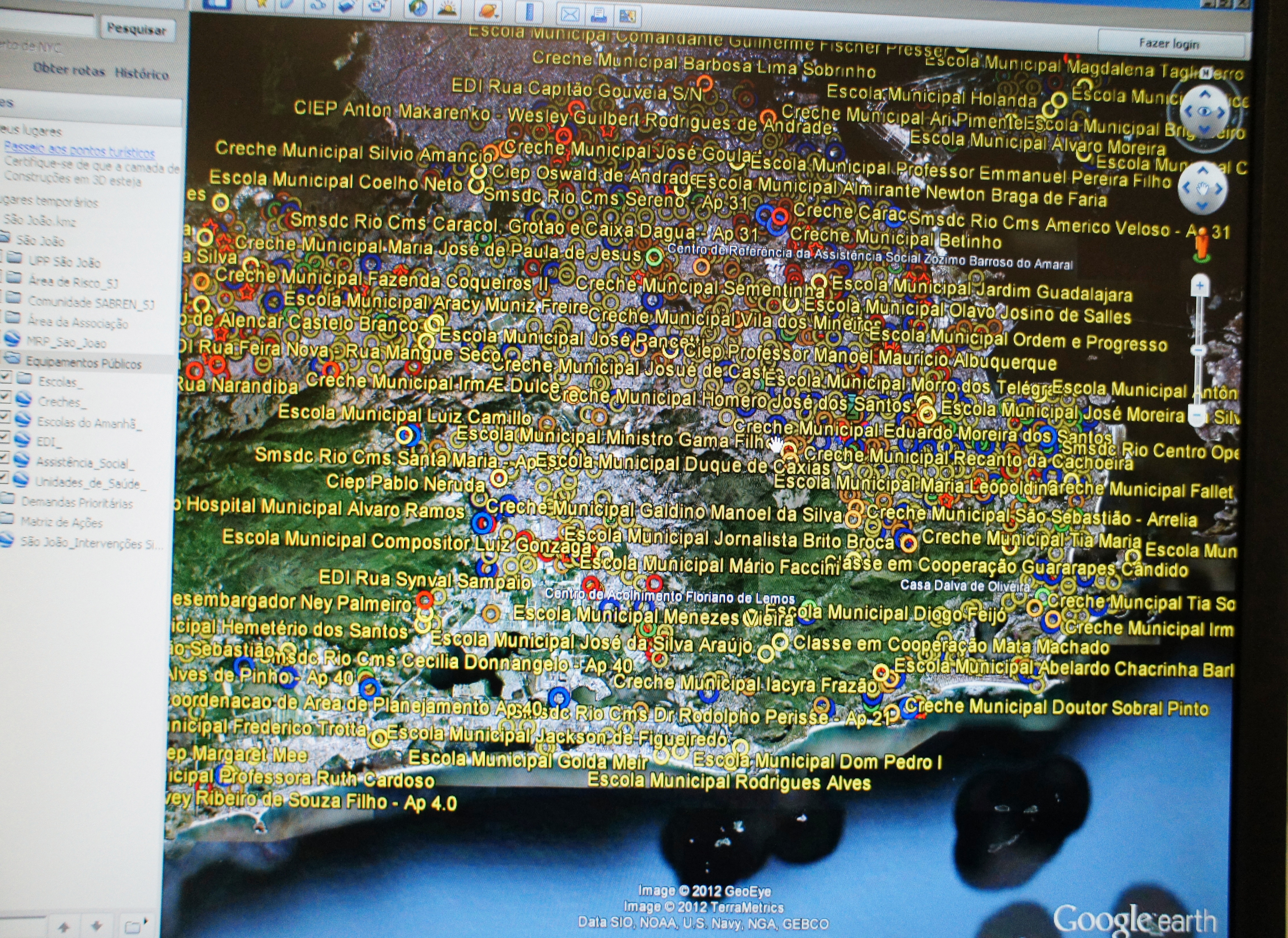
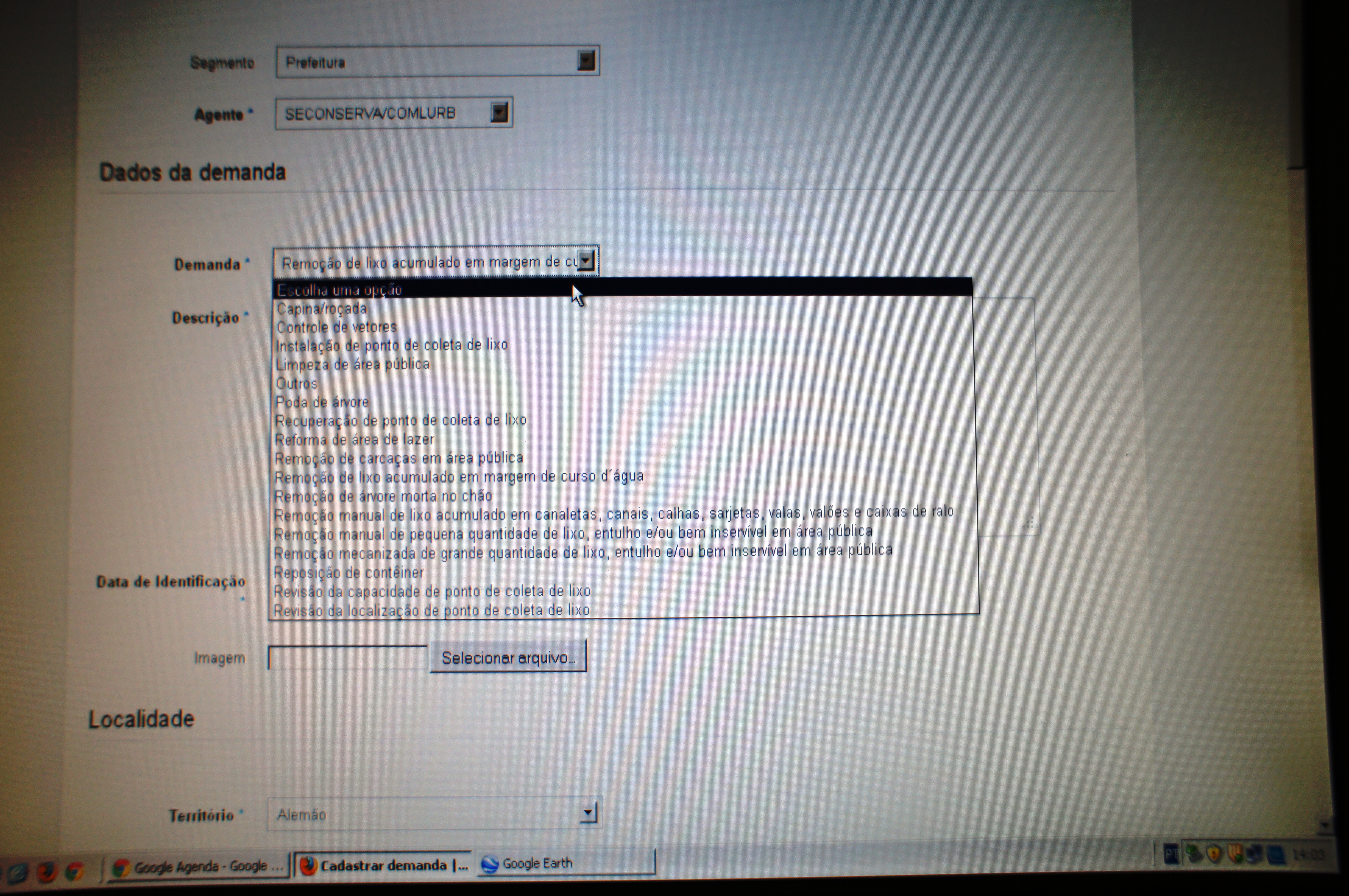
Enquanto Henriques falava, Gustavo Ferreira, responsável pelos Mapas Rápidos Participativos das favelas servidas pela UPP Social, girou uma tela de computador e clicou numa imagem baseada no Google Maps, fruto do trabalho de onze equipes de campo trabalhando em vinte territórios. O trabalho começou um ano atrás, com a ajuda do consultor Francesco di Villarosa. As equipes fazem fotografias e observações, e entrevistam moradores, líderes, agentes de ONG, e provedores de serviços públicos. Os resultados mudam constantemente, e são analisados para que se possa apresentar demandas aos órgãos responsáveis por supri-las. A UPP Social trabalha também com ONGs e o setor privado.

Entre outros dados, os mapas mostram quais partes de uma favela estão em risco de deslizamento e outros desastres naturais. São muito impressionantes as fotos de moradias contemporâneas que parecem ter surgido do filme Orfeu Negro. Nem toda casa de favela é construída de tijolo e cimento.

Parte do pequeno exército de moradores de favela que juntam dados sobre necessidades sociais

Se todos os dados mapeados fossem postados na Internet, iria esclarecer muitas dúvidas sobre a vida nas favelas pacificadas e os desafios que apresentam à cidade do Rio de Janeiro– tanto para quem moram em favela como para quem mora na cidade formal. A disponibilização desses dados a pesquisadores também iria abrir a porta para um estudo de impacto.

Administrando dados e suprindo demandas

Quando o presidente Juscelino Kubitschek teve a ideia de construir Brasília nos anos 1950, ele falava de fazer o país andar cinquenta anos em cinco. É uma tarefa comparável, o que o Rio está realizando de preparativos para sua agenda crescente de megaeventos: nos últimos anos a mão de obra policial cresceu exponencialmente, com atalhos de preparo que eles mesmos apontam. O efetivo total da Polícia Militar para o estado do Rio, incluindo cinco mil policiais de pacificação, é de mais de 40 mil hoje, e é projetado em 60 mil até 2014.

Criar uma UPP (uns caras armados vestindo uniformes elegantes, com seis meses de treinamento) parece muito mais fácil do que mapear e suprir as demandas por coleta de lixo, atendimento médico, iluminação pública, educação, crêches, assistência jurídica, e tantas outras coisas. Mas pode muito bem ser que os dois lados da moeda contém desafios igualmente difíceis.

Chegou a hora de entoar um novo mantra? Seguem as recomendações do estudo de impacto das UPPs, à Força de Pacificação da Polícia Militar do Rio de Janeiro:

1. Incluir taxas locais de homicídio nos critérios de seleção para novas áreas de UPP. Isso poderia ter um efeito sistémico, comunicando  ao crime organizado a necessidade de reduzir seus níveis de violência para não “perder” seus territórios.

2. Sistematizar critérios e procedimentos operacionais. Tanto policiais como moradores precisam saber quais são os procedimentos no caso de perturbação do sossego, mototáxis irregulares e som alto de bailes funk, por exemplo. Os policiais precisam saber o que fazer quando crianças relatam uso de drogas em casa, e saber a relação entre desempenho e gratificação.

3. Melhorar condições de trabalho e reformular as gratificações. Os atrasos atuais nas gratificações é “devastador na moral da tropa”.

4. Intensificar e melhorar o treinamento. Uma ou duas semanas de técnicas de policiamento de proximidade não conseguem desconstruir valores e comportamentos formados anteriormente.

5. Agir para legitimar a pacificação policial dentro da Polícia Militar toda.  Metas de redução de letalidade policial, ligadas a gratificações, iriam reduzir a rejeição da polícia de pacificação pelo resto do efetivo.

6. Repensar a resposta policial aos crimes de drogas. A mudança de foco, de drogas para armas, deve ser mais completa e coerente, e a polícia não deve mais reprimir manifestações culturais ligadas ao uso de drogas, tais como bailes funk, como se fossem território inimigo. Ao fazer isso, irá ganhar a confiança dos jovens, que frequentemente consideram suas ações arbitrárias e injustas.

7. Aprofundar o componente comunitário das UPPs. Deve haver mais interação entre policiais e moradores, em todos os níveis. Isso irá aumentar a identificação de policiais com o projeto de pacificação.

8. Promover mecanismos para que a comunidade tome decisões. Isso deve ajudar a preencher o vácuo de autoridade deixado pelos traficantes de drogas, o qual a polícia tem ocupado de maneira irregular e controversa.

9. Promover a representação e participação política de comunidades UPP. O estudo aponta a falta desse elemento na equação da pacificação, acrescentando que um papel policial nesse quesito seria questionável, mas que deve ser levado em consideração ao lidar com outros temas.

Fique ligado para mais sobre esse assunto, depois que o blog tiver uma chance de falar com administradores da pacificação sobre o estudo e sobre o que estão fazendo para avançar mais ainda.

Para mais informação, veja essa apresentação powerpoint dos resultados da pesquisa de opinião do CESeC e essa tese de mestrado da MIT, sobre a pacificação policial e a transformação de governança.


Posted in Brasil, Transformation of Rio de Janeiro / Transformação do Rio de Janeiro | Tagged , , , , , , , , , , , | Leave a comment

Pacification saves lives: the first full-blown impact study

Still, it needs a significant upgrade, evaluation says

UPP cop in Fallet favela, Santa Teresa

Ever since pacification began in Rio de Janeiro, in November 2008, we’ve been hearing (and saying) that social needs must also be met. As the number of UPPs, or police pacification units, grows (now at 26, employing 5,000 men and women, with a goal of 40 by 2014), State Public Safety Secretary José Mariano Beltrame– and many others– repeat the mantra about the other side of the coin.

The Social UPP got off to a shaky start, with Governor Sérgio Cabral’s political needs shoving  it out of the state nest in December 2010, into the municipal one, under the aegis of the Pereira Passos Institute. From day one however, it’s been run by Ricardo Henriques (who next week hands his post over to former Municipal Finance Secretary Eduarda La Rocque, who is to keep on current director Tiago Borba)  and a growing team, in partnership with the U.N. Habitat program.

Centuries of neglect and the mantra repetition have led to the general perception in Rio that police pacification is dangerously outpacing the city’s ability to meet social needs.

But the first wide-ranging examination of the impact of police pacification reveals that though it has significantly reduced violence in and around UPP communities, the project that lies at the core of Rio’s remarkable turnaround needs extensive reform itself.

Fortunately, the police are listening. Study coordinator Ignacio Cano, with a long history of research in the area of public security and human rights, is now in dialogue with the men and women in uniform. Hopefully, they’re poring over his  ‘Os donos do morrro’: uma avaliação exploratória do impacto das unidades de polícia pacificadora (UPPs) no Rio de Janeiro [‘The owners of the hill’: an exploratory impact evaluation of the police pacification units].

“Just  a decade ago, whether in training or research, the police in general wanted little to do with the academic community and flatly rejected or refused to cooperate with researchers,” observes Liz Leeds, founder of the Brazilian Forum on Public Safety and creator of the Democratic Policing Initiative when she was a Ford Foundation program officer in Rio, in the early 2000s.  “Today that cooperation is not only possible but frequently sought after by the police,” continues Leeds.  “Of course,  the police are not always happy with the results of independent research when the conclusions are negative.  It is a process that involves the gradual break-down of long-held mutual mistrust and prejudice between the two communities”.

Optimism

Cano’s study, funded by the Caracas-based Development Bank of Latin America by way of the Brazilian Forum on Public Safety, took great methodological pains in comparing crime statistics. Which makes it particularly heartening to find that statistics for UPP communities, for police stations serving them and for their geographical surroundings, all show that UPPs significantly reduce lethal violence. Interestingly, they also increase non-lethal crime: robberies and such may be on the rise now (and/or being reported more) because the iron-fisted rule of drug traffickers is ending.

In UPP favelas alone, pacification saves an estimated 60 lives a year per 100,000 inhabitants. This translates to 177 lives hypothetically saved per year in the city’s favelas, given that the UPPs currently serve a total population of 295,415.

At 227 pages, the study is a long read. But it’s a worthwhile investment because the numbers and analysis basically demonstrate that UPPs are pacifying the police and strengthening their institutional role in society. Because of UPPs, police killings are significantly down. Inside and near UPP favelas, this is the single most significant factor in reduced lethal violence. In addition, UPPs may lead cariocas to feel more compelled to report non-violent crime than they did before.

Another reason the study is a must-read are the excerpts from interviews carried out with favela residents, community leaders and police from a variety of levels of the hierarchy. This qualitative data provides valuable windows to the changes under way in Rio. For example, pacification has allowed some favela residents not only to come and go freely in their own communities, but also to at last visit those formerly belonging to “enemy” factions. The interviews also shed useful light on topics such as funk dances and mototaxis, both murky areas of conflict between UPP police and favela residents.

Pacification was undertaken with a reasonable amount of planning, described in this two-year-old Piauí magazine article. It has achieved so much. But, says the study, the model needs further development. From some of the police interviews and from press reports and unfolding events, it’s become clear that the program is in many respects rather slapdash. Last week the first UPP officer was shot dead, wearing a not-so-bulletproof-vest and working in a container as an operational base. Later, other officers complained that the donated rifles they used to defend themselves against the attack, allegedly undertaken by drug traffickers, had jammed.

Of course pacification is a pioneering effort, bumping up against  many unexpected challenges and outcomes, and so must be flexible. But it seems the time has come to buck the Brazilian penchant for improvisation.

In some places, “there are [social] services, the problem is access”– Ricardo Henriques

Fifty years in five? Or six?

Meanwhile, the mantra about social services keeps on being repeated.

No large-scale impact study of the Social UPP has been undertaken or is under way. It’s quite a bit easier to quantify violent deaths than to measure social needs and how much they’re being met– not least of all because live people have conversations.

“Dialogue with results is possible, and is a continuous exercise,” Ricardo Henriques told RioRealblog on one of his last days on the job. Knowing how to listen critically he added, is key. Job training for youth was a top demand in one pacified favela, for example, but it turned out the area did have job training, with empty classrooms. “It’s a question of matching, of information flow. You have to have a lot of information about a community,” he said.

As Henriques spoke, Gustavo Ferreira, responsible for the Social UPP’s Fast Participatory Mapping of UPP Favelas, swiveled a computer screen and brought up a Google Maps-based product of the program’s 11 field teams in 20 territories. Work began a year ago, with the help of consultant Francesco di Villarosa. The teams take photographs, make observations and interview residents, leaders, NGO agents, and public service providers. Results change constantly and are analyzed so as to pass on demands to agencies who can and should be meeting them. The Social UPP also works with NGOs and the private sector.

Among other data, the maps show which parts of favelas are at risk for mudslides and the like. Most impressive are the photos of contemporary housing that looks like something out of the film Black Orpheus. Not all favela homes today are made of brick and cement.

Part of the army of favela residents who collect data on social needs

If all the mapped data were to be posted on the Internet it could clear up a great deal of doubt about life in pacified favelas and the challenges they present to the city of Rio– for people who live in them and for those who don’t, as well. Making this data available to researchers would also open the door to an impact study.

Managing data and meeting demands

When President Juscelino Kubitschek got it into his head to build Brasília in the 1950s, he spoke about pushing the country ahead fifty years, in only five. What Rio is doing to prepare for its growing list of megaevents is a comparable task: police manpower has grown exponentially over the last few years, with shortcuts in preparation that they themselves fault. The Military Police force for all of Rio state, including 5,000 pacification police, totals 40,000-plus today and is set to grow to 60,000 by 2014.

Setting up police pacification units (guys with guns in snappy uniforms, who’ve had six months’ training) looks a great deal easier than mapping and meeting needs for trash collection, health care, public lighting, education, day care, legal aid, and so much else. But it may well turn out that both sides of the coin are equally challenging.

Perhaps it’s time for a new mantra? Here are the UPP impact study’s recommendations to Rio’s pacification police force:

1. Include local homicide rates in the criteria for selecting new UPP areas. This could have a systemic effect, sending a message to organized crime to bring down the violence level or “lose” their territories.

2. Systematize working criteria and procedures. Police and residents need to know how disturbances of the peace, mototaxis and funk dances are to be dealt with, for example. Police need to know what to do when children describe drug use at home, and what types of performance will be rewarded.

3. Improve work facilities and reformulate pay bonuses. Current pay delays damage morale.

4. Intensify and improve training. One or two weeks of proximity policing techniques cannot undo pre-formed values and behaviors.

5. Take measures to legitimate police pacification within the Military Police.  Police lethality reduction goals, linked to bonuses, would help to mitigate the rejection of UPP police by the rest of the force.

6. Rethink police response to drug crime. The change in focus from drugs to weapons should be more complete and even-handed, and the police should no longer repress drug-use-related cultural manifestations such as funk dances as if these were enemy territory. In doing so they will gain the trust of young people, who now often consider their actions arbitrary and unjust.

7. Deepen the community component of UPPs. There should be more interaction between police and residents, at all levels. This will increase police identification with the project.

8. Promote mechanisms for community decision-making. This should help fill the authority vacuum left by drug traffickers, which police have been stepping into in an irregular and controversial manner.

9. Promote community representation and political participation. The study points out this missing element in the pacification equation, adding that a police role is questionable for this item, though it should be taken into consideration as other issues are sorted out.

Stay tuned for more on this subject, once RioRealblog has had a chance to speak with pacification police officials on their reaction to the study and what they’re doing to develop the program further.

For more information, check out this powerpoint presentation of the CESeC police opinion survey results and this MIT Master’s thesis on police pacification and governance transformation.


Posted in Brazil, Transformation of Rio de Janeiro / Transformação do Rio de Janeiro | Tagged , , , , , , , , , , | 4 Comments

Story of reprisal for Alemão kidnapping isn’t true, says Public Safety Secretariat

Para Versão de represália por sequestro no Alemão não é verdade, diz Secretaria de Segurança Pública, clique aqui

According to the State Public Safety Secretariat, there’s no proof for an explanation given yesterday to journalists by residents and people who know the Complexo do Alemão, for Monday night’s attack on the Nova Brasília pacification police base. The investigative Civil Police have found no truth in the story (recounted in yesterday’s post) that drug traffickers supposedly attacked the base, killing a female police officer, in reprisal for the violent outcome of a trafficker’s wife’s kidnapping; the story is undergoing no investigation.

According to the Secretariat, this attack is part of a long-term intimidation strategy on the part of local traffickers. This past February, the Complexo saw 87 attacks, when the Army was still in charge of the area.

The Complexo de Alemão, invaded and occupied by the Army at the end of 2010, came under the control of the Pacification Forces, part of the Rio state Military Police, earlier this month.

If the kidnapping story is in fact false, whoever invented it was counting on Rio’s troubled police history as an element in his or her favor. And, in the context of pacification police arrests for corruption this year, it’s not hard to believe in conspiracy theories. These easily gain credence in Brazil, where a reasonable level of transparency and accountability is still lacking in so many spheres.

It’s worth ending this post with the reminder that pacification is a process. Traffickers, favela residentes, community leaders, police officers, inspectors and commanders, and even journalists– we are all learning and developing new behaviors, in a society undergoing an historic transition.

As the new study “‘Os donos do morrro’: uma avaliação exploratória do impacto das unidades de polícia pacificadora (UPPs) no Rio de Janeiro” [“‘The owners of the hill’: an exploratory impact evaluation of the police pacification units”], funded by the Development Bank of Latin America, coordinated by Ignacio Cano, concludes:

In general, the relationship between neighbors and police still carries a great deal of distrust, if not strongly negative mutual stereotypes, but it tends to improve with time. In fact, the police pacification units are the start of a long learning process on both sides, that on the one hand involves closer day-to-day shared experiences among police officers and residents of low-income areas, and on the other, the way in which the two sides deal with safety issues. While the residents need to learn to go to the police station to solve internal conflicts, for example, agents of the state need to switch from basically repressive actions to preventive work and mediation. From a symbolic standpoint, both sides evidence unsatisfied demands for greater respect from the other side, which compromises personal honor, and, for police, their professional identity. The terms of expected mutual respect must be renegotiated by way of interaction.

The wide-ranging study carefully examined and analyzed crime statistics. It also contains telling excerpts from interviews with favela residents and leaders, and with pacification police from different hierarchical levels.

To keep up with the transformation of Rio de Janeiro, follow the blog on Twitter by way of @riorealblog or on Facebook, or both.

Posted in Brazil, Transformation of Rio de Janeiro / Transformação do Rio de Janeiro | Tagged , , , , | 4 Comments

Versão de represália por sequestro no Alemão não é verdade, diz Secretaria de Segurança Pública

De acordo com a Secretaria Estadual de Segurança Pública, não existe comprovação nenhuma de uma explicação que moradores e frequentadores do Complexo do Alemão passaram ontem para jornalistas, pelo ataque anteontem à base Nova Brasília. A Polícia Civil não encontrou nenhum fundo de verdade na história (relatada no post de ontem) de que traficantes de droga teriam atacado a base, matando uma soldado, em represália por um malsucedido sequestro da esposa de um traficante; não há investigação em curso nesse sentido.

De acordo com a Secretaria, esse ataque faz parte de um comportamento de longa data, de intimidação por parte de traficantes da região. No mês de fevereiro deste ano, houve 87 ataques no local, quando o Exército estava no comando da área.

O Complexo de Alemão, invadido e ocupado pelo Exército no fim de 2010, passou ao controle das Forças de Pacificação, da Polícia Militar do Estado do Rio de Janeiro, no começo deste mês.

Se a história do sequestro é mesmo falsa, quem a inventou contava com a conturbada história policial do Rio de Janeiro como elemento a favor. E, no contexto de prisões neste ano de policiais de pacificação, por corrupção, não é difícil acreditar em  teorias de conspiração. Tais teorias facilmente ganham crentes nesse país, onde em tantas esferas ainda falta um nível razoável de transparência e responsabilidade pública.

Vale a pena concluir esse post com o lembrete de que a pacificação é um processo. Traficantes, moradores de favela, líderes comunitários, soldados, inspetores e comandantes policiais e até jornalistas– todos estamos aprendendo e aperfeiçoando novos comportamentos, numa sociedade em via de uma transição histórica.

Como conclui o novo estudo “‘Os donos do morrro’: uma avaliação exploratória do impacto das unidades de polícia pacificadora (UPPs) no Rio de Janeiro”, bancado pela Corporação Andina de Fomento, coordenado por Ignacio Cano:

De forma geral, a relação entre vizinhos e policiais ainda está carregada de desconfiança, quando não de estereótipos mútuos fortemente negativos, mas ela tende a melhorar com o tempo. Na verdade, as UPPs são um começo de um longo processo de aprendizado para ambas as partes, que envolve por um lado uma nova convivência mais estreita dos policiais com moradores de espaços populares e por outro a forma como os dois lados lidam com questões de segurança. Se os moradores precisam aprender a ir a delegacia para resolver conflitos internos, por exemplo, os agentes do estado precisam mudar de uma ação basicamente repressiva para um trabalho de prevenção e mediação. Do ponto de vista simbólico, ambas as partes se queixam de uma demanda de respeito não satisfeita pela outra parte, o que compromete a sua honra e, no caso dos policiais, a sua identidade profissional. É preciso que os termos mútuos do respeito esperado sejam renegociados através da interação.

O estudo examinou e analisou com muito cuidado e de maneira abrangente as estatísticas de crime. Também contém trechos significativos de entrevistas com moradores e lideranças de favelas, e com policias de UPP de diferentes níveis na hierarquia.

Siga o blog no Twitter pelo @riorealblog ou através do Facebook, ou ambos, para se manter plenamente informado sobre a transformação do Rio de Janeiro 

Posted in Brasil, Transformation of Rio de Janeiro / Transformação do Rio de Janeiro | Tagged , , , , | Leave a comment

First pacification police death: complicated story yet to be revealed?

For an update, check here.

Para Primeira morte de policial UPP: história complicada para desvendar? clique aqui

Ask a question and you get an answer. Ask someone else the same question and you’ll get another one. Sometimes the two answers seem to make a perfect match.

And yet all must be investigated and proven. The Disque Denúncia hotline has received many calls and today saw three arrests related to last night’s attack on pacification police in the Complexo do Alemão favelas.

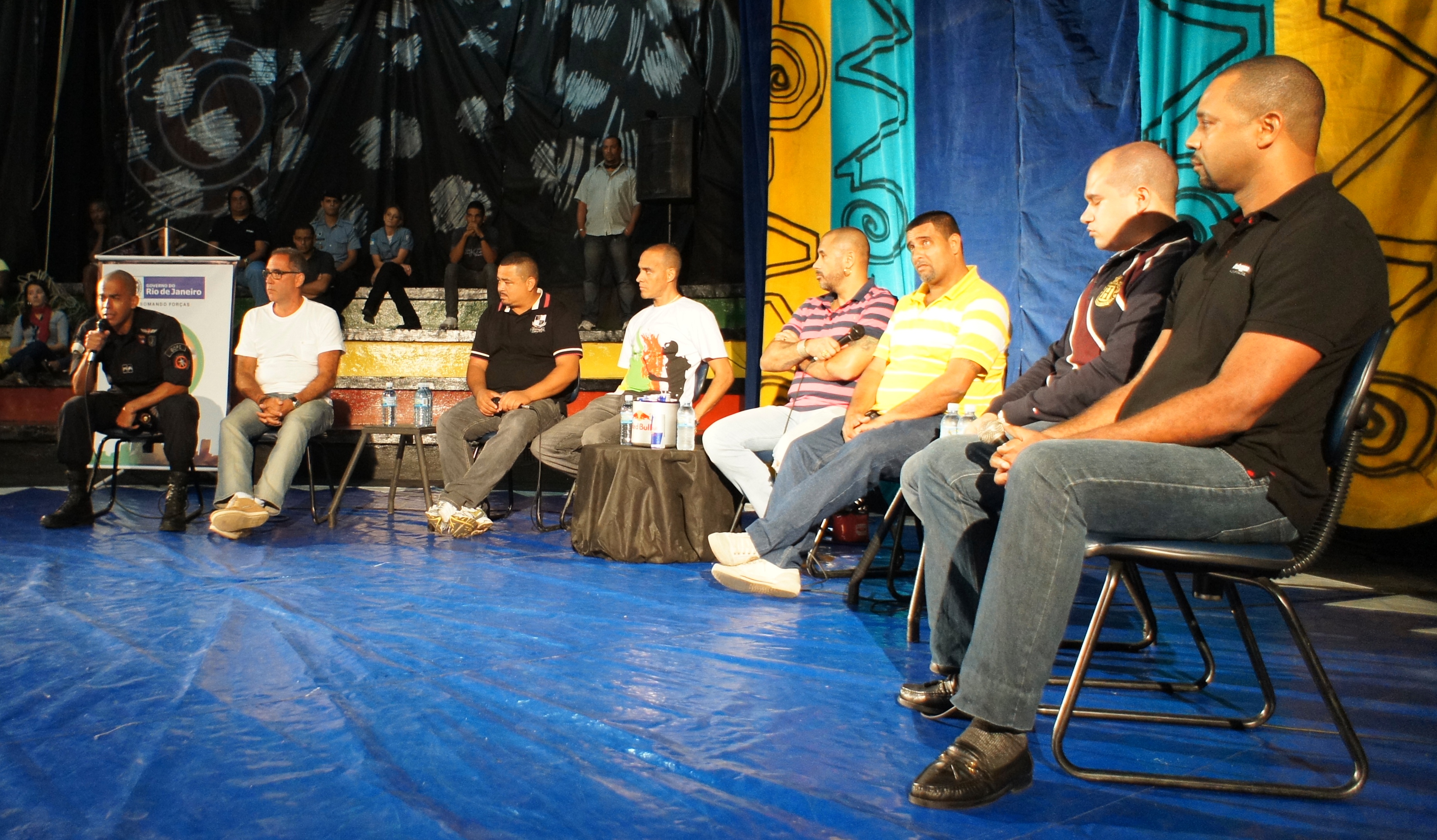
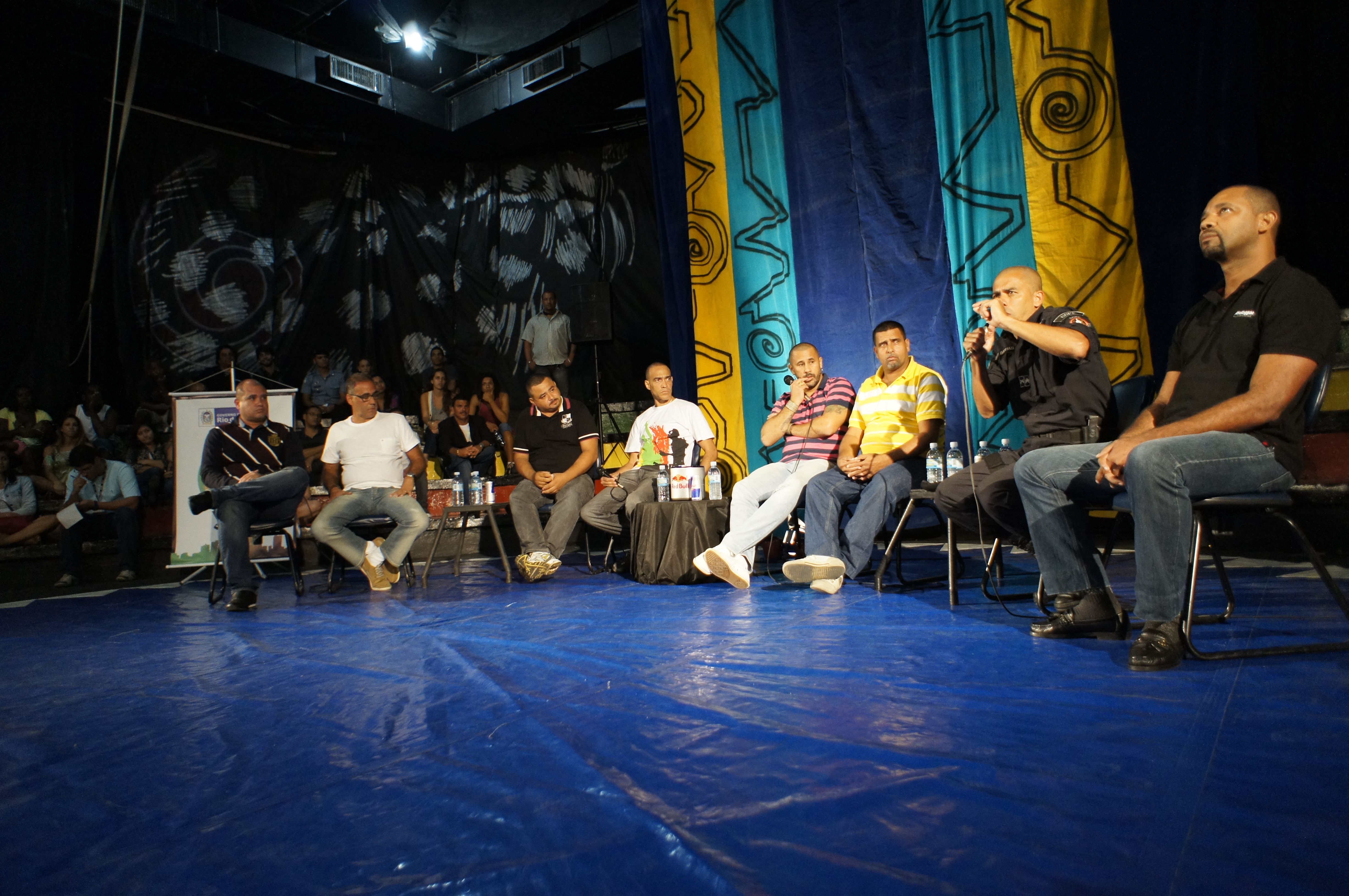
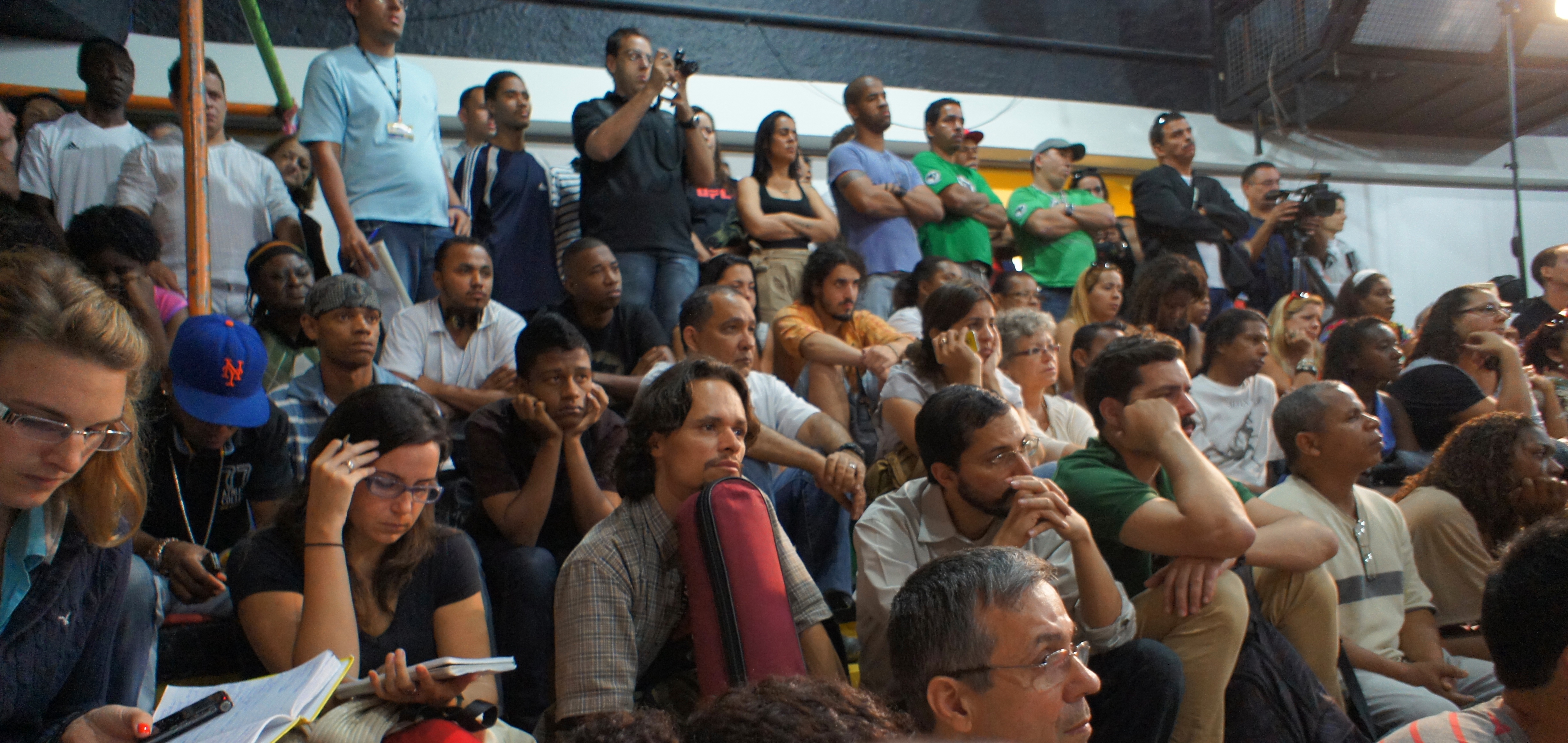
Meanwhile, an historic event took place this afternoon at Afroreggae’s Cantagalo unit: a sort of talk-show with former drug traffickers, a former militia member and police, hosted by the NGO’s founder, José Junior.

It happened that the elevator that connects Ipanema’s Rua Alberto de Campos to the “Brizolão” wasn’t working. And it happened that some Afroreggae employees were there, also trying to decide if it was better to climb 25 flights of stairs, or go around the block and take the elevator up from the  General Osório metrô station, to then cross part of the Pavão-Pavãozinho favela and so arrive at the Afroreggae auditorium.

“What happened last night in Alemão?” RioRealblog asked one of them.

The answer came without hesitation. “The UPP police kidnapped a drug trafficker’s wife, and asked for ransom, which was paid. But they didn’t return the woman.”

Shots fired at the pacification police unit’s building, one of which got through a bullet-proof vest worn by soldier Fabiana Aparecida de Souza, killing her, reportedly came from different directions.

On July 12, the Centro de Estudos de  Segurança e Cidadania made public the results of a second public opinion survey carried out among pacification police. The numbers show that many police don’t consider themselves well prepared for their work: in 2010, 63% considered themselves adequately prepared to work in pacification units. Two years later, this number dropped to 49%.

The universe researched in the two surveys changed a great deal, since the number of pacification units has grown. The first survey heard 359 police and the second, 775. In the last two years, the portion of police with a university degree climbed from 37% to 47%; and the proportion of women in the force grew from 0,8% to 11%. These changes may help explain the drop in self-evaluation regarding preparation.

Possibly, the study’s most important finding may arise from the quantification it makes of the “level of commitment to the project” of pacification that the police revealed, by way of their answers to five questions. A total of 51,% were categorized as “neutral or ambiguous” about the project. An additional 15,5% were partially or totally resistant. Thus, only a third identified with the goals of pacification, partially, or totally.

The respondents in 2012 are happier with their work conditions than those in 2010.  These conditions don’t include personal safety, though many said that one attractive aspect of pacification work is that it’s safer than other police work.

However, of the police surveyed this year, 60% would like to leave pacification.

For an impressive array of qualitative information on how UPP police operate and see themselves and favela residents, see this new study (starting on page 136), soon to be summarized in a new post.

What’s clear from the results of the CESeC survey is that the idea of community policing is still weak among pacification police. Only 5% said they meet often with favela residents, since this is more the task of their commanders. The current 24 police pacification units of  Rio de Janeiro employ 5,500 police. They have had from six to seven months training, together with the traditional military (non-UPP) police, with very little time spent on community policing.

Since last year, top members of the military police force are working to effect a revolution in the police academy curriculum.

It’s not clear what kind of training could prevent pacification police from committing kidnappings, if this is what did occur.

During the Afroreggae event, civil police inspector José Magalhães, who works with the NGO, commented on yesterday’s attack on the Alemão police pacificatin unit. “Something abnormal happened, which will soon come to light,” he said.

Later, the blog told the inspector the version heard earlier. “There’s a code of behavior,” Magalhães explained, making clear that he had no information regarding the attack. “A trafficker’s family has nothing to do with what he does. If you mess with his family, he’s going to mess with yours.”

Posted in Brasil, Transformation of Rio de Janeiro / Transformação do Rio de Janeiro | Tagged , , , , , , | 1 Comment

Primeira morte de policial UPP: história complicada para desvendar?

Para uma atualização, confira aqui

Faça uma pergunta e você terá uma resposta. Faça a mesma pergunta a outro interlocutor e terá outra. Às vezes as duas parecem combinar de maneira perfeita.

Resta procurar, e encontrar provas. A Disque Denúncia já recebeu várias ligações e hoje houve três prisões relacionadas ao ataque a policiais de ontem à noite no Complexo do Alemão.

Enquanto isso, de tarde aconteceu um evento histórico na unidade da Afroreggae do Cantagalo: uma espécie de talk-show de ex-traficantes de droga, um ex-miliciano e policiais, mediado pelo fundador da ONG,  José Junior.

Calhou do elevador que sobe da rua Alberto de Campos até o “Brizolão” estar parado. E calhou de alguns funcionários da Afroreggae estarem lá, também tentando decidir se era melhor subir 25 lances de escada, ou dar volta e pegar o elevador da estação de metrô General Osório, para daí atravessar uma parte da favela  Pavão-Pavãozinho e assim chegar no auditório da Afroreggae.

“O que aconteceu ontem à noite no Alemão?” perguntou RioRealblog a um deles.

A resposta veio sem hesitação. “Os policiais da UPP sequestraram a mulher de um traficante, e pediram um resgate, que foi pago. Mas não devolveram a mulher.”

Os tiros na unidade da polícia de pacificação, um dois quais atravessou o colete à prova de balas da soldado Fabiana Aparecida de Souza, matando-a, vieiram de diferentes direções.

No dia 12 de julho, o Centro de Estudos de  Segurança e Cidadania divulgou os resultados de uma segunda pesquisa de opinião entre policiais das UPPs. Os números mostram que muitos dos próprios policiais não se consideram bem preparados para o trabalho deles: em 2010, 63% se consideravam adequadamente preparados para trabalhar na UPP. Dois anos mais tarde, esse número caiu para 49%.

O universo pesquisado nos dois levantamentos mudou muito, pois o número de UPPs cresceu. O primeiro ouviu 359 policiais e o segundo, 775. Nos dois anos que se passaram, a fatia de policiais com curso superior subiu de 37% para 47%; e a proporção de mulheres cresceu de 0,8% para 11%. Talvez essas mudanças ajudem a explicar a queda na avaliação do preparo.

Pode ser que a revelação mais importante do estudo venha da quantificação que faz do “grau de adesão ao projeto” de UPP que os policiais evidenciaram, através de respostas a cinco perguntas. Um total de 51,% foi identificado como “neutros ou ambíguos” ao projeto. Mais 15,5% seriam parcialmente ou totalmente resistentes. Assim, apenas um terço se identifica com os objetivos da pacificação, ou parcialmente ou totalmente.

Os respondentes de 2012 estão mais satisfeitos com as condições de trabalho, do que aqueles de 2010.  Tais condições citadas não incluem segurança pessoal, apesar de muitos dizeram que um atrativo de trabalhar em UPP seria a maior segurança.

Contudo, dos policiais pesquisados neste ano, 60% gostariam de sair da UPP.

Para uma gama impressionante de informação qualitativa sobre o trabalho da polícia UPP e como os soldados veem a si mesmos e aos moradores de favela, veja esse estudo novo (começando na página 136 ), que em breve será resumido em um post novo.

O que fica claro pelos resultados da pesquisa CESeC é que a noção de policiamento comunitário ainda está muito fraca entre os policiais da UPP. Só 5% dizem reunir-se frequentemente com moradores, pois essa tarefa ainda é reservada ao comando. Nas atuais 24 UPPs do Rio de Janeiro, já trabalham 5,5 mil policiais. Eles tiveram de seis a sete meses de preparo, junto com os policiais militares tradicionais (não-UPP), com um mínimo de tempo dedicado ao assunto policiamente comunitário.

Desde o ano passado, a cúpula da polícia militar trabalha para revolucionar o currículo da academia.

Não está claro exatamente qual tipo de treinamento poderia evitar sequestros praticados por policiais da pacificação, se é isso que aconteceu.

Durante o evento da Afroreggae, o inspetor da policia civil José Magalhães, que trabalha com a ONG, comentou o ataque de ontem  à unidade da UPP. “Alguma coisa de anormal aconteceu, que logo vai aparecer,” disse ele.

Mais tarde, o blog comentou com o inspetor a versão que ouvira anteriormente. “Há um código de conduta,” explicou Magalhães, que tomou o cuidado de dizer que não tinha nenhuma informação a respeito do ataque. “A família do traficante tem nada a ver. Se você mexe com a família dele, ele vai mexer com a sua.”

Posted in Brasil, Transformation of Rio de Janeiro / Transformação do Rio de Janeiro | Tagged , , , , | 7 Comments

Bailes funk começam a voltar para favelas do Rio

Inicialmente, a pacificação baniu os bailes funk, porque haviam sido do domínio (e cultura) dos traficantes de droga

For Funk baile (dance) begins to make a return to Rio favelas, click here

Policiais da UPP revistam um carro e seus ocupantes

Sábado a noite foi uma noite de drama tão emocionante que mal era possível se afastar e pagar um real para descer o morro para a Tijuca pacata, por meio de uma Kombi caída aos pedaços com um homem descalço no volante, andando de marcha ré porque um carro de patrulha bloqueava o costumeiro local de virada.

No Fogueteiro, uma favela pacificada em fevereiro de 2011,  a polícia pacificadora iria permitir que um baile funk adentrasse a noite? Teria discussão, briga, prisão, tiro?

Ou haveria uma aceitação tranquila da gritante música de bate-estaca eletrônica que leva tantas bundas a trepidar e balançar?

No fim do baile funk infantil, uma atração adulta

Estranhamente, esse drama atraiu nenhum veículo de mídia brasileira.

E estranhamente, esse é o gancho, simbólico e possivelmente real, no qual depende a pacificação. Pois tem a ver com quem manda, em territórios que até tempos bem recentes ficavam além do alcance governamental.

É um gancho com história: nos idos do século XX, a música banida era o samba. Era só se atrever a andar nas ruas de pandeiro na mão, que você ia preso e seu instrumento era confiscado. Considerava-se que o samba era sexy demais, africano demais, uma má influência.

É dessa teoria de relatividade que certas gringas ficam se lembrando, na luz clara do fato que não se trata de cadeiras, enquanto menininhas trepidam e balançam, ao compasso de uma música que lhes manda “Senta, senta, senta!”

Os antigos programas da Xuxa são nada, em comparação

O baile foi prémio para a vitória de uma equipe feminina de futebol, no campeonato Taça das Favelas. A Secretaria Estadual de Saúde pagou a empresa de produção de bailes funk Furacão 2000 para fazer o show. Enquanto animava as menininhas, um dos mestres de cerimônia informou parenteticamente ao público sobre como  evitar a dengue (nunca deixe juntar água parada). Não se podia evitar o pensamento, olhando as dezenas de mulheres de traseiro avantajado que seguravam bebês, que alguma informação sobre planejamento familiar poderia ter sido mais apto.

Depois do concurso de funk e dos festejos para as jogadoras de futebol, a presidente da associação de moradores, Cintia Luna, subiu ao palco para pedir que os moradores assinassem um abaixo-assinado demandando a recisão de uma resolução estadual que efetivamente bane os bailes funk em favelas. Baixada unilateralmente pela Secretaria Estadual de Segurança Pública em janeiro 2007, a resolução parece ter sido o fundamento para o que pode ser chamado de o lado cultural da pacificação policial, que começou em novembro de 2008.

Aquecimento

Como resultado, o funk vive uma bizarra vida dupla. Plenamente aceitado no asfalto, a música que já é o som mais ouvido no Rio de Janeiro está em grande parte proibida nas favelas pacificadas. A situação leva centenas de jovens a abandonar seus próprios territórios, que são relativamente seguros, para aqueles onde a pacificação não chegou, onde ainda reina o proibidão– que enaltece a violência, o sexo, e o tráfico de drogas.

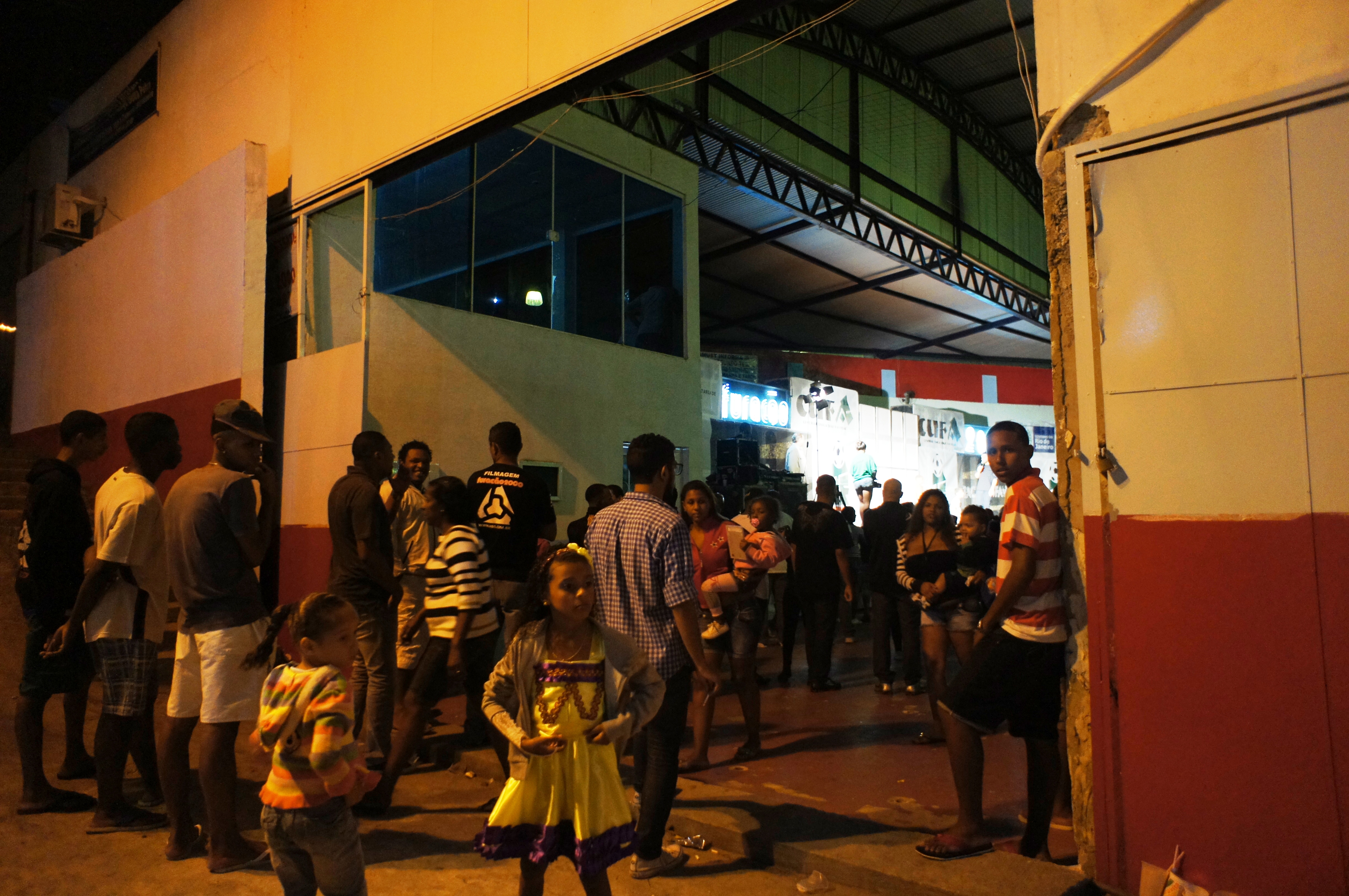
A quadra, construída há três anos por comerciantes locais, fica numa pequena descida lá no alto do Morro do Fogueteiro, parte de uma série de favelas cobrindo os morros entre Santa Teresa and Rio Comprido, não muito longe do centro da cidade. Dentro dela, mães e crianças e adolescentes torciam e trepidavam. Do lado de fora, perto de umas poucas barracas de comidinhas e bebidas, os mototaxis deixavam passageiros, davam volta e subiam com rapidez.  A alguns metros mais adiante pela rua, um pouco depois do ponto onde as motos faziam a volta, nos fundos da quadra, fica o Centro de Desenvolvimento Infantil Zélia Gattai Amado, do município. Do outro lado da rua há casas de tijolo inacabado e vielas, levando a mais do mesmo, com outras em mais uma favela na distância, as luzes providenciando um aspecto aconchegante. “Vá ver a vista,” sugerira a jornalista norteamericana Taylor Barnes. “É linda”.

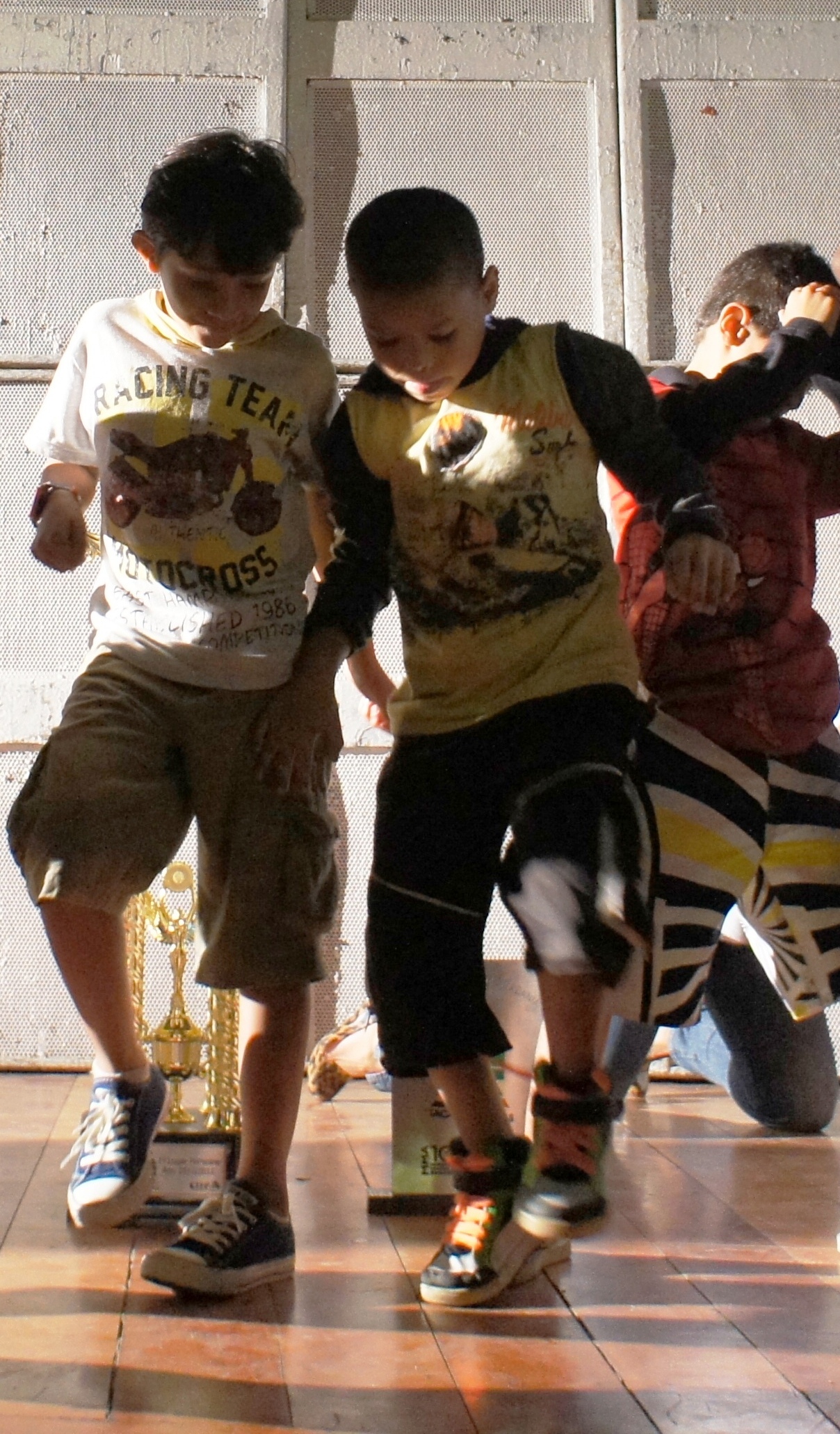
Meninos dançam o passinho

Barnes não é a única pessoa a apreciar a vista. Construído há nove anos, o Centro nunca funcionou porque os traficantes utilizavam o local como um ponto de observação e posicionamento de atiradores. Reinaugurado em abril passado, a área parece reter uma dose de sua karma; do outro lado da rua, entre as entradas das casas e as ruelas, dezenas de jovens rapazes fumavam maconha, produzindo uma nuvem de fumaça tão espessa que Julia Tierney, uma estudante de doutorado em planejamento urbano na Universidade de Califórnia em Berkeley, sugeriu sairmos de perto, pois estava ficando com dor de cabeça.

O calor humano dos brasileiros é mundialmente conhecido, mas séculos de instituções fracas e promessas não cumpridas levaram a um enorme estoque de desconfiança por trás dos sorrisos e beijos. Um pouco rua acima do fumódromo, Luna, a presidente da associação– que curte mais a Marisa Monte do que o funk– ficava em pé do lado de fora da quadra, se estressando com os policiais  de cara severa. “Tão procurando qualquer motivo para fechar o baile,” disse ela, antes de subir a rua até uma pequena área onde alguns carros chegavam, do lado de uma biroscas.

São tempos difíceis. Mês passado, um morador do Fogueteiro foi morto pela polícia, possivelmente sem motivo, possivelmente porque estava envolvido no tráfico. Por outro lado, outro confronto em setembro passado deixou um policial tetraplégico. E essa comunidade também é parte de uma região da cidade onde houve indiciamento de policiais por “vender de volta” o mercado de drogas aos traficantes locais.

Olhando para dentro, do lado de fora da quadra

Por volta das nove da noite um par de policiais da UPP desceram a rua correndo em direção à quadra, rifles na mão. Barnes e o videógrafo americano Jimmy Chalk correram atrás deles. Os tiras não chegaram até o fumacento ponto de observação; voltaram rapidamente ao terreno alto. Parecia que os gringos haviam pedido que fizessem um pouco de encenação, para o mini documentário que estavam filmando, sobre a pacificação. Mas não, a ação era verdadeira, disseram Chalk and Barnes quando voltaram alguns minutos depois.

Então chegou um carrão branco, e os policiais se empenharam com a tarefa de examinar documentos, assentos e porta-malas. “Há  muito mais soldados aqui do que normalmente,” comentou Luna.

Depois de uma visita de surpresa na quarta-feira passada do chefe das UPPs coronel Rogério Seabra, Luna resolveu escrever um email para ele, pedindo permissão para extender o baile funk infantil até um horário mais tarde, para adultos.

Drama no palco e fora dele

“Ele não respondeu,” disse ela ao RioRealblog. “Então eu entendi que era para ir adiante, com cuidado. Se não, ele teria logo dito que não.” Ela deu uma pausa. “Mas eu imagino que ele enviou todos esses soldados a mais e mandou que achassem algum jeito de reprimir.” Diante da câmera, Luna disse a Barnes and Chalk  que, do jeito que as coisas vão indo, ela acredita que está para acontecer uma nova ditadura militar. Desde o fim da última ditatura brasileira, em 1985,  a democracia se desenvolveu gradualmente até o ponto onde se tornou possível– e  necessário– começar a incluir os pobres na economia formal e a integrar as favelas na cidade formal.

Mas os desafios ali embutidos são enormes. Com a pacificação, a máxima autoridade na favela não é mais um traficante de drogas. Deve tomar seu lugar a polícia de pacificação? Na ausência de enérgica participação comunitária e sem a vigilância da mídia e da sociedade civil (fora nós gringos, Luna observava o desenrolar dos eventos da noite na companhia de mais uma moradora, além de uma intrépida estudante de Serviço Social na UFRJ e seu namorado protetor), o vácuo de autoridade é grande demais e não existem limites definidos.

Terminada a inspeção do carro, os tiras subiram no veículo deles, ligaram a sirene e se mandaram da rua abarrotada, pontas dos rifles do lado de fora das janelas. Dez minutos mais tarde estavam de volta. Mais um carro cheio de gente apareceu, e os tiras acenderam suas lanternas para penetrar o escuro por baixo do capô.

Seria uma boa ideia tentar falar com os soldados, mas quem sabia como iriam reagir?

Vista pela descida na direção da entrada à quadra

Apesar da dor de cabeça, Julia Tierney, que acabou de terminar um mestrado em planejamento urbano na MIT, comentou que sua pesquisa de tese revelou que muitos policiais dizem que precisam extrapolar na autoridade deles, para que a cidade não volte à gradual invasão dos bandos de criminosos em território urbano, que começou na década de 1980.

Um pouco abaixo na travessa da rua principal que sobe o morro, outro grupo de policiais revistava no escuro um pessoal de mãos na parede. Quando enfim conseguimos nos desapegar de tudo isso, e andamos alguns passos por essa rua principal até a parada da Kombi, vimos mais uma revista de automóvel.

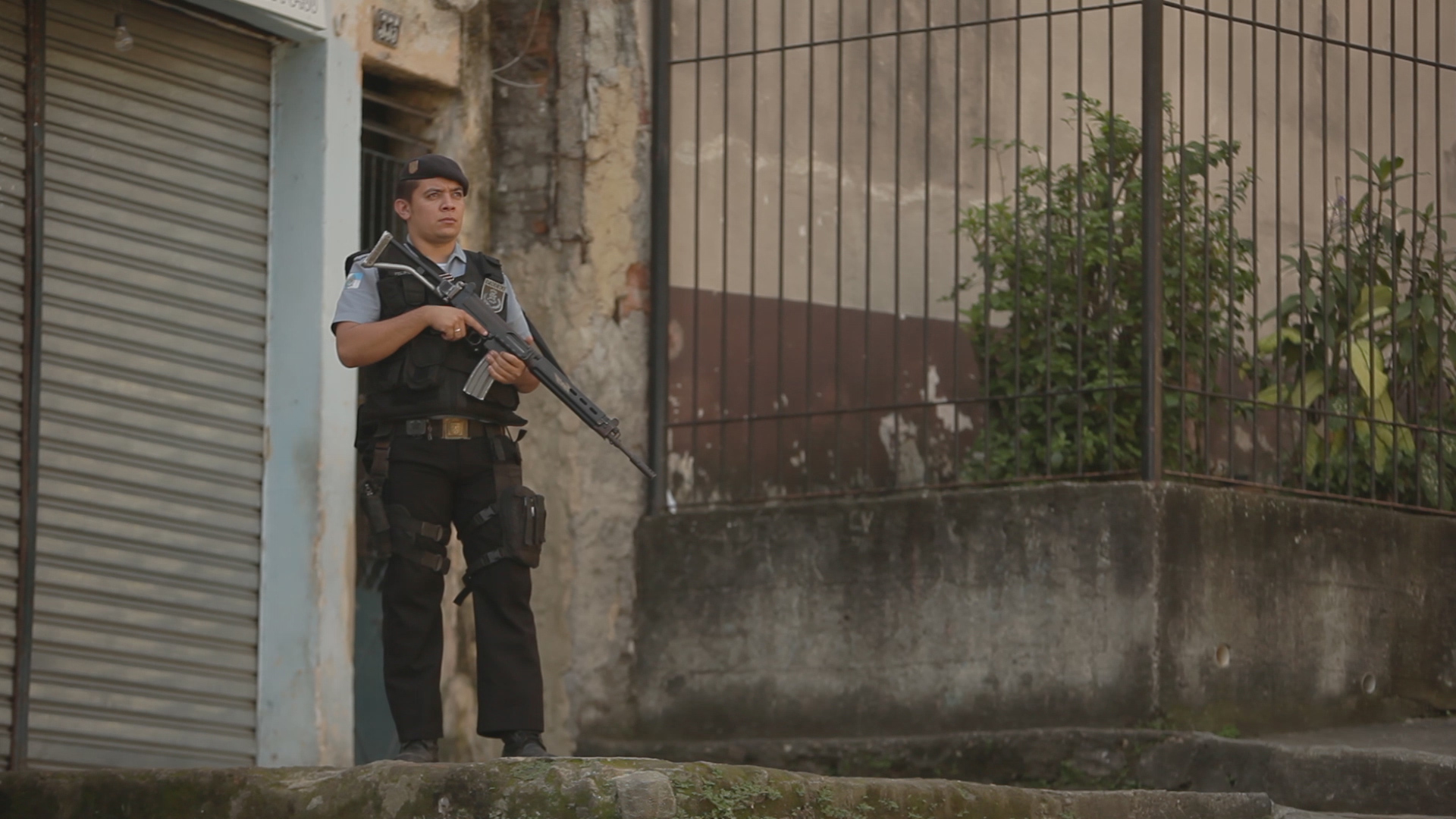
É bom se lembrar que a polícia militar do Rio de Janeiro e suas unidades de pacificação são longe de ser uma entidade monolítica. O Secretário Estadual de Segurança Pública, José Mariano Beltrame, já se mostrou aberto a conversar sobre questões de direitos humanos. Mas os soldados abaixo dele vêm de uma longa tradição de treinamento e comportamento na rua de durões. Era fácil imaginar, olhando seus rostos graves e sua facilidade com os rifles, que os movimentos altamente sexuais do funk poderiam mexer um pouquinho demais com os corações e mentes de alguns homens cujo trabalho é preservar a ordem.

Até quase meia noite do sábado, o baile rolava, uma pequena vitória para os moradores.

Até uma hora da manhã, nós gringos bem comportados, a estudante da UFRJ e seu namorado, e Cíntia  Luna estávamos todos já na cama com os ouvidos zumbindo, deixando os tiras para revistar cada carro que subia o Morro do Fogueteiro. Provavelmente, não vimos nem metade da diversão que se diz ser um “verdadeiro” baile funk. Também não vimos a polícia dando tiros num espaço cheio de gente às 1:30 da manhã, como a Luna disse mais tarde ter sabido acontecer. Aparentemente, ninguém se feriu.

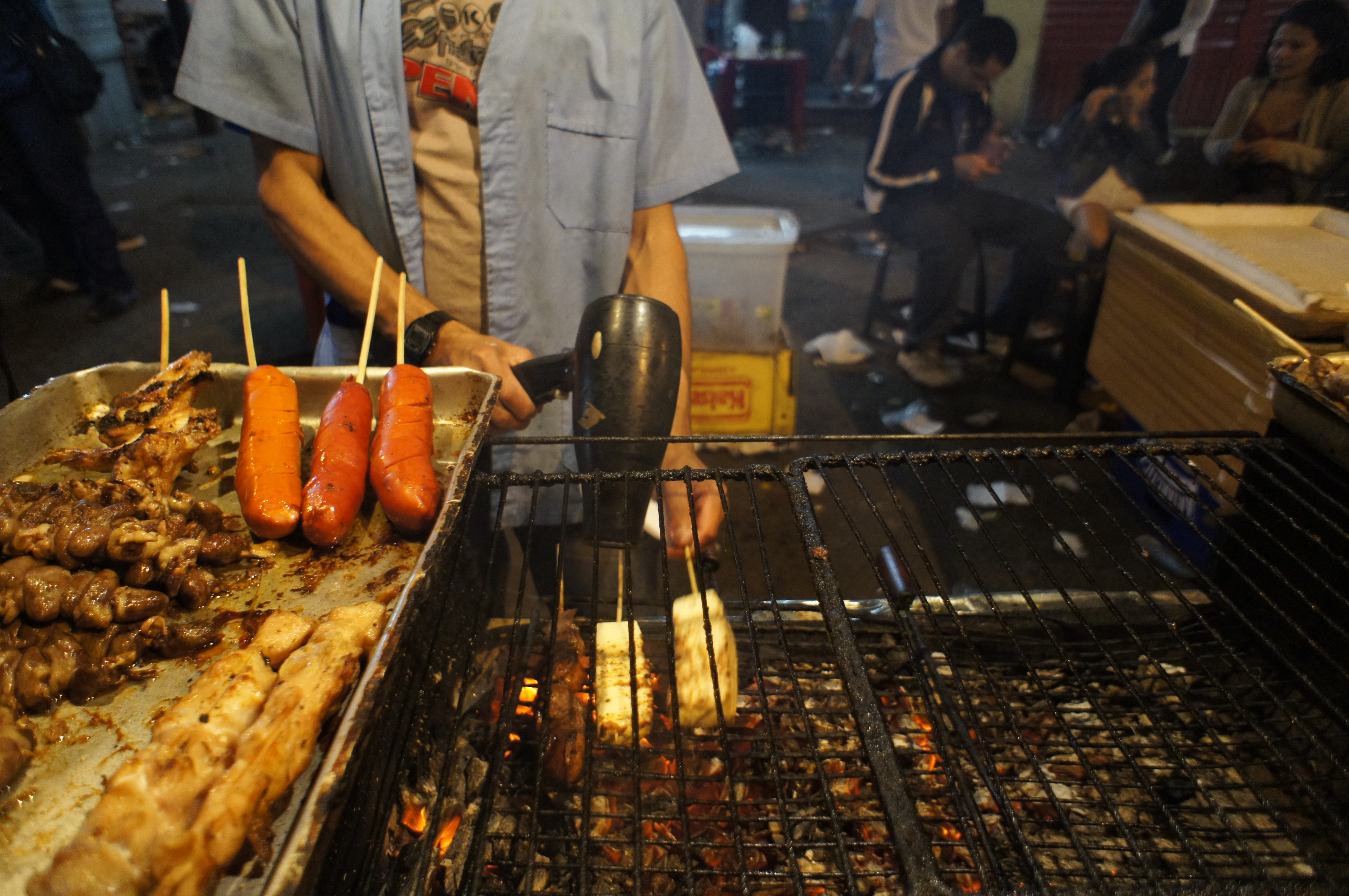
Parada técnica pós baile funk na Tijuca: queijo coalho a la secador de cabelo

Posted in Brasil, Brazil, Transformation of Rio de Janeiro / Transformação do Rio de Janeiro | Tagged , , , , | 8 Comments

Funk baile (dance) begins to make a return to Rio favelas

Pacification banned all funk dances initially, because they were the province (and the culture) of drug traffickers

UPP Police search a car and its occupants

Last night was a night with drama so gripping one could barely pull away and pay a real to get down the hill to placid Tijuca by way of  a crumbling VW bus with a barefoot man at the wheel, driven in reverse half the way because a patrol car was blocking the usual turnaround.

Would the pacification police allow Fogueteiro, a favela pacified in February 2011, to hold a funk dance late into the night? Would there be a discussion, a fight, arrests, shooting?

Or would there be tranquil acceptance of the screaming electronic jackhammer music that makes so many butts bob and shimmy?

Adult attraction winds up the family funk dance

Strangely, this drama had drawn no Brazilian media.

And strangely, this is the hook, symbolic and possibly even real, on which pacification hangs. For it’s all about who’s in charge, in territories so recently beyond government purview.

It’s a hook with history: back in the early twentieth century, samba was the banned music. If you so much as walked the streets with a tambourine, you could get arrested and your instrument confiscated. Samba was considered too sexy, too African, a bad influence.

It’s this theory of relativity that certain gringas keep reminding themselves of, in the clear-eyed knowledge that chairs aren’t involved, as little girls bob and shimmy their butts onstage to a song that tells them, Senta, senta, senta! (Sit, sit, sit).

Xuxa’s kiddie shows of yore look tame

The baile was a reward for the girls’ soccer team’s victory in an intra-favela championship. The state health secretariat paid a bigtime funk dance production company, Furacão 2000, to come in and run the show. As one of the emcees urged on on those little girls, he parenthetically told the crowd how to avoid dengue fever (never allow water to collect). One couldn’t avoid the thought, looking around at dozens of derrière-endowed women clutching babies, that family planning information might have been more on topic.

Once the teen funk contest was over and the soccer players had been feted, neighborhood association president Cintia Luna took center stage to ask residents to sign a petition demanding that a state regulation effectively banning favela funk dances be rescinded. Created unilaterally by the state Public Safety Secretariat in January 2007, the regulation seems to have laid the groundwork for what might be called the cultural aspect of police pacification, which began in November 2008.

The warmup

As a result, funk lives a bizarre double life. Fully accepted in venues on the “asphalt” (formal city), the music that has become Rio’s most popular sound is mostly prohibited in pacified favelas. The situation has led droves of young people to abandon their own relatively safe territories for those that pacification hasn’t yet reached, where the proibidão (the version with prohibited lyrics), glorifying violence, sex and drug trafficking still reigns.

The quadra (community samba court), built by local merchants three years ago, sits on a slight dip way at the top of Fogueteiro Hill, part of a series of favelas covering hilltops between Santa Teresa and Rio Comprido, not far from downtown Rio. Inside, moms and babes and teens cheered and shimmied. Outside, by a couple of snack and drink booths, mototaxis let off passengers, swooped around and zoomed back up the incline.  A few yards down the street, just beyond the spot where the swooping around was happening, at the rear of the quadra, sits the municipal Zélia Gattai Amado Child Development Center. Raw-brick houses and alleys stretch away and down, with more in another favela twinkling off in the distance. “Go look at the view,” American journalist Taylor Barnes had suggested. “It’s gorgeous”.

Boys dance the passinho

Barnes wasn’t the only one who appreciated the view. Built nine years ago, the Center had never functioned because drug traffickers used the spot as a lookout. Reinaugurated this past April, the area seems to retain some of its karma; just off the road, among the doorways and alleys, dozens of young men puffed on marijuana cigarettes, producing a smoke cloud so thick that Julia Tierney, an American doctoral student in urban planning from UC Berkeley, suggested moving away since she was getting a headache from it.

Brazilians are famous for their friendly disposition, but centuries of weak institutions and broken promises have built up a huge store of mistrust behind the smiles and kisses. Back up the street from the smoke-o-drome, neighborhood association president Luna– more a fan of Marisa Monte than of funk– hung around outside the quadra entrance, stressing over the grim police. “They’re just looking for an excuse to shut it down,” she said, before moving up the street to a small area where cars were pulling up by a couple of snack bars.

Times have been tough. Only last month a Fogueteiro resident was killed by police, possibly for no good reason, possibly because he was involved in drug trafficking.  On the other hand, last September another confrontation left a police officer tetraplegic. And this community is also part of a city region where police have been indicted for “selling back” the drug market to local traffickers.

Outside looking in

At about nine p.m. a couple of pacification police ran down the incline in the direction of the quadra, rifles in hand. Barnes and American videographer Jimmy Chalk ran after them. The cops didn’t go as far as the smoky lookout; they quickly returned to the high ground. It looked like the gringoes had asked them to playact a bit for the mini-documentary they were shooting, on pacification. But no, the action was real, Chalk and Barnes said on their return a couple of minutes later.

Then a fancy white car pulled up, and the police busied themselves with the examination of documents, seat cushions and trunk. “There are a lot more police here than usual,” commented Luna.

After an impromptu visit last Wednesday from UPP chief Colonel Rogério Seabra, Luna had taken it on herself to write him an email, asking for permission to extend the state-sponsored kiddie funk dance to a later hour, for adults.

Drama onstage and off

“He didn’t answer,” she told RioRealblog. “So I assumed that meant to go ahead, carefully. Otherwise he would have come out and said no.” She paused. “But I imagine he sent in all these extra soldiers and told them to clamp down any way possible.” On camera, Luna told Barnes and Chalk  that the way things are going, she believes a military dictatorship is in the offing. Since the end of Brazil’s last dictatorship, in 1985,  its democracy has slowly developed to the point where it became possible– and  necessary– to begin including the poor in the formal economy and start integrating favelas into the formal city.

But the challenges this implies are enormous. Pacification means that a favela’s supreme authority is no longer a drug trafficker. Should pacification police should take his place? In the absence of vibrant community participation and without vigilance by media and civil society (aside from us gringoes, Luna stood watching the night’s events unfold with one other local woman, plus an intrepid UFRJ Social Services student and her protective boyfriend), the authority vacuum is huge and limits aren’t clear.

Car inspection completed, the cops climbed into their car, turned on the siren and zoomed out of the crowded street, rifle nozzles sticking out the windows. Ten minutes later they were back. Another carful of people turned up and the cops took out flashlights to peer into the hood.

It would be a good idea to try and talk to the soldiers, but who knew how they would react?

Looking down the incline towards the entrance to the quadra

Despite her aching head, Julia Tierney, who just finished a Master’s in city planning at MIT, commented that her thesis research found that many police say they need to overemphasize their authority so as not to allow things to slip back to the gradual encroachment of criminal gangs into urban territory that started in the 1980s.

Just down the cross street of the main way up the hill, another group of police had some guys with their hands up against a wall in the dark. When we finally dragged ourselves away and walked a few steps down that main street to the VW bus pickup point, we could see yet another automobile search going on.

One should remember that Rio’s military police and its pacification units within that institution are by no means a monolithic entity. State Public Safety Secretary José Mariano Beltrame has shown himself to be open to discussing human rights issues. But the soldiers below him have a long tradition of tough-guy training and street behavior. It was easy to imagine, looking at their stony faces and easy ways with those  rifles, that the wildly sexy moves of funk dancing might just mess a bit too much with the hearts and minds of some men whose job it is to keep order.

As of almost midnight yesterday, the dance was still on, a small victory for residents.

By 1 a.m, we well-behaved gringoes, the UFRJ student and her boyfriend, and Cíntia  Luna were all in bed with ringing ears, leaving the cops to search every car that came up Fogueteiro Hill. Most likely, we didn’t see half the fun that a “real” baile funk is said to provide. We also didn’t see the police firing shots in a crowded space at  1:30 a.m., as Luna later reported she heard was the case. Apparently no one was hurt.

Post baile funk pitstop in Tijuca: queijo coalho a la hairdryer

Posted in Brazil, Transformation of Rio de Janeiro / Transformação do Rio de Janeiro | Tagged , , , , , | 11 Comments