We’ll only know for sure in two years

Is Rio ready for the Olympics?
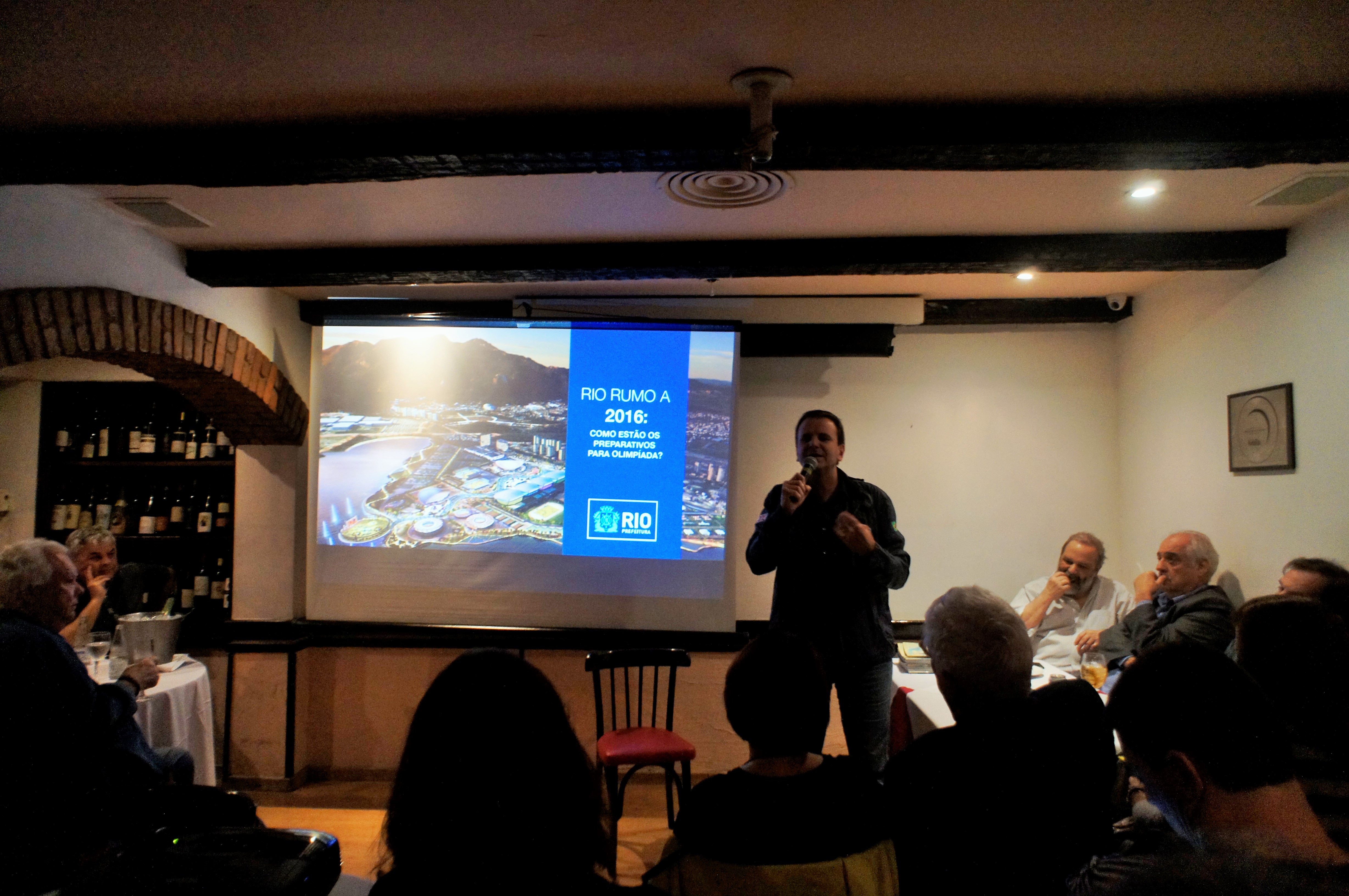
Eduardo Paes defends Olympic legacy

Eduardo Paes defends Olympic legacy

This past week saw much backing and forthing about the city’s Olympic preparedness, just six weeks away from the first World Cup game, to be played in São Paulo (Rio’s first game, Argentina vs Bosnia and Herzegovina in the remodelled Maracanã stadium, is set for June 15).

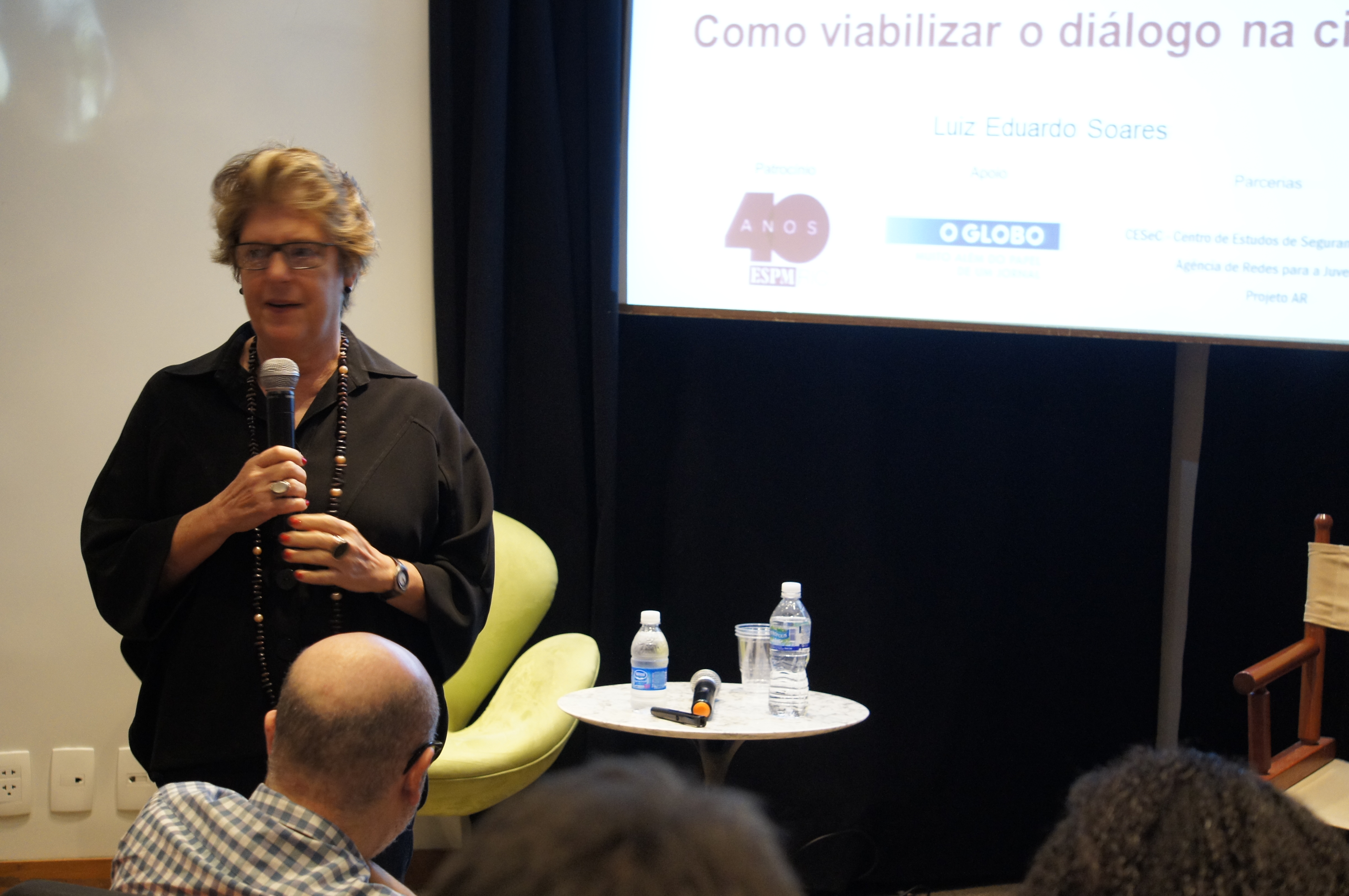
Last Monday, the night before International Olympic Committee member John Coates laid into the Marvelous City (he later softened), mayor Eduardo Paes was already on the defensive. Speaking at the OsteRio debate series, he went into great detail regarding the city’s preparations and the post-event legacy, presenting a 20-minute flyover film of the new Transcarioca rapid transit bus lanes connecting the Olympic Park to Rio’s international airport. The Transcarioca will be inaugurated later this year.

It’s safe to say that difficulties in meeting deadlines stem from Brazil’s red tape and poor coordination among different governmental spheres. Most likely, corruption has also played a role, since delays translate to higher costs and hasty oversight, benefitting contractors and those they pay off. So far, no scandals have arisen on the Olympic tab, but the Delta construction company, accused of corruption elsewhere (tainting former Rio governor Sérgio Cabral), was forced to abandon its Maracanã renovation work in 2012, leaving Andrade Gutierrez and Odebrecht constructors to complete the work in time for the June 2013 Confederations Cup.

Paes blamed the federal government for funding delays on the Deodoro Olympic facilities, but promised they’ll be ready “way ahead of time”. Without naming companies or concessions involved, he emphasized the role of the private sector, claiming that the lion’s share of Olympic spending is not coming from taxpayer pockets.

As he illustrated, Rio de Janeiro’s priority for this mega-event is, in addition to timeliness, the Olympic legacy. That legacy centers on public transportation and mobility in general. While cariocas complain bitterly about the traffic snarls that the mayor has caused with construction and by taking down the overpass that snaked between the city center and the bay, they may eventually find that it’s much easier to get around, carless, in than it was in 2008, when Paes was first elected.

The city will gain four new dedicated bus rapid transit systems, extension of an existing subway line to Barra da Tijuca, a downtown trolley network, two favela cable car lines, a rapid drainage system for the chronically flooded, centrally located Praça da Bandeira area, improved suburban trains and harbor ferries, and a more efficient bus system.

“I told President Dilma we needed to do something about the flooding in Praça da Bandeira if we are to host World Cup games” he confided, as a politician will, to a standing-room-only crowd. “I didn’t mention that the worst rains are in the summer, not the winter, when the games will be played.”

As the flyover video dragged on, Paes mentioned how little he knew of the West Zone Jacarepaguá area, early in his career as a public servant, since he grew up and went to private school in the South Zone. Then he proceeded to reel off the dozens of remote neighborhoods through which the Transcarioca will pass, speculating that few of those present (mostly South Zone residents) would know that geography.

A longtime fear of violence and the Tijuca Massif that separates Rio’s North and South Zones have indeed kept many cariocas in the dark about the names and the character of many city neighborhoods. Improved mobility, the mayor seemed to be suggesting, will change this state of affairs.

The mobility investments, if carried out successfully, may become significant. Yet they were part of an ambitious, much larger legacy envisioned a few years ago. This O Globo newspaper article discusses unkept Olympic promises. Still, it leaves out two unfulfilled legacy vows: the cleanup of the polluted Guanabara Bay and the Morar Carioca program upgrade of all Rio’s favelas (from 800 to a thousand, depending on definitions) by 2020.

Asked about these at the OsteRio debate, Paes responded that sanitation is the responsibility of the state government. Even so, he added, the city has taken on West Zone sanitation (with state approval), awarding work to a private concession, which is now creating that infrastructure. OsteRio participants urged him to do likewise for the bay, chock full of trash as well as untreated sewage. In Rio de Janeiro, only 30% of all sewage is properly collected and treated.

The mayor claimed that the almost-defunct Morar Carioca program was never part of the Olympic legacy, though an official city site still says otherwise.

Clearly the initial vision of the Olympic legacy was overly ambitious and priorities had to be determined, as time went on. The choice of transportation over housing has never been debated or publicly explained, however. Some observers conclude that the choice was made to benefit construction companies and real estate developers.

One can only hope now, as the Olympic window of opportunity begins to close, that attention will be given to the places that people come home to, once they’ve moved around the city. After all, one in five Rio residents, over a million people, live in informally constructed housing.
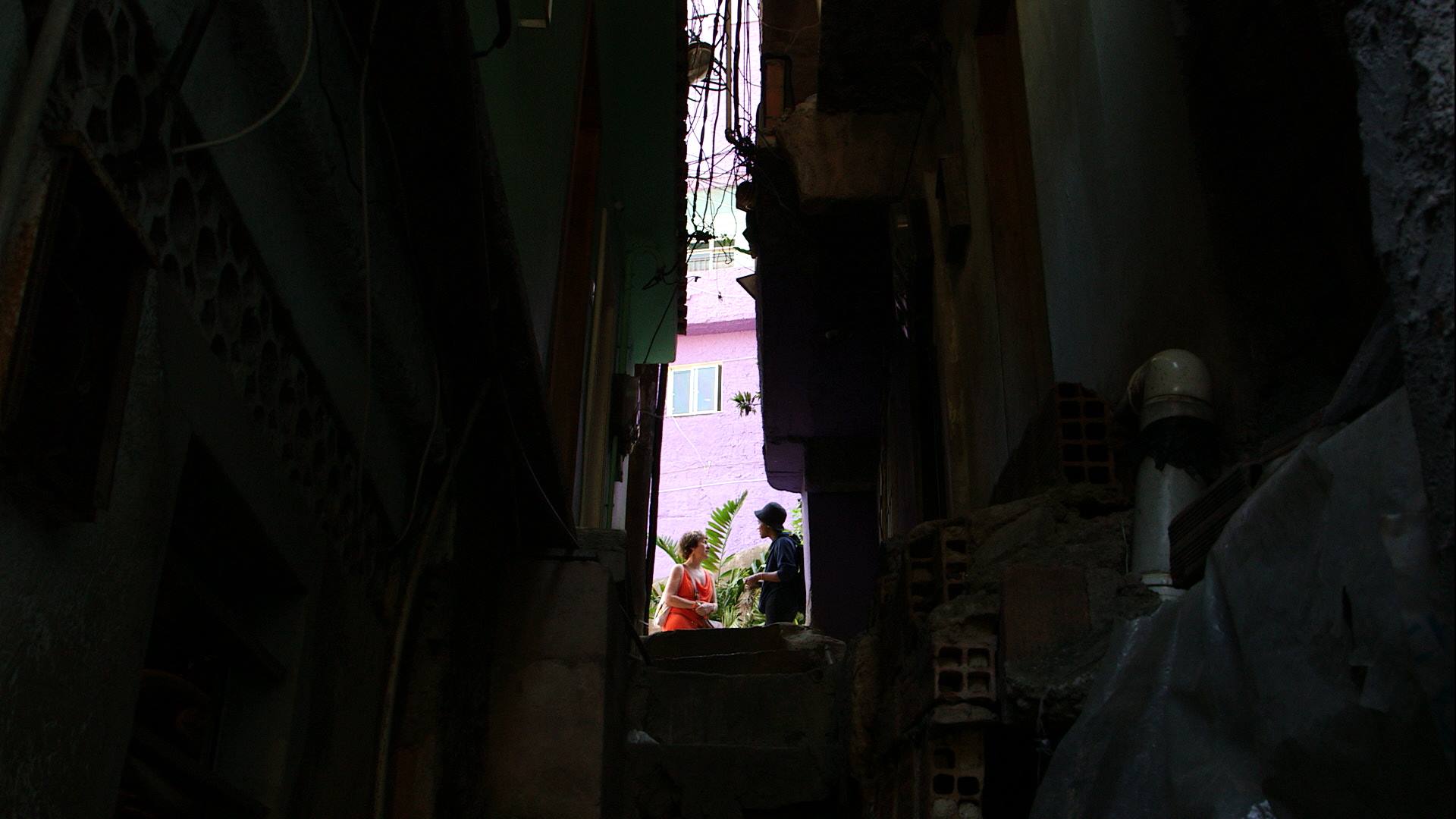
Talking with resident and former health worker Ana Costa Mendes, on Rua 4 in Rocinha, photo by Jimmy Chalk

Talking with resident and former health worker Ana Costa Mendes, on Rua 4 in Rocinha, photo by Jimmy Chalk

Learn more about the informal part of the city soon, when RioRealblogTV airs a second video on our YouTube channel, about favela alleyways. Your blogger spent an afternoon in the becos of Rocinha favela this past week, watching residents squeezing through incredibly narrow spaces. The experience served to bring home just how little those of us who live in the formal city know about life in favelas.

. . . . .

Here is a provocative first and here is the second of two articles by the The Guardian newspaper’s Simon Jenkins, on the challenges for Rio as the Olympics approach. No one asked the mayor what he thought of them…

Posted in Brazil, Transformation of Rio de Janeiro / Transformação do Rio de Janeiro | Tagged , , , , , , , , , | 4 Comments

Violência em Copacabana: para onde vai nos levar?

Pavão-Pavãozinho in more peaceful times, with investment in new construction after pacification

Pavão-Pavãozinho em tempos de paz maior, com investimento em construção nova, pós pacificação

For Violence in Copacabana: where will take it us?, click here.

Cada novo evento trágico no Rio demonstra as fraquezas da democracia brasileira:

  • um sistema judiciário que deixa, frequentemente, de servir a todos os cidadãos de maneira justa e de valorizar o bem maior
  • enorme desconfiança da mídia, da polícia, o sistema judiciário, os políticos e outras instituições
  • péssimos níveis de instrução
  • políticas públicas que são vistas como propriedade não do estado, mas de uma determinada administração governamental
  • vácuos de poder (no Rio, criados pelo rebaixamento de traficantes de droga cujos territórios são pacificados), prontamente ocupados pela polícia, sem treinamento nem reflexão pública suficiente.

Uma juiza deixou que o traficante de drogas da favela Pavão-Pavãozinho, Adauto do Nascimento Gonçalves, o Pitbull, fizesse uma visita à família, da qual ele nunca voltou. Pertubou-se, assim, a tênue paz na favela pacificada, parte da qual, de nome apropriado “Vietnã”, há alguns meses saiu do controle policial. Essa mudança aconteceu no contexto de eventos parecidos pela cidade toda: ataques a policiais e mais violência sendo experimentada por moradores em outras favelas.

Ao mesmo tempo, o enfraquecido governador Sérgio Cabral acaba de deixar o cargo para que o seu vice, Luiz Fernando de Souza, o Pezão, pudesse fazer nome entre os eleitores que irão votar para um novo governador neste outubro.  A política de segurança pública do Rio de Janeiro depende do resultado da eleição.

Nos últimos meses, moradores de favela têm se manifestado com frequência, muitas vezes, em resposta à violência policial. O jornal O Globo relata que traficantes de drogas estariam, em alguns casos, por trás das manifestações. Outros fatores, como os exemplos das manifestações de rua de junho-julho-agosto de 2013, a greve dos professores, e a dos garis, também podem contribuir a uma nova disposição para “descer o morro”, bloquear ruas, e incendiar lixo, ônibus e outros itens.

Desde o ano passado, critica-se sempre mais o comportamento policial, sobretudo após a morte do pedreiro Amarildo, que teria morrido durante uma sessão de tortura policial. O sociólogo Ignacio Cano, que em 2012 elaborou uma avaliação do programa de pacificação policial, acredita que foram instituídas poucas das recomendações dele, inclusive a instituição de protocolos para o comportamento policial.

Então, ontem de manhã em Copacabana, surgiu a tragédia mais recente, parte do que promete ser, por um bom tempo, uma sequencia de notícias de horror. Descobriu-se o corpo de Douglas Rafael da Silva Pereira, o DG, numa crêche do morro de Pavão-Pavãozinho. Houve depois pelo menos mais uma morte; de noite, ouviu-se tiros e estrondos; a base da UPP sofreu um ataque e faltou luz em grande parte da favela. Douglas morreu, de acordo com um relatório preliminar do IML, de um objeto transfixante ao pulmão. De acordo com um perito, o objeto foi uma bala.

Hoje, a luz voltou e acabou-se o barulho.

De acordo com a Globo TV, houve tiroteios intensos na segunda-feira de noite, enquanto a polícia tentava cercar o “Pitbull”. Já corre uma investigação dessa ação policial. Pode ser que Douglas, que, por coincidência, como outro jovem que morreu de maneira violento há dois anos, dançava no programa dominical pioneiro de Regina Casé, Esquenta!, levou um tiro no meio da batalha.

De acordo com a mãe dele, Douglas foi torturado pela polícia e existe uma testemunha do fato. Apesar de não morar na favela (porém perto), ele protagonizou uma curta metragem que parece ter prenunciado a morte.

Neste cenário complexo, a Copa do Mundo e os Jogos Olímpicos aumentam a pressão em todos.

E a pacificação, no centro da virada do Rio de Janeiro e do debate sobre o aumento da violência aqui? E o assunto que irá, provavelmente, decidir a eleição?

As fraquezas delineadas acima são apenas parte de uma complexa estrutura social e de poder, que precisa passar por mudanças radicais, das quais depende a sobrevivência da democracia brasileira. Seria impossível desemaranhar essa estrutura numa única levada revolucionária. Para o Rio, a pacificação, com seus muitos defeitos, foi um primeiro passo na direção certa, assistido pelo aumento real da renda, o crescimento econômico e maior acesso à faculdade, entre outras melhorias.

Mas a política de segurança pública, iniciada em 2008, chacoalhou todos os jogadores da estrutura social do Rio, e iluminou as verrugas deles. Agora que todos nós (e centenas de jornalistas estrangeiros que estão cobrindo os mega eventos) conseguem vê-los com mais clareza, o que faremos com eles? Com qual rapidez ou lerdeza podemos continuar a desemaranhar — e redesenhar — a antiquada estrutura socioeconômica do Brasil?

Aguardemos o ano de 2015.

Entenda por que sua blogger fica no Brasil

Posted in Brasil, Transformation of Rio de Janeiro / Transformação do Rio de Janeiro | Tagged , , , , | 3 Comments

Violence in Copacabana: where will it take us?

Pavão-Pavãozinho in more peaceful times, with investment in new construction after pacification

Pavão-Pavãozinho in more peaceful times, with investment in new construction after pacification

Each new tragic event in Rio points up the weaknesses of Brazil’s democracy:

  • a justice system that often fails to serve all citizens fairly and value the greater good
  • great mistrust of the media, the police, the justice system, politicians and other institutions
  • poor education levels
  • public policies that are viewed as belonging not to the state but to a particular government administration
  • power vacuums (in Rio, created by the demotion of drug traffickers whose territories are pacified), readily occupied by police, without sufficient training or policy considerations.

A judge allowed a Pavão-Pavãozinho favela drug trafficker, Adauto “Pitbull”do Nascimento Gonçalves, to go home for a family visit and he never returned. This disturbed the tenuous peace in the pacified favela, part of which, aptly named “Vietnam”, slipped out of police control several months ago. The shift took place in the context of similar circumstances, with attacks on police and growing violence experienced by residents in other favelas.

At the same time, lame-duck governor Sérgio Cabral stepped down to help his vice-governor, Luiz Fernando “Pezão” de Souza, make a name for himself in order to get elected this coming October. Rio’s public safety policy hinges on the outcome of the election.

Favela residents have been demonstrating frequently in recent months, often in response to police violence. O Globo newspaper has reported that drug traffickers urge them on. Other factors, such as the examples of the June-July-August 2013 street demonstrations, the teachers’ strike and the trash collectors’ strike, may also contribute to a new willingness to “come down the hill”, block traffic and set trash, buses and other items on fire.

Police performance has increasingly been criticized since last year, particularly after the death of laborer Amarildo, said to have died during a police torture session. Sociologist Ignacio Cano, who performed an evaluation of the police pacification program in 2012, believes that very few of his recommendations, including the institution of police protocols, were ever implemented.

And so, the latest tragedy, in what will surely continue to be a string of horrific news for quite some time, arose yesterday morning in Copacabana, when the body of 26-year-old Douglas “DG” Rafael da Silva Pereira was found on the premises of a day care center up the hill, in Pavão-Pavãozinho. At least one other death ensued; at night, shots were fired, blasts were heard, the UPP offices were attacked, the lights went out in much of the favela. Douglas died, according to a medical examiner’s preliminary report, of a piercing object to the lung, most probably, according to one expert, a bullet.

Today, the lights are back on and the noise has abated.

Globo TV reported that intense shooting occurred this past Monday night, as police attempted to close in on “Pitbull”. That police action is under investigation. It could be that Douglas, who coincidentally, like another young man that died violently two years ago, danced on Regina Casé’s pioneering Sunday afternoon Esquenta! program, took a bullet in crossfire.

According to his mother he was tortured by police and there is a witness. Though Douglas didn’t actually live in the favela (but nearby), he starred in a short movie that foreshadowed his premature death.

In this complex scenario, the upcoming World Cup and Olympic Games have ratcheted up the stakes for everyone.

And pacification, at the heart of Rio’s turnaround and the debate over increasing violence here? The issue that will most likely decide the election?

The weaknesses outlined above are only part of a longstanding intricate power and social structure that needs to change radically if Brazil’s democracy is to last. It would be impossible to untangle that structure in one revolutionary go. For Rio, pacification, with its many defects, was a tentative first step in the right direction, helped along by rising real incomes, economic growth and greater access to university education, among other improvements.

But the public safety policy dating to 2008 shook up all the players in Rio’s social structure and shone light on their warts. Now that we (and hundreds of foreign journalists covering the mega-events) can see them more clearly, what will we do about them? How fast or slowly can we keep on untangling –and redrawing — Brazil’s antiquated socio-economic structure?

Stay tuned for 2015.


Entenda por que sua blogger fica no Brasil


Posted in Brazil, Transformation of Rio de Janeiro / Transformação do Rio de Janeiro | Tagged , , , , | 1 Comment

Desde 2008, a fase mais difícil no Rio: estamos trocando de pele?

 Uma rica troca de ideias, enquanto a criminalidade aumenta e o Exército brasileiro chega para ocupar favelas, semanas antes da Copa do Mundo.

For Rio’s toughest moment since 2008: are we shedding our skin? click here

Social scientist Silvia Ramos, a Rio de Encontros coordinator

Silvia Ramos, cientista social, uma das coordenadoras do Rio de Encontros

“Como dialogar com um cínico?” dois jovens perguntaram durante uma reunião do Rio de Encontros na semana passada na Casa do Saber. Outros jovens, também estudantes universitários moradores de favelas, ecoaram a mesma questão.

Luiz Eduardo Soares, antropólogo, ativista e especialista em segurança pública, coordenador de segurança pública do estado do Rio de Janeiro de 1999 a 2000, era o palestrante. O título do encontro, “Como viabilizar o diálogo na cidade?” pressupõe a viabilidade de tal diálogo.

Porém, os jovens presentes duvidavam disso. Cínico é a palavra que usam para descrever as pessoas que gostariam de manter a tradicional estrutura de poder no Rio. Esses jovens são rappers, jornalistas, ativistas de direitos humanos, artistas e líderes comunitários. Muitos deles criticam a pacificação.

Um jovem perguntou a Soares, que durante a ditadura militar foi estudante, se estamos vivendo uma ditadura agora (Ele disse não).

Luiz Eduardo Soares was a visiting researcher at the Vera Institute of Justice and Columbia University in 2000

Luiz Eduardo Soares foi pesquisador visitante no Vera Institute of Justice e na Universidade Columbia em 2000

Retorno aos castigos da escravidão

“Por que as pessoas estão fazendo justiça com as próprias mãos?” um participante perguntou, referindo-se ao caso emblemático de um grupo de justiceiros que, no mês passado, despiu um suposto assaltante e o prendeu a um poste usando um cadeado para bicicletas. Soares acredita que, além de uma reação praticamente automática por parte de cariocas que se sentem negligenciados pelos sistemas de segurança pública e justiça, algo mais pode estar acontecendo. Ele disse que em outro nível, mais simbólico, a classe média tradicional estaria reagindo ao que ela considera como invasão, daqueles emergindo da pobreza.

“Os rolezinhos  redefinem a geopolítica da sociedade,” ele explicou. “O linchamento é uma reação a isso. Os pobres e negros começam a frequentar outros espaços.”

É impossível provar essa teoria, assim como é impossível, Soares apontou também, provar que a violência nas manifestações de rua é uma reação a décadas de violência praticada de cima para baixo na sociedade brasileira. Para muitos observadores de esquerda, essas ideias são intuitivamente corretas. Independente disso, conviver com o fenômeno não é uma proposição nacional razoável. Portanto, temos que fortalecer nossas instituições e nossos valores, ao invés de recorrer à violência ou à justiça ad hoc para defender uma ideia ou resolver um problema.

Um aspecto da vida cotidiana que não carece de provas é uma atitude disseminada em prol do autoritarismo, de cima para baixo. Soares, que propôs uma emenda constitucional para desmilitarizar a polícia brasileira, disse que essa atitude é um dos grandes obstáculos que a pacificação encontra no Rio. A Polícia, ele explicou, precisa ajudar a gerir a segurança pública. Ele disse ainda que “O orgulho profissional é o maior obstáculo à corrupção policial”.

 ???????????????????????????????

Vozes firmes e fortes

Como dialogar? Vale a pena tentar? O Rio está fazendo firula, indo para lugar nenhum? São perguntas importantes para todos nós, mas, principalmente, para aqueles que estão no início da vida adulta. Cariocas desiludidos das classes média e alta podem levar suas habilidades e sonhos para outro lugar. Não é o caso dos jovens do sistema de cotas das universidades públicas, nem dos bolsistas do ProUni nas universidades particulares. São estudantes cujos pais jamais sonharam cursar ensino superior.

Os problemas mais sérios do Brasil advêm da desigualdade social e da aplicação diferenciada de valores democráticos. Ao longo dos séculos, instituições fracas com acesso irregular levaram à criação de um sistema autoritário paralelo de favores e pagamentos escondidos, de justiça e vingança, de leis e fluxos de informação.

“Errar os erros antigos é melancólico,” Soares assinalou. No entanto, logo em seguida, ele destacou que há vinte ou trinta anos, “esse auditório seria impensável”.

Por um lado, ele disse, muitas pessoas culpam um “eles” genérico por tudo o que acontece de errado. “Isso fala de impotência, não há nenhum ‘nós’. Trata-se de um individualismo corrosivo, de vítimas. As pessoas dizem, ‘Que se danem, vou tratar de minha vida’.”

Por outro lado, as manifestações de rua do inverno passado não seguiram o padrão tradicional de encontros preparatórios para definir demandas e atividades, seguidos de uma marcha com manifestantes por trás de uma única faixa. “Cada um escreveu seu cartaz. Estamos tecendo aquele ‘nós’, é um momento de reinvenção coletiva.” Soares disse ainda que coletivos do Rio, como o Norte Comum são vitais para o processo.

Então, em um sentido, a resposta à pergunta dos jovens é simplesmente continuar a fazer arte, a se comunicar e a organizar eventos. Soares afirmou que até os cínicos têm seus momentos de fraqueza: ”Ninguém é uma rocha”. Ainda que, em meio à crescente violência urbana e a desentendimentos, o investimento pessoal envolvido seja questionável.

Resta aguardar para ver, com doses crescentes de paciência, se Soares está certo quando diz que o Brasil está “trocando de pele”.

ggg

Transformação em andamento?

Tradução por Rane Souza


Posted in Uncategorized | Tagged , , , , , , , , , | Leave a comment

Jazz na Laje: an unforgettable encounter

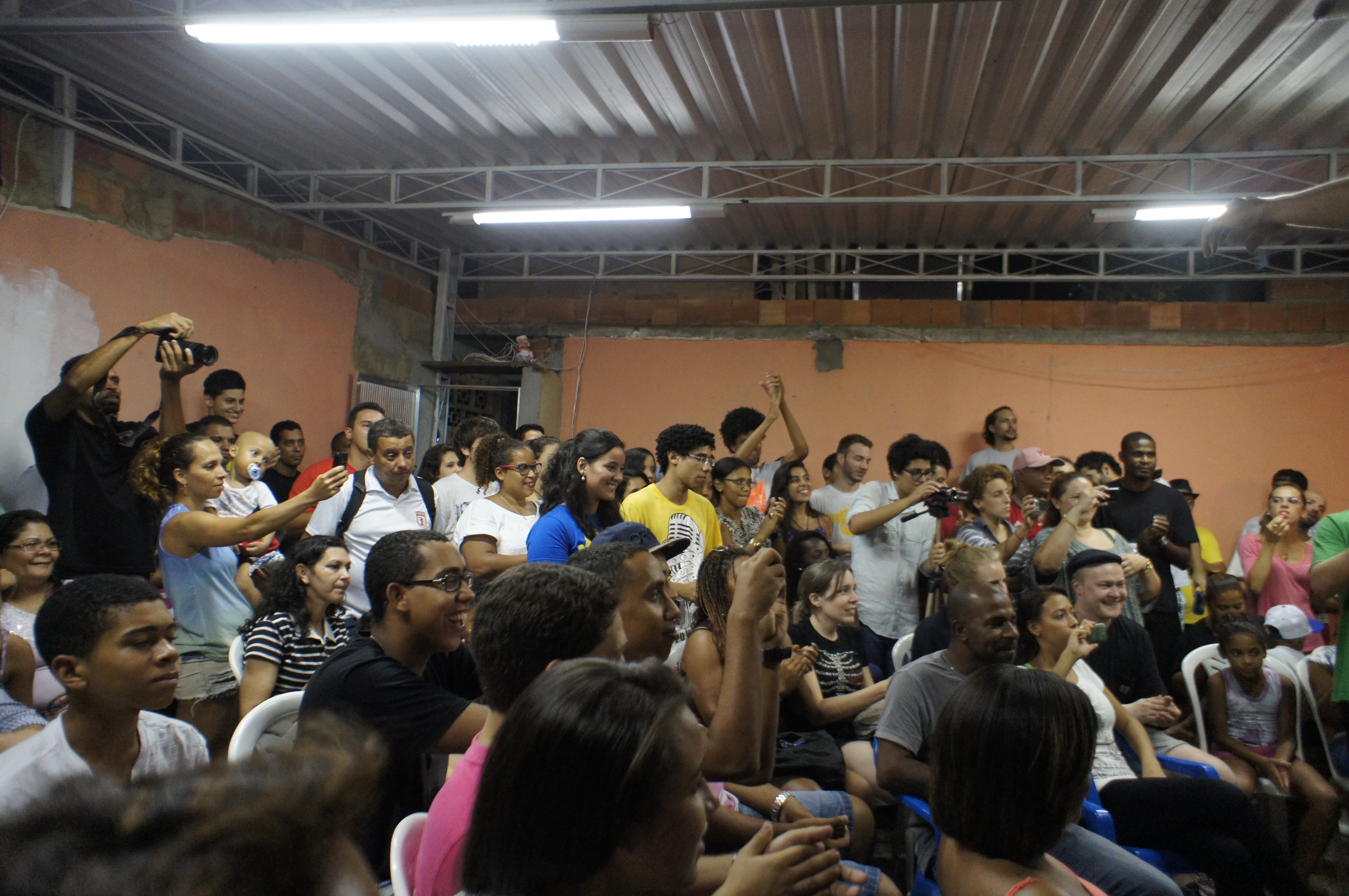
Uma multidão

Jazz fans and musicians on the same wavelength

Para Jazz na laje: encontro inesquecível, clique aqui

Jazz on the Favela Terrace

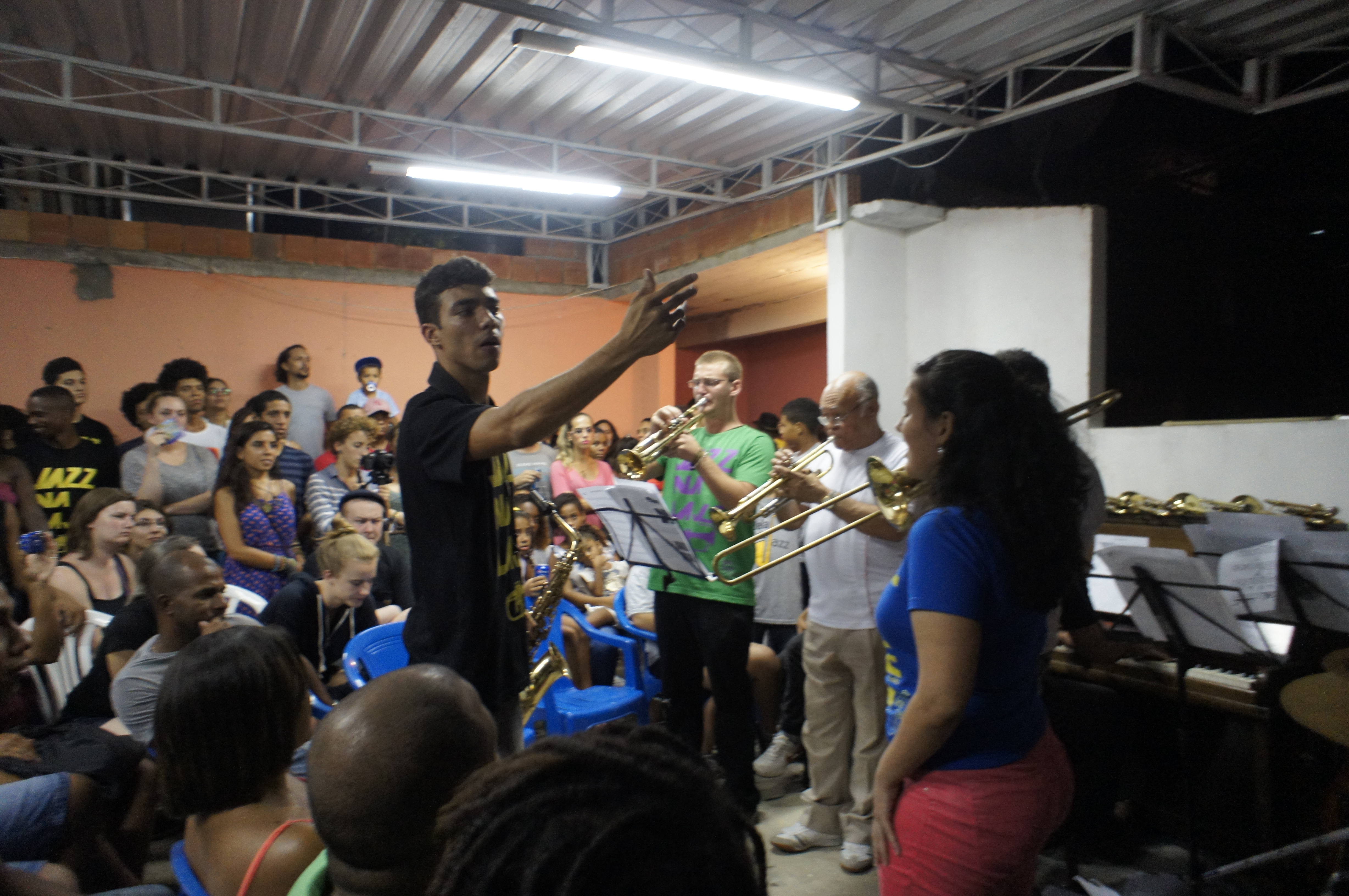
Refreshed by a sea breeze, this was a terrace at the top of a house in Cantagalo favela. But in the midst of musicians young and old, favela residents and visitors, creating a musical conversation amongst themselves and with the audience, there was a marked sense, on March 28, of being in a smoky underground Harlem club, back in the thirties or forties, of a return to the roots of jazz.

SONY DSC

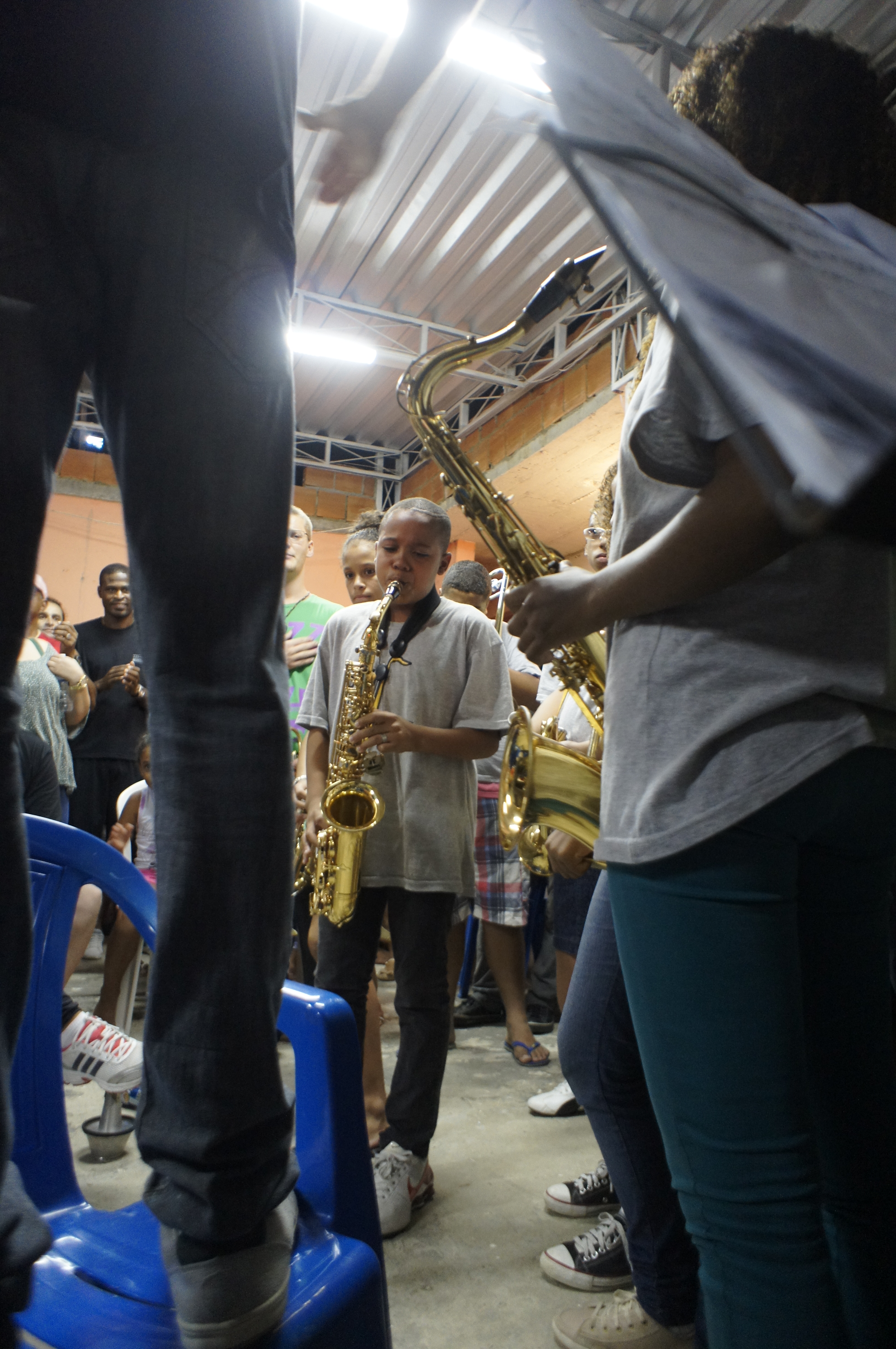
Weeping, this boy played his solo

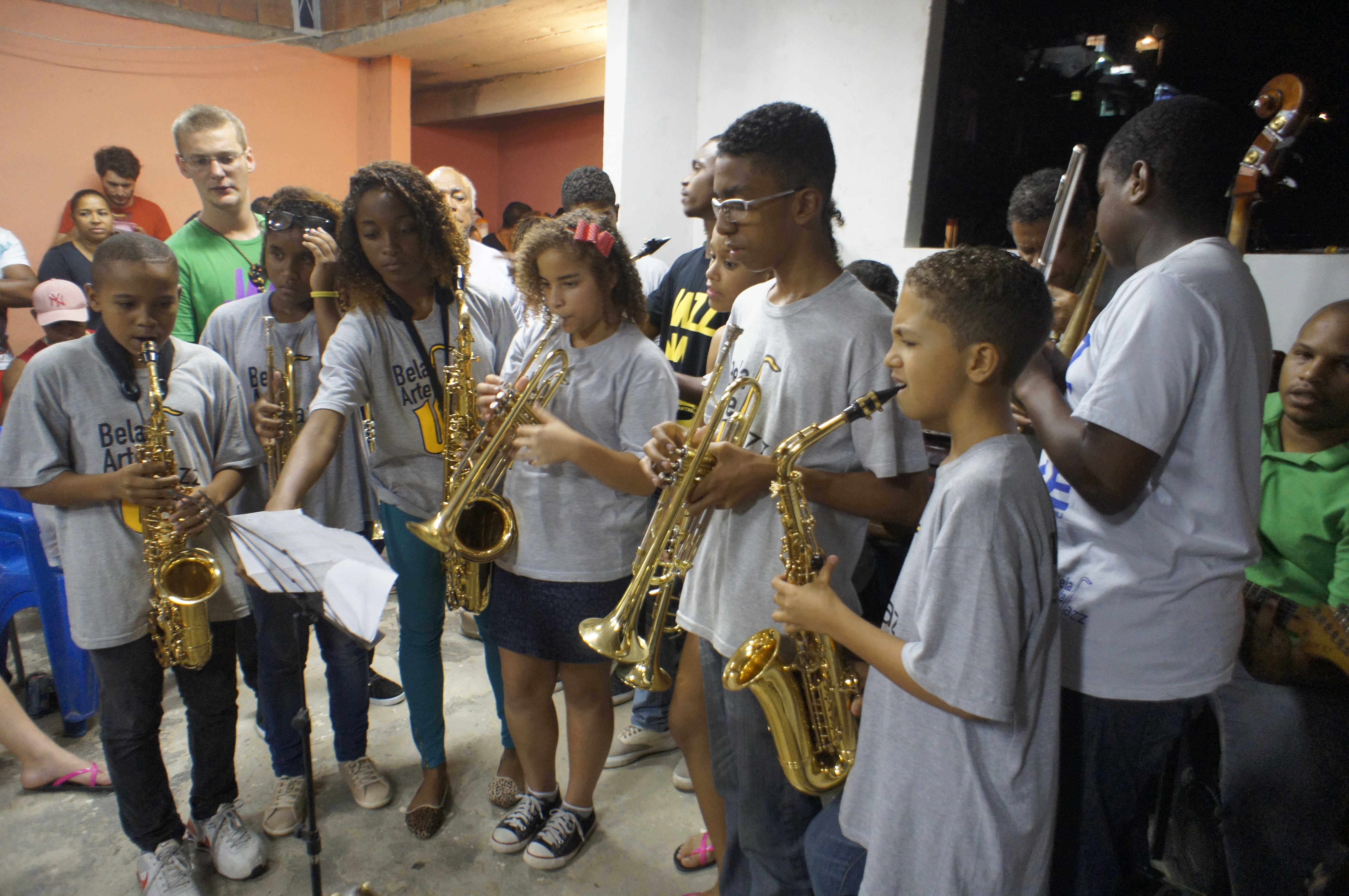
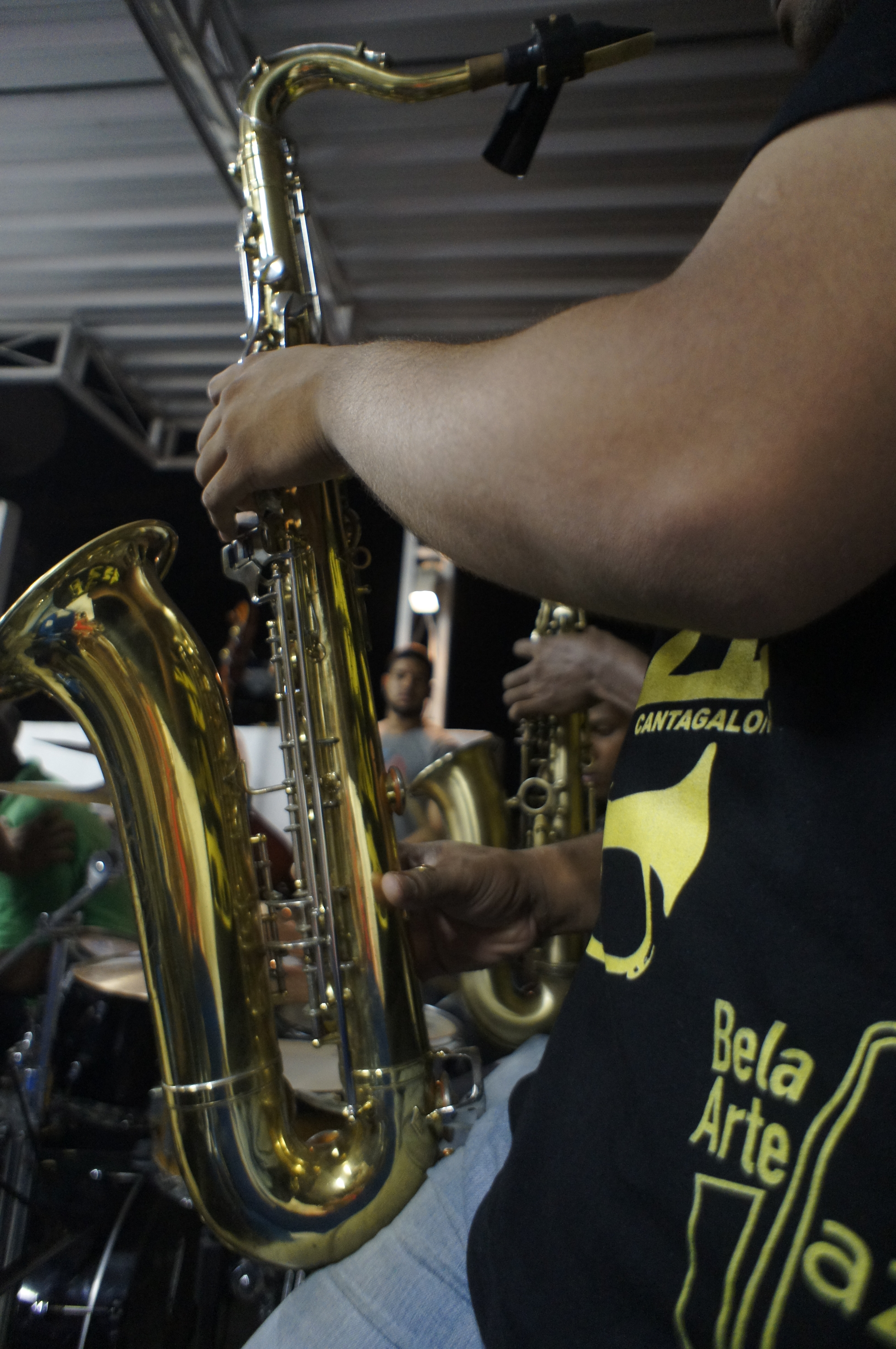
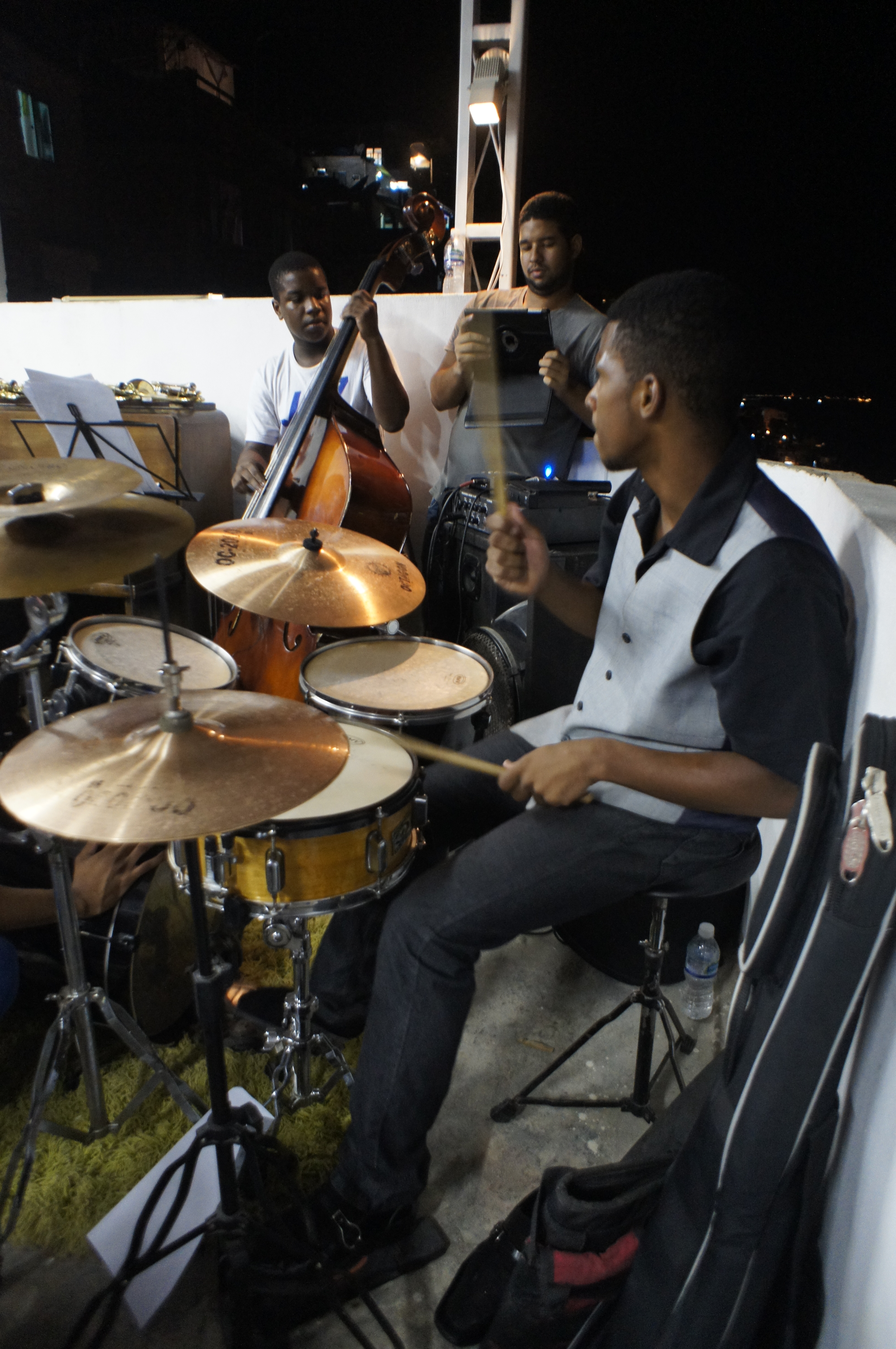
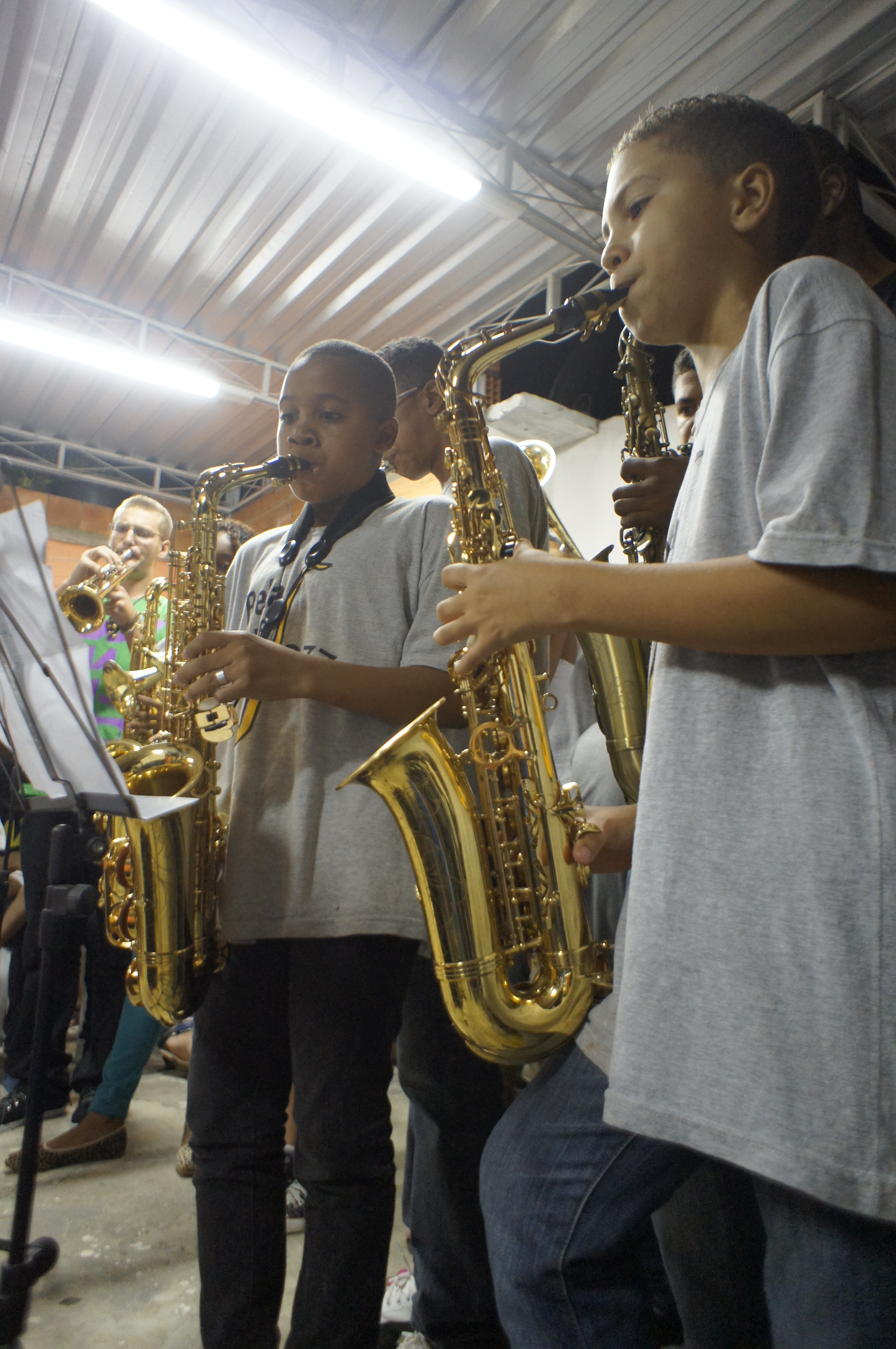
There was practically no rehearsal, confessed Leonardo Januario, 22, founder of the Bela Arte Jazz music school, which produced the event. Maybe this is why what took place was a goosepimple-inducing musical encounter, mostly of brass instruments, backed by bassist David Nascimento, drummer Mattheus Cruz, and pianist Jonathan Moreira. Electric guitarist Rodrigo Medina accompanied the students as well.

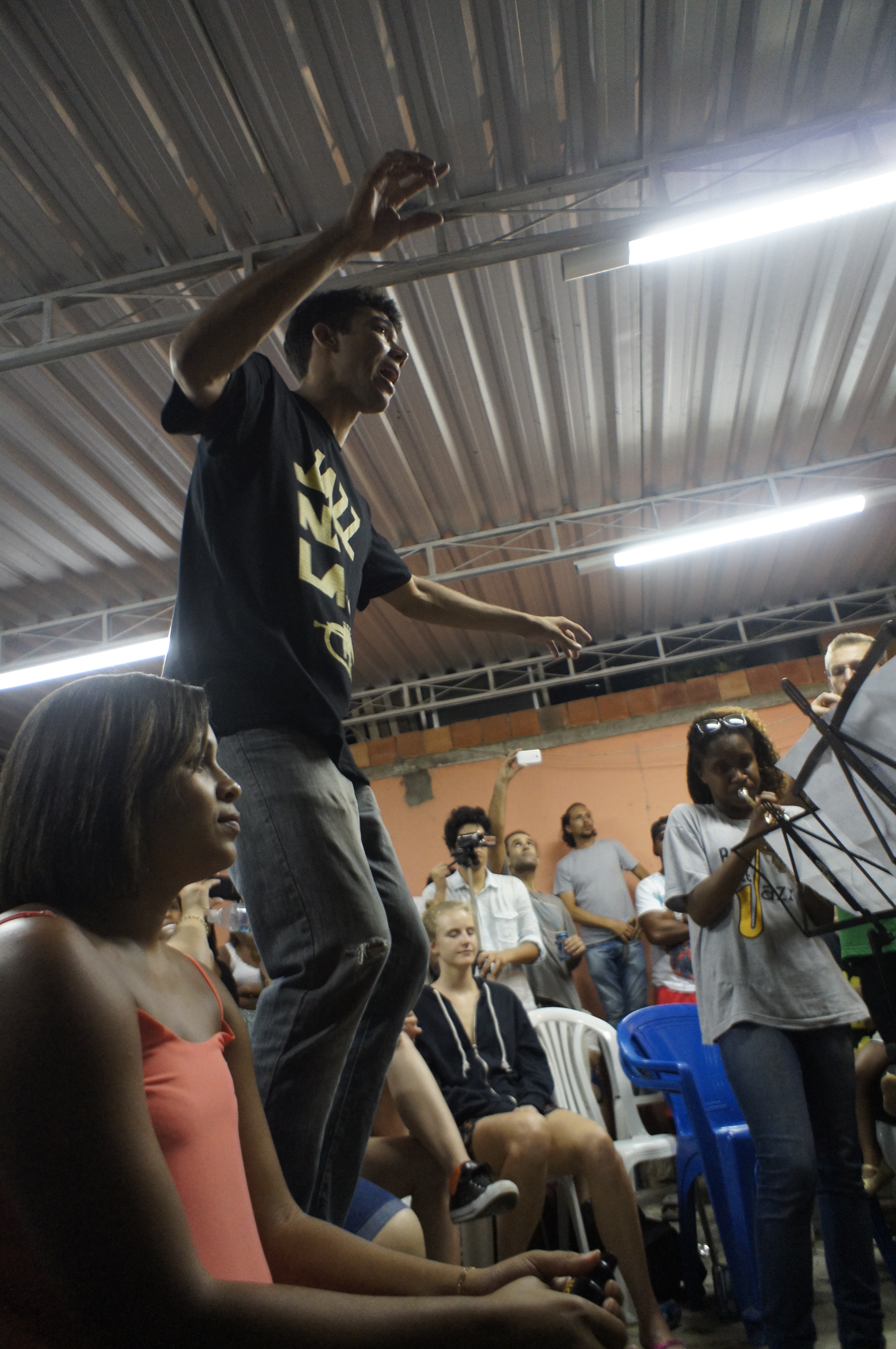
Maestro, aos 22 anos

“Maestro” at 22

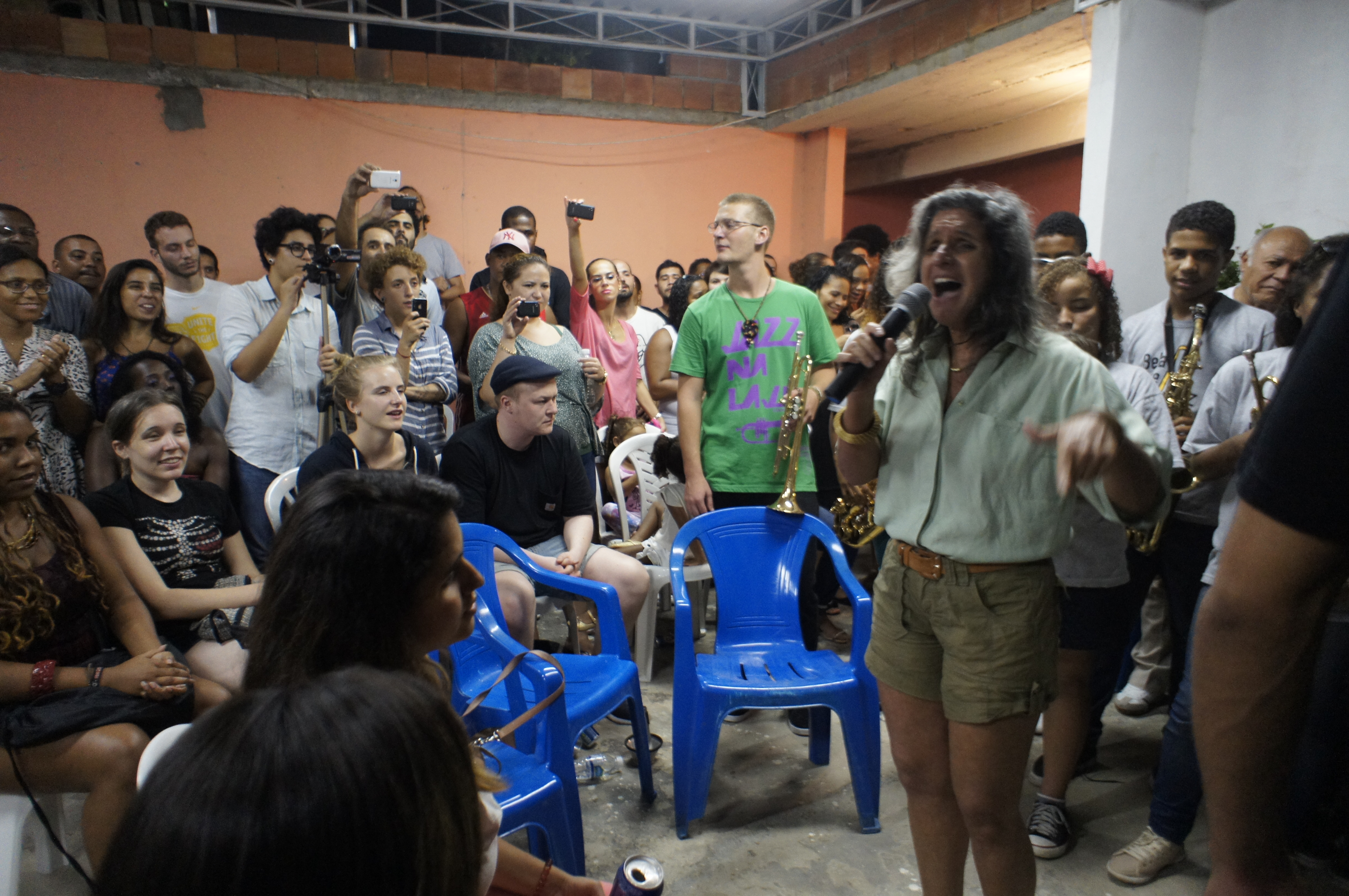
Bent on managing what easily might have been chaos, Leonardo hopped around the terrace, skirting the trombone of guest Paulo Nogueira, who played with trumpeter Darcy Cruz, both veterans. Leonardo himself played divinely, with rapid hand signals to the other musicians to facilitate the dialogue. When young singer Mariana Lisandro performed — courageously, without amplification, since the mike had just gone on the blink — another singer emerged from the audience. It was the well-known Thais Fraga, who began a “conversation” by way of scat singing.

SONY DSC

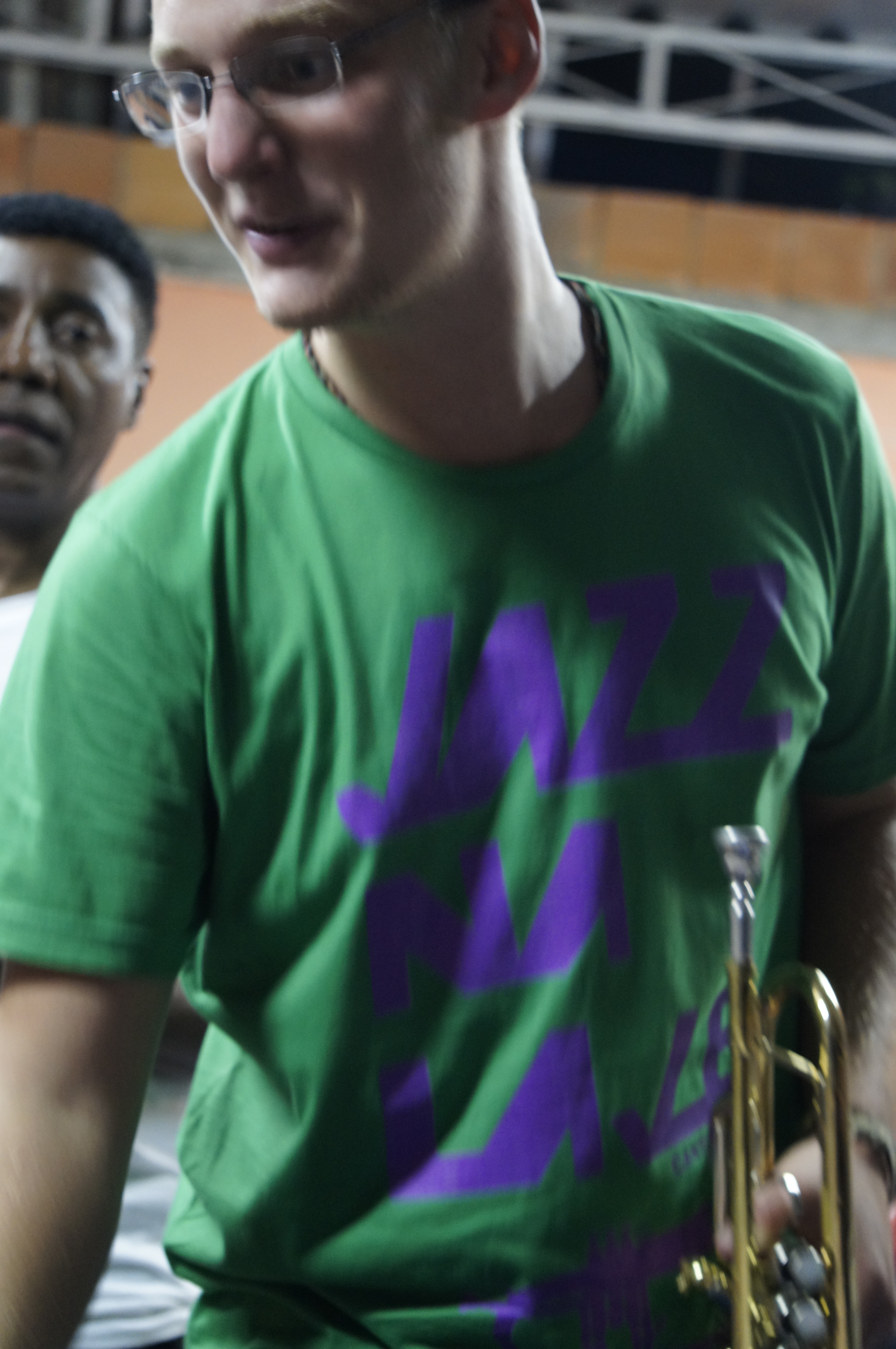
Tracking down the jazz music he heard in the favela, the young French trumpeter Antoine Jacquet discovered the Bela Arte Jazz school, where he now teaches

Alunos animadíssimos

The students asked to play one more theme, to much applause

As a soloist, especially on the flute, Leonardo demonstrated depth and daring. Just when it seemed the music was coming to a close, he took it to an unexpected, satisfying place.

SONY DSC

Down below, samba and UPP cops: clueless to the energy on Leonardo’s uncle’s terrace

Keeping still was not an option. It’s hard to recall a jazz listening experience of such impact in Rio de Janeiro — or anywhere. Could it be that the improvisational energy that pervades favela life showed up to make a special contribution?

Thais Fraga improvisou também

Thais Fraga was called to the front

Músicos e vizinhos

Musicians and neighbors

Cantagalo came under the pacification program in December 2009. Sporadic encounters between police and drug traffickers have taken place there in recent months, allegedly due to a drug trafficker’s release from prison. Pacification difficulties such as those in the Pavão-Pavãozinho/Cantagalo favelas –and worse– have also arisen, beginning last year, in the favelas of Rocinha and Complexo do Alemão. Aided by federal armed forces, the state of Rio de Janeiro today occupied the Complexo da Maré. Pacification of this complex of favelas and public housing is said to be indispensable to the success of the World Cup, that begins in June. And pacification is a key issue in the gubernatorial election this October.

But the music plays on

Young volunteers, stationed on the favela’s main road and along the multi-staircased way to Leonardo’s uncle’s house, helped guide audience members to Jazz na Laje.

ff

Focus, lots of it

Two years ago, Leonardo — who only began playing saxophone at age 17 — founded the Bela Arte Jazz school under the aegis of the pioneering Agência de Redes para a Juventude, a Petrobras-funded incubator for favela youth startups. Today the school functions on its own, with twelve students. Leonardo recently put a roof on the terrace, to protect them from sun and rain.

Canto sem microfone

Singing without a mike

Flutist, saxophonist, networker, conductor, arranger, emcee, teacher, entrepreneur. Leonardo’s talent — and the meeting of so many other musicians and listeners — lit up the night. At the next event, promised for a month from now, his uncle’s Cantagtalo terrace may prove small.

If you’d like to help with this project, you can make a deposit to Banco Itaú, branch 8586, account # 20871-5.

SONY DSC

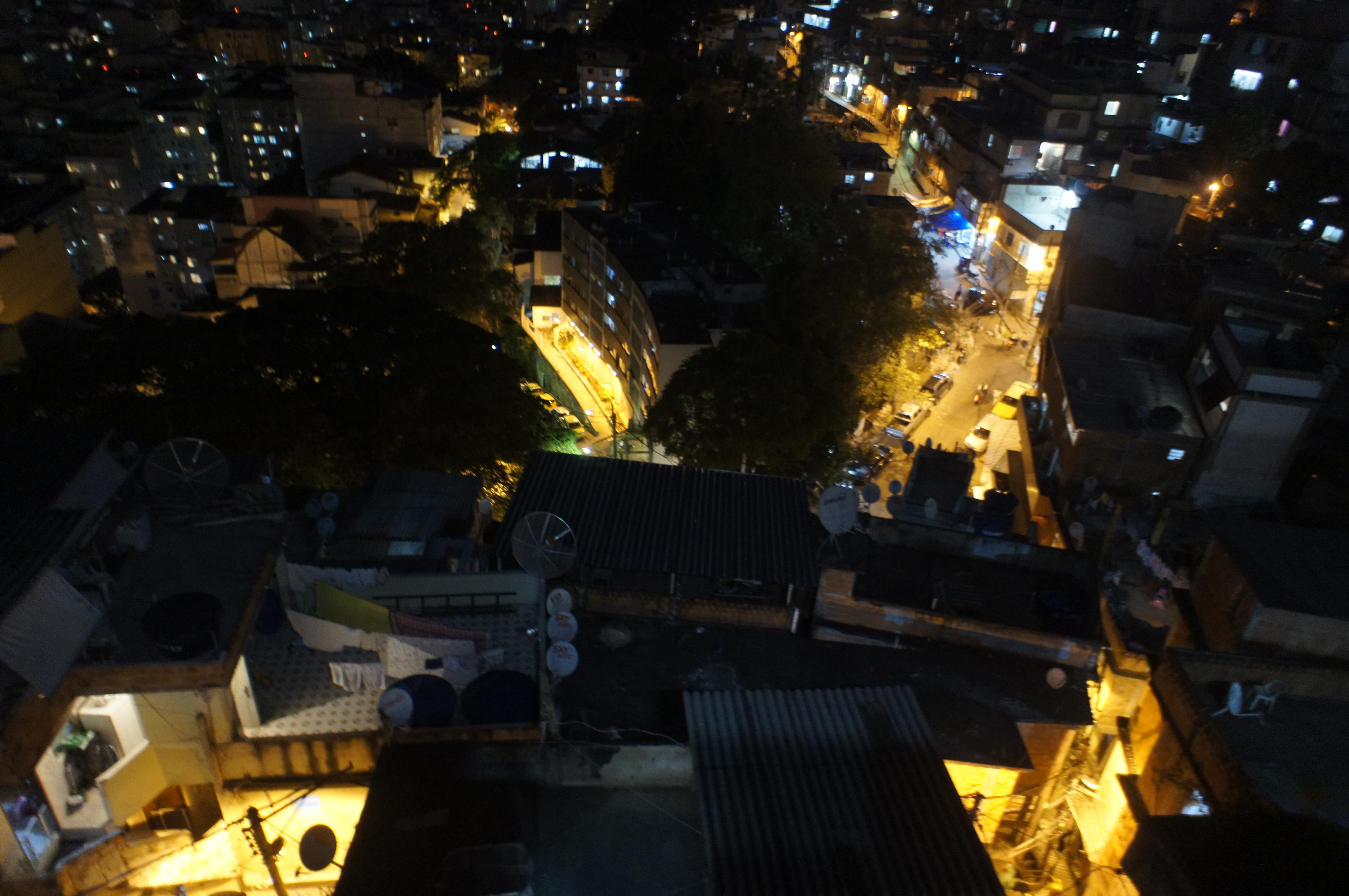
View from the laje


Posted in Brazil, Transformation of Rio de Janeiro / Transformação do Rio de Janeiro | Tagged , , , , , , | 4 Comments

Jazz na Laje: encontro inesquecível

Uma multidão

Ouvintes e músicos na mesma onda

Era uma laje no morro do Cantagalo, varrida por uma brisa marítima. Porém, no meio de músicos de uma gama de idades, moradores e visitantes, conversando musicalmente entre si e com o público, criou-se no último dia 28 de março a sensação marcante de estar num esfumaçado clube subterrâneo no Harlem, anos 1930 ou 1940,  de volta às origens do jazz.

SONY DSC

Chorando de emoção, a criança tocava um solo

Praticamente não houve ensaio, confessou Leonardo Januario, 22 anos, fundador da escola de música Bela Arte Jazz, que produziu o evento. Em compensação, aconteceu um emocionante encontro de músicos, na maioria de instrumentais de metal, apoiados pelo contrabaixista David Nascimento, o baterista Mattheus Cruz e o pianista Jonathan Moreira. O guitarrista Rodrigo Medina acompanhou os alunos, também.

Maestro, aos 22 anos

Maestro, aos 22 anos

Para ajeitar as participações, Leonardo saltitava pela laje, contornando o trombone do convidado Paulo Nogueira, que tocava junto com o trompetista Darcy Cruz, ambos veteranos. Na hora de tocar, ele mesmo, Leonardo tirava por um instante a mão das teclas para fazer sinais aos colegas, facilitando os diálogos. Quando a jovem cantora Mariana Lisandro se apresentou — corajosa, sem amplificação, porque o microfone havia acabado de falhar –, do meio do público uma outra cantora, a experiente Thais Fraga, iniciou uma “conversa” com ela, através do canto scat.

SONY DSC

Ao rastrear o som que ouvia pela favela, o jovem trompetista francês Antoine Jacquet encontrou a escola Bela Arte Jazz, onde hoje dá aula

Alunos animadíssimos

Alunos pediram para tocar mais um tema, e ganharam muitos aplausos

Como solista, sobretudo na flauta, Leonardo passava profundidade e ousadia. Bem quando parecia que a música ia cessar, ele a levava a algum lugar inesperado, certeiro.

SONY DSC

Lá embaixo, samba e policiais da UPP: sem ideia da energia na laje do tio do Leonardo

Era impossível ficar imóvel e difícil lembrar de alguma experiência semelhante de ouvir jazz no Rio de Janeiro — ou em qualquer parte. Será que aquela energia do improviso que permeia a vida na favela fazia uma contribuição especial?

Thais Fraga improvisou também

Thais Fraga improvisou também

Músicos e vizinhos

Músicos e vizinhos

O morro do Cantagalo entrou no programa de pacificação em dezembro de 2009. Nos últimos meses, houve confrontos esporádicos entre polícia e traficantes, supostamente devido à saída da prisão de um traficante. As dificuldades da pacificação dos morros Pavão-Pavãozinho/Cantagalo se somam aos problemas que surgiram desde o ano passado, na favela da Rocinha e no Complexo do Alemão. Amanhã, o estado do Rio de Janeiro, com a ajuda das forças armadas do governo federal, parte para o desafio da ocupação do Complexo da Maré, considerada indispensável pelo governo para a realização da Copa do Mundo, que começa em junho. A pacificação é uma questão chave da eleição para governador em outubro.

O acesso ao evento Jazz na Laje foi facilitado por jovens voluntários, que a partir da estrada principal da favela indicaram o caminho — com direito a muitas escadas — aos visitantes.

ff

Muito foco

Há dois anos, Leonardo — que começou a estudar saxofone aos 17 anos — fundou a escola Bela Arte Jazz sob o guarda-chuva da pioneira Agência de Redes para a Juventude, uma espécie de incubadora de startups para jovens de favela, com recursos da Petrobras. Hoje, a escola funciona sem apoio institucional, atendendo a uma dúzia de alunos. Recentemente, Leonardo instalou um teto na laje.

Canto sem microfone

Canto sem microfone

Flautista, saxofonista, aglomerador, maestro, arranjador, animador, professor, empreendedor. O talento do Leonardo — e o encontro de tantos outros músicos e ouvintes — iluminou a noite. No próximo evento, é capaz de a laje do tio dele, no morro do Cantagalo, ficar pequeno.

Se você quiser ajudar com este projeto, pode fazer um depósito no Banco Itaú, agência 8586, conta 20871-5.

SONY DSC

Vista da laje


Posted in Brasil, Transformation of Rio de Janeiro / Transformação do Rio de Janeiro | Tagged , , , , | Leave a comment

Rio’s toughest moment since 2008: are we shedding our skin?

A rich exchange, as the crime rate heads north and the Brazilian army arrives to occupy favelas, just weeks before the World Cup

Social scientist Silvia Ramos, a Rio de Encontros coordinator

Social scientist Silvia Ramos, a Rio de Encontros coordinator

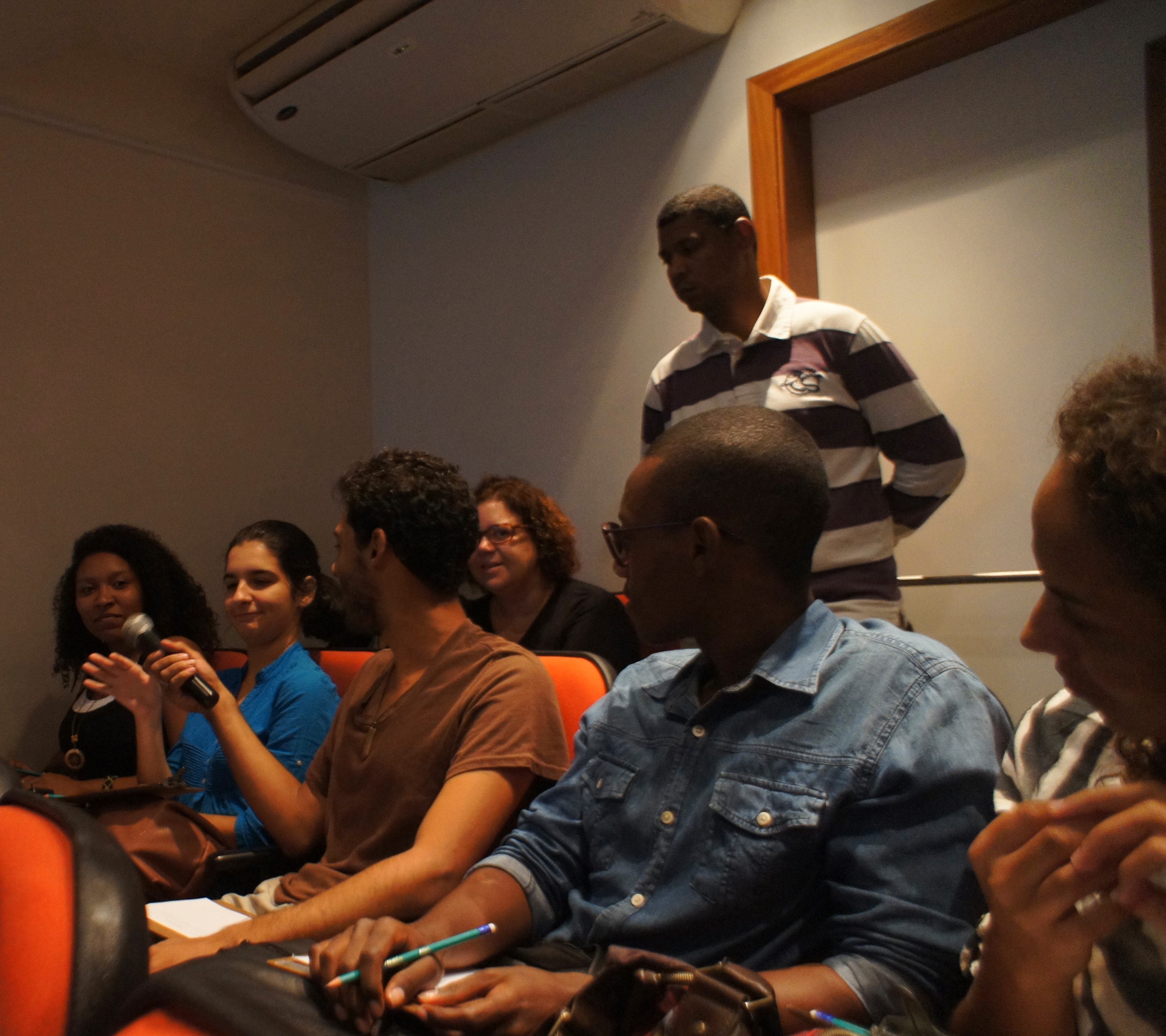
“How do we dialogue with a cynic?” two young people asked during a Rio de Encontros gathering this past week, at the Casa do Saber. Others, also university students who live in favelas, echoed the question.

Luiz Eduardo Soares, anthropologist, activist and public safety specialist, state public safety coordinator from 1999 to 2000, was the speaker. The title of the gathering, “How to make dialogue in the city feasible?”, assumes such dialogue to be possible.

But the young people in attendance had doubts. Cínico, cynic, is the word they use to describe those who would maintain the traditional power structure in Rio. The kids are rappers, journalists, human rights activists, artists, community organizers. Many are critical of pacification.

One asked Soares, a student himself during the military dictatorship, if we’re living in a dictatorship now (He said no).

Luiz Eduardo Soares was a visiting researcher at the Vera Institute of Justice and Columbia University in 2000

Luiz Eduardo Soares was a visiting researcher at the Vera Institute of Justice and Columbia University in 2000

Harking back to the punishments of slavery

“Why are people taking justice into their own hands?” asked one audience member, referring to the emblematic case of a group of justiceiros who last month stripped and chained a robbery suspect to a post, using a bike lock. Soares believes that, beyond the knee-jerk response of cariocas who feel neglected by their public safety and justice systems, something else may be going on. He says that on another, more symbolic level, the traditional middle class could be responding to what they see as the encroachment of those emerging from poverty.

“The rolezinhos (social media-coordinated occupations of shopping malls, often by lower-class youth) are evidence of a redefined geopolitics of society,” he explained. “Lynching is a reaction to this. Poor and blacks are starting to inhabit new spaces.”

It’s impossible to prove this theory, just as it’s impossible, Soares also noted, to prove that protest street violence is a reaction to decades of top-down violence in Brazilian society. To many observers on the left, these ideas are intuitively correct. Whether or not they truly are, living with such phenomena is not a tenable national proposition. And so we must move to strengthen our institutions and values, rather than rely on ad-hoc violence or justice to make a point or solve a problem.

One aspect of daily life here that needs no proving is a pervasive top-down attitude. Soares, proponent of a constitutional amendment to de-militarize the Brazilian police, said that this attitude is largely to blame for the difficulties that pacification now faces in Rio. Police, he explained, need to help manage public safety, not simply follow orders from above. “Professional pride is the the biggest obstacle to police corruption,” he added.

Natália challenges the idea of victimization, although she is poor, black and blind

Speaking up and out

How to engage? Is it worth even trying? Is Rio spinning its wheels, putting on a show? Huge questions for all of us, but particularly for those starting out in life. Disillusioned middle- and upper-class cariocas can always take their skills and dreams elsewhere, but what about the kids in the public university quota system, kids on ProUni scholarships at private universities, kids whose parents never dreamed of higher education?

Brazil’s biggest issues arise from inequality and the uneven application of democratic values. Over centuries, weak institutions with spotty access led to the creation of a parallel authoritarian system of networks of favors and payoffs, of justice and retribution, of lawmaking and information flows.

“It’s depressing, to keep on making the same old errors,” noted Soares. But then he went on to point out that, twenty or thirty years ago, “this auditorium would be unlikely”.

On the one hand, he said, many people blame an unspecified eles, “them”, for all that’s wrong. “This speaks of impotence, there’s no ‘we’. It’s about a corrosive individualism, victimization. People say, ‘Damn ’em, I’m just gonna look out for number one’.”

On the other, last winter’s street protests didn’t follow the traditional pattern of preparatory meetings to determine demands and activities, then a march with protestors behind a single banner. “Each person made his own sign, with his own message. We’re weaving the ‘we’, it’s a moment of collective reinvention.” Soares added that Rio’s collectives, such as Norte Comum, are key to the process.

In a sense then, the answer to the young people’s question is to simply keep on making art, communicating, organizing. Soares says even cynics have their weak moments: “No one is a rock”. Yet, in the midst of growing urban violence and misunderstandings, the personal investment involved is arguable.

What remains to be seen, with a mounting dose of patience, is if Soares is correct when he says Brazil is “shedding its skin”.

ggg

Transformation in the making?


Posted in Brazil, Transformation of Rio de Janeiro / Transformação do Rio de Janeiro | Tagged , , , , , , , , , | 7 Comments

Something new is happening in Rio

Para Acontece algo de novo no Rio clique aqui

Renato Sorriso did indeed reveal the soul of Rio, but not the way veteran journalist Elio Gaspari, meant, in his March 8 column.  Sorriso (Smile, his nickname), a trash collector, is famous for samba-ing down Marquês de Sapucaí Avenue during the annual Carnival parades, as he sweeps up after each samba school.

“Rio has the ability to be enchanted with characters from downstairs”, Gaspari wrote, using his habitual upstairs/downstairs dichotomy to describe Brazilian society. Gaspari believed reports that the smiling trash man had joined the strike that brought sanitation chaos to Rio during this past Carnival. “It might not be a good idea to pick a fight with a trash collector, but when the mayor is on one side and a guy like ‘Sorriso’ is on the other, he ought to think twice.”

The columnist’s first error was to believe local reporting.

Photos of Rio’s famous trash collector, carried on his co-workers’ shoulders, led many people, including journalists, to suppose that he had joined the strike. During the work stoppage, however, Brazilian media seemed to have inexplicable difficulty in interviewing strikers. Apparently, only one publication took the initiative to see what Renato Sorriso actually had to say.

He told the UOL site: “I’m totally in favor of each person going after his or her own objectives. But I’m punching the clock as usual. I worked during Carnival at the Sapucaí parades and I also swept some streets in Tijuca, as usual … I preferred not to strike”.

Gaspari’s second error was to focus on an old phenomenon, instead of seeing a new one.

Rio still is capable of becoming enchanted with characters from downstairs. But the issue at hand was not, as the columnist claimed, mayor Eduardo Paes’ difficulty in recognizing this phenomenon. Regardless, something new is afoot, that Gaspari himself was unable to see in the trash collectors’ strike: the downstairs characters –“represented” by Sorriso — are no longer satisfied with the enchantment of those who live upstairs.

For centuries, Brazilian society has eased the tensions of inequality by way of enchantment with the “downstairs characters”, as Gaspari describes them. Carnival is itself the biggest example of this. The movie Neighboring Sounds provides a marvelous portrayal of the friendly relations between employers and employees that sustain the traditional structure.

The mayor got it. He understood that the samba-ing trash collector (as well as the union that strikers said didn’t represent them) had become irrelevant. By negotiating directly with them, Paes caved hugely, raising the monthly wage floor from R$ 875 (US$ 372) to R$ 1,100 (US$ 467), quite close to the strikers’ demand of R$ 1,200 (US$ 510).

When you come right down to it, happily applauding Renato Sorriso’s samba steps while he swept Marquês de Sapucaí Avenue was very little indeed, compared to the 37% raise his co-workers got by walking off  the job during Carnival (and there was strangely little comment in the press on the 37%, possibly a historic number).

Given the profound societal transformation which the trash strike indicates, the time has come for those “upstairs” to pay some attention to the compensatory festivities that are part of our daily lives here. Being enchanted with the downstairs characters — weaving and keeping friendly relations with those below, is today far less than is needed to sustain Brazil’s democracy in a peaceful manner.

It wasn’t exactly Sorriso who uncloaked Rio’s soul, but the trash collectors who had the courage to reveal, for anyone who cared to look, that the city’s soul is in full transformation. It’s become acceptable to question the status quo, circumvent representative institutions, to carry out a “mutiny”, as the mayor initially described the movement.

And this isn’t only about the darling trash collectors. A strike partially sidelining a union has been going on for more than 40 days in the interior of the state of Rio, by employees at the Comperj petrochemical complex.

As time goes by, the real nature of the exchange between the upstairs and downstairs of Brazilian society will become ever more apparent. In Rio de Janeiro, we’ve certainly gotten a good whiff of it.

Meanwhile, when are we going to set up full recycling?

Posted in Brazil, Transformation of Rio de Janeiro / Transformação do Rio de Janeiro | Tagged , , , , , | 3 Comments

Acontece algo novo no Rio

Renato Sorriso mostrou a alma do Rio, sim, mas não do jeito que o jornalista veterano, Elio Gaspari, assinalou, na sua coluna do dia 8 de março.

“O Rio tem a capacidade de se encantar com personagens do andar de baixo”, escreveu Gaspari, ao acreditar nas reportagens dizendo que o gari sorridente havia aderido à greve durante o Carnaval. “Brigar com gari pode não ser uma boa ideia, mas, quando um prefeito está de um lado, e um sujeito como ‘Sorriso’ está do outro, ele deve pensar duas vezes.”

O primeiro erro do colunista foi de acreditar nas reportagens.

As fotos do gari mais famoso do Rio, carregado nos ombros dos colegas, levaram muita gente, inclusive jornalistas, a supor que ele tivesse aderido à greve. Durante a paralisação, porém, vimos uma inexplicável dificuldade, de parte dos meios de comunicação, de ouvir grevistas. E aparentemente, apenas um veículo tomou a iniciativa de ouvir Renato Sorriso.

Ao site da UOL, ele teria falado o seguinte: “Eu sou totalmente a favor de cada um correr atrás dos seus objetivos. Mas eu estou batendo o meu ponto certinho. Trabalhei no Carnaval durante os desfiles na Sapucaí e também varri algumas ruas na Tijuca, como de costume […] Preferi não fazer greve”.

O segundo erro do Gaspari foi de focar em um fenômeno antigo, em vez de enxergar o novo.

O Rio ainda tem a capacidade de se encantar com personagens do andar de baixo. Mas a questão da hora não foi, como diz o colunista, a inabilidade do prefeito Eduardo Paes de reconhecer esse fenômeno. Independente disso acontece algo de novo, que o próprio Gaspari deixou de reconhecer na greve dos garis: as tais personagens do andar de baixo  –“representados”  por Sorriso — não se contentam mais com o encantamento dos que habitam o andar de cima.

Há séculos, a sociedade brasileira alivia as tensões da desigualdade por meio do encantamento “com personagens do andar de baixo”, como Gaspari descreve. O próprio Carnaval é o maior exemplo disso. O filme O Som ao Redor retrata maravilhosamente bem as relações amigáveis entre patrões e empregados que sustentam a estrutura tradicional.

O prefeito entendeu o que era preciso entender: que  o gari sambista (como também o sindicato da categoria que, diziam os grevistas, não os representava) virou irrelevante. Ao negociar diretamente com eles, Paes cedeu enormemente, subindo o piso salarial de R$ 875 para R$ 1.100, bem perto dos reivindicados R$ 1.200.

No fim das contas nuas e cruas, festejar o samba do Renato Sorriso enquanto ele varria a avenida Marquês de Sapucaí era pouquíssima coisa, comparado aos 37% de aumento que os colegas dele conseguiram, cruzando os braços durante o Carnaval (Aliás, houve pouco comentário na mídia sobre os 37%, possivelmente um número histórico).

Face à transformação profunda da sociedade que a greve dos garis aponta, chega a hora de o “andar de cima” prestar atenção nos festejos compensatórios que fazem parte de nosso dia a dia. Encantar-se com os personagens do andar de baixo, ou seja, tecer e manter relações amigáveis com os subordinados, hoje fica muito aquém do que é necessário para sustentar a democracia brasileira de forma pacífica.

Não foi exatamente o Sorriso quem mostrou a alma, mas os garis que tiveram a coragem de revelar, para quem quiser enxergar, que a alma da cidade está em plena transformação. Tornou-se aceitável questionar o status quo, driblar as instituições representativas, fazer “motim”, como o prefeito inicialmente descreveu o movimento.

E não apenas no caso dos garis. Acontece há mais de quarenta dias uma greve de funcionários no interior do estado do Rio, no complexo petroquímico da Comperj, que também desafiam um sindicato.

Cada vez mais irá aparecer o real teor das trocas entre os andares da sociedade brasileira. No Rio de Janeiro, já sentimos isso na pele – e no nariz.

No mais, quando vamos instituir um programa de reciclagem plena?

Posted in Brasil, Transformation of Rio de Janeiro / Transformação do Rio de Janeiro | Tagged , , , , , | 1 Comment

Carnival 2014: garbage strike a sign of social transformation

Clique aqui para Carnaval 2014: greve de garis aponta transformação social

um lado da moeda

Heads

Carnalixo (Carnitrash), some say

It’s okay to be angry in a crowd; the crowd feeds on your anger, digests it, nourishes your rage as your rage nourishes it. All of a sudden you feel powerful. You can take on anybody. It is not their city anymore, it is your city. You own this city by right of your anger.

–Suketu Mehta, writing about Mumbai in his book Maximum City, published in 2004

There’s tragedy in the insane. And not only in what’s defined as insanity in this historical era. There’s another tragedy, that of not being listened to. Whenever someone diagnosed with mental illness commits a crime, the pathology is used to annul all questions and wipe out any discourse on meaning. The person is no longer a person with a history and circumstances, in which the illness is a circumstance and part of the story, never the whole picture. The person is no longer a person, but an illness. 

–Eliane Brum, writing on the recent violence in Brazil, on the Spanish newspaper El Pais’ site in Portuguese

Carnival is Rio de Janeiro’s main event. We see this movement taking place at this time as blackmail.

– Vinícius Roriz, president of Rio’s city sanitation company, Comlurb, quoted on the Globo site, G1

Cara

Tails

Given the turbulence that began last June and continues to this day, it seemed that this Carnival would somehow be different. But in what way, if Carnival is already about turning things upside down?

Who could have guessed that the newly-formed RioRealblogTV team would hit the nail on the head, weeks ago, when we chose the subject matter of our first video (click on the captions icon to see English subtitles)?

The irony couldn’t be bigger. While Carnival stands for a retreat from all that is authentic, with revelers masquerading as sailors, pirates and nuns, reality shoved its stinky face into our own. This year, Rio’s 15,000 garbage men awarded long life to the mountains of detritus that they used to remove from our sight, almost magically.

So here is the violence we feared this year. Inviting the mayor to pick up a broom and sweep the city clean by himself, garbage workers marched city streets in protest. “The mayor wants to hold the World Cup and the garbage workers want to buy groceries” one sign said.

The mess presents us with the complexity of the moment, with strikers (now fired) claiming that the union, that negotiated a 9% pay rise, doesn’t represent them. How should we calculate the value of urban sanitation now, when a garbage man or woman can easily find another job, the cost of living is rising frenetically, and we’re on the eve of the World Cup?

Coleta

Collection

Last year, the blog commented on the (lack of) sustainability of Carnival seen in the quantity of trash it produces. It seems that City Hall, Dream Factory (the company that organizes street Carnival) and the soft-drink and beer manufacturer, Ambev, also identified the problem. This year we saw an effort on their part to collect recyclables and orient street vendors.

But the Carnival 2014 strike brings up a kind of carelessness that goes beyond the environment, that permeates all of Brazilian society and may well be a key source of the violence we’ve been experiencing, as Eliane Brum notes in her excellent article.

Carelessness of the human being.

Why is Rio so dirty?

Posted in Brazil, Transformation of Rio de Janeiro / Transformação do Rio de Janeiro | Tagged , , , , | 4 Comments