Reckless Rio: in the air, on the ground and even under the earth

Civil Police hunted down a cold-blooded drug trafficker  as if they were flying over a jungle, instead of a densely populated favela

[UPDATE] Civil Police Chief Martha Rocha said Monday morning  (May 13) that there is no protocol for collecting, monitoring or evaluating video images of her force’s operations. A committee has now been created to set up such a protocol.  Protocols for police behavior seem to be one of the weakest links in the area of public safety. The creation of protocols was one of the main recommendations in the impact study of the state’s pacification program.

May 5, TV Globo’s primetime program, Fantástico, aired a video of a risky helicopter chase that resulted in the death of a heavily armed drug trafficker and gang leader with eleven warrants out for his arrest. The year-old video has led to investigations by the Civil Police internal affairs department and Rio’s state legistature’s Human Rights Committee; the Rio State Attorney General reopened the case, and the helicopter pilot has been temporarily removed from his duties

In the video, civil police, hovering over rooftops as low as 70 feet, shouting excitedly, sprayed fire into a favela in Rio’s West Zone. The suspects shot at the helicopter, which was hit by some bullets. Miraculously, no police or uninvolved civilians were hurt.

U.S. security personnel, closely watching Brazil as mega-events quickly approach, weren’t pleased by what they saw.

“I do not know any professional organization police, nor military, anywhere in the world where this level of force would be considered justifiable, reasonable or necessary,” Eduardo Jany, a U.S. Marine specialized in anti-terrorism, and Director of Law Enforcement Advisory Services for Mutualink, a police training, equipment and consulting firm, wrote in an email to RioRealblog. “They are very lucky no innocents were injured or killed.” Jany said he had spoken to two senior executives at the FBI and a senior officer in the U.S. military’s Special Operations Command. “We were trying to wrap our minds around this thing and see how [it] could unfold in this manner.  All of us are just flabbergasted,” he added.

Wrapping one’s mind around recent events in Rio is no easy task, only a month away from the Confederations Cup international soccer championship and two months before Pope Francis’ visit, especially in light of the ease with which two young men allegedly bombed bystanders at the finish line of the Boston Marathon, last month.

Everyday life is hazardous.

Here, buses have been killing pedestrians and bicyclists, invading police have allegedly committed human rights abuses in Complexo da Maré, a police helicopter crasheda rainstorm doused lights in large parts of the city for too long, the city council failed to adequately debate health care policy, a water main burst right next to the just-reopened Maracanã stadium, and sewage has been flowing openly in downtown streets.

All of this came on the heels of some truly horrific events: a bus tumbled off an overpass during a fight between a passenger and the driver; and an American student was gang-raped on a public transit van, while her French boyfriend was beaten up. Since then, other rapes on public transportation  have come to light.

In the face of  such chaos, a couple of jokers recommended that cariocas remain immobile, since there’s too much traffic to drive a car, the metro is too crowded, the trains don’t work, you risk rape on a van, buses can fall off an overpass, helicopters crash and bicycles are run over. If you’re hurt, the jokers added, don’t get in an ambulance, because these too have been getting into wild accidents. Remain immobile, they conclude, making a play on the word for real estate, imóvel — because values have been skyrocketing.

What’s really going on?

The question is being asked on several levels. Regarding the specific police operation carried out a year ago, perhaps the murkiest aspects are division of labor and the chain of command. Before pacification began in 2008, police reformers preached the unification of Brazil’s various police forces, saying that the principal Civil and Military Police forces had historically worked more at odds with each other, than in concert.

But in Rio, State Secretary of Public Safety José Mariano Beltrame — who oversees both the Civil and Military Police — made clear that he preferred to work within the existing system. He focused on the RISPs, geographical divisions of the state for which Civil and Military Police share responsibility, receiving pay bonuses for crime reduction.

RioRealblog has often explained the division of labor between the two as investigative work versus street police work. But as the helicopter chase indicates, it’s not quite so clear-cut. Federal Police (Brazil’s version of the U.S. FBI) had reportedly been monitoring “Matemático”, the drug trafficker, for five months. According to reports, the Military Police were supposed to move in on him, but their armored vehicle took a bullet in a tire — and so the Civil Police went into action, in a helicopter, communicating with those on the ground, reportedly utilizing an off-limits Navy FN MAG 7.62mm machine gun made in Belgium. Apparently, the mission was to kill the dealer — although Civil Police Chief Martha Rocha later suggested her men should have arrested him, instead.

You might say the case involves excellent cooperation among the various forces. But the “newspeak” statement released to Fantástico by State Public Safety Secretary Beltrame indicates otherwise: “The sector that is specialized in these actions must answer to society and those with the responsibility for acting must assume the responsibility for the consequences”.

Did the Navy know the Civil Police was using its machine gun? Why did Civil Police Chief Rocha sit for a year on the footage presented last week on Fantástico, without following up? What kind of oversight exists, that allows a pilot to risk the lives of his passengers, who in turn risk those of favela residents? Would the police have dared to carry out such an operation in a middle-class neighborhood?

In developing democracies, conspiracy theories abound. Here, some posit that the video came to light now due to an internal power dispute within the Rio Civil Police. Others point out that Matemático wasn’t arrested, to protect corrupt police.

Civil Police in trouble?

Yesterday, yet another video surfaced, this time purportedly of Civil Police rearranging a West Zone crime scene, so as to make it look like they’d killed a criminal in self defense. The two videos, both coming out of the Civil Police (one was filmed on a police officer’s head camera), would indicate internal difficulties. Whether or not this is the case, Beltrame’s cryptic statement — especially given that he’s generally quite outspoken– could signal tension between him and Civil Police forces, and command issues within Beltrame’s domain. The Civil Police were also at fault in the case of the van rape: they didn’t investigate a Brazilian woman’s complaint some weeks before the American’s tragic experience, involving the same perpetrators.

What do the two forces do, and when? In theory, the Military Police do preventive work, while the Civil Police investigate and follow up on criminal activity. But Military Police make arrests, they invade favelas, they amass information. Overlap must exist; after all, each force has its own elite squad: the BOPE, for the Military Police; and CORE, for the Civil Police. And when does the Civil Police’s investigative work shift to the Federal Police?

Perhaps it’s time for a rethink of Rio’s police forces?

The bigger picture

Issues of responsibility abound, as Brazil moves from a society run by an elite according to an unwritten code, to one of greater clarity, equality and participation. In Brasília, Congress and the Judiciary are battling over who has the last word on corruption rulings involving legislators — while the Executive branch struggles to overcome clientelist obstacles to modernizing policy such as much-needed port reforms.

In Rio, the usual buck-passing, neglect of human rights and power plays are exacerbated by the fact that public demand for quality services, provided directly or supervised by city or state government, is on the rise — due to upcoming mega-events, increased investment and greater income. This may be is part of the explanation for the growing number of people run over by buses, among other catastrophes. Bus companies, faced with a shortage of drivers, have reduced job requirements and curtailed training.

For decades, Brazilians have shrugged off — and shared in — widespread neglect for human life and health. This has been changing, as people gain income and access to information networks. Still, reckless individualistic behavior and acceptance of it come naturally. Fantástico’s helicopter story got short-lived public attention, and many website comments praised the police for killing Matemático, urging them to bring down more bandidos.

Only days ago, a fight broke out among Brazilian passengers on an American Airlines flight to São Paulo, before it took off– because one passenger wanted to sleep, and the guy behind him preferred to watch a movie. Seven people disembarked in Miami, in handcuffs.
Posted in Transformation of Rio de Janeiro / Transformação do Rio de Janeiro | Tagged , , , , , | 13 Comments

Uma nova aliança para mudar o Rio: Casa Fluminense

José Marcelo Zacchi

José Marcelo Zacchi, diretor executivo da Casa Fluminense: ainda falta uma ideia de um Rio plenamente integrado

Click here, for A new alliance for change in Rio: Casa Fluminense

Moradores de Santa Cruz e líderes de importantes movimentos cariocas por mudanças sociais se reuniram, no sábado passado, na ponta mais a oeste da cidade, para inaugurar o novo think-and-do-tank, a  Casa Fluminense. Para iniciar o trabalho ambicioso da Casa, a pesquisadora do IETS, Valéria Pero, mostrou mapas da desigualdade na região metropolitana; moradores prestaram depoimento em vídeo, e ao vivo, sobre a carência de serviços públicos na região; e os participantes do evento expressaram ideias e sonhos para o ano de 2017.

Eliana Sousa Silva, diretora da Redes da Maré, e Valéria Pero, pesquisadora no IETS: curtindo uma tapioca no Matadouro Imperial de Santa Cruz, antes do evento de inauguração

Nos seis anos de mudanças no Rio, já se fez muito para melhorar a vida das pessoas. Talvez, o fato mais significativo seja a queda, em quase 50%, nos índices de homicídios, chegando aos atuais 24 por 100 mil habitantes. O aumento da segurança, aliado ao crescimento econômico, estimulou investimentos, tanto públicos quanto privados. Apesar dos preços exorbitantes, o turismo cresce.

Mas, como os mapas da desigualdade mostraram a todos, no sábado, houve pouco avanço, no sentido de combater vieses endêmicos, paradigmas de políticas públicas ultrapassadas e modelos de crescimento econômico tacanhos.

“O Rio corre o risco de se acomodar, de reproduzir a desigualdade que está em nosso DNA: da Casa Grande e Senzala,” disse José Marcelo Zacchi, diretor executivo da Casa. Zacchi destacou que a prefeitura já gastou dois bilhões de reais em reformas urbanas (Morar Carioca) até o ano de 2012 – e quase a metade desse montante, no mesmo período, para reformar o estádio do Maracanã (que por coincidência também foi inaugurado sábado, com a polícia jogando gás lacrimogêneo em manifestantes pacíficos, que estavam do lado de fora).

De Paula Martinica a Pedro Strozenberg: vamos colocar a tecnologia a serviço da participação

De Paula Martinica a Pedro Strozenberg: vamos colocar a tecnologia a serviço da participação

Os participantes apontaram que a empresa estatal de água e saneamento, CEDAE, abastece a cidade com água da Baixada Fluminense – e, enquanto o Leblon nunca fica sem água, a Baixada Fluminense frequentemente sofre com cortes. Os pontos de ônibus, ao longo da nova faixa exclusiva para ônibus, a BRT, ligando a Barra ao resto da Zona Oeste, perdem qualidade quanto mais a oeste o passageiro viaja – e alguns pontos de ônibus BRT nem ficaram prontos.

Líderes santacruzenses

Líderes santacruzenses

Uma tarefa importante para a Casa Fluminense é reunir e apresentar dados: monitorar governos. Os mapas da desigualdade apresentados no sábado ofereceram um panorama da região metropolitana do Rio, uma oportunidade de entendimento raramente ao alcance dos cidadãos. Enquanto as médias para o Grande Rio melhoraram, áreas chave continuam com índices baixos em educação, emprego e renda, dentre outros indicadores. O mais impressionante foi um gráfico mostrando que, enquanto a desigualdade de renda no país e na região sudeste caiu significativamente, conforme a medida do índice de Gini, a melhora no Rio ficou para trás.

Os economistas afirmam que isso se deve principalmente ao fato de que empregadores do setor de petróleo e gás, ao enfrentar carência de mão de obra, oferecem salários mais altos que acabam por distorcer o índice de Gini aqui. Porém, segundo Valéria Pero, o modelo de crescimento econômico estatal, focado no setor energético, deve ser repensado, para que o quadro possa ser diferente.

Aproximadamente 60 pessoas compareceram ao evento, mas a maioria não era de Santa Cruz. De acordo com aqueles que estiveram presentes, a participação de moradores,em qualquer região da cidade, costuma ser baixa.

Marcus Faustini

Marcus Faustini, e o índice Gini, ao fundo: lupa nas causas

A despeito disso, Alexandre Damascena, artista e professor – e líder local – apontou que a escolha de Santa Cruz para a inauguração colocou o bairro como um ponto de partida, ao invés de um ponto final. Alair Rebecchi, um ativista da igreja católica, reclamou de problemas com transporte e demonstrou esperança de que a Casa vá além de questões superficiais. Segundo Pablo Ramoz, o imponente e belíssimo recém reformado Matadouro Imperial, onde a inauguração aconteceu, é subutilizado. Sugeriu que o espaço fosse usado por artistas, em diálogo com a indústria local – assinalando ainda que Santa Cruz tem altos índices de pobreza, apesar de abrigar indústrias que geram alta renda.

Marcus Faustini, nascido e criado em Santa Cruz, fundador do programa para jovens Agência Redes para a Juventude, encorajou seus colegas fundadores da Casa a enxergar além dos sintomas da desigualdade, para mapear não somente os efeitos, mas as causas também. “Temos que ser ousados, tomar partido,” ele disse, acrescentando que o modelo atual, no qual as pessoas na base da pirâmide socioeconômica moram mais distante de seus empregos que as pessoas no topo da pirâmide – e precisam gastar muito com transporte –, contribui para a concentração de renda.

Miguel Lago

Miguel Lago, fundador do Meu Rio

“Temos que ir de bairro em bairro, porta a porta,” disse, fazendo referência às dificuldades de mobilização. “A Casa precisa criar uma metodologia para escutar as pessoas, precisa ser uma força política, e não apenas produzir pesquisa e livros.”

Miguel Lago, um dos fundadores do grupo de ativismo digital Meu Rio,  disse que o desejo dele para o Rio em 2017  seria “não apenas redistribuir a maneira de falar das coisas, mas redistribuir o poder”.

Aberta a todos (esta blogueira que vos fala é uma orgulhosa e ativa sócia fundadora), a Casa Fluminense é um empreendimento de longo prazo, criada para propor políticas públicas de redução da desigualdade e aprofundamento da democracia, no Rio como um todo. A Casa fará monitoramento dos gastos públicos; mapeamento colaborativo das necessidades e dos programas socioeconômicos; e oferecerá cursos em liderança e governo.

Em 2009, quando o Rio foi escolhido para sediar as Olimpíadas, esse e outros mega eventos pareciam distantes – e quase inimagináveis. Como faria esta cidade decadente, com mentalidade de vilarejo, para se transformar?

À medida que o tempo passa, apesar das mudanças na cidade, ainda vivenciamos muita violência, em tantas formas, em grande e pequena escala. Os cariocas olham à sua volta,  se deparam com os desafios e os problemas que persistem  – e resmungam a frase feita, “Imagine na Copa”.

Pablo Ramoz: vamos usar esse espaço!

Pablo Ramoz: vamos usar esse espaço!

O fato de que um grupo de ativistas, oriundos de Comunidades CatalisadorasRedes da Maré, Agência Redes para Juventude, IETS, Meu Rio, O InstitutoISERFundação Getúlio Vargas  e  Brazil Foundation/Fundo Carioca (com vários outros grupos representados, e o número de sócios em pleno crescimento), tenha se encontrado em Santa Cruz, para começar a pensar o Rio pós-olímpico, é um sinal de que alguns cariocas importantes — de imaginação — estão trabalhando firme,  e podem se tornar uma força nada desprezível.

Tradução de Rane Souza

Posted in Brasil, Transformation of Rio de Janeiro / Transformação do Rio de Janeiro | Tagged , , , , , , , , , , , , , , , , , , , , | 2 Comments

A new alliance for change in Rio: Casa Fluminense

José Marcelo Zacchi

José Marcelo Zacchi, executive director of Casa Fluminense: the idea of a truly integrated Rio is still lacking

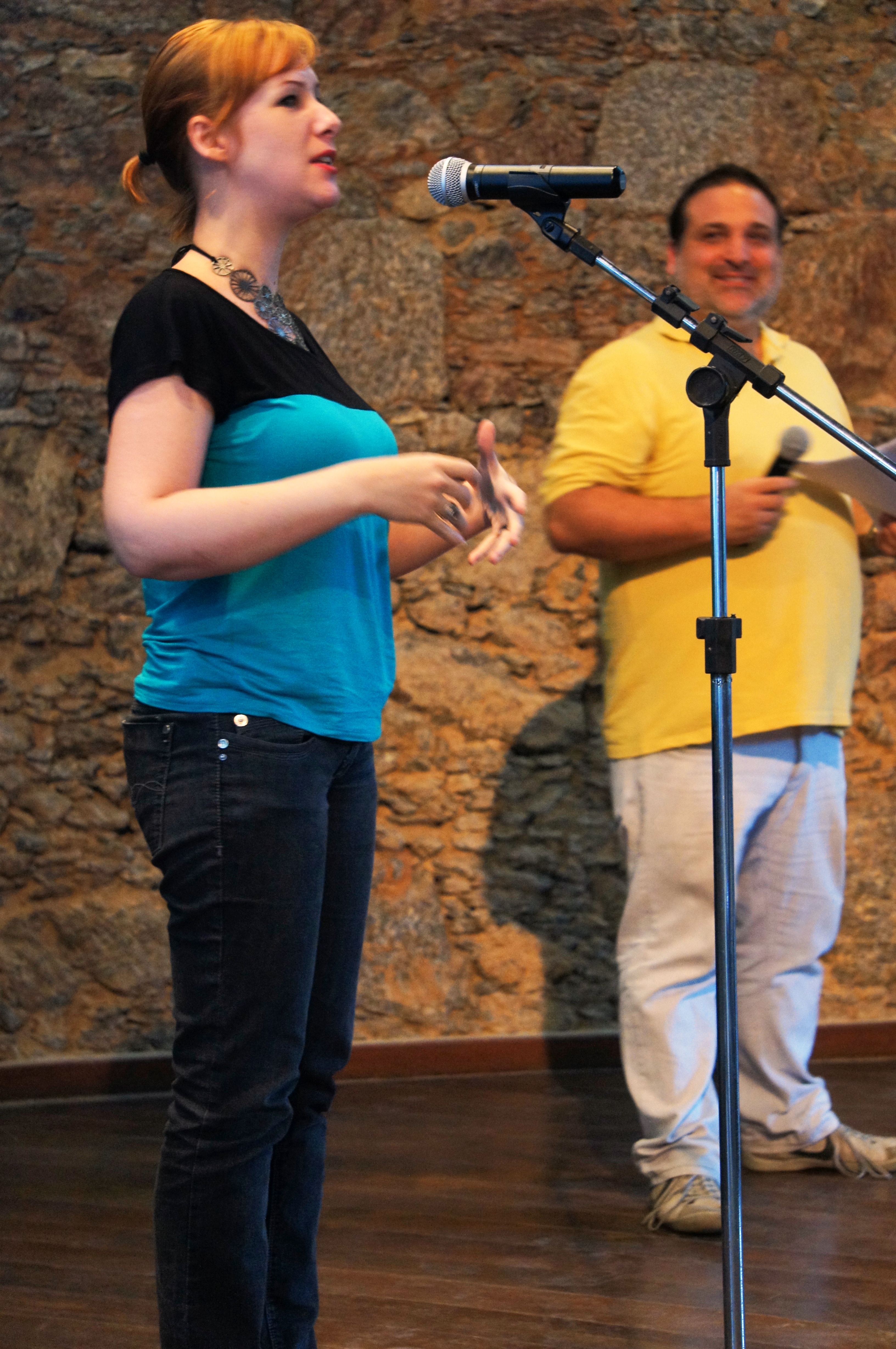
Local residents and leaders of major carioca movements for social change gathered yesterday at the city’s westernmost edge, in Santa Cruz, to inaugurate the new think-and do-tank, Casa Fluminense. To kick off the Casa’s ambitious work, IETS researcher Valéria Pero presented maps of the metropolitan region’s inequalities; residents spoke in a video, and live, of local needs not being met; and attendees expressed ideas and dreams for the year 2017.

Eliane Sousa Silva, director of Redes da Maré, and Valéria Pero, researcher at IETS

Eliane Sousa Silva, director of Redes da Maré, and Valéria Pero, researcher at IETS: enjoying a tapioca in the Matadouro Imperial of Santa Cruz, before the inauguration

Six years into Rio’s turnaround, much has been done to improve life here. Perhaps the most significant fact is that the homicide rate has almost been halved, to 24 per 100,000 inhabitants. Increased security, together with economic growth, have spurred both public and private sector investment. Tourism is growing, despite high prices.

But, as the maps of inequality demonstrated to all yesterday, not enough has been done to address endemic biases, outdated public policy paradigms and short-sighted models of economic growth.

“Rio runs the risk of accepting the status quo, of reproducing the inequality that’s in our DNA: that of the Big House and the slaves’ quarters,” said José Marcelo Zacchi, executive director of the Casa. Zacchi noted that the city has spent US$ 1 billion equivalent on urban renewal (Morar Carioca) through 2012 — and half this amount, over the same time period, to remodel the Maracanã stadium (coincidentally also inaugurated yesterday, with police tear-gassing nonviolent demonstrators out front). 

Paula Martinica, to Pedro Strozenberg: let's put technology at the service of participation

Paula Martinica, to Pedro Strozenberg: let’s put technology to use, for participation

Participants noted that the state water and sanitation company, CEDAE,  supplies the city with water from the Baixada Fluminense — and, while Leblon never runs short of water, the Baixada Fluminense itself often suffers cutoffs. Stations along the new BRT dedicated bus line linking Barra to the rest of the West Zone worsen in quality the further west the passenger travels– and some have never been completed.

Líderes santacruzenses

Santa Cruz leaders

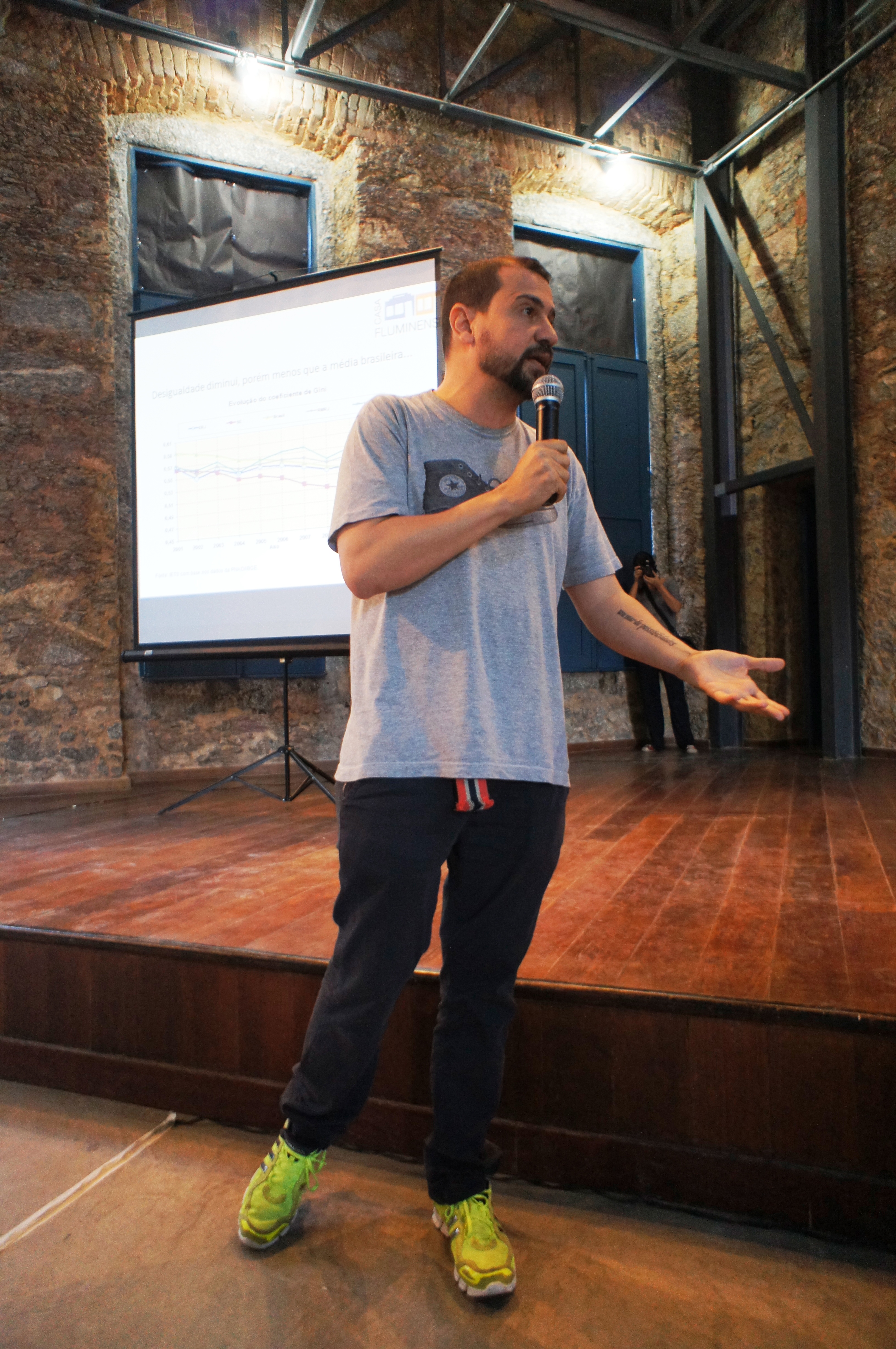
An important task of the Casa Fluminense is to gather and present data, to keep tabs on government. The inequality maps presented yesterday provided an understanding of the metropolitan area of Rio, one rarely available to citizens. While averages for greater Rio have improved, key areas lag far behind in education, employment, and income, among other indicators. Most striking was a graph showing that while income inequality as measured by the Gini index has dropped significantly nationwide and in the southeastern region of Brazil, improvement in Rio hasn’t kept pace.

Economists say this is mostly because oil and gas employers, facing labor shortages, offer high salaries that skew the Gini index here. But, said Valéria Pero, the state’s energy-driven economic model needs to be re-thought, to address the gap.

About sixty people attended the event, but most weren’t from Santa Cruz. Participation in local affairs is always low, in any neighborhood, said those who did show up.

Marcus Faustini

Marcus Faustini and the Gini index, in the background: magnifying glass on causes

Still, Alexandre Damascena, artist and teacher — and local leader– noted that the Casa’s choice of Santa Cruz for yesterday’s inauguration turns the location into a point of departure, rather than a final destination. Alair Rebecchi, a Catholic church activist, complained of transportation difficulties, and expressed the hope that the Casa will go beyond surface issues. The recently-restored,  impressively beautiful Matadouro Imperial (Imperial Slaughterhouse), where the inauguration was held, is under-used, noted Pablo Ramoz. He suggested it be used by artists, in dialogue with local industry– adding that Santa Cruz has a great deal of poverty although it is also home to industry that generates enormous income.

Marcus Faustini, born and bred in  Santa Cruz, creator of the Agência Redes para a Juventude youth program, urged his fellow Casa founders to look beyond symptoms for the causes of inequality, to map causes and not just effects. “We have to be daring, take sides,” he said, adding that the current model, whereby those at the bottom of the socioeconomic pyramid live further from their jobs than those at the top — and must spend a greater chunk of wages on transportation– contributes to income concentration.

Miguel Lago

Miguel Lago, Meu Rio founder

“We have to go from neighborhood to neighborhood, door to door,” he said, referring to the difficulties of mobilization. “The Casa must invent a model for listening to people, it must be a political force, and not just produce research and books.”

Miguel Lago, a founder of the digital activism group Meu Rio, said that his wish for a Rio in 2017 “is not just to redistribute the way we talk about things. It’s to redistribute power.”

Open to any and all (this blogger is a proud founding member and active supporter), the Casa Fluminense is a long-term undertaking, created to propose public policy to reduce inequality and deepen democracy in all of Rio. It will monitor government spending; collaboratively map socioeconomic needs and programs; and offer courses in leadership and government. 

When Rio was chosen to host the Olympics, in 2009, this and other mega-events seemed distant — and almost unimaginable. How would this decadent city with a village mentality manage to turn itself around?

As time has passed, despite great change in the city, we still have too much violence, in so many forms, large and small. Cariocas look around at persistent problems and challenges — and mutter the by-now cliché line, imagine na Copa . 

Pablo Ramoz: vamos usar esse espaço!

Pablo Ramoz, with Alexandre Damascena: let’s use this space!

That yesterday a group of activists from Catalytic Communities, Redes da Maré, the Agência Redes para Juventude, IETS, Meu Rio, O Instituto, ISER, Fundação Getúlio Vargas  and the Brazil Foundation/Fundo Carioca (with many other groups represented among a growing membership) should have gathered in Santa Cruz to begin thinking about the post-Olympics Rio de Janeiro is a sign that some very important carioca imaginations are hard at work– with the potential of becoming a force to be reckoned with.

Posted in Brazil, Transformation of Rio de Janeiro / Transformação do Rio de Janeiro | Tagged , , , , , , , , , , , , , , , , , , , , | 2 Comments

O Rio é uma causa perdida?

Click here for Is Rio a lost cause?

Continue a ler se você acha que sim – mesmo que você tenha encontrado o blog ao fazer buscas no Google por fotos sensuais 

"Parte considerável da mão de obra disponível é absorvida pelo tráfico de drogas"--Stratfor

Tornando-se visíveis

Após os acontecimentos devastadores das últimas semanas no Rio de Janeiro, muitos cariocas e observadores estrangeiros caem em uma armadilha perniciosa: de pensar que a transformação da cidade ou é real, ou é falsa. E quem acredita que é real seria ingênuo, ou um explorador.

Essa entrevista para o jornal O Estado de São Paulo expressa os pensamentos de um número crescente de cínicos. “Há um sentimento geral de que tudo é feito no Brasil hoje apenas para montar uma fachada. É algo muito desanimador,” disse André Martins Vilar de Carvalho, um psicólogo e filósofo que mora no Rio.

Grande parte do que Vilar de Carvalho diz vai além de sua observação inicial–  e é verdade e precisa ser dito – repetidas vezes:

  • [O] Brasil […] vive uma espécie de capitalismo desenvolvimentista selvagem, que no fundo não quer gastar dinheiro com o social, interessando-se pelo lucro a qualquer custo.
  • O que vale colocar em questão aqui é esse “sonho pacificador”, é a política local transformar uma iniciativa bem-sucedida em uma grande propaganda de um Rio de Janeiro pacificado. […] a coisa é apresentada como se o Rio não tivesse mais problemas, virou uma cidade organizada, valorizada… Aí um estádio que foi construído cinco anos atrás corre o risco de desabar na cabeça da multidão. Descobre-se que a construção foi malfeita, obviamente por algum tipo de superfaturamento.
  • E o que não temos é um pacto social, não existe um discurso de construção de fato de um país para todos. O que existe e, mais triste ainda, é aceito, são interesses individuais ou de pequenos grupos mesquinhos, mas não uma disposição de pensar o coletivo. A ideia do “cada um puxa a sardinha para seu lado” está legitimada socialmente no Brasil.
  • Já a herança escravocrata é particularmente perversa: ela cria um sentimento de desigualdade social aceito de maneira não questionada no Brasil. E também uma perversidade na relação de poder, a ideia de que inevitavelmente vai existir uma elite, que esse fosso de distribuição de renda “faz parte”. É um sentimento muito ruim, muito prejudicial para o pacto coletivo de que precisamos.

Se você, assim como o entrevistado, faz a sua parte pelo Rio ao questionar, protestar e pressionar os governantes, pode parar de ler o post aqui.

Mas, se você se prende à ideia de que tudo é falso, para simplesmente virar as costas ao bem comum, por favor, continue a ler (o mais provável é que tais pessoas não leiam este blog, mas, quem sabe, se depararam com ele ao buscar por fotos sensuais de dançarinas de funk, como alguns fazem, segundo as estatísticas do WordPress). Deixar a sociedade de lado para focar em interesses individuais é, por si só, um voto a favor daqueles que superfaturam contratos, colocam motoristas de ônibus mal treinados atrás do volante ou deixam de investigar a queixa de estupro de uma brasileira.

E tem mais, a situação é muito mais complexa do que uma simples disputa entre idealistas e cínicos. Nós vivemos e trabalhamos em um inegável contexto de mudança. Não temos uma sociedade estática. A pirâmide socioeconômica do Brasil está se achatando. Apesar da desaceleração do crescimento econômico e mesmo em face da possibilidade de retrocesso – como ocorreu na Espanha e em Portugal, por exemplo –, os milhões que entraram na economia formal nos últimos cinco anos já sentiram o gosto de novos comportamentos, ideias, valores e possibilidades. As experiências vão além da compra de televisores de tela plana e outros eletrodomésticos.

Tais bens intangíveis estão aqui para ficar– e avanços como a nova lei que obriga o pagamento de horas extras e outros benefícios para domésticas certamente fortalecerão o processo. Isso está no centro do que realmente está acontecendo no Rio, mesmo que o prefeito, o governador e o secretário de habitação da cidade não tenham percebido plenamente o escopo do que eles iniciaram. Os invisíveis estão se tornando visíveis.

Os recém chegados despertam preocupação nas tradicionais classes mais altas, cujos filhos enfrentam trocas de fraldas e pias cheias de louça, bem como mais competição por empregos e vagas universitárias. Eles se estremecem perante a cultura de massa que acompanha uma economia de base ampla e a democracia.

398580_10150510904015787_2086678898_n

Aquilo que é intangível dura

Alguns cariocas enxergam o panorama mais amplo. Regina Casé, no programa de TV Esquenta  do último domingo, fez uma pergunta a algumas crianças presentes: em qual  favela você mora? Em seguida, conversou sobre a definição e o mapeamento de favelas no Rio com José Marcelo Zacchi, pesquisador do IETS. Talvez apenas dois anos atrás, teria sido impensável fazer tal pergunta em rede nacional.

O escritor Julio Ludemir e outros levantam a autoestima e ajudam jovens dançarinos a estabelecer contatos entre si mesmos e com a cidade como um todo, através da atual Batalha do Passinho, a qual, em uma rodada anterior, foi registrada em um documentário fabuloso, estreando em breve nas salas de cinema do Rio.

Marcus Faustini, diretor de teatro, expande sua metodologia de incubadora de projetos para jovens, da Agência Redes para Juventude, para o Rio como um todo e também para Miami, Londres, Manchester e Paris. Ele está trabalhando para integrar o Rio com o inovador Home Theater Festival, criando apresentações em casas em toda a cidade. Os “formados” da Agência continuam a desenvolver projetos próprios em favelas, como um workshop de dança de rua e apresentações jazz,  no Cantagalo; e uma festa de rap no Chapéu Mangueira, dentre outros.

A série de debates OsteRio volta com energia nova. Na próxima segunda-feira, haverá um debate sobre se os Cariocas são malandros ou especialmente criativos, com a presença de Zuenir Ventura, colunista de O Globo, e de Gilberto Scofield, editor da seção Rio do jornal. O Studio X , da Universidade Columbia, também fomenta debates que iluminam aspectos da transformação do Rio, tais como o processo de revitalização da área portuária.

As eleições estaduais de 2014 se aproximam e estimularão debate sadio, sobre o que já foi realizado e o que ainda falta. Pode ser que o provável candidato do PMDB, o insípido vice-governador “Pezão”, Luiz Fernando de Souza, tenha que enfrentar o provável candidato do Partido dos Trabalhadores, o carismático senador Lindbergh Farias.

E, por último, mas não menos importante, ativistas, designers, jornalistas e pensadores da região metropolitana do Rio estão construindo um novo think tank e site de notícias: Casa Fluminense— com foco no ano de 2017.

Sim, a cidade ainda é violenta e injusta demais– precisamos trabalhar para mudar isso. Porém, observadores e cariocas devem desconfiar daqueles que dizem que o Brasil não mudou. Apesar de ser psicólogo, Vilar de Carvalho deixou de apontar que o cinismo pode mascarar um desejo. Talvez alguns céticos , na verdade, esperem que o Rio não esteja mudando – pois assim, eles não precisarão mudar a si mesmos.

Tradução de Rane Souza

Posted in Brasil, Transformation of Rio de Janeiro / Transformação do Rio de Janeiro | Tagged , , , , , , , , , , , , , , , | 5 Comments

Is Rio a lost cause?

Read on, if you think so– even if you got here by Googling for sexy photos

"Parte considerável da mão de obra disponível é absorvida pelo tráfico de drogas"--Stratfor

Becoming visible

After the devastating events of the last few weeks in Rio de Janeiro, many Cariocas and foreign observers have fallen into a perfidious mind-trap: the city’s transformation is either real, or false. And, if you believe it’s real, you’re either a sucker or an exploiter.

This interview in the O Estado de São Paulo newspaper, widely circulated, expresses the thoughts of a growing number of cynics. “There’s a generalized feeling that everything being done in Brazil today is just a facade. It’s very discouraging,” says André Martins Vilar de Carvalho, a psychologist and philosopher living in  Rio.

Much of what Vilar de Carvalho says goes beyond his initial observation, is true, and needs to be said– over and over again:

  • Brazilian developmental capitalism is savage, ultimately has no interest in spending on social needs and is solely interested in profit at any cost.
  • What needs to be questioned is the “pacifying dream”, the local policy of transforming a successful initiative into a huge ad campaign of a pacified Rio de Janeiro …the thing is presented as if Rio had no more problems, it’s now an organized city, with more value… then we run the risk of a stadium built five years ago falling on our heads. We find that it was poorly constructed, obviously due to some kind of over-invoicing.
  • We have no social pact, no one is talking about truly building a country for everyone. What we do have, sadly, and quite widely accepted, are individual or narrow small-group interests, but no chance to think about the greater good. The idea of “everyone looking out for himself” is socially legitimated in Brazil.
  • The legacy of slavery is particularly perverse, creating a sense of unquestioned social inequality in Brazil. There is also perversity in relation to power, the idea that an elite must inevitably exist, that this abyss of income distribution is just how things are. This is a very bad feeling, very harmful for the collective approach that we need.

If you, like the Estadão interviewee, do your part for Rio by raising issues, demonstrating, and pressuring government officials, read no further.

But if you depend on the idea that all is false  to turn your back on the greater good, please read on (most probably these people aren’t reading the blog, but who knows, maybe they stumbled onto it when looking for pictures of sexy funk dancers, as some do, according to RioRealblog’s WordPress statistics).  Giving up on society to focus on one’s individual concerns is in itself a vote for those who would over-invoice, put poorly trained bus drivers behind the wheel, or fail to address a Brazilian woman’s rape report.

What’s more, the scenario is not a simple battle between idealists and cynics. We live and work in a context of undeniable change, not a static society. Brazil’s socioeconomic pyramid is flattening out. Despite slowed economic growth and even in the face of possible reverses — as seen in Spain and Portugal, for example– the millions who made it into the formal economy in the last five years have had a taste of new behaviors, ideas, values and possibilities– not just new flat screen televisions.

The intangibles are here to stay, and advances such as the new law requiring overtime pay and other benefits for maids will surely reinforce them. This is at the heart of what’s really going on in Rio, even if the mayor and the governor and the city housing secretary don’t quite realize the scope of what they’ve begun. The invisible are becoming visible.

The new arrivals stir concern among the traditional upper classes, whose children face increasing competition for education and jobs, as well as diaper changes and sinksful of dirty dishes. They recoil from the onslaught of mass culture that comes with a broad-based economy and democracy.

398580_10150510904015787_2086678898_n

The intangibles stay on

Some cariocas do perceive the larger panorama. Regina Casé, on her popular Esquenta program last Sunday, asked participating children what favelas they were from, and then discussed the definition and mapping of favelas in Rio with IETS researcher José Marcelo Zacchi. Maybe only two years ago, the idea of asking someone what favela they were from, on national television, was unthinkable.

Writer Julio Ludemir and others have raised self-esteem and helped young dancers to connect with each other and with the city at large, by way of the ongoing Batalha do Passinho, which is also chronicled in a fabulous documentary about to hit Rio theaters.

Theater director Marcus Faustini has expanded his Agência Redes para Juventude youth projects’ incubation methodology in Rio itself and beyond, to Miami, London, Manchester and Paris; he’s also working to integrate the Rio with the innovative Home Theater Festival, creating performances in homes across the city. Agência “graduates”  are busy developing their projects in favelas, with a street dance workshop and performances and jazz, in Cantagalo; and a rap party in Chapéu Mangueira, among others.

The OsteRio debate series has returned, with new energy. Discussion this coming Monday will be on whether cariocas are malandros (scoundrels) or particularly creative, featuring O Globo  newspaper columnist Zuenir Ventura and Rio editor Gilberto Scofield. Columbia University’s Studio X hosts useful discussions as well, which clarify aspects of Rio’s transformation such as the port revitalization process.

The 2014 gubernatorial election now looms, and will spur healthy debate about what’s been accomplished and what remains to be done, as the likely PMDB candidate, stodgy vice-governor “Pezão” Luiz Fernando de Souza, tries to maintain his party’s hold on the state, to which the likely Workers’ Party candidate, the charismatic senator Lindbergh Farias, aspires.

And, last but not least, activists, designers, journalists, researchers and thinkers from metropolitan Rio are building a new think-tank and news site: Casa Fluminense— focused above all on the year 2017.

Yes, the city is still far too violent and unjust, and we must work to change this. But observers and locals should be suspicious of those who say Brazil is the same as always. Though Vilar de Carvalho is a psychologist, he failed to point out that cynicism can disguise a wish. Some skeptics may in fact hope that Rio isn’t changing– so they won’t have to change themselves.


Posted in Brazil, Transformation of Rio de Janeiro / Transformação do Rio de Janeiro | Tagged , , , , , , , , , , , , , , , | 15 Comments

Estupros em van revelam divisão social

Whose city is it?

Vista partida em um ônibus do Rio

For Van rapes reveal social division, click here

[ATUALIZAÇÃO: minutos depois que a versão em inglês desse post ficou pronta ontem, o Rio de Janeiro passou por mais uma tragédia: um ônibus caiu de um viaduto na Avenida Brasil, matando pelo menos sete pessoas e causando ferimentos graves em quinze passageiros. De acordo com um passageiro que desceu do ônibus antes de ele cair, o motorista brigava com um homem que pulou a roleta.]

Em 23 de março, uma brasileira registrou queixa de estupro na polícia, dizendo que o crime ocorreu em uma mini-van em Copacabana. Pouco foi feito – até que o mesmo aconteceu com uma estudante americana, na madrugada de sábado. Como resultado da negligência anterior,  duas oficiais da polícia foram exoneradas de seus cargos.

Na década de 1990, quando as frotas de ônibus ficavam aquem à demanda por transporte, apareceram as vans no Rio de Janeiro. Hoje em dia, elas lotam as ruas e, por vezes, as frotas são controladas por milícias paramilitares. Os motoristas transportam um número perigoso de passageiros, muitos deles de pé sem espaço adequado para a cabeça, enquanto os cobradores se penduram nas janelas para oferecer assentos como se fossem brinquedos de um parque de diversões (e uma viagem de van–  ou de qualquer outro transporte público carioca– geralmente não é muito diferente de uma montanha russa, até com consequências trágicas).

As vans são relativamente baratas, confiáveis, e preenchem uma lacuna no transporte urbano. Durante o Carnaval, quando o metrô ficou lotado, as vans salvaram a pátria. Quando  houve greve dos motoristas de ônibus, as vans salvaram a pátria.

Quem usa as vans? Não são as pessoas das classes sociais mais altas. E, no Brasil, há muitas coisas que as classes mais altas não fazem. Esse foi o assunto de uma conversa extremamente franca que ocorreu segunda-feira à noite, em um debate  sobre a juventude carioca na OsteRio, uma série de debates fundada pelo saudoso pensador urbano André Urani, dentre outros.

Segundo Fabricia Ramos, os jovens da elite carioca estão extremamente focados em reproduzir o estilo de vida que seus pais criaram para eles. Ela apontou que os pais ensinam aos filhos que os brasileiros são pacíficos e passivos; que os cariocas são especiais, e que fazer política é chato.

Sem uma visão geral das estruturas socioeconômicas que constroem o estilo de vida da elite (e sem a curiosidade para aprender algo sobre eles), esses jovens evitam posições de liderança – e até se negam a assumir a condição de elite. “É muita irresponsabilidade,” disse Ramos, que estudou na Escola Americana do Rio de Janeiro, uma das instituições educacionais mais caras da cidade. De acordo com Ramos, atualmente uma pesquisadora no think tank  IETS , que organiza a OsteRio, muitos de seus colegas de escola da EARJ e, posteriormente, da PUC, rejeitam o espaço público, optando por viver em uma espécie de universo paralelo. “O custo de vida para manter isso está aumentando,” ela apontou. “Fazem para si mesmos uma encarceramento voluntário privado. Se vão para uma favela, é para um evento ou uma festa–não criam laços.”

It's all about sharing

Faustini: a cidade é lugar de encontros

A opinião dura que Ramos tem de seus pares foi complementada pelas falas de Miguel Lago, fundador da ONG ativista Meu Rio e de Marcus Faustini, cuja Agência de Redes para  a Juventude ajuda jovens moradores de favela a desenvolver o potencial como seres humanos criativos e pensantes. Enquanto alguns jovens cariocas – de todas as classes sociais – estão mergulhando na vida da cidade, outros provavelmente serão forçados, por mudanças atuais, a reavaliar o objetivo de reproduzir o estilo de vida da infância. A revista Veja desta semana,  com a capa “Você amanhã”, de um homem branco de avental que lava louça, em referência a uma nova lei federal que assegura o pagamento de horas extras para as empregadas domésticas, revela somente a ponta do iceberg.

Os cariocas das classes mais altas podem ter que lavar mais pratos no futuro próximo, mas muitos ainda não tiveram a experiência de andar de trem suburbano ou barca, de estudar em uma escola pública, viver em moradia pública ou ser atendido em um hospital público (o que recentemente, esta blogueira teve a oportunidade de fazer, seguida de uma visita a um médico particular, que disse que o exame de raio-X gratuito era razoável, mas que a tala de gesso triplicaria o período de recuperação do tornozelo fraturado em comparação a uma bota importada de plástico).

Por que o estupro de uma americana recebeu tanta atenção da imprensa? Como a polícia – que geralmente trabalha a passos de cágado – conseguiu prender os três criminosos em dois dias? Obviamente, isso ocorreu, em parte, porque a vítima era estrangeira, e, em tempos de mega eventos, as notícias se espalham rapidamente para além dos limites da cidade do Rio de Janeiro. Além disso, ela era uma pessoa que tinha acesso a meios para vir estudar no Rio. Portanto, pode-se inferir que ela teria uma situação financeira melhor que a maioria dos usuários das vans, inclusive melhor do que a da vítima brasileira de estupro. E, sendo esse o caso, aqueles cariocas que normalmente não se aventuram nesse meio de transporte (que para os gringos tem um certo charme exótico) conseguem se identificar com ela– e sentir o choque.

Tradução de Rane Souza

Posted in Brasil, Transformation of Rio de Janeiro / Transformação do Rio de Janeiro | Tagged , , , , , , , , | 4 Comments

Van rapes reveal social division

Split views out of a Rio bus

[UPDATE: minutes after this post was completed, Rio suffered yet another tragedy: a bus fell off an overpass on Avenida Brasil, killing at least seven and severely injuring fifteen passengers. According to a passenger who got off the bus before it fell, the driver was arguing with a man who had jumped the turnstile.]

March 23, a Brazilian woman reported to the police that she’d been raped in Copacabana after getting into a mini-van. Not much came of it– until the same happened to an American student, late Saturday night. As a result of the earlier negligence, two police administrators have been removed from their positions.

As bus fleets failed to adequately meet transportation needs in the 1990s, vans came into being in Rio de Janeiro. Today, they clog traffic and fleets are often managed by paramilitary gangs. Drivers cram in dangerous numbers of passengers, many standing without headroom, while money-takers hang out of windows and hawk seats as if they were carnival rides (and a journey is sometimes not unlike being in a roller coaster, as on much of Rio’s public transportation, sometimes with tragic consequences).

Vans are relatively cheap, generally dependable, and they fill a real need. When Carnival overwhelmed the metro, vans saved the day. When bus drivers struck, vans saved the day.

Who rides in vans? Not the upper classes. And in Brazil, there are a lot of things the upper classes don’t do. This was the subject of an impressively honest discussion last night at an OsteRio debate on Rio youth, part of the series founded by the late urban thinker André Urani, among others.

Rio’s young elites, said Fabricia Ramos, are overwhelmingly focused on reproducing the lifestyle their parents created for them. Parents, she recounted, teach their children that Brazilians are peaceful and passive; that cariocas are special, and that politics is a boring pursuit.

Lacking an overview of the socioeconomic structures that  support the elite lifestyle (as well as the curiosity to learn about them), these children grow up to shirk leadership– and they even refuse to see themselves as elites. “It’s very irresponsible,” said Ramos, who went to the Escola Americana do Rio de Janeiro, one of Rio’s most expensive educational institutions. According to Ramos, today a researcher at the IETS thinktank which organizes OsteRio, many of her classmates at EARJ and later at PUC, the Catholic University, reject the public sphere, preferring to live in a sort of parallel universe. “The cost of this is increasing,” she noted. “They make themselves into voluntary prisoners. If they go to a favela, it’s for some kind of event or party, but they create no ties with people there.”

It's all about sharing

Faustini: a city is a place where different people can meet

Ramos’ harsh view of her peers was complemented by the remarks made by Miguel Lago, founder of the activist Meu Rio NGO; and Marcus Faustini, whose Agência de Redes para  a Juventude helps favela youth to tap their potential as creative, thinking human beings. While some young cariocas –from all social classes– are diving into the life of the city, others are likely to be forced by ongoing change to reevaluate the goal of reproducing childhood lifestyles. This week’s Veja “You Tomorrow” magazine cover, showing a white man in an apron washing dishes, in a reference to a new federal law granting overtime pay to domestic workers, reveals just the tip of the iceberg.

Upper-class cariocas may soon be washing more dishes, but many have yet to ride a commuter train or ferry, study at a public school, live in public housing or be treated at a public hospital (this blogger recently had occasion to do so, with a subsequent visit to a private doctor, who said the free x-ray was decent, but the half-cast would triple recovery time for the fractured ankle, compared to an imported plastic boot).

Why was so much media attention given to the rape of the American woman? How did the police– traditionally laggard– manage to arrest all three perpetrators in two days? Obviously, in part because the victim was foreign, and, in this era of mega-events, news travels fast beyond Rio’s city limits. But she was also someone who had access to the funds to get herself to Rio and study here; thus one might assume she must be financially better off than most van riders, including the Brazilian rape victim. And this being the case, those cariocas who don’t normally venture into such conveyances (with all their underclass charm for many gringos) are able to identify with her and feel the shock.

Posted in Brazil, Transformation of Rio de Janeiro / Transformação do Rio de Janeiro | Tagged , , , , , , , , | 16 Comments

Águas de março: uma lição de humildade?

Provavelmente, não

For March rains: a lesson in humility, click here

Queda de árvores e postes: não é culpa dele

Queda de árvores e postes: não é culpa dele

Se a eleição municipal fosse por agora, talvez Eduardo Paes estivesse passando um aperto. Após a chuva torrencial de terça-feira passada  à noite, que alagou a cidade e matou cinco pessoas, muitos cariocas querem linchá-lo. Alguns bairros ficaram sem luz por pelo menos 24 horas, a volta para casa no fim do expediente se tornou uma peregrinação, e até às onze da manhã do dia seguinte o trãnsito ainda estava caótico. O Estádio do Maracanã, cujo reforma está atrasada, também ficou alagado, provocando o adiamento de uma visita da FIFA e da entrega final da obra. O estádio precisa ficar pronto para a Copa das Confederações, que acontecerá entre 15 e 30 de junho deste ano.

“Hoje seria um bom dia para pegar aquele Banco Imobiliario do Rio e fazer o Paespalho engolir todas as peças, né?” um carioca perguntou quarta-feira, no Facebook.

De acordo com o jornal O Globo, na terça-feira foi registrado 70% do volume total de precipitação previsto para o mês de março. Em algumas partes da cidade, cairam 50 milímetros de chuva em apenas quinze minutos. Além disso, o registro de 2.149 raios levou outra moradora do Rio a imaginar que talvez os Maias tivessem errado a data do fim do mundo.

E um brincalhão sarcástico  fez um Photoshop em uma imagem dos trilhos alagados do Metrô; três estações tiveram de ser fechadas na noite da chuva.

Abaixo, temos um exemplo dos dezenas de vídeos postados no Facebook e no YouTube, gravados por testemunhas oculares, mostrando o Apocalipse carioca. Neste vídeo, o cinegrafista amador, indignado, se dirige diretamente ao prefeito:  “Olha o que suas obras fazem aí, ô, vamos ver minha rua aí”.

Recolher mais lixo

Um engenheiro citado na reportagem de O Globo afirma que a Prefeitura não está fazendo o suficiente para proteger os moradores das chuvas de verão. Dentre as medidas necessárias, ele disse que é preciso “proteger as bacias dos rios, reduzindo a ocupação de encostas por favelas, ampliando a coleta de lixo nas comunidades, reprimindo o despejo irregular de esgoto nos corpos d’água e galerias pluviais e criando barragens ao longo dos rios que nascem no Maciço da Tijuca”.

Segundo essa fonte, a construção atual de um reservatório na Tijuca não resolverá o problema, porque lixo e lama continuarão a escoar para dentro dele, se essas outras obras não forem levadas a cabo.

Também citado em O Globo, o prefeito Eduardo Paes falou num tom petulante no dia seguinte à tempestade– que pegou muitos moradores no caminho para casa após o trabalho, e os caminhões de lixo da Comlurb no meio da coleta noturna. “Mas o carioca também tem que entender que chuva forte não é para passear na rua. Cai árvore e poste, que não temos como controlar. Morreu um homem no Camorim atingido por uma árvore. Vou ter que cortar as árvores do Camorim?” ele perguntou.

A Prefeitura é responsável por inspecionar e manter as árvores e postes – e “passear” não é bem o que a maioria das pessoas presas nos ônibus, com água na altura dos joelhos do lado de fora, estava fazendo.

Talvez ela seja responsável também pelos estragos da chuva  em um projeto novo de moradia, para onde famílias em áreas de risco foram levados menos de um ano atrás. De acordo com o síndico, citado no jornal O Dia, uma obra da Rio-Águas levou ao alagamento de 64 apartamentos, a maioria de deficientes físicos. “O risco maior é aqui. Perdi móveis, eletrodomésticos, roupas e comida. Minha casa é uma vergonha, e minha vida perdeu o sentido”, Lidiane Conceição, 27 anos, ex-moradora do Morro do Borel, disse ao jornal.

Falando num tom mais maduro, o prefeito disse ainda que o antigo problema de alagamento na praça da Bandeira será resolvido com as obras dos reservatórios e do desvio dos rios Joana e Maracanã, que se iniciarão no começo do ano que vem. Segundo ele, os alagamentos na Avenida Brasil acabarão quando o BRT Transbrasil, pista exclusiva para ônibus, estiver pronto em 2016.

Para todos, o caos estimulou o já clássico comentário: Imagine na Copa!

Geralmente, chove menos em julho do que em março… em todo caso, a Defesa Civil  acabou de publicar um guia de sobrevivência a desastres naturais. É importante destacar que, desta vez, não houve notícia de deslizamento de terra em favelas ou de desabamento de casas, o que talvez seja devido ao trabalho de conscientização e de defesa civil, da Prefeitura.

Agora, o sol saiu

Para a sorte de Eduardo Paes, cujo recente compra para escolas públicas da versão Rio Cidade Olímpica do jogo Banco Imobiliário chocou os cidadãos, ele foi reeleito em outubro do ano passado—no primeiro turno,  e com um recorde de 64.6% dos votos. Apesar de  os royalties do petróleo do estado do Rio de Janeiro estarem novamente sob risco, investimentos públicos e privados contribuíram muito para retirar a cidade de uma longa decadência, e desenvolver sua vocação natural como centro turístico e cultural. Provavelmente o Rio será um dos últimos lugares a sentir o impacto do desaquecimento econômico no país.

No ano passado, Eduardo Paes pôde contar com a burocracia municipal e com suas políticas, como uma máquina política. Porém, considerando que a economia é o eixo de qualquer eleição, conforme concluiu um estrategista de campanha do Bill Clinton em 1992, o prefeito não vai sentar tão logo para surfar o You Tube e assistir às piores imagens do temporal.

É a boa sorte do Eduardo Paes também que os cidadãos estejam bem ocupados pelo crescimento econômico, e pouco inclinados a ficar com a tempestade de terça-feira na cabeça – e que os cariocas fazem pouco caso de dificuldades e preocupações. “Jorrava água pelo teto do elevador do meu prédio, que é  bastante bom, com um condomínio alto,” comenta um estrangeiro estupefato. “O porteiro me disse que estava avisando a todos para tomar cuidado.” No país dele, acrescenta, o elevador teria sido interditado imediatamente.

Na verdade, duas das mortes nesta semana foram por eletrocução, na rua.

Até mesmo os fatos mais dramáticos no Rio – como despejos forçados, que atualmente atraem a atenção de muitos jornalistas e fotógrafos estrangeiros – parecem ter pouca importância para o prefeito, e até mesmo para a ONU. Enquanto o grupo de ativistas Comitê Popular da Copa e Olimpíadas Rio aguardava com entusiasmo uma apresentação prevista para 4 de março, por Raquel Rolnik, Relatora Especial da ONU sobre Direito à Moradia como componente do direito ao padrão de moradia adequada no Conselho de Direitos Humanos das Nações Unidas, o resumo oficial praticamente não mencionou o Rio.

Tudo é relativo

Para muitos cariocas, a vida está realmente melhorando pela primeira vez em décadas. Mas, conforme as queixas de muitos jovens e ativistas, ainda há muito por fazer– e muito do que está sendo feito poderia ser melhor, se aqueles que elaboram e administram as políticas públicas trabalhassem com mais transparência, diálogo e participação.

Um alto funcionário da Prefeitura disse ao RioRealblog em janeiro que a política de moradia de renda mista é uma ideia incipiente no Rio. Pouco antes, ele havia lido uma proposta de moradia de renda mista, preparada à pedido dele, referente ao Porto, por alunos de mestrado da Universidade Columbia. Ele disse ainda que empresários do setor imobiliário estariam mais abertos à ideia se soubessem que essa política é praticada nos Estados Unidos e na Europa – e não apenas no México e na Colômbia.  Até o momento, o Rio não desenvolveu estratégias de incentivo à habitação de renda mista.

O bom é inimigo do ótimo. Portanto, no clima traiçoeiro do Rio de Janeiro, o melhor que nós podemos fazer é acompanhar de perto as autoridades municipais e estaduais, e criar as condições para que conversas bem informadas e trocas de ideias frutíferas aconteçam com frequência .

Tradução de Rane Souza

Posted in Brasil, Transformation of Rio de Janeiro / Transformação do Rio de Janeiro | Tagged , , , , , , , | 6 Comments

March rains: a lesson in humility?

Probably not

Few worries

Fallen trees and posts not his fault

If the mayoral election were this week, Eduardo Paes might be sweating.  After a night of torrential rain Tuesday that flooded the city and killed five people, cariocas have it in for him. Neighborhoods lost electricity for as many as 24 hours, commutes turned into pilgrimages, and traffic was chaotic even as late as eleven a.m. the next day. The Maracanã soccer stadium construction site, running behind schedule, was also flooded, postponing a FIFA visit and final delivery. The stadium must be ready for the Confederations Cup, to be held June 15-30 of this year.

“Today would be a good day to get ahold of that Rio version of Monopoly and make [the mayor] swallow all the pieces, don’t you think?” asked one Rio native yesterday, on Facebook.

According to O Globo newspaper, Tuesday saw 70% of the total rain predicted for the month of March, with 50 millimeters coming down in a mere 15 minutes in some parts of the city. That, plus 2,149 bolts of lightning led another resident to comment that perhaps the Mayans got the date wrong.

And a sarcastic joker photoshopped a picture of flooded subway tracks; three stations had to be closed, the night of the storm.

Below, an example of dozens of eyewitness films posted on Facebook and Youtube, illustrating the carioca Doomsday. In this one, the disgusted amateur filmmaker addresses the mayor  directly: “Look at what your public works achieve, look at my street,” he says.

Pick up more trash

An engineer quoted in the O Globo article says the city isn’t doing enough to protect residents against summer rains. Needed actions include the protection of river basins, reduction of hillside housing, improvement in favela trash pickup, repression of illegal sewage flows into rivers and drainage systems, and damming of rivers that start in the Tijuca Massif. According to this source, ongoing reservoir work in Tijuca won’t solve the problem alone, because trash and mud will still flow into them if the other work isn’t carried out.

Also quoted in O Globo, Paes sounded petulant the day after the storm, which caught many residents trying to get home from work, and the Comlurb trash trucks in the midst of their nightly pickup. “Cariocas have to understand that when it rains hard it’s no time to be gallivanting in the streets. Trees and posts fall, which we have no way of controlling. A man died in Camorim when a tree fell. Am I going to have to cut down all the trees in Camorim?” he asked.

In fact the city is responsible for inspecting and caring for trees and posts– and gallivanting isn’t exactly what most people stuck on buses with knee-deep water out the door were up to.

In a more serious tone, the mayor also said the age-old problem of flooding in the Praça da Bandeira with reservoirs and river management works slated for early next year, and that flooding on Avenida Brasil will cease once the Transbrasil dedicated bus lane roadway is completed, in 2016.

The chaos of course bring to mind what’s become a classic comment/question in Rio: imagine na Copa! I.e., with all this, how will Rio deal with the mega-events?

It does tend to rain less in July than in March… meanwhile, the city’s Civil Defense department just published a natural disaster survival guide. Notably, this time around there’s been no news of favela mudslides or loss of housing, which could be due to city education and safety work.

Now, the sun is out

Lucky for Paes, who recently shocked citizens with his purchase of a Rio Olympic City version of Monopoly for public schools, he was reelected last October— in the first round of voting yet, and with a record 64.6% of the vote. Despite the fact that Rio state’s petroleum royalties are at risk again, public and private investment have done much to lift the city out of its long decadence and develop its natural vocation as a tourism and cultural hub. Rio will most likely be one of the last places to feel the impact of the national economic slowdown.

Last year, Paes did get to use the municipal bureaucracy and its policies as a political machine. But, since the economy still is IT (stupid), as a Bill Clinton campaign strategist figured in 1992, the mayor probably won’t sit down and cruise through YouTube to watch the worst of this week’s storm.

Paes is also lucky that the local boom keeps citizens busy and unlikely to hold Tuesday’s storm long in their minds– and that cariocas tend to shrug off difficulty and worry. “Water was pouring into the ceiling of the elevator in my building, which is a good one, with a high condominium fee,” recalls an amazed foreigner who recently moved to Rio. “The doorman told me he was warning everyone who got into it to be careful.” Back home, he adds, the elevator would have been immediately shut down.

Two of the deaths this week were in fact from electrocution, in the street.

Even the most dramatic of developments in Rio– such as forced evictions, which now attract all manner of foreign journalists and photographers– seem to be shrugged off not only by the mayor but even the United Nations. While the activist Comitê Popular da Copa e Olimpíadas Rio looked forward to a report given Mar. 4 by Special Rapporteur on adequate housing as a component of the right to an adequate standard of living Raquel Rolnik at the United Nations Human Rights Council, an official write-up gave Rio short shrift.

It’s all relative

For many Cariocas, life is truly much better its been in decades. But, as many young people and activists complain, there is so much more to do, and much of what’s being done could be even better if city policymakers and administrators did their work with greater transparency, dialogue and participation.

Mixed-income housing is only incipient in Rio, a city administrator told RioRealblog in January after reading a proposal on the subject, for the port area, prepared by Columbia University graduate students. Local real estate developers, he added, would be more open to the idea if they knew that the policy is applied in the United States and Europe– not just Mexico and Colombia. So far, Rio has developed no incentives for mixed-income housing.

O bom é o inimigo do ótimo, as one says in Portuguese: what’s good is the enemy of what’s best. So in this treacherous climate, the best we can do is watch city (and state) officials closely, and make sure that well-informed conversation and the exchange of ideas happen as much as possible.

Posted in Brazil, Transformation of Rio de Janeiro / Transformação do Rio de Janeiro | Tagged , , , , , , | 4 Comments

Is the pacification unit still there?

Theoretically, yes

Para A UPP ainda existe? clique aqui

[UPDATE] The UPP command in these favelas changed in the last week of February. According to the press relations office of the Pacification Police Office, “The current commander of the  Chapéu Mangueira UPP, Captain Sérgio Stoll, will leave to begin the Officers’ Advanced Training Course, a necessary part of the military police career. In his absence, lieutenant [Rodrigo] Veillard will take command of the unit, under the supervision of Major Felipe Magalhães, former commander of the unit,”– but the change must certainly have something to do with the subject of this blog post.

While the police work to control the situation in several UPP favelas, a French reporter got permission from druglords who migrated out of pacified areas to an unnamed location in greater Rio, and got their daily activities on film. The excellent program, which includes a response about this phenomenon from State Public Safety Secretary José Mariano Beltrame, is at this link, and in English. And here is a recent Veja magazine article about the “beachhead” status of the UPP in Complexo do Alemão. A new Veja interview with Secretary Beltrame, who speaks about the situation in the favelas behind Leme, is here— and Veja has another bit this week, on the new UPP intelligence unit.

That’s what a resident of one of the favelas behind the South Zone neighborhood of Leme told RioRealblog, after witnessing what he called an “invasion” by members of the Comando Vermelho gang, in the early hours of January 20.

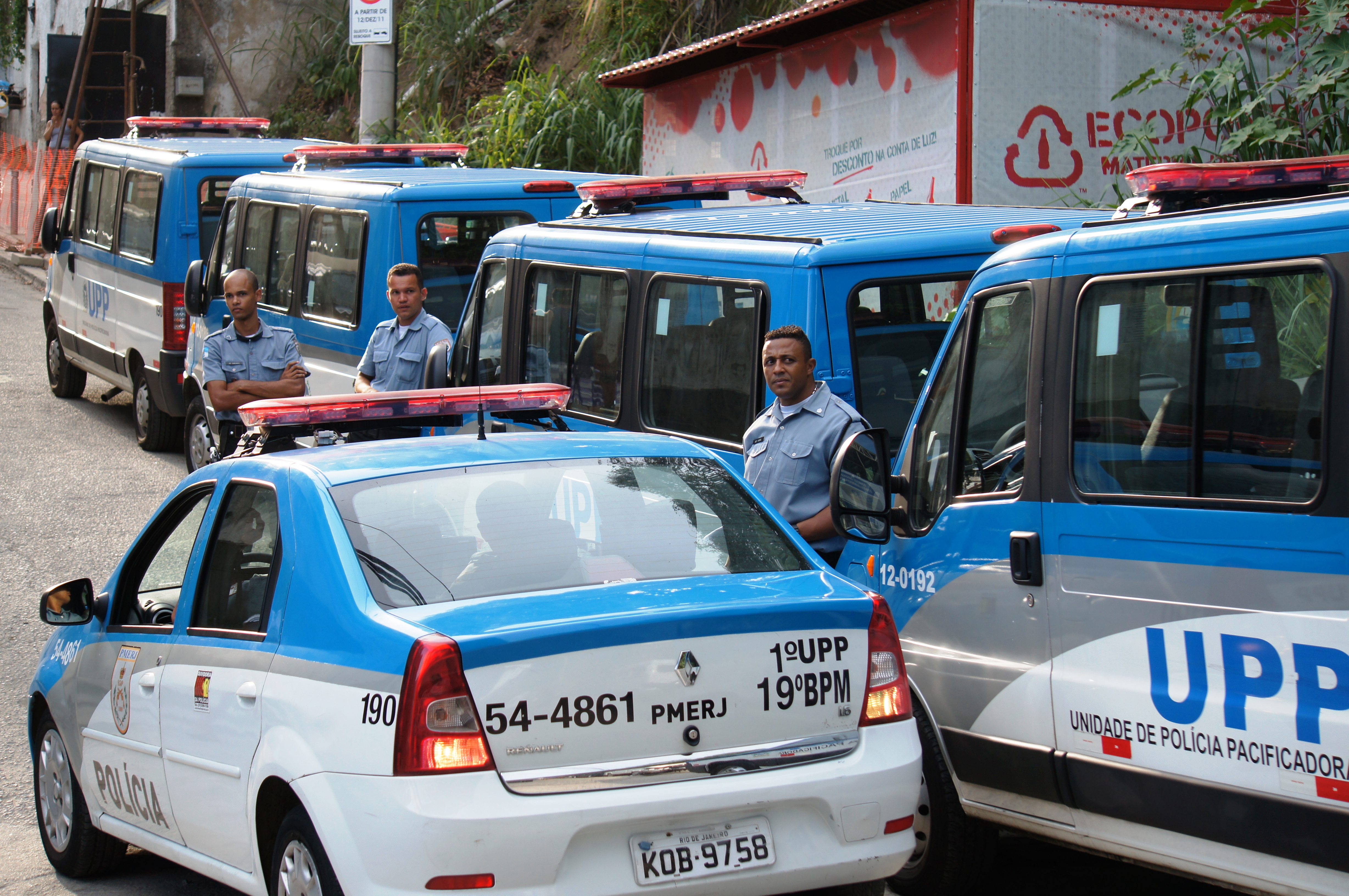
Where the pacification police are usually stationed, at the Morro da Babilônia and Chapéu Mangueira favelas

Where the pacification police are usually stationed, at the Morro da Babilônia and Chapéu Mangueira favelas, one day last December

Police say residents are exaggerating events, because they’re so afraid things will go back to the way they were. There is sporadic violence in pacified favelas, which brings on investigations, searches and other police action, depending on the situation.

Rio de Janeiro’s fourth UPP went to the Babilônia and Chapéu Mangueira favelas in June 2009. Since then, they’ve been considered a model of pacification, attracting VIP visitors such as New York mayor Michael Bloomberg, during the UN Rio +20 conference; and actor Harrison Ford with his family, just days ago.

In 2012, the Bar do David, located in Chapéu Mangueira and famous for its seafood feijoada, was the first favela boteco, or tavern,  to win Rio’s annual Comida de Buteco contest.  Babilônia is also an example of what can be done in terms of eco tourism e reforestation, once pacifiation opens up a territory in the city, making it accessible to everyone. And the urban upgrading program Morar Carioca focused on the area early, in 2009, with improvements in drainage, sewage collection, water supply, reforestation, public lighting, mudslide prevention and the creation of leisure areas.

Except that, according to this report and interviews with residents, violence is returning to the favelas and in a sense to Leme itself, where real estate prices increased a great deal due to the arrival of a police pacification unit in the neighborhood.

This is no isolated case. According to sources cited in the O Globo newspaper, pacification in the North Zone’s Morro da Mangueira still hasn’t taken hold. Another problematic UPP is responsible for the Coroa, Fallet and Fogueteiro favelas, where a corruption scheme that came to light in 2011 is still being investigated.

Allegedly, criminals from the Amigos Dos Amigos gang stayed in Chapéu Mangueira after pacification, foregoing visible weapons. This isn’t news. Drug trafficking continues all over the city, as is the case in just about any metropolis. Pacification aims not to end trafficking, but to retake territories and reduce violence.

What happened on the 20th, according to residents, is that members of a second gang, the Comando Vermelho, moved in. “It was three a.m. Boys we knew to be drug dealers from Amigos Dos Amigos came by,” says a local. “Running. Coming after them was a small group of hooded men, armed. They came back later, to assure us we were in no danger.”

This source walked a friend from that spot down to the asphalt, as cariocas call the formal city, passing the area where the UPP police are usually posted, in front of the FAETEC community court on the Ary Barroso path up the hill. But no police were there.

Since that night, residents say they haven’t slept in peace. “There was a curfew for residents last Friday, Feb. 22, and Sunday, Feb. 24, there was shooting at 7 and 9 p.m., respectively,” says one.

“The night no longer belongs to residents,” comments another.

According to them, the new competition between gangs has led to an arms race. Since the end of January, it’s not unusual to see AK47 rifles, pistols and machine guns in the arms of drug traffickers. “The Comando Vermelho invades one day. The next, it’s ADA’s turn,” says one of the residents.

According to a well-informed source who wishes to remain anonymous, such nighttime battles are no more than some shots fired from the top of the Chapéu Mangueira hill.

“A guy from one gang got out of jail,” says the source, and another, from another gang, was already in business selling drugs. “One threatened to kill the other.”

To find out what happened on the hilltop, the 12th district police station, in Copacabana, has begun an inquest.

Today, military police and dogs searched the vegetation in the area for weapons and drugs, but found nothing.

The problem in Babilônia/Chapéu Mangueira arises at a tough moment in Rio’s transformation, a time of achievements and challenges. The alliance between the city and the state governments isn’t as steady as it was five years ago, when both Eduardo Paes and Sérgio Cabral were in their first terms and the city was just starting to turn itself around.

Now, Paes is going full steam ahead on his mega-event preparations. Residents and activists who oppose relocations and demolitions— speak out, but he’s already re-elected.  Those who keep a critical eye on city hall are increasingly concerned over a lack of transparency, dialogue, and participation.

Cabral, responsible for pacification, is becoming a lame duck as Rio closes in on the 2014 gubernatorial election. The alliance between his PMDB and the PT at the federal level is showing cracks, since each party has its own candidate for his succession.

Meanwhile, the Metro moves forward, same for the port revitalization, Rio runs out of water because the electric company cut power to the water company though the electric company blames the water company, forced internment of crack addicts has begunferry and metro fares go up, the state government prepares to privatize the Maracanã soccer stadium, the first of a slew of new museums is set to openthe Providência cable car system, tooEike Batista gets to do what he wants with the Gloria MarinaGuanabara Bay is apparently becoming even more polluteda new Pope’s on his way (together with millions of young pilgrims), and the city council, ah the city council… actually cut their own incomes.

And, at the center of all these changes, good or bad, sits the pacification policy, now with thirty units and moving into the Complexo da Maré. At this point, the UPPs have to work. At least that’s what the terrified residents of Chapéu Mangueira and Babilônia think.

See O Globo‘s coverage, here.

Posted in Brazil, Transformation of Rio de Janeiro / Transformação do Rio de Janeiro | Tagged , , , , , , , , , | 1 Comment